Great Ocean Road day tour from Melbourne: is it worth it?
Melbourne: From melbourne great ocean road 12 apostles tour
What you’re actually booking
Quick answer: the standard full-day Great Ocean Road tour from Melbourne is an 11-13 hour coach day covering roughly 600-680 km round trip, with stops at Torquay or Bells Beach, Lorne, Apollo Bay and the Twelve Apostles/Port Campbell limestone formations. It suits travellers with a single day to spend on the coast; it does not suit travellers who want to linger at any one stop, since group tours run on a fixed schedule with limited flexibility.
| Where | Torquay, Lorne, Apollo Bay, Twelve Apostles/Port Campbell |
| Cost | Around 95-180 AUD group; 300 AUD+ private |
| Time needed | 11-13 hours, door to door |
| Getting there | Coach pickup from central Melbourne hotels/CBD point |
| Best time | Reverse-direction or sunset tours for better light, fewer crowds |
What you actually see, stop by stop
Torquay and Bells Beach: the official start of the Great Ocean Road and the birthplace of Australian surf culture — home to Rip Curl and Quiksilver’s original stores, and the legendary Bells Beach surf break. Most tours allow 20-30 minutes here, enough for a photo and a quick browse, not enough for a proper look if surf culture genuinely interests you.
Lorne: a pretty foreshore town with a pier walk, usually a lunch or morning tea stop depending on the tour’s schedule.
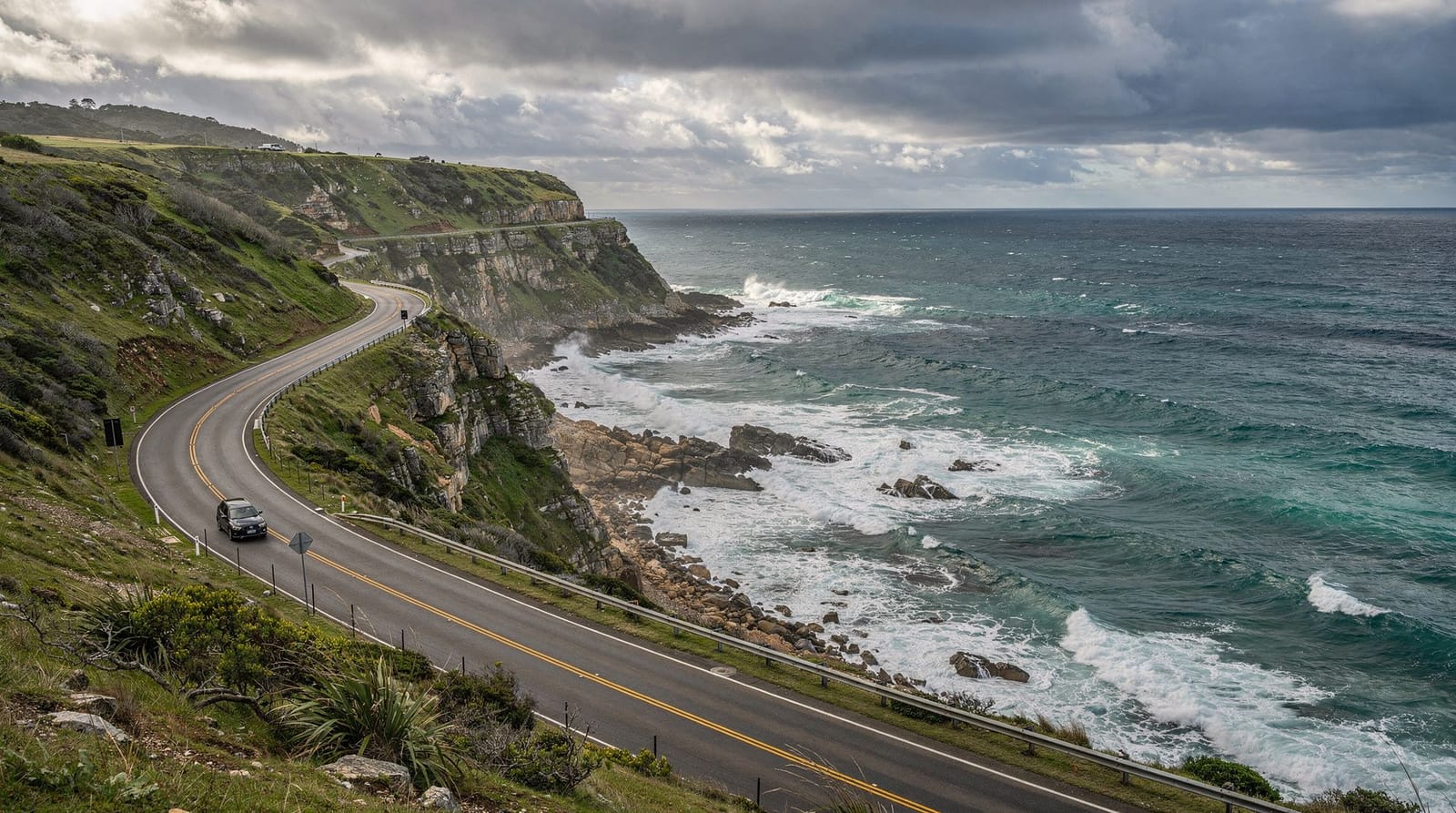
Apollo Bay and the Otways: the road winds through the fringes of the Great Otway National Park en route to Apollo Bay, a working fishing town. Some tours include a short rainforest or waterfall stop here; check the itinerary specifics before booking if this matters to you, since not all operators include an Otways detour.
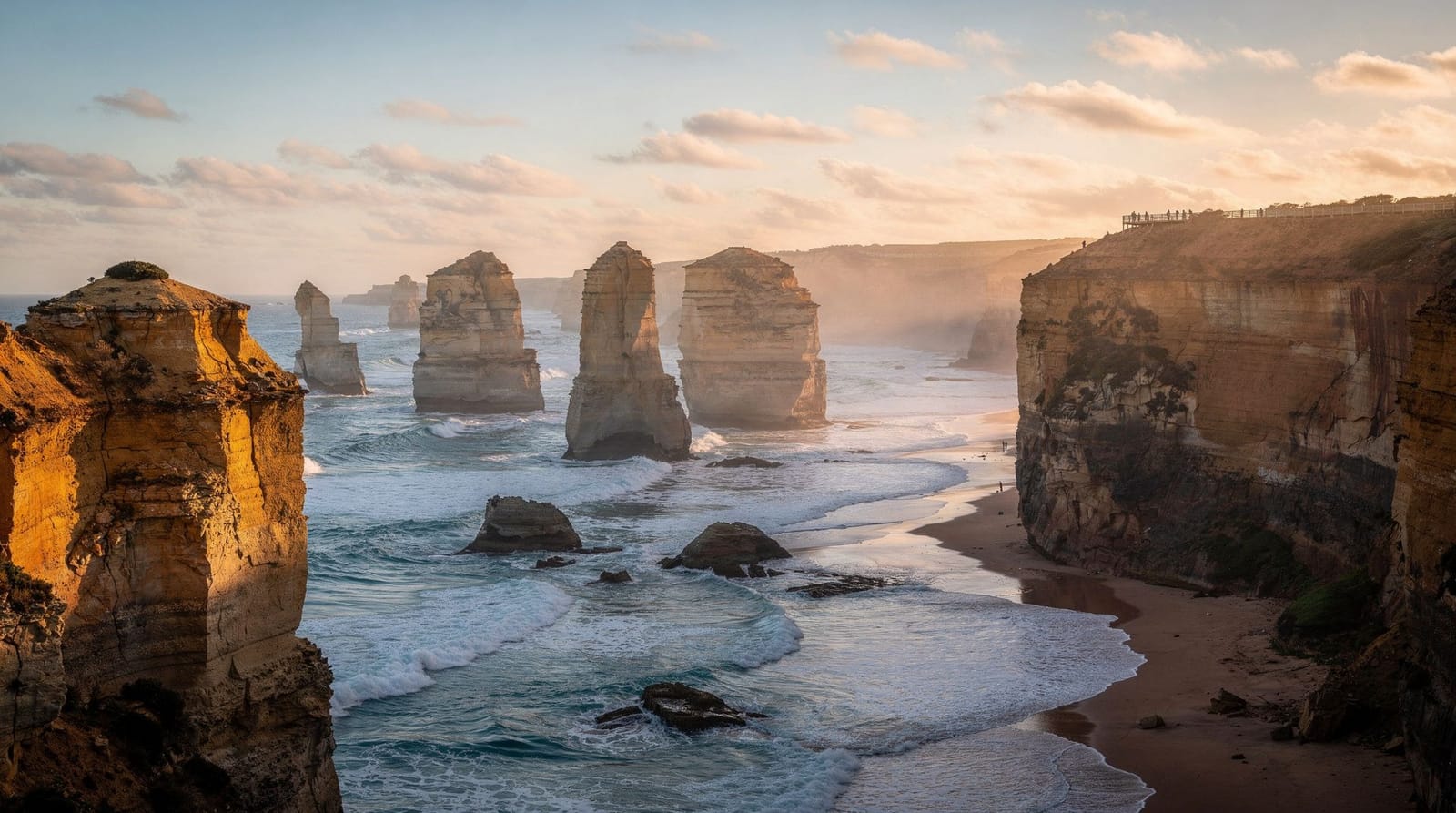
The Twelve Apostles and Port Campbell: the coast’s main event — limestone stacks rising from the Southern Ocean, several kilometres of boardwalk-connected viewpoints, and (a genuinely useful thing to know) fewer stacks than the name suggests, since several have collapsed into the sea over time. Most tours allow 45-75 minutes here, plus a further stop at nearby Loch Ard Gorge.
Price and what it actually includes
Full-day group tours typically run 95-180 AUD per person, varying by operator, group size (smaller groups cost more per person) and whether lunch is included. Private tours for your own group cost meaningfully more — often 300-500+ AUD depending on group size — but offer flexibility on stops and timing that shared coach tours don’t.
compare a private full-day Great Ocean Road tourHelicopter add-ons over the Twelve Apostles are sold separately by most operators and add a genuinely different perspective on the collapsed stacks and coastline scale — worth it for a special-occasion trip, not necessary for a standard visit.
Clockwise versus reverse (anti-clockwise) tours
This is the single most useful piece of information for choosing between competing Great Ocean Road tour listings. The standard, most heavily marketed tours run clockwise — Melbourne to Torquay to Lorne to the Apostles — arriving at the Apostles in the crowded 11am-2pm window alongside every other coach that left Melbourne around the same time that morning. Reverse (anti-clockwise) tours drive the inland route to the Apostles first, arriving in better morning or early-afternoon light with meaningfully fewer other coaches at the same viewpoints, then work back along the coast road for the return leg.
book a boutique Great Ocean Road tour in reverseIf photography, a quieter viewing experience, or simply avoiding the worst of the day-tripper crowd matters to you, a reverse tour is worth seeking out specifically, even if the coach itself is a similar size and price to a standard clockwise option.
Sunset tours: a genuinely different experience
A handful of operators run sunset-timed tours, departing later and reaching the Apostles in the day’s final light — a materially different, often more dramatic visual experience than the standard midday visit, though it means a later return to Melbourne (sometimes past 10pm) and less time at the coastal towns earlier in the route.
check Great Ocean Road sunset tour optionsWho this suits, and who it doesn’t
Suits: travellers with a single free day who don’t want to drive, first-time visitors wanting a broad overview of the coast without researching self-drive logistics, and anyone uncomfortable driving on the left on unfamiliar winding roads.
Doesn’t suit: travellers who want to linger at any single stop for more than the allotted time, anyone prone to motion sickness on long winding drives (bring medication if this applies to you), or travellers with more than a single day available — an overnight self-drive trip covers the same ground with meaningfully less rushing. See our 3-day self-drive Great Ocean Road itinerary if that flexibility appeals more than a single guided day.
Is it worth it? Our honest verdict
For a genuinely single-day visit, yes — a full-day tour is the most practical way to see the Twelve Apostles and the coast’s other highlights without renting a car or navigating unfamiliar roads yourself. The trade-offs (a long day, a fixed schedule, crowds at peak viewing times on standard clockwise tours) are real but manageable, especially if you specifically seek out a reverse-direction or sunset-timed tour rather than defaulting to the first, most heavily marketed listing you find.
If you have two or more days to spend on the coast, however, self-driving with an overnight in Apollo Bay or Lorne is a genuinely better experience — less rushed, better light at the Apostles, and time to actually explore the Otways rather than glimpsing them from a moving coach.
Alternatives if this specific tour doesn’t suit you
If a full 11-13 hour day sounds like too much, some operators offer shorter, Apostles-focused tours via the faster inland route, sacrificing the scenic coast-road drive for a shorter overall day — worth asking about if time, not budget, is your main constraint. If budget is the constraint instead, self-guided V/Line train travel to Geelong followed by local exploration is a cheaper (if more limited) alternative, though it doesn’t reach the Twelve Apostles themselves without a car or a booked tour.
For a genuinely different pace, our 3-day self-drive itinerary and the broader Great Ocean Road destination guide cover the self-drive option in full detail, including where to stay overnight and how to sequence the drive across multiple days.
Seasonal considerations for this tour
Summer (December-February) offers the longest daylight, meaning even a standard clockwise tour gets decent light at the Apostles, and total fire ban days occasionally affect regional roads — check current conditions if travelling during a heatwave. Autumn (March-May), widely considered Victoria’s best all-round season, tends to bring calmer, clearer coastal conditions than summer’s occasional haze. Winter (June-August) brings the shortest days (sunset around 5-5:30pm), meaning tours often return to Melbourne in full darkness, and rain is more frequent, though a clear winter day after a cold front can deliver some of the year’s sharpest visibility.
Spring (September-November) is generally reliable, similar to autumn, with the added chance of good wildflower displays if your route passes through the Otways’ understory.
Money-saving tips for this tour
Booking on a weekday rather than a weekend sometimes unlocks lower pricing from operators managing demand across the week, and travelling in winter (genuinely Victoria’s quietest season) tends to bring lower fares across the board, not just for accommodation. Group tours are consistently cheaper per person than private tours, so if budget is the main constraint, a shared coach with 20-40 other travellers is the more economical choice over a private vehicle, accepting the trade-off of a fixed schedule and less flexibility on stops. Bringing your own snacks and water rather than buying at the tour’s lunch stop (where prices reflect a captive-audience location) is a small but real saving across a long day.
What to actually expect on the day
Most operators pick up from a small number of central Melbourne hotels or a designated CBD meeting point between 7 and 7:30am, with the coach filling up across several stops before properly getting underway. Expect a driver-guide narrating points of interest along the route rather than a dedicated separate guide, which is standard for this style of tour and generally sufficient — the coastline speaks for itself more than any narration could.
Toilet and photo stops are built into the schedule roughly every 60-90 minutes, and most tours build in enough slack that a single delayed stop doesn’t cascade into missing the Apostles’ best light, though it’s worth accepting that a shared coach tour moves at the group’s pace, not yours, if you’re someone who likes to linger.
Practical tips before you book
Bring layers regardless of season — the coast is windier and often several degrees cooler than Melbourne’s CBD. Motion sickness medication is worth packing if you’re at all prone to it; the coast road’s curves are genuinely continuous for long stretches. Confirm your pickup point and time the night before, since most tours depart from central Melbourne around 7-7:30am, and a missed pickup on a shared coach tour usually means forfeiting the day entirely rather than a simple reschedule.
How the day-tour route compares to nearby regions
Some travellers weigh a Great Ocean Road day tour against a day trip to the Grampians or a Ballarat history day instead, especially if a single day is genuinely all the time available. These aren’t really interchangeable: the Great Ocean Road is a coastal-scenery day, the Grampians is a mountain-and-wildlife day, and Ballarat is a gold-rush history day. If you can only fit one, the coast road’s Twelve Apostles are the more internationally recognisable drawcard, but travellers with more time often combine several across a longer stay rather than picking a single “best” option.
If a single day genuinely isn’t enough
The single biggest limitation of any day tour is time at each stop, and it’s worth being honest about that trade-off before booking. Travellers who find themselves wishing for more time at Apollo Bay or the Otways on a day tour are usually better served by our 3-day Great Ocean Road and Grampians road trip itinerary or a simpler overnight in Lorne or Apollo Bay, both of which remove the fixed-schedule pressure entirely. The self-drive guide covers logistics for travellers considering that route instead of a booked tour.
Compare alternative tours
Frequently asked questions about Melbourne
Is a one-day Great Ocean Road tour worth it?
Yes, if your schedule genuinely only allows one day — it covers the coast's highlights, including the Twelve Apostles, without you needing to drive. It's a long day (11-13 hours), and travellers with more flexibility often get more out of an overnight version instead.How much does a Great Ocean Road day tour cost?
Full-day group tours from Melbourne typically run 95-180 AUD per person depending on operator, group size and inclusions. Private tours and helicopter add-ons at the Twelve Apostles cost meaningfully more, often 300 AUD or above per person.Should I book a clockwise or reverse (anti-clockwise) tour?
Reverse tours reach the Twelve Apostles later in the day, in better afternoon light and with fewer coach crowds, since most day-trippers follow the standard clockwise route. If photography or a quieter viewing experience matters to you, a reverse-direction tour is worth the modest price difference some operators charge for it.Is the Great Ocean Road better as a tour or self-drive?
A tour suits a single long day trip, since someone else manages hours of winding coastal driving while you look at the view. Self-driving suits travellers planning to overnight along the coast, since it removes the fatigue of a same-day round trip and lets you set your own pace at each stop.What's included in a typical Great Ocean Road day tour?
Return coach transport from central Melbourne, a guide or driver-guide, stops at Torquay/Bells Beach, Lorne, Apollo Bay and the Twelve Apostles/Port Campbell area, and often a lunch stop (sometimes included, sometimes at your own cost depending on the operator).How long is the drive to the Twelve Apostles from Melbourne?
Around 3-3.5 hours each way via the coast road with stops factored in, or closer to 2.5 hours via the inland Princes Highway without the scenic coastal detour most tours are built around.Can I do the Great Ocean Road as a day trip without a tour or a car?
Not realistically for the full route to the Twelve Apostles — there's no direct public transport covering the coast road's key stops in a single day. A booked tour or a rental car are the two practical options; V/Line trains reach Geelong but not the Apostles themselves.Do Great Ocean Road day tours stop at Loch Ard Gorge?
Most do, usually as a short add-on stop near the Twelve Apostles, since it sits only a few minutes further along Port Campbell's coastline. Confirm on the specific listing, as a small number of shorter itineraries skip it to save time.