The Great Ocean Road
Great Ocean Road guide: the full route from Torquay to Port Campbell, self-driving vs guided tours, timing, and honest advice on doing it in one day.
Melbourne: From melbourne great ocean road 12 apostles tour
Quick facts
- Length
- ~243 km, Torquay to Allansford (near Warrnambool)
- Distance from Melbourne
- ~1 hour to Torquay, ~3.5 hours to the Twelve Apostles
- Built
- 1919–1932, largely by returned WWI servicemen
- Key stops
- Bells Beach, Lorne, Apollo Bay, the Otways, Twelve Apostles
- One-day round trip
- 11–13 hours from Melbourne — long but common
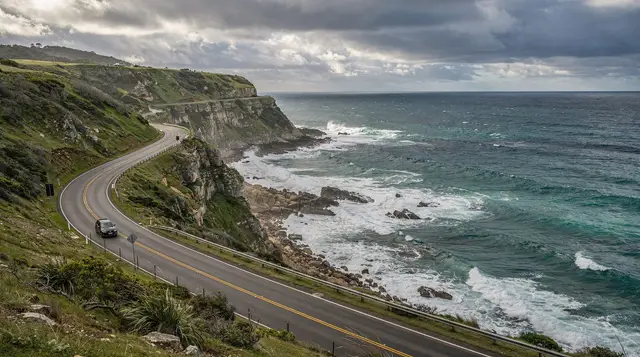
The Great Ocean Road runs roughly 243 km along Victoria’s southwest coast, from Torquay (about an hour from Melbourne) to Allansford near Warrnambool, and it is Australia’s most famous coastal drive — a title earned honestly rather than through marketing alone. The road itself is a war memorial: it was built between 1919 and 1932 largely by returned World War I servicemen using pick and shovel labour, specifically as a memorial to soldiers killed in the war, and it remains the largest war memorial in the world by that measure.
That history is worth knowing before you go, because it explains why the road hugs the coastline so closely and climbs and descends so constantly — it was engineered as a scenic memorial route, not the most efficient way to connect Geelong to Warrnambool.
The honest planning question most visitors actually have is whether to see it as a single very long day trip from Melbourne or to slow down and stay a night or two along the way — see our dedicated is the Great Ocean Road worth it and tour vs drive guides for the full breakdown, but the short version is: a one-day round trip (11–13 hours) is genuinely common and worthwhile if it’s your only option, but two to three days lets you actually stop at the places worth stopping at, rather than driving past them on a schedule.
| Where | Torquay to Allansford, ~243 km SW of Melbourne |
| Cost | Self-drive: fuel only; guided full-day tour ~130–200 AUD/person |
| Time needed | 1 long day (11–13 hrs round trip) rushed; 2–3 days comfortable |
| Getting there | Self-drive, or guided coach tour from Melbourne |
| Best time | Autumn/spring for mild weather and thinner crowds |
The route, section by section
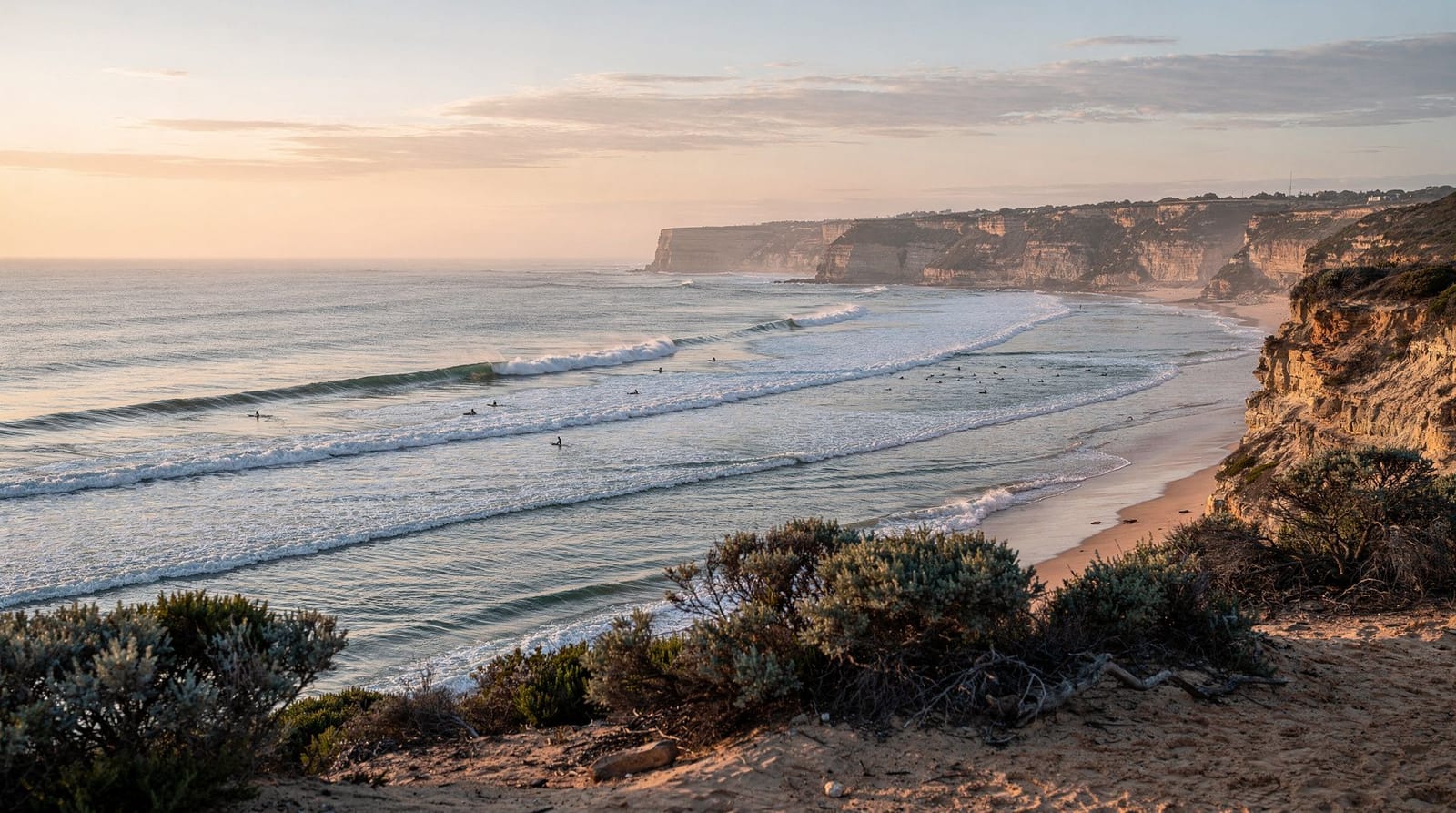
From Melbourne, the road effectively begins at Torquay, Australia’s surf capital and home to Bells Beach, before running through Geelong’s outskirts and past a string of small beach towns to Lorne, a popular overnight base with a lively main street and waterfalls in the surrounding hills. Beyond Lorne, the road narrows and winds more dramatically through the Otway Ranges’ rainforest edge to Apollo Bay, the other main overnight base and gateway to the Otways’ rainforest and waterfall walks.
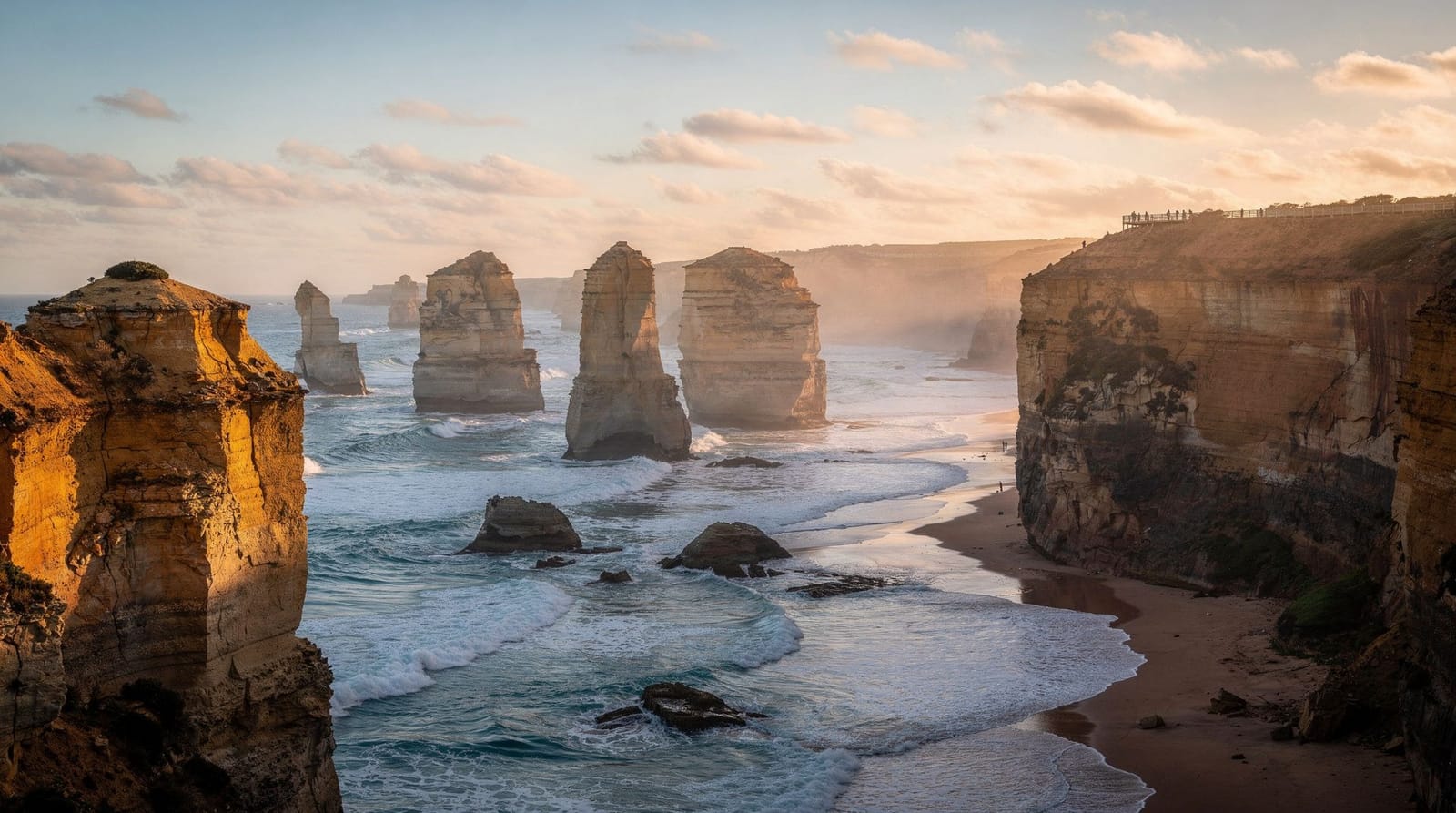
From Apollo Bay, the road cuts inland briefly through the Otways before emerging at the coast again near the Twelve Apostles and the Port Campbell National Park’s other limestone formations — Loch Ard Gorge, London Bridge (now London Arch, since a section collapsed in 1990), and the Grotto.
Self-driving vs a guided tour
Self-driving gives complete control over pacing and stops but requires confidence driving on the left on a narrow, winding road with frequent tourist traffic and, in wetter months, the possibility of fog or rain reducing visibility on the cliff sections. It also means one person in the group doesn’t get to fully enjoy the coastal views while concentrating on the road. A guided day tour removes the driving entirely, typically includes a knowledgeable commentary on the road’s history and geology, and often runs the route in reverse (finishing at the Apostles at sunset and driving back to Melbourne after dark) to avoid the worst of the tour-bus congestion that builds through the middle of the day.
See our Great Ocean Road self-drive guide for route-specific driving advice if going it alone.
From Melbourne: Great Ocean Road and 12 Apostles full-day tourDoing it in reverse
A specific, genuinely useful piece of local advice: most self-drivers and several tour operators run the road anti-clockwise from Melbourne — driving inland via the Princes Highway to reach the Twelve Apostles first, then working back along the coast road via Apollo Bay and Lorne to Torquay. This avoids arriving at the Apostles in the middle of the day alongside every tour bus that left Melbourne at the same time that morning, and instead times the most photogenic stop for softer, less crowded light either early or late in the day.
From Melbourne: boutique Great Ocean Road tour in reverseWildlife along the way
Wild koalas are genuinely, reliably visible in the gum trees around Kennett River and Cape Otway, without any paid wildlife park required — this is one of the road’s best honest freebies, though sightings depend on the koalas actually being active and visible that day, and patience helps. Cape Otway Lightstation, Australia’s oldest surviving lighthouse on the mainland, sits at the southernmost point of the drive and charges entry, combining lighthouse history with reliable koala spotting in the surrounding bush. See koala spotting in Victoria and Great Otway National Park for specifics.
From Melbourne: coastal highlights, forest and wildlife tourSunset at the Apostles
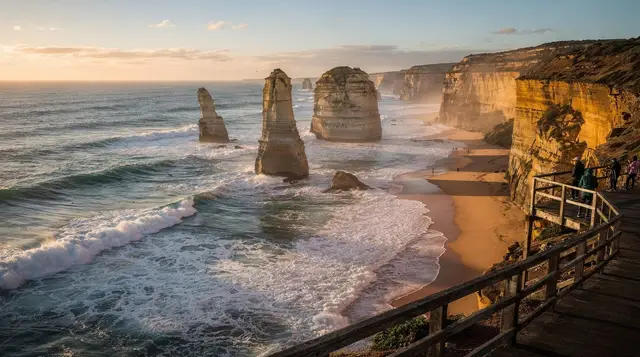
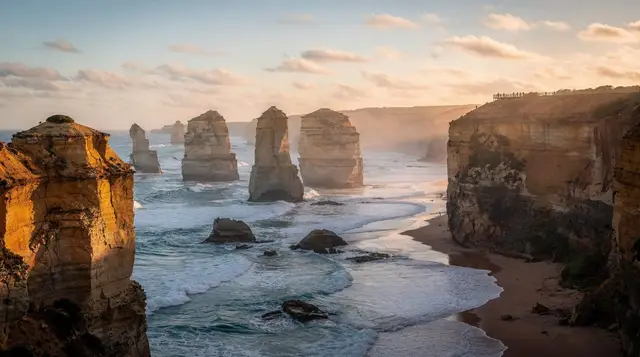
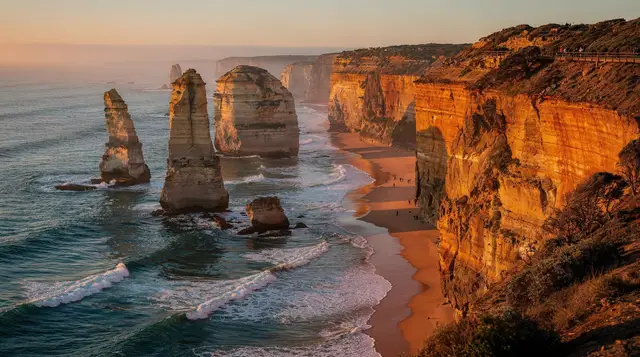
The Twelve Apostles are lit differently, and arguably best, in the last hour before sunset, when the limestone stacks catch warm light against the darkening ocean — a specific reason several tour operators and self-drivers time their visit for late afternoon rather than midday. This does mean driving back to Melbourne partly in the dark if doing it as a single day trip, which is worth planning for if self-driving, particularly given the road’s wildlife crossing risk (kangaroos and wombats) after dusk.
Great Ocean Road: full-day sunset tourWeather and timing
Being on Victoria’s exposed southwest coast, the Great Ocean Road sees genuinely changeable weather year-round, and fog is a real possibility at any time of year, particularly around the Twelve Apostles’ clifftops in the early morning. Summer (December–February) brings the best odds of clear, dry weather but also the heaviest crowds and the highest accommodation prices in Lorne and Apollo Bay. Autumn and spring offer a reasonable weather-to-crowd trade-off. Winter is atmospheric — dramatic stormy seas, near-empty viewpoints — but with genuinely reduced daylight hours that make the one-day round trip considerably tighter.
The road’s war memorial history in more detail
The Great Ocean Road Trust, formed in 1918, conceived the road specifically as a living memorial to Victorian soldiers who died in the First World War, and as a practical works project to employ returned servicemen struggling to find work in the recession that followed the war. Construction proceeded in stages between 1919 and 1932, with workers using dynamite, picks and shovels to carve the road into cliff faces in sections where no prior track existed, under genuinely dangerous conditions — several workers died during construction. The road was tolled until 1936 to recoup construction costs before being handed to the state government and made free to use.
Memorial arches at Eastern View, near Lorne, still mark the road’s dedication, and the whole route is formally listed on the Australian National Heritage List in recognition of both its engineering and its memorial significance — details worth knowing given how easily the road’s origin gets reduced to “scenic drive” in casual conversation.
Accommodation strategy if staying overnight
Lorne and Apollo Bay are the two realistic overnight bases for a multi-day Great Ocean Road trip, each with a range of accommodation from budget caravan parks to boutique guesthouses. Lorne is closer to Melbourne and has a livelier restaurant and shopping strip; Apollo Bay is closer to the Otways’ rainforest walks and the Twelve Apostles, cutting the drive time to the road’s most famous stretch the next morning. Port Campbell, right beside the Apostles themselves, is a smaller, more limited option but puts you literally minutes from the formations for a sunrise or sunset visit without a long drive either side.
Booking ahead matters significantly in summer and over long weekends, when accommodation in all three towns fills and prices rise sharply.
Getting there without a car
If you don’t want to drive and don’t want a full guided tour, V/Line buses connect Geelong (reachable by train from Southern Cross) to Apollo Bay, though services are limited and won’t get you to the Twelve Apostles themselves without a further connection or hire car. For most visitors without a car, a guided day tour from Melbourne is the realistic option to see the full route including the Apostles in a single day.
Budget for a Great Ocean Road trip
A guided full-day tour from Melbourne, including the Twelve Apostles, typically costs 130–200 AUD per person, with premium small-group or reverse-route options at the higher end. Self-driving costs are mainly fuel and any rental car fees, plus tolls-free roads throughout, making it the cheaper option for groups of three or more splitting a car. Multi-day trips add accommodation (budget 100–150 AUD/night in Lorne or Apollo Bay outside peak season, considerably more over summer and long weekends) and meals along the route, which run comparable to regional Victorian prices generally — a little below Melbourne’s CBD average.
See the Great Ocean Road day trip guide and the budget calculator for a fuller cost breakdown.
The Great Ocean Road by season
Weather, daylight and crowd levels shift enough across the year that timing genuinely changes the experience of driving the road.
| Season | Weather | Crowds | Notes |
|---|---|---|---|
| Summer (Dec–Feb) | Best odds of clear, dry weather | Heaviest, highest prices | Book Lorne/Apollo Bay accommodation well ahead |
| Autumn (Mar–May) | Mild | Moderate | Good weather-to-crowd balance |
| Spring (Sep–Nov) | Mild | Moderate | Similar balance to autumn |
| Winter (Jun–Aug) | Cold, wet, atmospheric | Quietest | Shortest daylight — tightens a one-day round trip |
One day vs two to three days: what you actually get
A single rushed day realistically covers Torquay, a brief Lorne stop, Kennett River for koalas, and the Twelve Apostles and Loch Ard Gorge before the long drive back — worthwhile if it’s genuinely your only option, but it leaves the Otways’ rainforest walks, a proper Apollo Bay stop and any real time at the smaller limestone formations unseen. Two days adds an overnight in Apollo Bay or Port Campbell and lets you slow down at the Apostles for sunrise or sunset rather than a rushed midday stop; three days comfortably adds a full Otways rainforest walk and more time in Port Campbell National Park’s lesser-known formations beyond the headline stacks. See our 3-day Melbourne and Great Ocean Road itinerary for a suggested pacing.
Frequently asked questions about the Great Ocean Road
Is it possible to do the Great Ocean Road in one day from Melbourne?
Yes, though it’s a long day — 11–13 hours round trip including stops, typically leaving Melbourne before 7:00 and returning after dark. It’s genuinely worthwhile if that’s your only available time, but two to three days lets you actually enjoy the stops rather than rushing between them.
Should I drive the Great Ocean Road clockwise or anti-clockwise?
Anti-clockwise (Melbourne inland to the Twelve Apostles first, then back along the coast) avoids the worst tour-bus congestion at the Apostles around midday and is the route most operators and experienced self-drivers recommend.
Do I need a 4WD for the Great Ocean Road?
No — the road is fully sealed and suitable for any standard rental car. Ordinary caution on narrow, winding sections and wildlife crossings at dawn/dusk is what actually matters.
Where can I see koalas on the Great Ocean Road?
Kennett River and the area around Cape Otway are the most reliable spots for wild koala sightings, at no cost, alongside the paid Cape Otway Lightstation.
Is the Great Ocean Road worth it if I’ve seen other coastal drives?
Most visitors who’ve driven other famous coastal routes still rate it highly for the combination of dramatic limestone geology, rainforest sections through the Otways and genuine wild koala sightings in one route — see our full is it worth it analysis for a more detailed comparison.
What’s the best time of year to drive the Great Ocean Road?
Autumn (March–May) and spring (September–November) offer the best balance of mild weather and manageable crowds; summer is busiest and most expensive; winter is quietest but coldest, wettest and has the least daylight.
Can I do the Great Ocean Road without a car?
Yes, via a guided day tour from Melbourne, which is the most practical option if you don’t want to self-drive; limited V/Line bus services also connect some towns but don’t reliably reach the Twelve Apostles.
How far is the Great Ocean Road from Melbourne?
Torquay, the road’s effective starting point, is about an hour from Melbourne; the Twelve Apostles are roughly 3.5 hours by the direct inland route, longer if driving the full coastal road via Lorne and Apollo Bay.
How many days should I spend on the Great Ocean Road?
One long day (11–13 hours round trip) is possible and worthwhile if it’s your only option, but two to three days is the comfortable, recommended pacing — it adds an overnight in Apollo Bay or Port Campbell and time for the Otways’ rainforest walks that a rushed single day skips entirely.
Can I combine the Great Ocean Road with the Grampians?
Yes — a longer road trip linking both regions via the southern route through Dunkeld is a popular way to cover Victoria’s most famous coastal drive and its most complete outdoor destination in one trip; see the combined Great Ocean Road and Grampians itinerary for a suggested route.
Top experiences
Bookable activities with verified prices and instant confirmation on GetYourGuide.