A day in the Yarra Valley wine region
Victoria’s best-known wine region is closer than most visitors expect
For visitors weighing up which of Melbourne’s regional day trips to prioritise, the Yarra Valley consistently ranks as the most relaxed and least logistically demanding of the major options — no long coastal drive, no evening wildlife event dictating your schedule, just a comfortable morning departure, a leisurely lunch, and an early return if you’d rather have the evening free in the city.
The Yarra Valley sits about an hour east of central Melbourne, making it the most schedule-friendly of the region’s big day trips — you can start later and finish earlier than a Great Ocean Road or Phillip Island day, and still get a genuinely full experience. It’s Victoria’s oldest and best-known cool-climate wine region, known particularly for Chardonnay and Pinot Noir, with dozens of cellar doors ranging from small family operations to large estates with restaurants attached.
| Where | Yarra Valley, ~1hr east of Melbourne |
| Tasting cost | around 10-20 AUD per flight |
| Full-day tour | around 180-260 AUD with lunch |
| Hot air balloon | around 350-420 AUD with breakfast |
| Best time | Autumn (Mar-May) for foliage and comfortable temps |
For a fuller picture of the region beyond this one-day plan, our Yarra Valley wine guide goes deeper on estates and styles, and the Yarra Valley day trip guide lays out the practical logistics of getting out there and back.
What a tasting actually costs
Cellar door tastings across the Yarra Valley typically run 10-20 AUD per person for a flight of four to six wines, often waived or credited toward a purchase if you buy a bottle afterward. Larger estates with dedicated tasting rooms and food service sometimes charge more for a guided or paired tasting experience, but the standard walk-in tasting remains affordable enough that trying several wineries independently, if you have a designated driver, needn’t blow a modest day-trip budget.
Tour vs self-drive
Cellar door tastings almost always involve driving between properties, which creates an obvious tension if you’re also drinking — this is the single biggest reason a guided tour tends to make more sense here than self-driving. A typical full-day tour visits three to five wineries with a mix of tastings and a sit-down lunch included, letting everyone in the group actually taste rather than nominate a designated driver who skips most of it.
 Yarra valley wine experienceCheck availability
If you’d rather explore at your own pace and are comfortable spitting or limiting tastings, a hop-on-hop-off winery bus links several cellar doors on a fixed route, giving more flexibility than a guided tour without needing a designated driver for the whole group.
What makes the Yarra Valley distinctive among Victoria’s wine regions
Victoria has several notable wine regions beyond the Yarra Valley — the Mornington Peninsula, Geelong’s surrounds, and further out the Grampians and Rutherglen — but the Yarra Valley remains the most visited from Melbourne largely because of its proximity and its particular strength in Chardonnay and Pinot Noir, grape varieties that reward the valley’s cooler elevation and reliable rainfall. If you have time to compare, the Mornington Peninsula (covered in our hot springs and wine guide) offers a similar cool-climate style with a coastal setting, while the Yarra Valley leans more into a classic countryside, rolling-hills atmosphere.
What a typical day looks like
Most organised tours depart Melbourne between 8:30am and 9:30am, reach the valley by around 10am, and structure the day around two to three tastings before lunch and one or two more after, returning to the city by early evening (roughly 5-6pm). Lunch is usually at a winery restaurant — many of the Yarra Valley’s better-known estates run genuinely good kitchens rather than treating food as an afterthought to the wine.
a winery tour with lunch at Yering StationIf you are building the wine day into a longer stay, it slots neatly into a 3-day Melbourne itinerary, and our guide to getting around Melbourne helps you plan the city legs on either side of it.
A short history of the region
The Yarra Valley’s wine history dates back to the 1830s, among the earliest wine-growing regions established in Australia, though the industry largely died out by the early 20th century as the market shifted toward fortified wines from other regions. A modern revival began in the 1960s-70s, led by a handful of pioneering winemakers who recognised the valley’s cool climate suited to Burgundian-style Chardonnay and Pinot Noir, and the region has grown steadily since into one of Australia’s most respected cool-climate wine areas — a detail that adds useful context to why the valley’s wines taste notably different from the bigger, warmer-climate reds more commonly associated with Australian wine internationally.
Choosing which cellar doors to visit
With dozens of wineries scattered across the valley, deciding where to go can be the hardest part of planning independently. Larger, well-known estates like Domaine Chandon and Yering Station combine strong wine programs with excellent food and easy access for group tours, making them reliable choices if you’re short on time or visiting with a group that includes non-experts. Smaller, family-run cellar doors offer a more personal experience and the chance to talk with the actual winemaker, but require more research or local knowledge to find — this is where a guided tour’s local expertise genuinely earns its cost over self-driving blind.
Beyond wine: what else the Yarra Valley offers
The region isn’t only cellar doors. Healesville, at the valley’s northern edge, is home to Healesville Sanctuary, a well-regarded native wildlife park focused on rehabilitation and conservation — a good pairing if you want wildlife alongside wine on the same day. For something more distinctive, hot air ballooning over the valley at sunrise is a genuinely well-regarded activity here, floating over vineyards and the Yarra Ranges before the day’s heat sets in, typically followed by a champagne breakfast on landing.
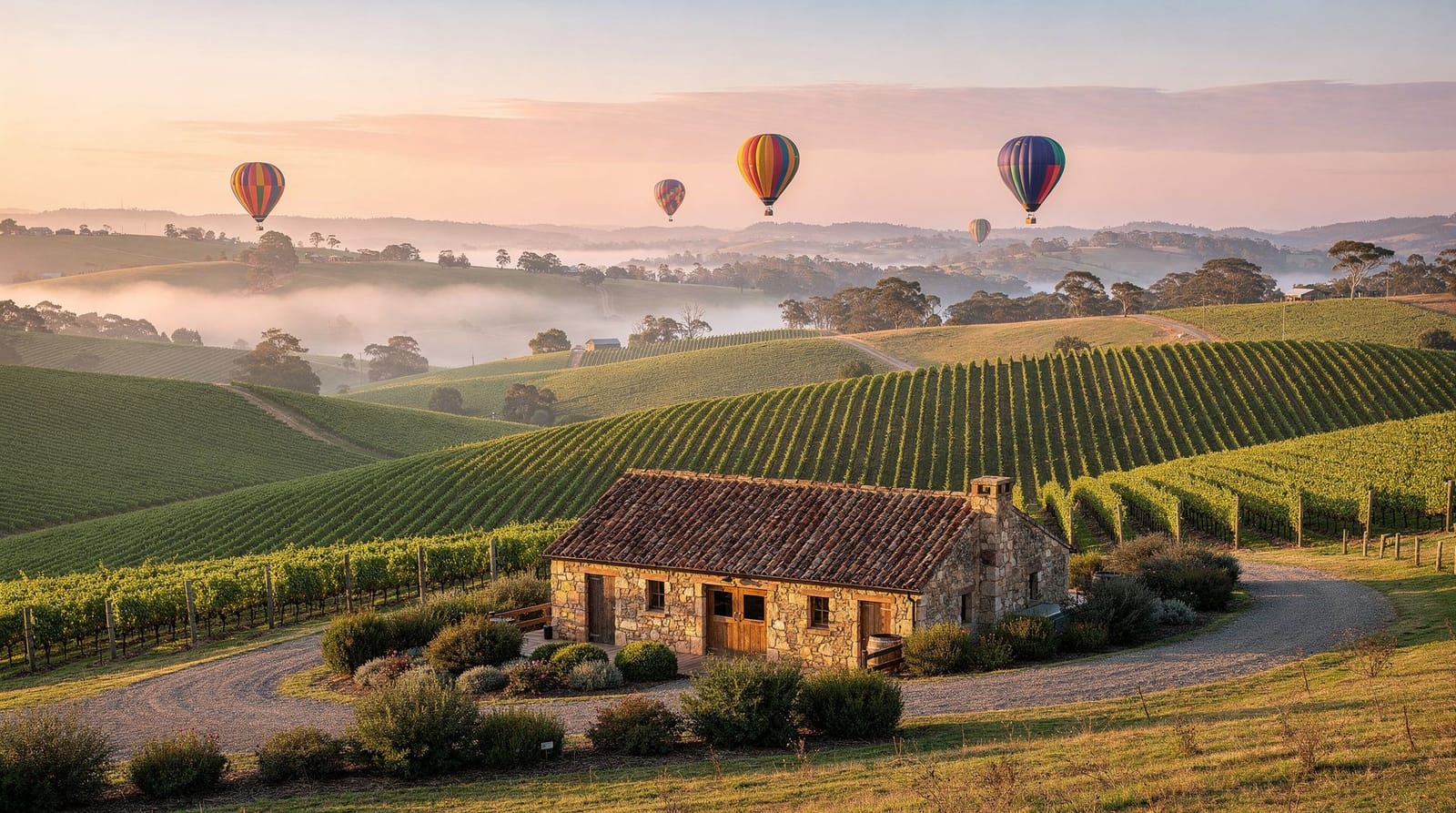 Hot air balloon experience yarra valley with breakfastCheck availability
What it costs
A guided full-day tour with lunch and several tastings typically runs 180-260 AUD per person, which usually represents better value than it first appears once you factor in that most cellar door tastings themselves would cost 10-20 AUD each if visited independently and are often included or discounted on a tour. Hot air ballooning is a separate, pricier experience, typically 350-420 AUD including breakfast, reflecting the early start and the logistics involved.
For more on the wildlife side, the Healesville Sanctuary guide explains what to expect from a visit, and the Puffing Billy railway guide is worth a read if a scenic train ride appeals more than another tasting.
Non-wine options for the group
If your group includes non-drinkers or travellers who simply aren’t interested in wine, most Yarra Valley tours and independent itineraries can accommodate that easily — gin, whisky and chocolate producers operate alongside the wineries in several combined tastings, and Healesville Sanctuary’s wildlife focus provides a genuine full-day alternative that doesn’t revolve around alcohol at all. Being upfront with a tour operator about a mixed-interest group when booking usually results in a better-tailored itinerary than trying to adapt a wine-only tour on the day.
Best time to visit
For a closer look at the colourful season, see our autumn in the Yarra Valley guide, and for the wider picture across the year, the best time to visit Melbourne post covers how the seasons shape the whole trip.
Autumn (March-May) is widely considered the Yarra Valley’s best season — vineyards turn gold and red, and daytime temperatures are comfortable for an outdoor lunch on a winery terrace. Spring (September-November) brings new growth and generally pleasant weather too. Summer can be genuinely hot for a day spent partly outdoors, and winter, while quieter and often atmospheric with fireplaces at cellar doors, means shorter daylight and cooler outdoor seating.
Seasonality at a glance
| Season | Conditions | Notes |
|---|---|---|
| Autumn (Mar-May) | Comfortable, scenic foliage | Widely considered the best season |
| Spring (Sep-Nov) | Mild, new growth | Pleasant, generally uncrowded |
| Summer (Dec-Feb) | Can be genuinely hot | Fine but less comfortable outdoors |
| Winter (Jun-Aug) | Cool, shorter daylight | Quiet, atmospheric fireplaces at cellar doors |
Comparing a Yarra Valley day with Melbourne’s other regional trips
Of Melbourne’s main day trips, the Yarra Valley is the most schedule-friendly — no long coastal drive like the Great Ocean Road, and no evening event to build the day around like Phillip Island’s Penguin Parade. If you’re deciding which regional day to prioritise on a short trip, see our best day trips from Melbourne comparison, and pair a Yarra Valley morning with the Dandenong Ranges and Puffing Billy if you want to combine wine country with a scenic train ride on the same regional outing.
Frequently asked questions about the Yarra Valley
How far is the Yarra Valley from Melbourne?
About an hour by car from central Melbourne, making it the most time-efficient of the region’s major day trips.
Do I need a car to visit the Yarra Valley?
Not necessarily — guided tours and the hop-on-hop-off winery bus both operate without requiring your own vehicle, and are generally the better choice anyway if you plan to drink at tastings.
What is the Yarra Valley known for producing?
Chardonnay and Pinot Noir are its signature cool-climate wines, alongside sparkling wine production at several larger estates.
Is the Yarra Valley worth visiting if you don’t drink alcohol?
Yes — most wineries offer non-alcoholic options or food-focused visits, and the valley’s scenery, Healesville Sanctuary’s wildlife, and the hot air ballooning experience are all worthwhile independent of wine tasting.
How old is the Yarra Valley wine industry?
Grape growing dates back to the 1830s, making it one of Australia’s earliest wine regions, though the modern industry is really a product of a revival that began in the 1960s-70s after the original industry largely died out in the early 1900s.
Should I book individual wineries or a full tour?
A full guided tour is generally easier and safer given the drinking involved, and local operators know which smaller cellar doors are worth the stop. Self-driving to individual wineries works if you have a strict designated driver or plan to spit rather than swallow at tastings.
Can non-drinkers enjoy a Yarra Valley day trip?
Yes — most tours can accommodate non-drinkers with food-focused stops, gin or chocolate tastings alongside the wine, or a Healesville Sanctuary wildlife visit as a genuine non-alcohol-centred alternative for the day.
Is the Yarra Valley or the Mornington Peninsula the better wine day trip from Melbourne?
Both are strong choices — the Yarra Valley leans into a classic countryside, rolling-hills atmosphere with a stronger Chardonnay and Pinot Noir reputation, while the Mornington Peninsula offers a similar cool-climate style with a coastal setting, covered in our hot springs and wine guide.