Cowes
Phillip Island's main town: a calm swimming beach, the jetty, and the practical base for penguins, koalas and everything else on the island.
Melbourne: Phillip island penguins and wildlife
Quick facts
- Distance from Melbourne CBD
- ~140 km, ~1h40-2h drive
- Role
- Main town and accommodation base on Phillip Island
- Beach
- Sheltered, facing Western Port — calmest on the island
- Access to Penguin Parade
- ~10-15 minutes by car
- Ferry
- Seasonal passenger ferry to French Island and Stony Point
Is Cowes worth visiting on its own, or just somewhere to sleep near the Penguin Parade? Both, honestly. Cowes is Phillip Island’s main town — the practical base almost every visitor uses for accommodation, food, and supplies — but it also has a genuinely pleasant sheltered beach and a working jetty that are worth an hour or two in their own right, not just a place to pass through on the way to the island’s wildlife attractions.
| Where | Thompson Avenue and the foreshore, Phillip Island |
| Cost | Beach and jetty free; seal-watching boat tours are the main paid extra |
| Time needed | 1-2 nights as an island base; an hour or two for the town alone |
| Getting there | Self-drive across the San Remo bridge (~1h40-2h) or an organised tour |
| Best time | Summer for swimming; year-round as a base for the Penguin Parade |
The beach and the jetty
Cowes’ main beach faces Western Port on the island’s northern, sheltered side, making it the calmest and most family-friendly swimming spot on Phillip Island — a contrast to the more exposed, surf-facing beaches at Cape Woolamai on the island’s southeastern side. The Cowes Jetty, extending out into the bay, is a popular spot for fishing, an evening walk, and views back across Western Port toward the mainland and, on a clear day, the Mornington Peninsula on the opposite shore.
A brief history
Cowes takes its name from the town of the same name on the Isle of Wight in England, part of a broader pattern of English place names given to Phillip Island’s settlements by early colonial surveyors — the island itself is named after Arthur Phillip, the first Governor of New South Wales. Originally established as a small port serving the island’s agricultural and fishing communities in the 19th century, Cowes grew into the island’s main town through the 20th century as tourism, rather than farming, became the dominant local industry — a shift closely tied to the growing popularity of the Penguin Parade itself as a visitor drawcard from the mid-20th century onward.
The town centre
Thompson Avenue, Cowes’ main street, holds the bulk of Phillip Island’s restaurants, cafes, and shops — a genuinely wider range than the island’s other, smaller settlements like Rhyll or Ventnor, reflecting Cowes’ role as the default accommodation base for most visitors. Expect a mix of casual fish and chips, pubs, and a scattering of more considered dining options, busiest around the evening period before or after a Penguin Parade visit.
Seal-watching boat tours
Boat tours depart from Cowes’ harbour seasonally (mainly the warmer months) for closer views of the Australian fur seal colony at Seal Rocks, off the Nobbies at the island’s western tip — a closer, more dynamic alternative to viewing the seals from the Nobbies boardwalk with telescopes. See the Phillip Island page for more detail on the seal colony itself.
Phillip Island penguins and wildlife day tourFerry access to French Island
A seasonal passenger ferry connects Cowes to French Island, across the western arm of Western Port — a useful option for visitors wanting to add a French Island day trip onto a Phillip Island stay without the longer drive around to the more frequent Stony Point ferry service on the Mornington Peninsula side. Check current timetables before relying on this route, since sailings are limited and seasonal.
Rhyll and the quieter alternative
Rhyll, on the island’s eastern, Western Port-facing side, offers a smaller, more low-key alternative to Cowes for visitors who want to base themselves on Phillip Island without the relative bustle of the main town. It has its own small jetty, a handful of restaurants with a stronger seafood focus, and a boardwalk through mangroves at the Rhyll Inlet — a genuinely different, quieter ecosystem from the open beach at Cowes, and a good spot for birdwatching given the mangrove and wetland habitat. Rhyll trades Cowes’ convenience and choice for a more relaxed, local feel.
A Maze’N Things and other nearby family attractions
Just outside Cowes, A Maze’N Things offers a hedge maze, mini-golf, and a house of optical illusions — a straightforward family attraction that works well as a break between the island’s wildlife-focused sites, particularly useful for filling time on the day of an evening Penguin Parade visit without needing to drive far from town.
Practical information
Cowes has the island’s main supermarket, medical centre, and most fuel stations, making it the sensible place to stock up regardless of where else on the island you’re staying or heading. Parking along Thompson Avenue and near the jetty can be tight on peak summer weekends and around the October Grand Prix, though it eases considerably outside those periods. Mobile signal is reliable throughout the town.
Getting there and getting around
Cowes is reached the same way as the rest of Phillip Island: by car across the San Remo bridge, about 140 km and 1 hour 40 minutes to 2 hours from Melbourne, or via an organised tour or overnight package. Once in Cowes, the town itself is easily walkable, and it sits close to the island’s other main sights — the Penguin Parade at Summerland Beach is about 10-15 minutes by car, as is the Koala Conservation Centre, making Cowes a genuinely central, practical base rather than requiring long transfers to see the island’s main attractions.
Penguin Parade general viewing ticketWeather and packing for Cowes
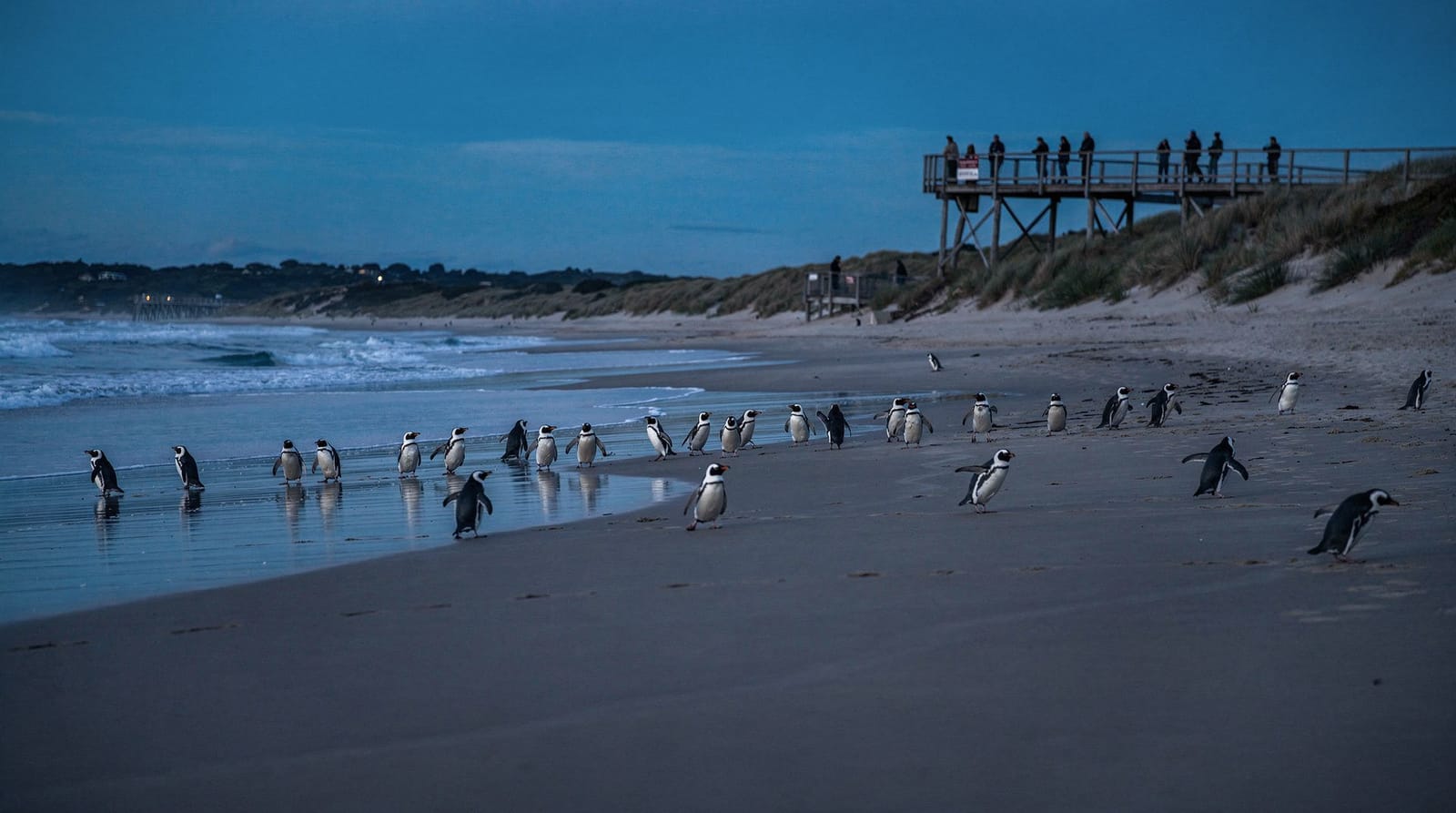
Being on the sheltered side of the island, Cowes generally sees calmer conditions than the exposed southern coastline, though the wind can still pick up noticeably along the jetty and open foreshore. As with the rest of Phillip Island, evenings cool down quickly regardless of how warm the day has been — a jacket is worth having on hand even after a hot summer day, particularly if an evening Penguin Parade visit is on the agenda, since the viewing stands at Summerland Beach are considerably more exposed than the sheltered town itself.
Where to stay
Cowes holds the large majority of Phillip Island’s accommodation, ranging from caravan parks and motels to larger hotels and holiday rentals along or near the beachfront. Booking ahead matters over summer school holidays and around the October Grand Prix weekend, when demand across the whole island, not just Cowes, tightens considerably.
Combining Cowes with a wider Phillip Island wildlife day
Most visitors treat Cowes purely as accommodation rather than the day’s activities, radiating out to the Koala Conservation Centre, the Nobbies, and the Penguin Parade itself, all covered in more detail on our Phillip Island wildlife guide. For a full run-down of ticket options and timing at the Penguin Parade specifically, see which Penguin Parade ticket to choose, since the viewing options range from general admission to premium platforms with different price points and vantage.
Getting between Cowes and the rest of the island without a car
Visitors staying in Cowes without a rental car have limited but workable options: a seasonal local bus service connects Cowes to some of the island’s main attractions, and several tour operators run pickup services directly from Cowes accommodation to the Penguin Parade and other sites, removing the need for a rental altogether. Taxis and rideshare exist on the island but are far less reliable and more expensive than in central Melbourne, given the island’s small permanent population — booking transport for an evening Penguin Parade visit ahead of time, rather than assuming a taxi will be available on demand, is the safer approach.
A sample day plan based in Cowes
A typical day for visitors based in Cowes: morning at the Koala Conservation Centre or Churchill Island, lunch back in town on Thompson Avenue, an afternoon at the Nobbies or a seal-watching boat tour, then dinner in Cowes before the short drive to the Penguin Parade at dusk. This rhythm — using Cowes as the hub and radiating out to the island’s spread-out attractions — is how most multi-day Phillip Island visits are structured, and it’s the main reason Cowes’ central location matters more than its beach or dining scene alone would justify.
Planning the rest of your Phillip Island time
Cowes works best as one piece of a longer plan. If you are still deciding how to fit the island into a Melbourne trip, the Phillip Island day trip guide lays out the case for going in a single day versus staying over, and the Penguin Parade guide explains what the evening itself is like. Visitors who want to see more native animals around the island can pair this with the koala spotting guide and the kangaroo spotting guide, both of which help you set realistic expectations.
Many people reach Cowes as part of a wider loop through southern Victoria. The Mornington Peninsula sits across the water and combines well with a Phillip Island stay, and the Wilsons Promontory day trip is a natural contrast if you want bush walking after a few days of beach and wildlife. For a longer wildlife-focused route that includes the island, see the wildlife and nature itinerary.
Driving and transport tips before you arrive
If you are driving yourself, the driving in Victoria guide covers the basics of driving on the left and rural roads, which is useful reading before the trip across the San Remo bridge. Travellers who would rather skip the drive can read the V/Line regional trains guide for how regional public transport works in Victoria, and then plan a tour or pickup for the island itself. The getting around Melbourne guide is also worth a look for the Melbourne end of the journey.
Honest take: the sensible default choice
For most visitors, Cowes is simply the right place to stay on Phillip Island — central, well-serviced, and with its own reasonable beach, rather than a compromise choice made only for lack of alternatives. Visitors seeking a quieter, more low-key base sometimes choose Rhyll instead, on the island’s more sheltered eastern side, but trade away some of Cowes’ convenience and range of dining options in exchange for a quieter evening.
The foreshore reserve and walking paths
Cowes’ foreshore reserve runs along much of the town’s beachfront, with a paved path suitable for walking, jogging, or an easy family bike ride, connecting the jetty area to quieter stretches of beach further along — a pleasant, low-effort way to spend an hour without needing to drive anywhere else on the island. Norfolk Island pines line parts of the foreshore, planted decades ago and now a distinctive part of the town’s visual character, giving Cowes’ waterfront a slightly different look from the more open, dune-backed beaches elsewhere on Phillip Island.
Events and the Cowes Cultural Centre
The Cowes Cultural Centre, in the town centre, hosts a small gallery space and community events, including occasional exhibitions tied to the island’s natural and cultural history — a modest but genuine cultural touchpoint beyond the wildlife attractions that dominate most visitor itineraries. The town also hosts a periodic market and community events through the year, worth checking local listings for if visiting on a weekend, since timing can add an extra, low-key layer to an otherwise wildlife-focused Phillip Island trip.
Cowes vs Rhyll for a Phillip Island base
| Cowes | Rhyll | |
|---|---|---|
| Accommodation choice | Widest on the island — motels, hotels, rentals | Limited, smaller-scale |
| Dining | Widest range, Thompson Avenue strip | Fewer options, stronger seafood focus |
| Atmosphere | Central, busier, more services | Quiet, low-key, mangrove boardwalk |
| Distance to Penguin Parade | ~10-15 minutes by car | Similar, slightly further |
| Best for | Most visitors, families, first-timers | A quieter, more local-feeling stay |
Budget for a Cowes-based Phillip Island stay
Cowes itself costs nothing to enjoy beyond food and accommodation — the beach, jetty and foreshore walk are all free. A fish-and-chips dinner on Thompson Avenue runs 15-25 AUD per person, with a handful of more considered restaurants running higher. A seal-watching boat tour typically costs 60-100 AUD per person depending on length and operator. Accommodation ranges widely by season, with summer school holidays and the October Grand Prix weekend commanding a significant premium over shoulder-season rates — booking well ahead for those periods matters more than the specific choice of Cowes over another island base.
Frequently asked questions about Cowes
Do I need to book a Penguin Parade ticket in advance if staying in Cowes?
Yes, especially in summer and school holidays — the Penguin Parade sells out popular evening sessions, so booking ahead is safer than assuming Cowes’ proximity guarantees a same-day ticket.
Is Cowes the best place to stay on Phillip Island?
For most visitors, yes — it has the widest range of accommodation, dining, and shops, and sits centrally enough that the Penguin Parade, Koala Conservation Centre, and the Nobbies are all a short drive away.
Is Cowes beach good for swimming?
Yes — it faces the sheltered Western Port side of the island, making it calmer and more suited to families than the surf beaches on the island’s ocean-facing side, such as Cape Woolamai.
Can you get to French Island from Cowes?
Yes, via a seasonal passenger ferry, though sailings are limited — check current timetables before planning around it. The more frequent car ferry service to French Island runs from Stony Point on the Mornington Peninsula side.
How far is Cowes from the Penguin Parade?
About 10-15 minutes by car, making it a convenient base for an evening Penguin Parade visit without a long drive back afterwards.
Is Rhyll a better base than Cowes?
It depends on priorities — Rhyll is quieter and has a stronger seafood and mangrove-boardwalk character, but Cowes offers considerably more choice in accommodation, dining, and shops, and sits more centrally to the island’s main attractions.
What can you do in Cowes without a car?
The town itself, including the beach, jetty, and Thompson Avenue’s restaurants and shops, is easily walkable. Reaching the island’s other attractions (the Penguin Parade, Koala Conservation Centre, the Nobbies) requires transport, since they’re several kilometres apart from the town centre.
Top experiences
Bookable activities with verified prices and instant confirmation on GetYourGuide.