French Island
A largely off-grid island in Western Port with one of Victoria's healthiest koala populations, reached only by ferry — no bridge, few cars, few shops.
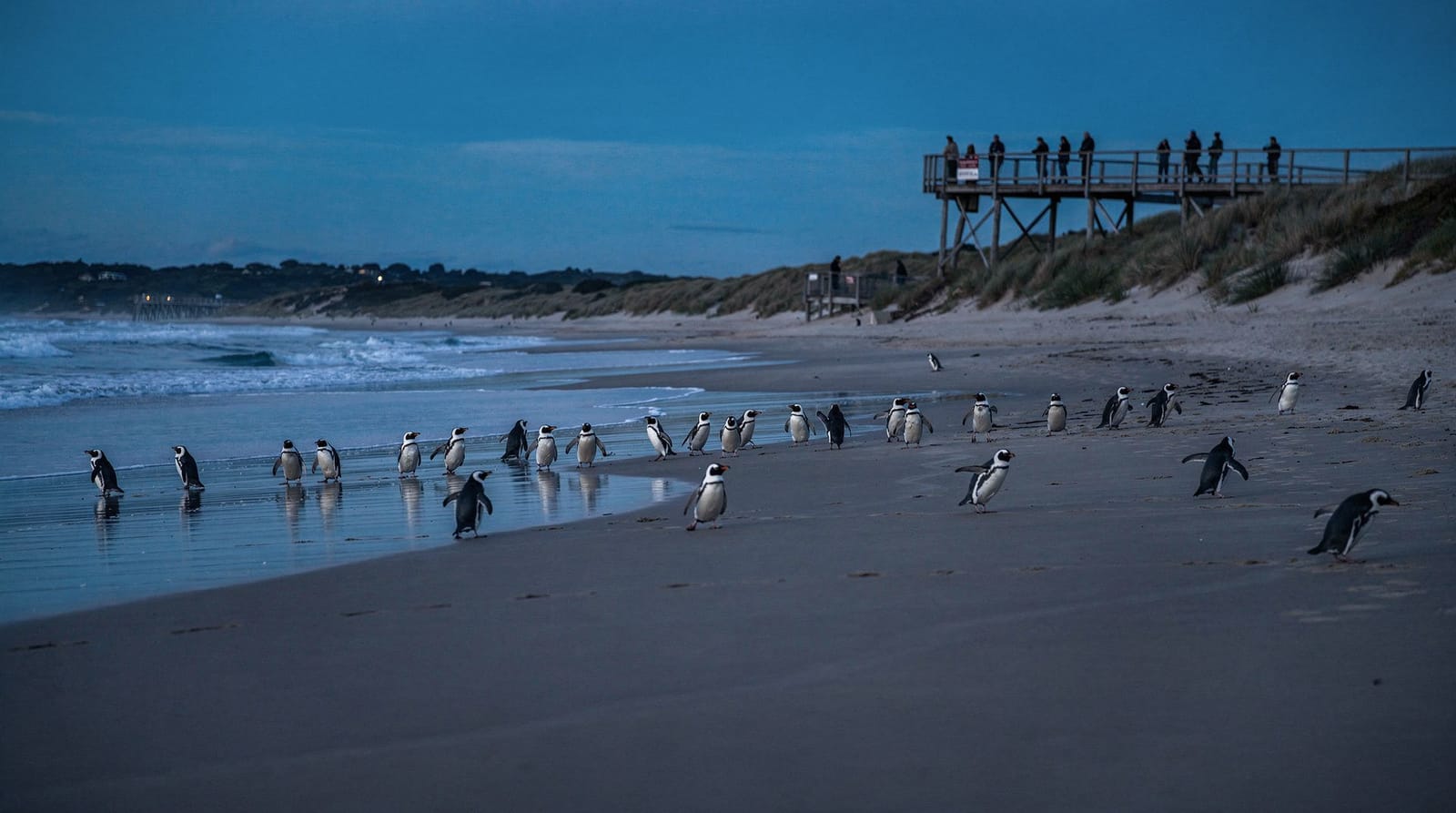
Gippsland: Penguin parade general viewing ticket
Duration: 2 hours
Quick facts
- Access
- Ferry only — no bridge (unlike Phillip Island)
- Main ferry
- Western Port Ferries, from Stony Point (Mornington Peninsula)
- Population
- Around 100 permanent residents
- Known for
- One of Victoria's largest disease-free koala populations
- Infrastructure
- Mostly unsealed roads, no mains power or water for most of the island
Why doesn’t French Island have a bridge like neighbouring Phillip Island? Partly geography, partly a deliberate choice to keep the island low-key — French Island sits in Western Port between the Mornington Peninsula and Phillip Island, reachable only by ferry, with most of its interior unsealed, off the mains power grid, and home to only around 100 permanent residents. It’s the genuine quiet alternative to Phillip Island for visitors who want Victorian wildlife-watching without the crowds, at the cost of considerably less infrastructure and convenience.
| Where | Western Port, between the Mornington Peninsula and Phillip Island |
| Cost | Ferry fare plus any guided tour; no entry fee to the national park itself |
| Time needed | A full day trip, or overnight for the darkest skies and a slower pace |
| Getting there | Western Port Ferries from Stony Point, ~15–20 min crossing |
| Best time | Spring and autumn for walking/cycling comfort; year-round for koalas |
Getting there: ferry only
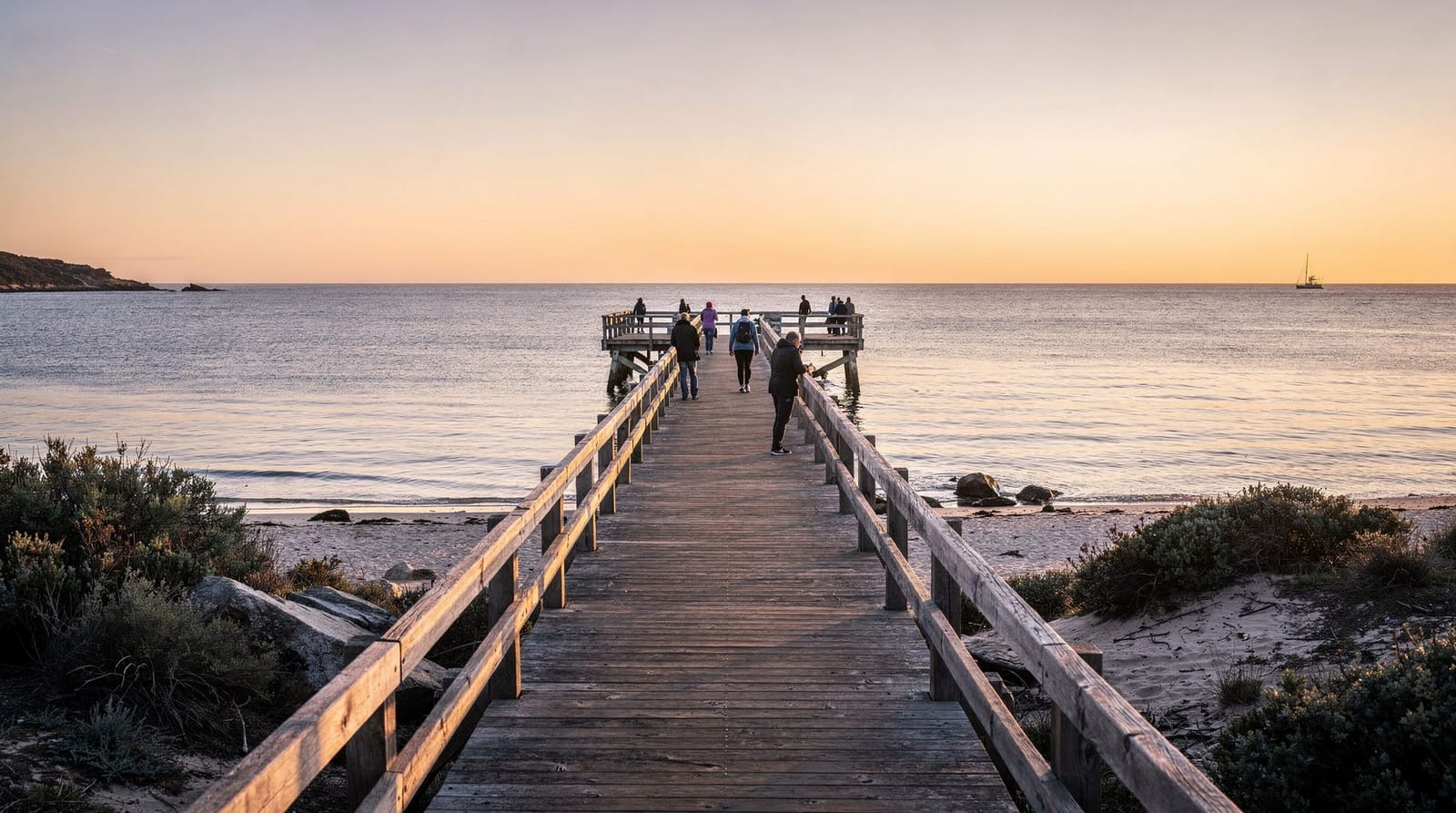
The main way to reach French Island is the Western Port Ferries vehicle and passenger service from Stony Point, on the Mornington Peninsula’s eastern side (itself a drive of around an hour and a quarter from central Melbourne), crossing to Tankerton on French Island in about 15-20 minutes, with several sailings a day. A separate, more limited seasonal passenger-only ferry also links French Island to Cowes on Phillip Island — worth checking current timetables for either route before planning a visit, since neither runs with the frequency of a standard commuter ferry.
Given the limited vehicle-carrying capacity and cost of bringing a car across, many day visitors leave their car at Stony Point and either walk, cycle (bikes can usually be brought on the passenger ferry), or join a guided shuttle tour of the island’s main sights instead of self-driving once they arrive.
Koalas and the island’s conservation role
French Island holds one of Victoria’s largest and healthiest disease-free koala populations, free of the chlamydia infections that affect and reduce fertility in many mainland koala populations. This has made the island an important source population for koala translocation and conservation programs across Victoria over recent decades — animals bred here have been used to help re-establish or bolster populations elsewhere in the state. For visitors, this translates into genuinely good, reliable koala sightings in the island’s eucalypt woodland, often at a more relaxed pace and with far fewer other visitors around than at dedicated wildlife parks on the mainland.
Wetlands and birdlife
The waters and mudflats around French Island are part of a Ramsar-listed wetland system (internationally recognised under the Ramsar Convention for its importance to migratory wading birds), supporting large numbers of birds that migrate annually between Australia and the Northern Hemisphere. Birdwatchers visiting specifically for this reason should time a trip around low tide, when the exposed mudflats draw the largest concentrations of feeding birds.
French Island National Park and the old prison farm
Much of the island’s interior falls within French Island National Park, established in 1997, protecting significant areas of native bushland, wetland, and coastal habitat. The island also has an unusual history as the site of a minimum-security prison farm (operating until the mid-1970s), reflecting the island’s long-standing isolation as a practical asset for that purpose long before it became a low-key wildlife tourism destination. Some of the old farm buildings and cleared paddocks remain visible today, a slightly incongruous historical layer beneath the current national park.
Honey and small-scale local produce
French Island’s relatively untouched bushland, rich in native tea tree and other flowering plants, supports a small local honey industry — French Island honey has a distinct, well-regarded local reputation, sold in small quantities through the very limited retail presence on the island itself and occasionally through mainland outlets. This kind of small-scale produce is about as close as the island gets to a conventional tourist retail experience.
Comparing French Island to Phillip Island directly
Visitors deciding between the two islands should weigh what each actually offers rather than assuming French Island is simply a smaller, quieter Phillip Island. Phillip Island has the Penguin Parade, a genuine range of accommodation and dining, sealed roads, and reliable mobile coverage — French Island has neither penguins nor infrastructure, but offers reliably good koala sightings, internationally significant wetland birdlife, and a level of quiet and darkness impossible to find on its more developed neighbour.
Visitors with only one day to spare for wildlife-watching in this part of Victoria are usually better served by Phillip Island’s broader range of attractions; visitors specifically seeking a quieter, less commercial experience, or a second day trip after already covering Phillip Island, are the ones who tend to get the most out of French Island.
| French Island | Phillip Island | |
|---|---|---|
| Access | Ferry only, no bridge | Bridge (San Remo) — drive straight across |
| Penguin Parade | No | Yes |
| Koala sightings | Reliable, large disease-free population | Present, less concentrated |
| Roads | Mostly unsealed | Fully sealed |
| Crowds | Very low | Moderate to high, especially at dusk |
| Shops/dining | Minimal — bring your own food | Full range in Cowes and other towns |
Pairing French Island with Phillip Island’s headline sights
Because the two islands offer such different things, they work well as a pair rather than as rivals. Many visitors give one day to the quiet koala woodland here and another to the busier attractions next door. If you go that way, the Phillip Island day trip guide and the broader Phillip Island wildlife guide cover what to prioritise there, while the Penguin Parade guide and which Penguin Parade ticket to choose help you pick a viewing option before you arrive. Anyone who simply wants the penguins without arranging the drive can book a general viewing ticket for the Penguin Parade in advance, and travellers without a car may prefer a guided full-day wildlife tour from Melbourne that handles the transport.
Other wildlife to see around Victoria
If French Island’s koalas leave you wanting more, the koala spotting in Victoria guide explains where else to look for them, and the kangaroo spotting guide covers another Australian icon that is easy to miss without local advice. For a more structured trip built around animals and landscapes, the wildlife and nature itinerary strings several of these experiences together, and the Wilsons Promontory guide is worth a look for a longer coastal escape further along the same stretch of Victoria.
Cycling the island
A full loop of French Island’s roads, mostly unsealed, covers roughly 60 km and is a popular, if demanding, day activity for fit cyclists — a genuinely different way to see the island’s wildlife and landscape than the shorter guided tours most visitors take, though it requires proper preparation (water, repair kit, sun protection) given the limited services available along the route.
Practical information: what isn’t here
This is the detail that catches out visitors expecting a smaller version of Phillip Island: French Island has essentially no shops, only a small general store and cafe near the main settlement, no mains power or reticulated water across most of the island (residents rely on generators, solar power, and rainwater tanks), and very limited mobile signal outside the main settlement area. Visitors should bring their own food and water for a day trip rather than assuming they’ll find lunch options along the way, and check accommodation details carefully if staying overnight, since “off-grid” is a literal description of most of the island’s infrastructure rather than a marketing term.
Guided tours vs independent visits
For visitors without the time or inclination to cycle the full island loop, a guided minibus tour covering the main koala-viewing woodland, a lookout point, and a portion of the national park is the standard way to see French Island’s highlights in a single day trip from the ferry terminal at Tankerton — these tours are typically timed to connect with the Stony Point ferry schedule, worth booking ahead given the island’s limited transport options once you arrive. Independent walkers can also cover some of the shorter trails near Tankerton on foot, though reaching the more remote parts of the national park without a bike or a booked tour is impractical given the distances involved and the lack of any taxi or rideshare service on the island.
A sample day trip plan
A realistic single-day visit: catch an early ferry from Stony Point, join or arrange a guided tour of the koala woodland and a wetland lookout for the late morning, a packed lunch (brought from the mainland, given the island’s minimal food options) somewhere scenic around midday, an afternoon walk or additional wildlife-watching before catching one of the later return ferries back to Stony Point. Visitors with more time sometimes stay overnight at one of the island’s small number of guesthouses specifically to experience the night sky and quiet away from any light pollution — a genuine point of difference from almost anywhere within two hours of Melbourne.
Weather and preparation
Because so little of the island has shelter, shade, or facilities outside the small settlement at Tankerton, weather preparation matters more here than at almost any other destination on this site — sun protection and water are essential in summer given the largely open, unsealed roads, and a proper rain layer is worth carrying in cooler months, since there’s little opportunity to duck indoors if conditions turn. Mobile signal is limited to patchy coverage near the main settlement and largely absent across the rest of the island, so downloading any maps or tour information in advance, and telling someone your planned return ferry time, is sensible rather than excessive caution.
Honest take: quiet is the entire point
French Island isn’t a like-for-like substitute for Phillip Island — there’s no Penguin Parade, no Grand Prix circuit, and nowhere close to the range of dining or accommodation. What it offers instead is genuine remoteness within a two-hour trip of Melbourne, reliable koala sightings without the crowds, and internationally significant birdlife for anyone specifically interested. Visitors expecting Phillip Island’s infrastructure and convenience will likely be disappointed; visitors seeking exactly the opposite — a quiet, lightly developed island with real wildlife and few other tourists — tend to come away as some of the most satisfied visitors covered on this site.
Combining French Island with the Mornington Peninsula
Because the ferry departs from Stony Point on the Mornington Peninsula’s eastern side, French Island naturally combines with a broader peninsula day or weekend rather than standing entirely alone. Visitors basing themselves in Sorrento or Portsea for a weekend sometimes add a French Island day trip via Stony Point, though the drive across the peninsula to reach Stony Point adds real time and is worth factoring into the day’s overall pacing rather than treating the ferry crossing as the only travel involved.
What to pack for a day on French Island
Given the almost total absence of shops, shade and mains services outside the small settlement at Tankerton, packing properly matters more here than at most Victorian day-trip destinations. Bring your own food and water rather than assuming lunch options will appear along the way, sturdy closed shoes for the unsealed roads, sun protection and insect repellent, a printed or downloaded map given the patchy mobile signal, and a rain layer outside summer. Binoculars are worth the extra weight for both the koala-watching and the Ramsar wetland birdlife.
Frequently asked questions about French Island
How do you get to French Island?
By ferry only — the main route is Western Port Ferries from Stony Point on the Mornington Peninsula, taking about 15-20 minutes to Tankerton. A separate seasonal passenger ferry also links the island to Cowes on Phillip Island.
Is there a bridge to French Island?
No — unlike Phillip Island, which is connected to the mainland by the San Remo bridge, French Island is reachable only by ferry, which is a large part of why it feels considerably quieter and less developed.
Why are French Island’s koalas considered special?
The island holds one of Victoria’s largest populations free of the chlamydia infections common in many mainland koala populations, making it an important source for koala conservation and translocation programs across the state.
Are there shops or restaurants on French Island?
Very few — a small general store and cafe near the main settlement is essentially it. Most visitors bring their own food and water for a day trip rather than relying on facilities on the island.
Do I need a car on French Island?
Not necessarily — many visitors leave their car at Stony Point and explore by bicycle or guided shuttle tour instead, given the limited vehicle ferry capacity and the island’s mostly unsealed roads.
Can you stay overnight on French Island?
Yes, at a small number of guesthouses and cottages, though the choice is far more limited than Phillip Island. An overnight stay is worth considering specifically for the near-total absence of light pollution and the quiet, which are harder to appreciate on a single day trip.
Is French Island a good alternative to Phillip Island for koala-watching?
Yes — it holds one of Victoria’s largest disease-free koala populations, and sightings tend to be reliable in the island’s eucalypt woodland, generally with far fewer other visitors around than at mainland wildlife parks.
How long does the ferry to French Island take?
The main Western Port Ferries route from Stony Point to Tankerton takes about 15-20 minutes, with several sailings a day — short enough that the ferry crossing itself isn’t the limiting factor for a day trip.
Can I combine French Island with the Mornington Peninsula in one trip?
Yes — the ferry departs from Stony Point on the peninsula’s eastern side, so it fits naturally into a broader Mornington Peninsula day or weekend, though the drive across the peninsula to Stony Point adds real time worth planning around.
Is French Island or Phillip Island better for koala-watching specifically?
French Island’s koala population is larger and disease-free, and sightings are often more reliable in a quieter setting, but Phillip Island offers koalas alongside the Penguin Parade and far more infrastructure — the choice depends on whether solitude or breadth of attractions matters more.