Lorne
The best-known resort town on the Great Ocean Road, two hours from Melbourne: beach, rainforest waterfalls, and why most day tours stop here.
Melbourne: From melbourne great ocean road 12 apostles tour
Quick facts
- Distance from Melbourne CBD
- ~140 km, ~2h drive via Geelong
- Position on the Great Ocean Road
- About a third of the way to the Twelve Apostles
- Known for
- Beach, cliffside surf coast, Erskine Falls
- Key event
- Pier to Pub ocean swim, January
- Population
- ~1,100 (swells heavily over summer)
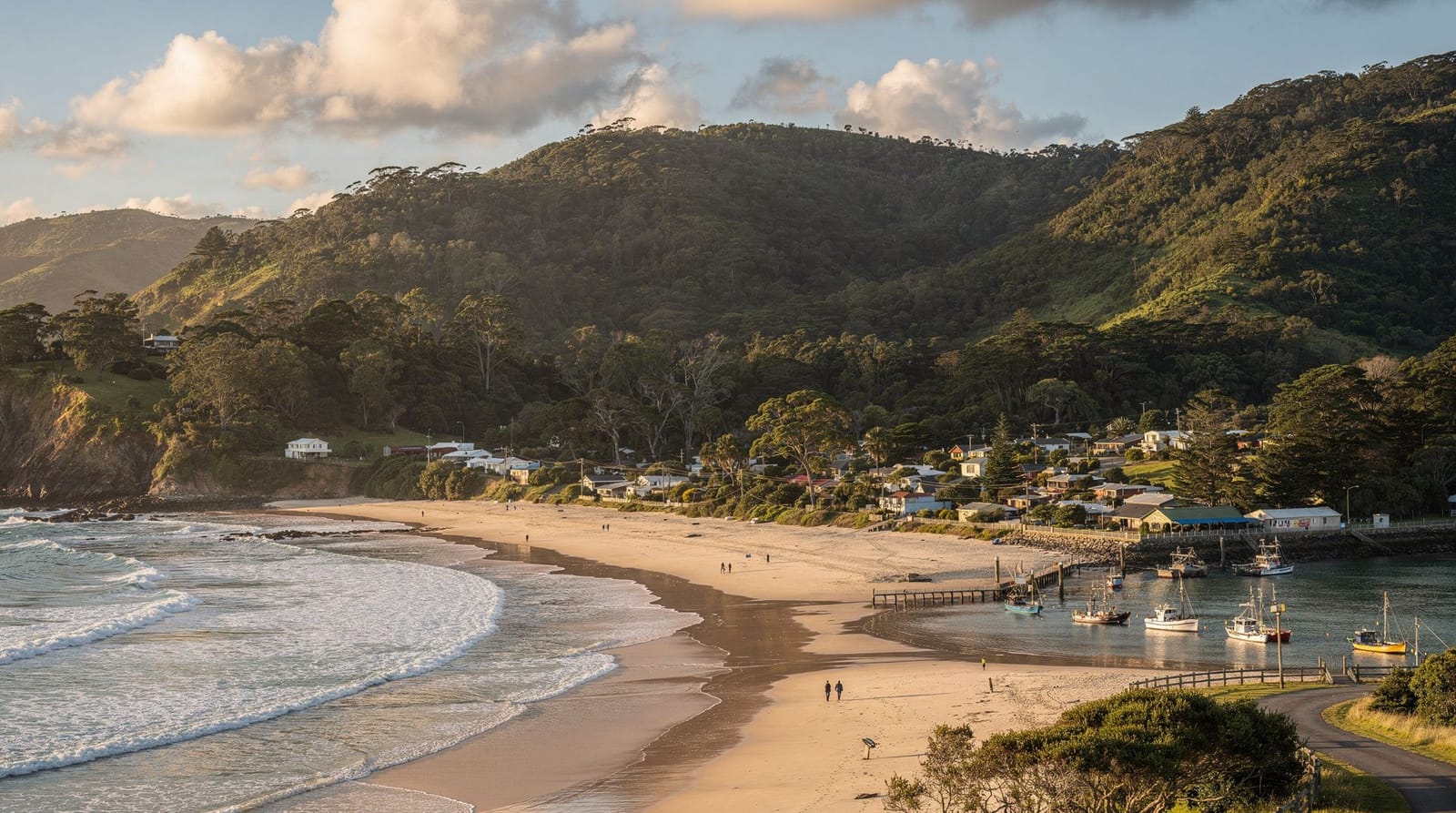
Why do almost all Great Ocean Road tours stop in Lorne? Timing and scenery, mostly. Lorne sits roughly two hours from Melbourne — close enough to be a natural mid-morning break on the drive out to the Twelve Apostles — and it’s genuinely one of the prettiest built-up stretches of the Great Ocean Road, with a curving beach backed by a busy cafe strip and the Otway foothills rising steeply behind the town. It’s not a wilderness experience; it’s Victoria’s best-known coastal holiday town, and for many visitors that’s exactly the point.
| Where | ~140 km southwest of Melbourne via Geelong, ~2h drive |
| Coffee/lunch stop | Around 5–8 AUD for coffee, 15–25 AUD for a casual lunch on Mountjoy Parade |
| Time needed | 20–30 min as a tour stop; a half day to properly see the beach and Erskine Falls |
| Getting there | Self-drive, Great Ocean Road tour coach, or limited V/Line coach service |
| Best for | A short, scenic Great Ocean Road stop without committing to the full Apostles drive |
Full-day Great Ocean Road tours from Melbourne routinely schedule a morning tea or coffee stop here before continuing on toward Apollo Bay and the Twelve Apostles — worth knowing if a specific tour’s itinerary doesn’t explicitly mention Lorne by name, since many still pass through it as a functional rest stop even when the marketing focuses entirely on the Apostles further down the road.
The beach and the town
Lorne’s beach curves gently along the town’s full length, patrolled in summer and popular with swimmers, though — as with most open ocean beaches on this coast — rips exist and swimming between the flags matters. The Lorne Pier anchors the northern end of the beach and is the finish line for the town’s best-known annual event, the Pier to Pub ocean swim each January, one of the largest ocean swims in the world by participant numbers and a genuine local institution that fills the town’s accommodation for the weekend.
Mountjoy Parade, the main street, runs along the beachfront with the bulk of the town’s cafes, restaurants, and shops — busy and slow-moving by car in peak summer, easily walkable on foot.
Erskine Falls and the Otway foothills
A short drive inland from the town centre, Erskine Falls drops around 30 metres into a fern-filled gully — one of the more accessible waterfalls in the Great Otway ranges, reached via a lookout platform a short walk from the car park, or a longer, steeper track down to the base of the falls for a closer view. It’s a good half-hour to hour detour if you have your own transport and want rainforest scenery without committing to the deeper Otways drive toward Apollo Bay.
Several other walking trails thread the hills immediately behind Lorne, ranging from short lookout walks to longer routes into the Great Otway National Park proper — worth checking current trail conditions locally, since sections can close after storms or for fire management.
Getting there and how tours use it
By car, Lorne is about 140 km from Melbourne via Geelong and the coast road through Torquay and Anglesea, typically around two hours depending on traffic through Geelong. It’s also reachable, less commonly, by V/Line coach services along the Great Ocean Road route.
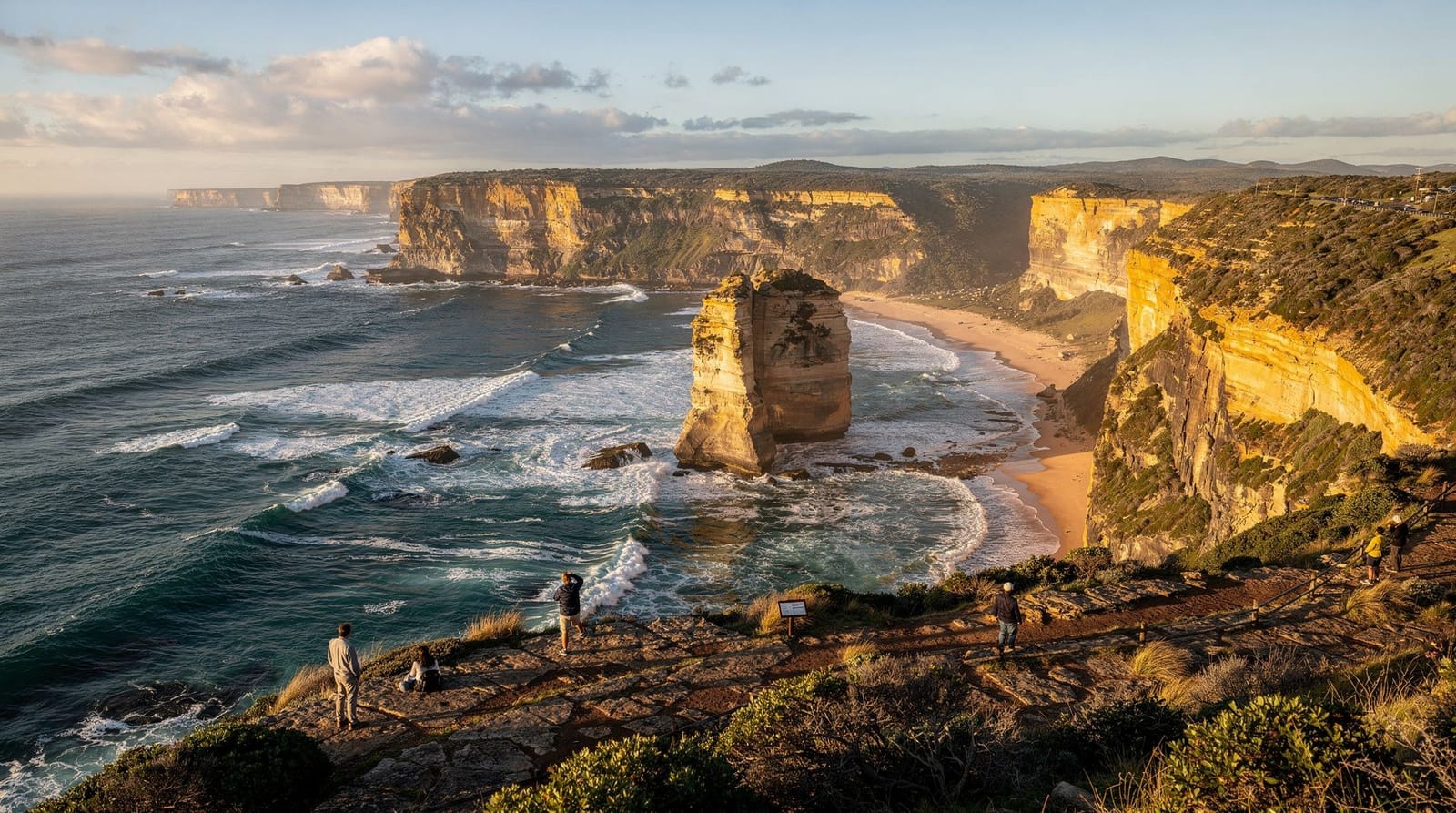
Because of its position roughly a third of the way to the Twelve Apostles, Lorne functions as the natural break point on most full-day Great Ocean Road tours — a chance to stretch, get a coffee, and see the beach before the drive continues on to the more dramatic coastal scenery further west.
full-day Great Ocean Road and Twelve Apostles tour from Melbourne Great Ocean Road full-day sunset tourTour itineraries vary in exactly how long they linger in Lorne — some treat it as a fifteen-minute photo stop, others build in a proper lunch break here — worth checking the specific itinerary if a longer Lorne stop matters to your plans, rather than assuming every “Great Ocean Road tour” handles it the same way.
boutique Great Ocean Road tour in reverse (Apostles first, Lorne on the way back)Qdos Arts and the town’s cultural side
Just outside the town centre, Qdos Arts combines a sculpture garden set into the bush with a restaurant and gallery space — an unexpected cultural stop for a beach town, and a good option if the group wants something other than another beach walk or coffee stop. It’s small enough to see in half an hour but worth the short detour if you’re staying overnight rather than passing through on a tight day-trip schedule.
Great Ocean Road History Interpretive Trail
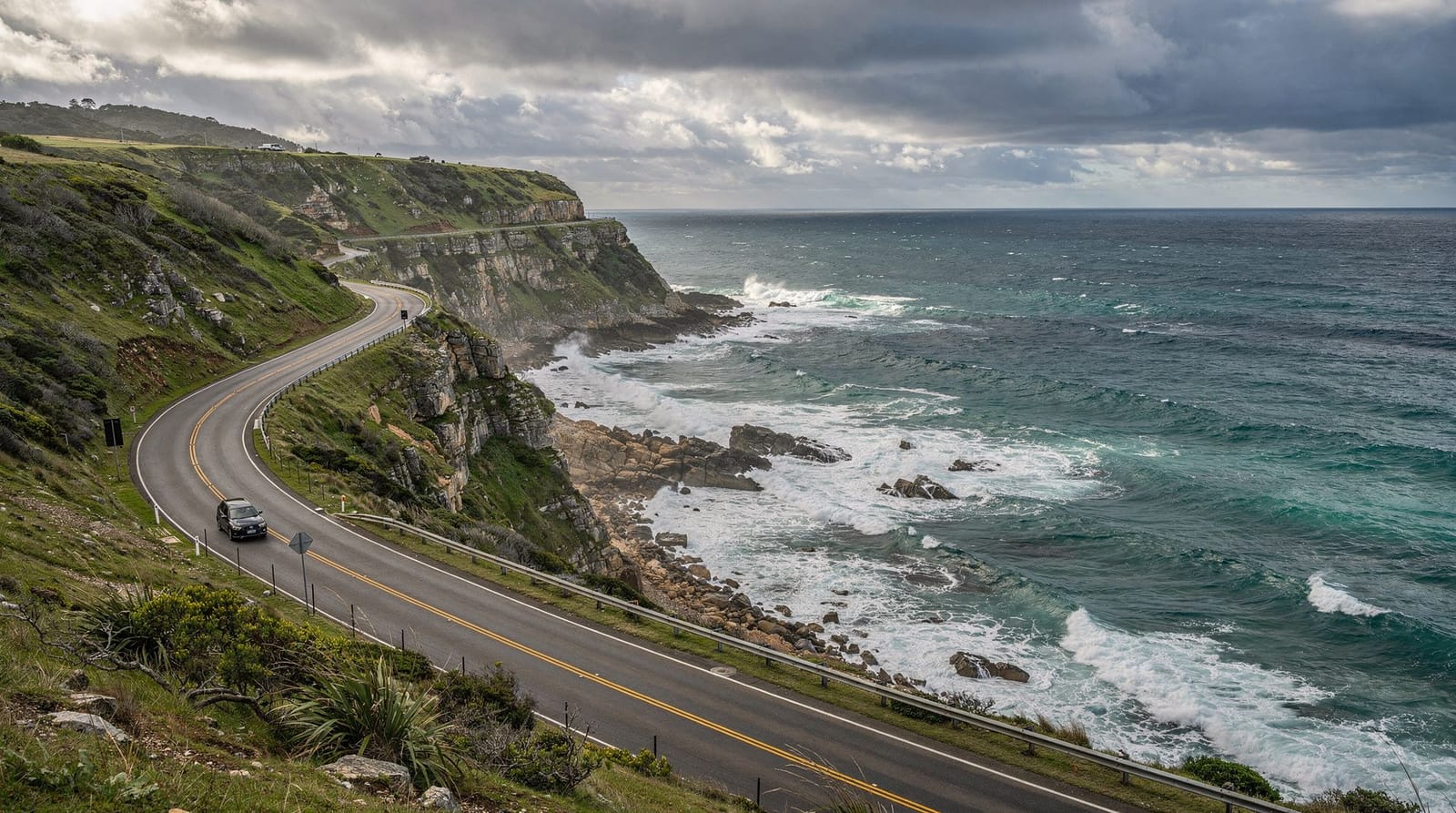
Lorne is also a good place to learn how the Great Ocean Road itself came to exist: much of the road was built by returned World War I soldiers between 1919 and 1932 as a war memorial and unemployment relief project, hand-carving the route into the cliffside with picks and shovels in places where no road had existed before. Interpretive signage in and around Lorne covers this history, which is easy to miss if you’re focused purely on the drive itself and the Twelve Apostles further along — the road is, technically, the world’s largest war memorial.
Walking trails beyond Erskine Falls
Beyond Erskine Falls, the hills behind Lorne hold a network of shorter walks worth knowing about if you have half a day rather than just a lunch stop: the Sheoak Falls and Kalimna Falls circuit links two smaller waterfalls with a forest loop track, generally quieter than Erskine Falls itself since it’s less heavily signposted from the main road. The Teddy’s Lookout, a short drive or longer walk from the town centre, gives a sweeping view back along the coast and down to the mouth of the Erskine River — one of the best photo stops in Lorne itself, and free.
Practical information
Parking along Mountjoy Parade is metered and genuinely difficult to find on a summer weekend — arriving before 10 am, or using one of the car parks slightly back from the beachfront, saves considerable frustration. Fuel, supermarkets, and pharmacies are all available in town, making Lorne a sensible last full-service stop before the road narrows and services thin out further toward Apollo Bay and beyond. Mobile signal is reliable in town but drops out in patches on the winding coast road itself, particularly around the more remote clifftop sections.
Where to eat and stay
Mountjoy Parade has the bulk of the town’s dining, from casual fish and chips by the pier to more considered modern Australian menus with beach views. The Lorne Hotel, a heritage pub dating to the 1870s overlooking the beach, is the town’s best-known dining and drinking landmark, with a beer garden that fills quickly on warm evenings. Several bakeries and cafes along the main strip serve the morning coffee crowd arriving off Great Ocean Road tours, and can get genuinely busy between about 10 and 11 am when multiple tour coaches arrive within the same short window.
Accommodation ranges from caravan parks and motels to boutique guesthouses and larger hotel-style properties directly on the beachfront; prices rise sharply and availability tightens dramatically over the summer school holidays and the Pier to Pub weekend in January — booking well ahead for a January visit is close to essential, and even shoulder-season weekends benefit from booking a week or more in advance rather than arriving on spec.
Wildlife around Lorne
The bushland behind Lorne and along the Great Ocean Road’s foothills is home to koalas, and sightings along the trees bordering the roadside are reasonably common, particularly around dusk — slow driving through the wooded sections near town is worth it for the chance of a sighting alone, quite apart from road safety. Wallabies and a wide range of native birds also inhabit the reserves immediately behind the town; the Otway ranges further west (covered on the Apollo Bay & the Otways page) hold denser and more reliable wildlife-watching opportunities if that’s the priority.
A realistic stopover plan
As part of a Twelve Apostles day trip: a 20-30 minute stop is realistic if the goal is reaching the Apostles with good light — enough time for a coffee, a short beach walk, and photos from the pier, without the Erskine Falls detour.
As an overnight or two-night base: Lorne works well as a base for exploring the surrounding Otways at a slower pace than a single rushed day allows — Erskine Falls, Teddy’s Lookout, and the Sheoak/Kalimna Falls circuit can all be covered without a long onward drive each day, and the beach itself is worth having more than an hour for.
Honest take: worth stopping, not worth building a whole trip around
Lorne is a genuinely pleasant beach town, but it isn’t a wilderness or wildlife experience — it’s closer in spirit to a well-established Australian seaside holiday town, busy, commercial, and geared toward tourists in peak season. Visitors expecting an untouched coastal village will find Apollo Bay, a little further along, has a slightly quieter, less resort-like feel, while still being on the same road.
If your Great Ocean Road day is tightly timed around reaching the Twelve Apostles before the light gets flat, treat Lorne as a functional 15-30 minute stop rather than lingering — but if you have a full day or an overnight stay built in, the beach and Erskine Falls combination genuinely justifies more time here.
Nearby stops on the road
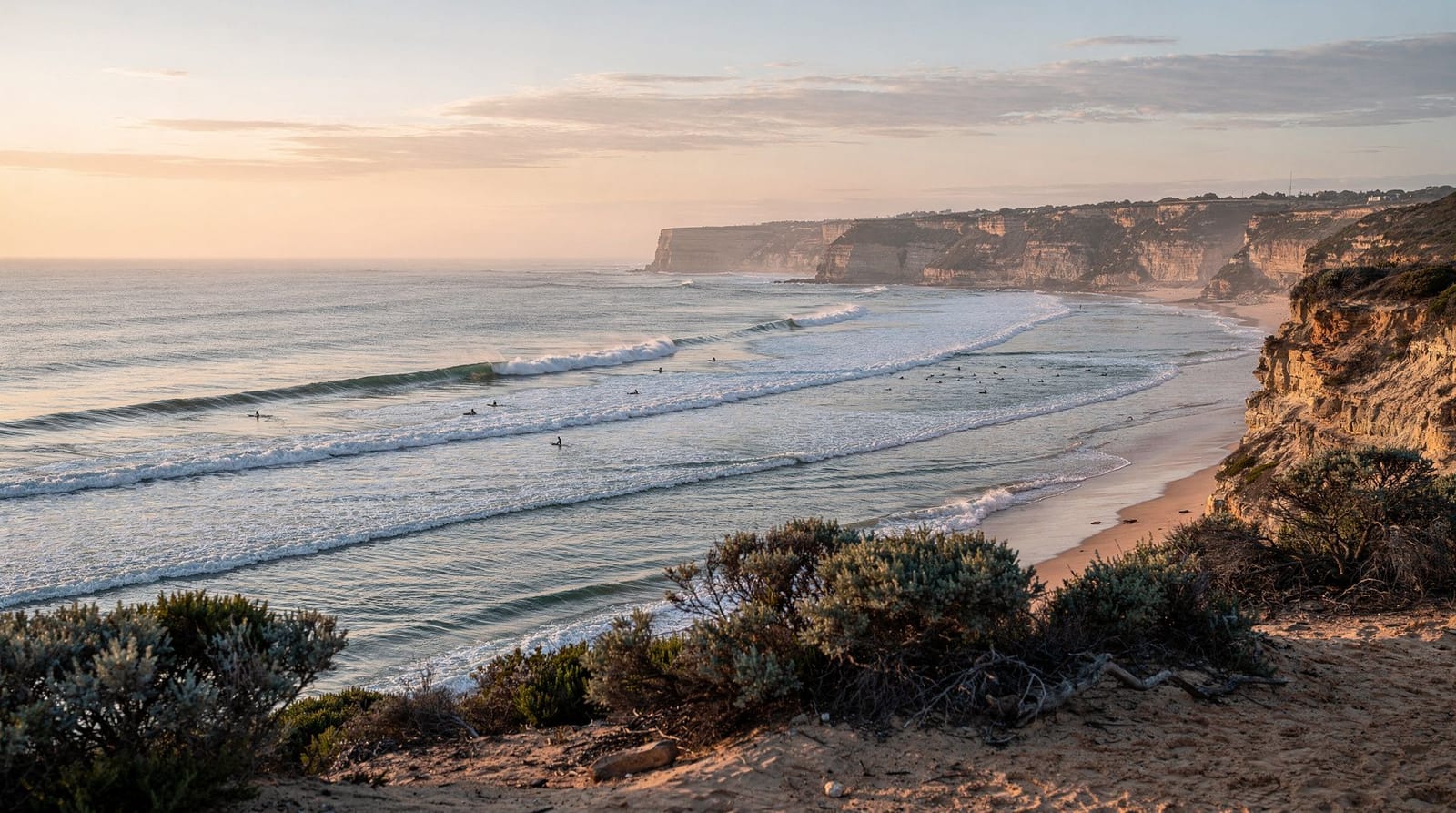
Heading west from Lorne, the road continues through a series of smaller settlements — Wye River, Kennett River (a reliable spot for roadside koala sightings, with several colonies living in the trees right along the highway) and Skenes Creek — before reaching Apollo Bay, around 45 minutes further on. Heading east, Anglesea and Torquay lead back toward Geelong and, eventually, Melbourne, with Torquay & Bells Beach marking the start of Victoria’s surf coast proper. Lorne’s position roughly in the middle of this stretch makes it a natural pivot point whichever direction the rest of the day’s driving takes.
Lorne vs Apollo Bay vs Torquay: choosing a base
Visitors deciding where to stop, or stay, along the Great Ocean Road often ask how Lorne compares with its two closest rivals:
| Lorne | Apollo Bay | Torquay & Bells Beach | |
|---|---|---|---|
| Distance from Melbourne | ~140 km, ~2h | ~190 km, ~2h45 | ~100 km, ~1h15 |
| Character | Busy resort town, curving beach | Quieter, still a working fishing town | Surf-town, closer day trip from Melbourne |
| Best for | A classic beach-town stop, Erskine Falls | A calmer overnight base further along the road | A short surf-coast taste without the full drive |
| Distance to Twelve Apostles | ~120 km further | ~70 km further | ~185 km further |
Read the dedicated Apollo Bay & the Otways and Torquay & Bells Beach pages for more on each.
Camping and caravan parks around Lorne
Beyond the hotel and guesthouse options already covered, the Great Ocean Road corridor around Lorne has a strong caravan-and-camping culture, with several parks directly behind the dunes or a short walk from the beach — a genuinely popular, cheaper alternative to Mountjoy Parade’s pricier accommodation, especially for families making a longer stay of it over the summer school holidays.
Sites book out early for January, in step with the general accommodation crunch around the Pier to Pub weekend, so treat camping as needing the same advance planning as any other Lorne booking rather than a fallback option for last-minute travellers. Most parks have basic amenities blocks, powered and unpowered sites, and some allow campervans and caravans right up to the high-water mark in designated areas — worth checking individual park rules before arriving, since fire restrictions and vehicle access vary by site and by season, particularly during the summer total fire ban period.
Frequently asked questions about Lorne
How far is Lorne from Melbourne?
About 140 km, roughly two hours by car via Geelong and the coast road through Torquay and Anglesea.
Do all Great Ocean Road tours stop in Lorne?
Most full-day tours from Melbourne do, since it sits about a third of the way to the Twelve Apostles and makes a natural rest stop — though the length of the stop, and whether it’s explicitly promoted, varies between operators.
Is Lorne good for swimming?
Yes, with the usual open-ocean caveats — the beach is patrolled in summer, and swimming between the flags matters given real rip currents on this coastline.
What is the Pier to Pub swim?
An annual ocean swim race each January from the Lorne Pier to a local pub, one of the largest ocean swims in the world by entrant numbers, and a major local event that fills the town’s accommodation for the weekend.
Is Erskine Falls worth the detour?
Yes, if you have your own transport — it’s a short drive inland and a relatively easy walk to a lookout over a 30-metre rainforest waterfall, a good taste of the Otways without committing to the longer drive toward Apollo Bay.
Is Lorne better than Apollo Bay?
They’re different in character — Lorne is busier, more resort-like, and closer to Melbourne; Apollo Bay is a little further along the coast and feels somewhat quieter and less built-up. Many Great Ocean Road day trips pass through both.
Are there koalas near Lorne?
Yes — sightings in the trees along the roadside and in the bushland behind the town are reasonably common, especially around dusk. The Otway ranges further west offer denser wildlife-watching if that’s a priority for the trip.
How much time should I spend in Lorne on a Great Ocean Road day tour?
If reaching the Twelve Apostles with good light is the priority, 20-30 minutes is realistic for a coffee and a look at the beach. With a full day or an overnight stay, Lorne comfortably supports several hours between the beach, Erskine Falls, and Teddy’s Lookout.
Should I stay in Lorne or Apollo Bay?
Lorne is closer to Melbourne and busier, with a classic resort-town feel; Apollo Bay is about 45 minutes further and generally quieter, with easier access to the deeper Otways. Both work as an overnight base — the choice comes down to whether you want a livelier beach-town evening or a calmer one.
Is camping available near Lorne?
Yes — several caravan and camping parks sit close to the beach around Lorne, a cheaper alternative to Mountjoy Parade’s hotels and guesthouses. Sites for January book out early alongside the rest of the town’s accommodation.