Apollo Bay & the Otways
A quieter fishing town on the Great Ocean Road and the rainforest behind it: the Otway Fly, glow-worms, and the last comfortable stop before the Apostles.
Apollo Bay: Private group great ocean road 12 apostles tour
Quick facts
- Distance from Melbourne CBD
- ~190 km, ~2h45-3h drive
- Character
- Working fishing town, quieter than Lorne
- Great Otway National Park
- Cool temperate rainforest, waterfalls, glow-worms
- Signature attraction
- Otway Fly Treetop Adventures
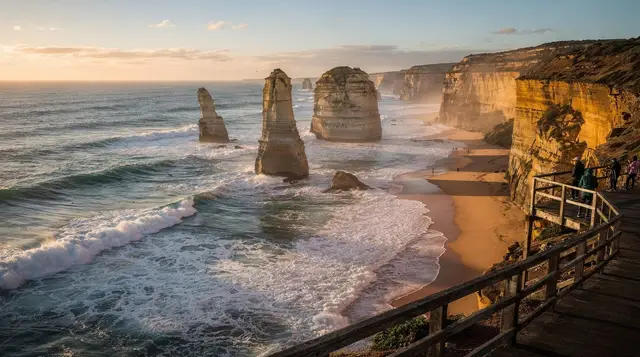
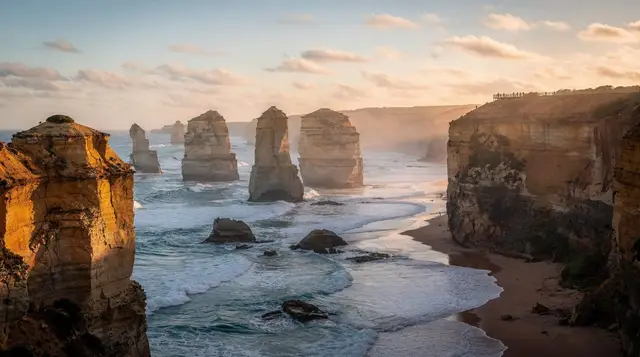
- Distance to Twelve Apostles
- ~1h further west
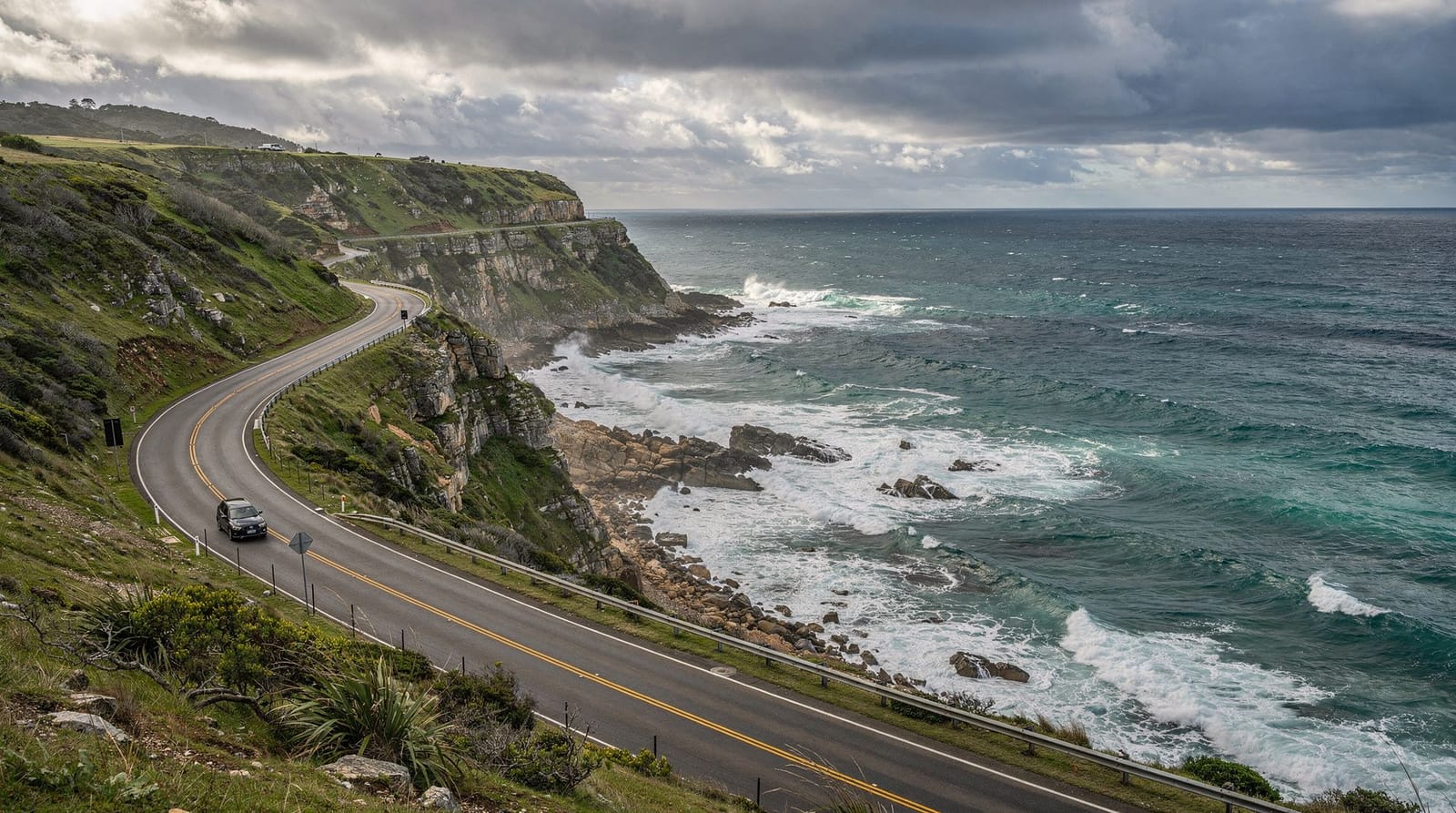
Is Apollo Bay just a smaller version of Lorne, or genuinely different? Genuinely different. Apollo Bay is still a working fishing port with its own commercial fleet, sits noticeably further from Melbourne (roughly three hours rather than two), and backs directly onto the Great Otway National Park’s rainforest rather than open grazing hills — the combination gives it a quieter, more local feel than Lorne, even though both towns sell themselves on the same stretch of coast road.
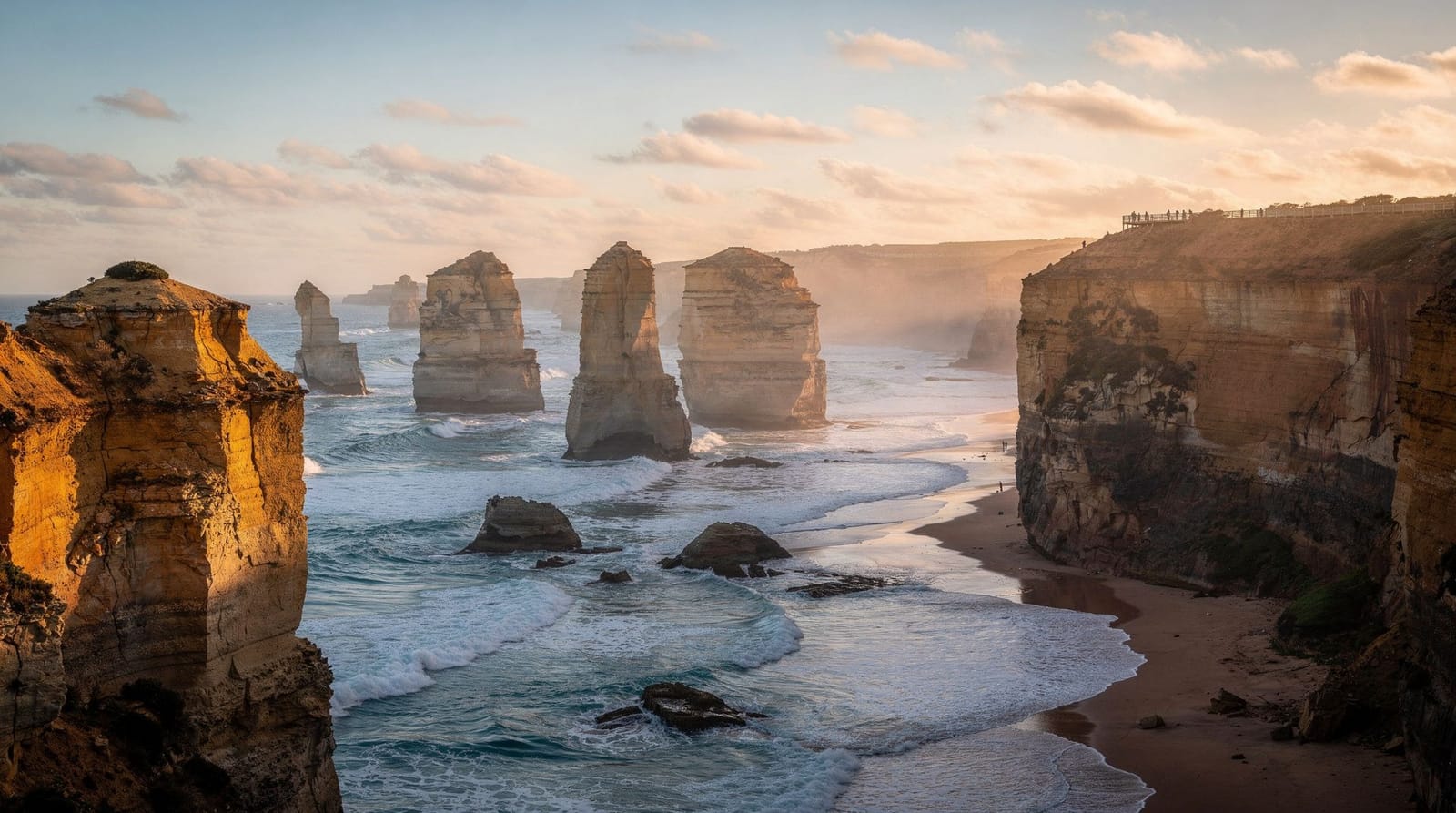
It’s also the last town with a full range of services (fuel, supermarkets, a proper choice of accommodation) before the road climbs inland through the Otways toward the Twelve Apostles, which makes it a practical overnight base for anyone splitting the Great Ocean Road drive over two days rather than rushing it in one.
| Cost to visit the town itself | Free — the harbour, beach and foreshore markets cost nothing |
| Otway Fly entry | Paid attraction, around AUD 30-40 per adult |
| Getting there | Self-drive (~2h45-3h) or a Great Ocean Road tour with an Apollo Bay stop |
| Rainforest walks | Maits Rest is free and unstaffed; Triplet & Beauchamp Falls are free trailheads |
| Booking ahead | Recommended for accommodation in summer and at Easter |
The town and the working harbour
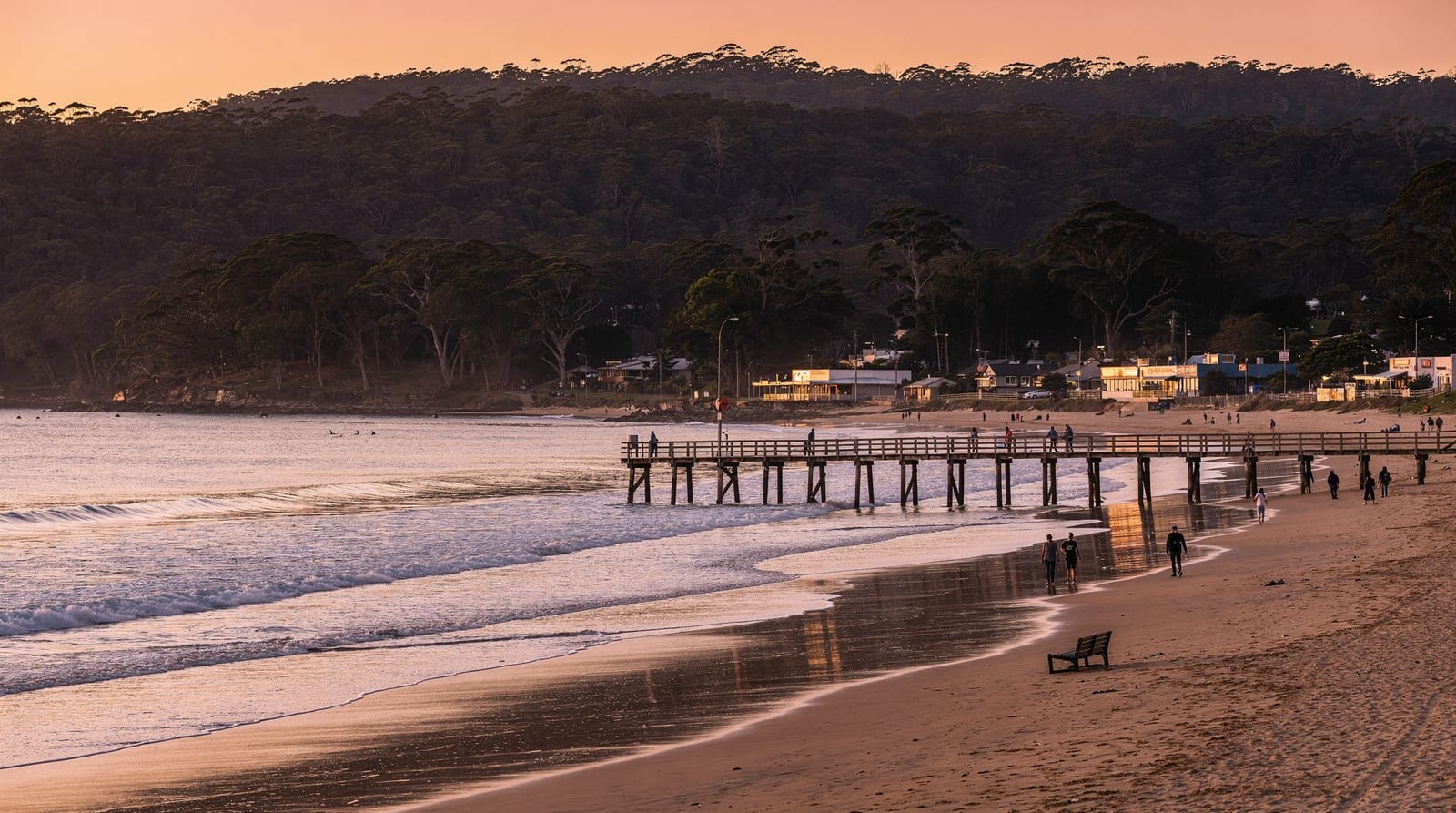
Apollo Bay’s harbour still supports a genuine commercial fishing fleet, and locally caught seafood — particularly crayfish in season — shows up on menus around town in a way that feels more like a working port than a purpose-built tourist strip. The town’s foreshore reserve and beach are gentler and less commercially built-up than Lorne’s, with a long sweep of sand backed by the Otway foothills rather than a dense cafe strip.
The Apollo Bay Market, held on the foreshore on the first Saturday of the month (and additional dates over summer), is a good local touchpoint if the timing lines up, selling local produce, art, and crafts rather than mass tourist souvenirs.
The Great Otway National Park
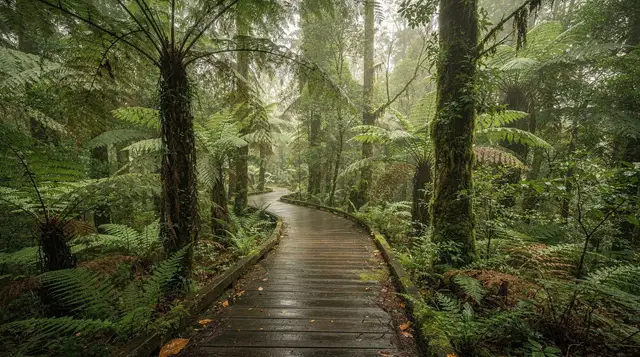
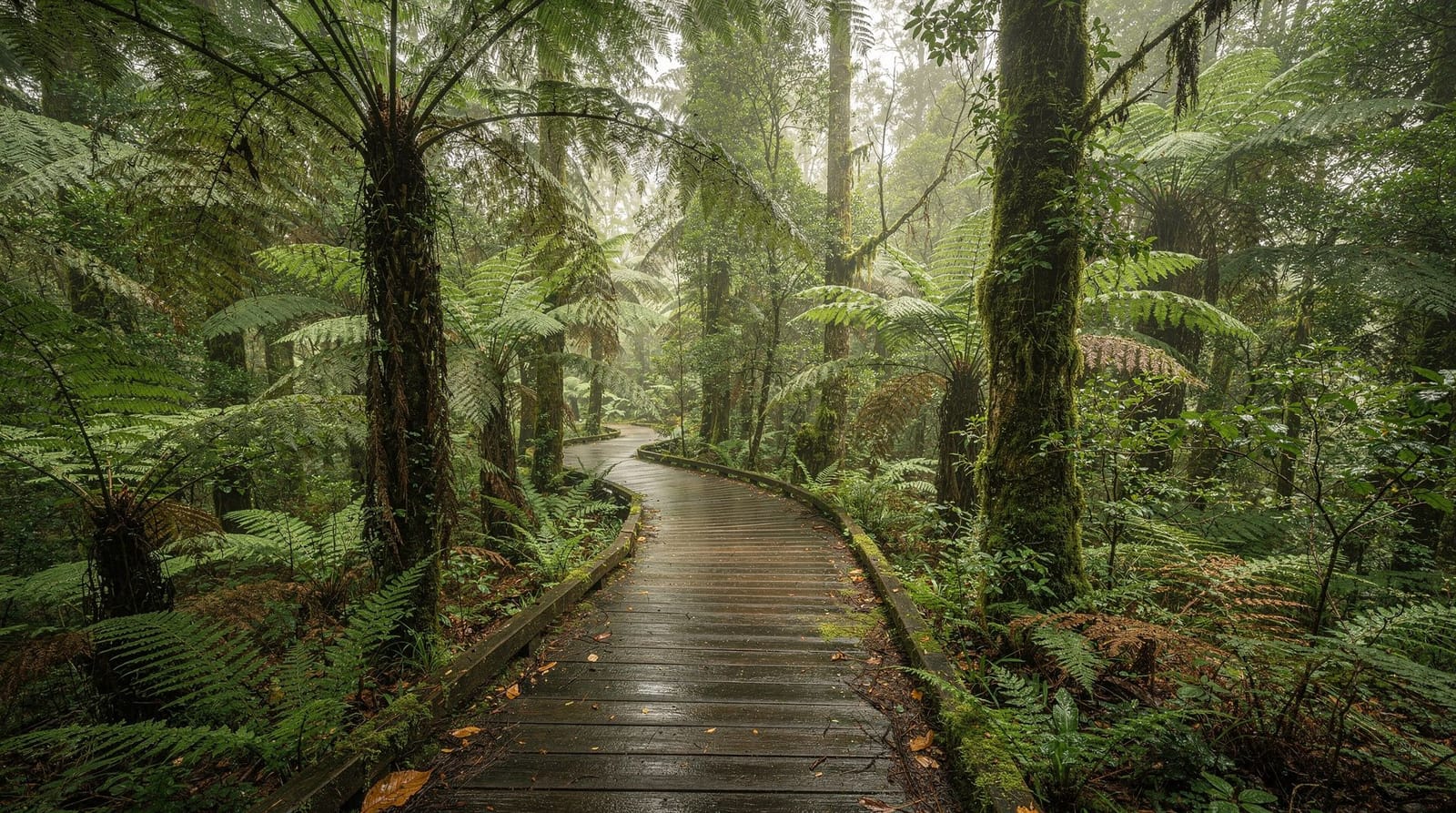
Behind Apollo Bay, the Otway Ranges rise into genuine cool temperate rainforest — a different ecosystem entirely from the drier coastal scrub further east along the road, with towering mountain ash, tree ferns, and a noticeably wetter, greener feel. Maits Rest, a short, easy boardwalk loop through old-growth myrtle beech and blackwood rainforest, is one of the most accessible rainforest walks directly off the Great Ocean Road itself, requiring no real fitness or long detour.
Deeper into the Otways, Triplet Falls and Beauchamp Falls are two of the better-known waterfalls, both reached via forest walking trails of an hour or more return — genuinely worth the detour for anyone with a full day rather than a quick coastal drive-through.
The Otway Fly Treetop Adventures
The Otway Fly, inland from Apollo Bay near Beech Forest, is a steel walkway suspended up to 25 metres above the rainforest floor, giving a canopy-level view of the forest that’s impossible to get from the ground — plus, for those wanting more, a zipline canopy tour bolted onto the same site. It’s a genuinely well-built attraction rather than a gimmick, though it sits a 30-45 minute drive inland from Apollo Bay itself, worth factoring into the day’s timing if it’s on the list.
Glow-worms
Several gullies in the Otways host colonies of glow-worms (fungus gnat larvae, not actually worms, that produce a faint blue-green bioluminescent light to attract prey) visible after dark in the right conditions — still, dry, moonless nights work best, and total darkness (no torches, no phone screens) is essential once your eyes adjust, since any white light disrupts both the glow-worms’ visibility and everyone else’s night vision. Maits Rest and several other gullies along the Otway back roads are known local viewing spots; a guided night tour removes the guesswork of finding an active colony and navigating unlit forest roads after dark.
Cape Otway Lightstation
West of Apollo Bay, Cape Otway Lightstation is the oldest surviving lighthouse on the Australian mainland, built in 1848 to warn ships away from the notoriously dangerous stretch of coast known as the “Shipwreck Coast” — the same waters that would later claim the vessels commemorated at Loch Ard Gorge near the Twelve Apostles. The lighthouse and surrounding heritage buildings are open to visit, and the access road itself is one of the most reliable places on the entire Great Ocean Road to see wild koalas in the roadside trees, often at eye level from the car window — worth driving slowly regardless of whether you stop at the lighthouse itself.
Marengo and the fur seal colony
Just south of Apollo Bay, Marengo has a small offshore reef supporting a fur seal colony, visible from the shore with binoculars or more closely on a boat tour departing from Apollo Bay’s harbour — a lower-key, less crowded alternative to the larger seal-watching operations further along the coast or on Phillip Island.
Beaches and surfing
Apollo Bay’s main town beach is sheltered and generally calmer than the more exposed surf beaches further along the coast, making it a reasonable swimming option for families, though — as everywhere on this coastline — checking conditions and swimming in patrolled areas in season matters. Surfers looking for genuine breaks tend to continue toward the more exposed beaches near Cape Otway or backtrack toward Torquay & Bells Beach, which holds Victoria’s most serious wave reputation.
Skenes Creek and the coastal lookouts east of town
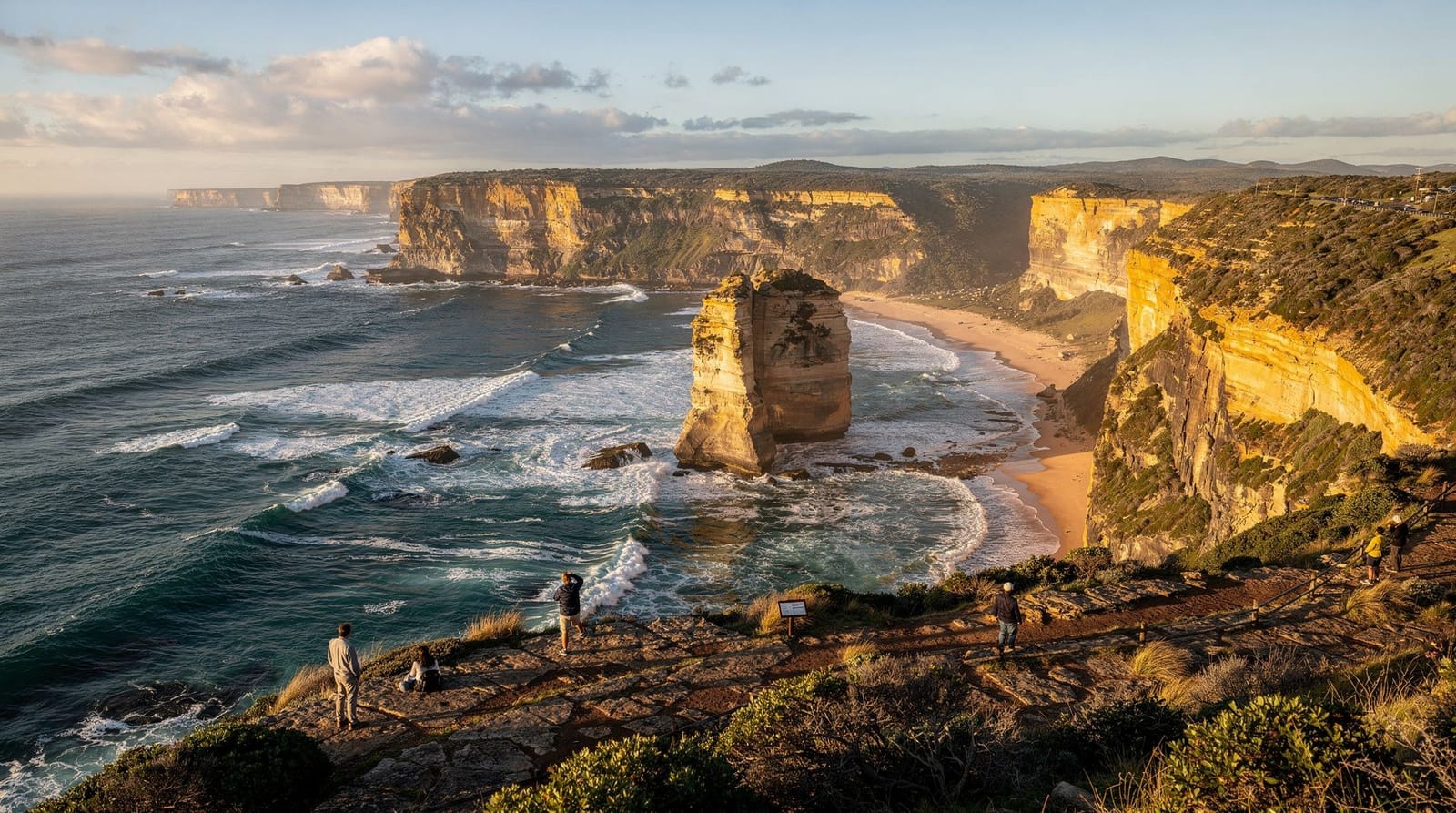
Just east of Apollo Bay, Skenes Creek marks the start of the Great Ocean Road’s climb up and over the Otways toward Lorne, and the pull-offs along this stretch — Mount Sabine and Wongarra among them — give sweeping views back down the coast that most drivers rushing between Lorne and Apollo Bay skip entirely. It’s a five-minute stop rather than a destination, but worth the brake tap if the weather is clear, since it’s a genuinely different vantage point from the more famous lookouts closer to the Twelve Apostles further west.
Comparing Apollo Bay with Lorne
| Apollo Bay | Lorne | |
|---|---|---|
| Distance from Melbourne | ~190 km, ~2h45-3h | ~140 km, ~2h |
| Feel | Working fishing town, quieter | Resort town, livelier restaurant scene |
| Best for | Otway rainforest, waterfalls, Otway Fly | Beach culture, dining, nightlife |
| Distance to Twelve Apostles | ~1h further west | ~1h45 further west |
| Crowds | Lighter, even in summer | Can be heavily booked in summer/Easter |
Wildlife beyond koalas
Beyond the koalas along the Cape Otway road, the Otways support populations of echidnas, a wide range of native birds, and — in the ocean beyond Marengo and further along the coast — seasonal whale sightings during the southern right whale migration (roughly May to September, more reliably spotted further along the coast near Warrnambool, but occasional sightings occur off Apollo Bay too). The rainforest gullies are also home to the same superb lyrebird species found in the Dandenong Ranges, though less commonly encountered here than in Sherbrooke Forest.
Practical information
Apollo Bay is the last town with comprehensive services (fuel, supermarket, pharmacy, ATMs) before the road continues on toward Princetown and the Twelve Apostles, where facilities thin out considerably — worth fuelling up and stocking any supplies here rather than assuming the next town will have what you need. Mobile signal is reliable in town but drops out across much of the inland Otway forest roads, including around Maits Rest and the Otway Fly access road — download offline maps if self-driving through the forest.
Getting there and getting around
By car, Apollo Bay is about 190 km from Melbourne, roughly two hours forty-five minutes to three hours via Geelong, Torquay, and Lorne along the coast road — noticeably longer than the drive to Lorne alone, reflecting Apollo Bay’s position further along the route. From Apollo Bay, the Twelve Apostles are a further hour or so west, either continuing along the coast road or cutting inland through the Otways via Lavers Hill.
private group Great Ocean Road and Twelve Apostles tour from Apollo BayBecause of the distance from Melbourne, tours based specifically in Apollo Bay (rather than day tours departing and returning to Melbourne in a single day) suit visitors already staying overnight in the region, letting them see the Twelve Apostles without the long return drive to the city the same evening.
private luxury Great Ocean Road and Twelve Apostles day tour from Apollo Bay full-day Great Ocean Road, Twelve Apostles and Otway rainforest tourWhere to stay
Apollo Bay has a genuinely broader spread of accommodation than most other Great Ocean Road towns of its size — motels, caravan parks, B&Bs, and a scattering of larger hotels — reflecting its role as the practical overnight stop for people splitting the drive to the Apostles over two days. Booking ahead in summer (December-February) and around Easter matters, though availability is generally less pressured than in Lorne given the town’s larger total accommodation stock relative to its size.
Honest take: the case for basing here over Lorne
If the plan is a two-day Great Ocean Road trip with an overnight stop, Apollo Bay is arguably the better base than Lorne: it’s positioned closer to both the Otway rainforest attractions (Maits Rest, the Otway Fly, the waterfalls) and the final push to the Twelve Apostles, meaning less backtracking the next morning. It’s also quieter and less resort-like, which suits visitors who found Lorne’s summer crowds off-putting on a previous trip or in reviews they’ve read.
The trade-off is a longer initial drive from Melbourne and fewer big-name restaurants or nightlife options than Lorne — Apollo Bay is a practical, comfortable base rather than a destination in the same holiday-town sense.
Budget for a stop in Apollo Bay
The town and harbour itself cost nothing to enjoy — walking the foreshore, browsing the monthly market, and watching the fishing fleet come in are all free. The Otway Fly treetop walk is the main paid attraction, running around AUD 30-40 per adult for the walkway alone, more if adding the zipline canopy tour. A seafood lunch featuring local crayfish in season typically runs 30-45 AUD per person, noticeably above a standard pub meal but reflecting the genuinely local catch. Cape Otway Lightstation entry adds a further modest fee. Guided glow-worm night tours and boat trips to see the Marengo fur seal colony are the other common paid add-ons, both optional rather than essential to a worthwhile stop.
Nearby regions
Apollo Bay sits roughly midway along the Great Ocean Road proper, with Torquay & Bells Beach about ninety minutes back toward Melbourne and the Twelve Apostles an hour further west — making it a natural midpoint stop whether the trip is a single long day or a two-night drive. For a broader sense of how Apollo Bay fits into the whole route, the Great Ocean Road overview page covers timing and stops end to end.
Frequently asked questions about Apollo Bay and the Otways
How far is Apollo Bay from Melbourne?
About 190 km, roughly two hours forty-five minutes to three hours by car via Geelong, Torquay and Lorne along the coast road.
Is Apollo Bay better than Lorne for an overnight stay?
For a two-day Great Ocean Road trip, many visitors find Apollo Bay the more practical base — it’s closer to the Otway rainforest attractions and the final stretch to the Twelve Apostles, and generally quieter than Lorne. Lorne has a livelier restaurant and cafe scene if that matters more to you.
Is the Otway Fly worth the detour?
Yes for most visitors — it’s a well-built canopy walkway giving a genuinely different perspective on the rainforest than ground-level walks, though it adds 30-45 minutes of driving inland from Apollo Bay each way, worth factoring into a tight day’s schedule.
Where can I see glow-worms near Apollo Bay?
Several gullies in the Otway ranges host glow-worm colonies, viewable after dark on still, moonless nights without any artificial light. A guided night tour is the most reliable way to find an active colony without navigating unlit forest roads yourself.
How far is Apollo Bay from the Twelve Apostles?
About an hour further west, either continuing along the coast road or cutting inland through the Otways via Lavers Hill — making Apollo Bay a sensible final overnight stop before reaching the Apostles the next morning.
What’s the best base for exploring the Otways: Apollo Bay or Lorne?
Apollo Bay is generally the better base for the Otway rainforest attractions specifically, since it sits closer to Maits Rest, the Otway Fly, and the waterfalls than Lorne does. Lorne remains the better choice for a livelier restaurant and beach-town atmosphere.
Is Maits Rest a difficult walk?
No — it’s a short, flat, easy boardwalk loop suitable for most fitness levels and one of the most accessible rainforest experiences directly off the Great Ocean Road.
Is Cape Otway Lightstation worth visiting?
Yes, both for the site itself — Australia’s oldest surviving mainland lighthouse, with a genuine shipwreck history — and for the access road, which is one of the most reliable spots on the whole Great Ocean Road for roadside koala sightings.
Can you see whales near Apollo Bay?
Occasionally, during the southern right whale migration roughly May to September, though sightings are more reliable further along the coast near Warrnambool. Don’t build a trip specifically around whale-watching from Apollo Bay itself.
Top experiences
Bookable activities with verified prices and instant confirmation on GetYourGuide.