ACMI at Federation Square: what's free, what's ticketed
Melbourne: Melbourne city highlights walking tour
Is ACMI free to visit?
The permanent exhibition, The Story of the Moving Image, is free and open 364 days a year. ACMI charges separately for its rotating special exhibitions (usually design or pop-culture retrospectives) and for its public cinema program, both of which are ticketed on top of the free general entry.
Australia’s national museum of the moving image
Tucked into Federation Square on the corner of Flinders and Swanston streets, ACMI (the Australian Centre for the Moving Image) is easy to underestimate from the outside — it doesn’t have the grand facade of the State Library or the obvious scale of NGV International across the river. Inside, it is Australia’s national museum dedicated to film, television, videogames and digital culture, and it has quietly become one of the better rainy-day, budget-friendly stops in the CBD precisely because so much of what’s worthwhile is free.
The honest-planner distinction to understand before visiting is the split between free and ticketed content. ACMI’s permanent gallery, The Story of the Moving Image, costs nothing and is open 364 days a year. Its rotating special exhibitions — the kind built around a specific film franchise, director retrospective or pop-culture design theme — are ticketed separately, and so is its public cinema program. Knowing this before you arrive avoids the slightly awkward moment of assuming everything inside is included.
| Where | Federation Square, corner of Flinders and Swanston Streets, CBD |
| Cost | Free (permanent exhibition); special exhibitions and cinema ticketed separately |
| Time needed | 60–90 minutes for the free galleries; half a day with a special exhibition |
| Getting there | Directly opposite Flinders Street Station; several tram stops fall in the Free Tram Zone |
| Best time | Weekday mornings before midday for the quietest galleries |
Opening hours and what’s on
ACMI opens daily from 10am to 5pm. The one seasonal adjustment is ANZAC Day, 25 April, when it opens later, from 1pm to 5pm out of respect for the morning’s commemorations. It closes fully only on Christmas Day, which makes it one of the more reliably open museums in the city across the rest of the calendar, including most public holidays.
Cinema screening times run on a separate schedule to the gallery’s opening hours, often extending into the evening, so if a specific film session is the goal, check ACMI’s own program listing rather than assuming it matches gallery hours.
Inside the free permanent exhibition
The Story of the Moving Image is built around genuinely hands-on, immersive displays rather than static wall text and glass cases. It traces the history of the moving image from early cinema through the rise of television and into contemporary digital culture, with a strong emphasis on letting visitors interact directly with the material — touchscreens, motion-triggered displays and recreated sets rather than passive viewing. It rewards visitors who engage with the interactive elements properly rather than walking through quickly; budget at least an hour if you actually want to try things rather than glance at them.
A particular strength is the exhibition’s treatment of Australian film and television heritage specifically — local production history, iconic Australian shows and films, and the technical and cultural story of how Australian screen culture developed. This is coverage that’s genuinely hard to find presented this well anywhere else in Melbourne, and it gives the museum a distinct identity rather than feeling like a generic film-history retrospective imported from elsewhere.
Videogame history, done properly
Alongside film and television, ACMI dedicates significant gallery space to the history of videogames as a medium, tracing the evolution from early arcade and console systems through to contemporary interactive digital art. Much of this section is playable rather than simply displayed, which is part of why it consistently ranks as one of the more engaging sections for younger visitors and anyone who grew up around gaming rather than film. It treats games as a serious cultural medium worth the same historical depth as cinema, rather than a token side-room, which is unusual among museums of this kind internationally.
The cinema program and ticketed special exhibitions
Beyond the free galleries, ACMI runs a genuine public cinema program with its own screens, showing everything from classic and arthouse film seasons to festival premieres — tickets are bought separately, similar to any commercial cinema, and the program changes regularly. Alongside this, ACMI periodically hosts large ticketed touring exhibitions, often built around a major film franchise, a director’s career, or a design and pop-culture theme; these have historically been some of the more popular temporary exhibitions in Melbourne when a well-known title is on.
Because these are ticketed and rotate, it’s worth checking what’s currently showing before a visit if a special exhibition specifically appeals, since general admission to the free permanent gallery doesn’t include it.
Booking, tickets and avoiding queues
For the free permanent exhibition, there’s genuinely no need to book — walk-in access during opening hours is standard, and the galleries rarely reach capacity outside of school holiday peaks. Special ticketed exhibitions are a different story: the more high-profile touring shows, particularly anything tied to a well-known film franchise or design movement, can sell out specific time slots on weekends and during school holidays, so booking a few days ahead is worth doing if a specific exhibition is the main reason for the visit. Cinema tickets follow standard cinema booking practice — popular festival screenings or premieres can sell out, while regular repertory sessions usually have seats available closer to the day.
If your priority is simply the free galleries with no crowd pressure, a weekday visit any time before midday remains the most reliable way to have the interactive stations to yourself rather than queuing behind school groups.
Free vs ticketed at a glance
| What | Cost | Booking |
|---|---|---|
| The Story of the Moving Image (permanent) | Free | Not required |
| Special touring exhibitions | Ticketed, varies by show | Recommended, especially weekends/school holidays |
| Cinema screenings | Ticketed, standard cinema pricing | Recommended for popular sessions |
| Shop and public plaza | Free to browse | Not required |
A guided way to see ACMI alongside the rest of the CBD
If ACMI is one stop on a broader first morning in the city rather than a dedicated outing, a guided Melbourne city highlights walking tour typically threads Federation Square, Flinders Street Station and the surrounding laneways together, with ACMI available as a self-guided detour once the group reaches the square.
book a Melbourne city highlights walking tourFor visitors specifically interested in Melbourne’s history and street culture rather than a general orientation walk, a tour combining laneways, history and culture covers similar ground with a different emphasis.
book a history, laneways and culture walking tourACMI’s shop, cafe and Federation Square dining
ACMI has its own small shop near the entrance selling film, television and games-related books, merchandise and design objects, worth a browse on the way out even if you’re not buying anything. There’s no need to leave the building for a coffee either, though Federation Square more broadly has a solid spread of cafes and restaurants across its plaza and surrounding laneways, ranging from quick coffee stands to sit-down restaurants with river views toward Southbank. Combining an ACMI visit with a meal at one of these means the whole stop, gallery and food together, rarely needs to extend beyond a couple of hours unless a cinema session is involved.
Accessibility at ACMI
The building is fully accessible via Federation Square’s step-free public plaza, with lifts connecting all gallery levels and accessible toilets available throughout. Most interactive displays in the permanent exhibition are positioned at a height and angle usable from a wheelchair, and staff at the entrance can advise on any exhibition-specific access notes, particularly for touring shows that sometimes use lower lighting or enclosed spaces as part of their design. Cinema screens also offer accessible seating on request.
Combining ACMI with Federation Square and NGV Australia
ACMI’s location inside Federation Square is one of its biggest practical advantages. NGV Australia (the Ian Potter Centre), which holds the gallery’s Australian art collection, sits immediately alongside it within the same square, and both are free, making a combined visit an easy way to cover Australian visual art and screen culture back to back without changing location. Federation Square itself hosts regular free public events, markets and screenings on its central plaza, so timing a visit around whatever’s on outside can add extra value to the same trip.
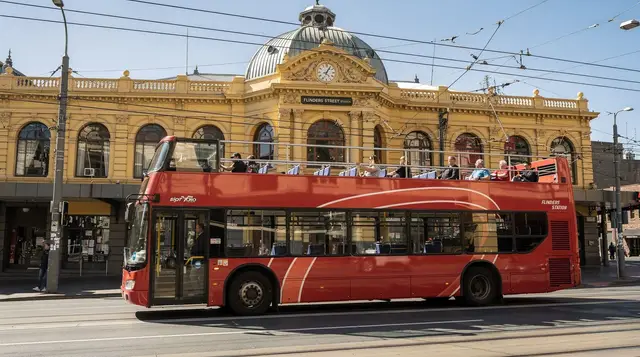
Flinders Street Station, directly across the road, is worth pairing with the visit too — its iconic clocks-and-dome facade is one of Melbourne’s most photographed buildings and the meeting point locals still use by default (“meet under the clocks”). Together, ACMI, NGV Australia, Federation Square’s plaza and Flinders Street Station make for a genuinely full free or low-cost half-day in one small, walkable corner of the CBD.
What a typical visit looks like
Most visitors start with the free permanent exhibition, spending 60-90 minutes moving through the moving-image history sections before settling into the videogame galleries, which tend to be where people linger longest. If a special exhibition is running and appeals, that typically adds another hour and a separate ticket cost. Visitors combining a cinema session with the galleries generally treat it as a full afternoon or evening rather than a quick stop, given screening lengths.
Weekday mornings are consistently the quietest time to visit the free galleries, particularly before midday; school groups and family visitors tend to arrive from late morning onward, and weekends see the highest overall foot traffic through Federation Square generally.
ACMI for families and kids
ACMI is one of the stronger family options among Melbourne’s CBD museums specifically because so much of its content is designed to be touched, played and interacted with rather than viewed at a careful distance. The videogame history sections in particular hold children’s attention far longer than a typical gallery, and several interactive stations throughout the moving-image galleries are built with younger visitors in mind. It pairs naturally with NGV Australia next door for a rainy-day, free, indoor pairing that covers both art and screen culture without needing tickets for either core gallery.
Pram access throughout the building is straightforward, with lifts connecting all levels, and there’s no strict route through the galleries, so families can move at whatever pace suits younger children without missing a fixed narrative sequence.
What to actually look out for inside
A few specific things inside the free galleries are worth deliberately seeking out rather than stumbling across. The evolution-of-cinema sections use physical props, recreated sets and behind-the-scenes technical displays rather than relying purely on screens, which makes the technical side of filmmaking, cameras, editing and special effects across different eras, feel tactile rather than abstract. The television history sections trace the medium from its earliest broadcast days through to contemporary streaming culture, with a deliberate throughline showing how Australian broadcasting developed its own identity alongside British and American influences.
The videogame galleries are arranged roughly chronologically, moving from early arcade cabinets and home consoles through to more recent interactive digital art installations, and several stations let you actually play historical hardware rather than just view it in a case. This is the section that most consistently surprises first-time visitors expecting a conventional, look-only museum experience.
Planning around the seasons and school holidays
ACMI’s free galleries are indoors and climate-controlled, making them a reliable option regardless of Melbourne’s notoriously changeable weather, useful on a hot summer afternoon or a wet winter morning alike. The main seasonal consideration is crowding rather than comfort: school holiday periods, particularly in the Victorian summer break over December and January, bring a noticeably higher volume of family visitors to the interactive galleries, and popular special exhibitions or cinema premieres can see queues form for ticketed entry during these windows. Visiting on a weekday outside school holidays, ideally in the first couple of hours after opening, remains the most reliable way to have the hands-on displays largely to yourself.
A short history of ACMI and Federation Square
ACMI opened as part of Federation Square’s original 2002 development, conceived from the outset as Australia’s dedicated national museum of film, television and digital culture rather than a general history museum with a media wing. Federation Square itself, with its distinctive fractal-patterned sandstone and glass facades, was a deliberately bold and initially controversial piece of civic architecture for the site opposite Flinders Street Station, and it has since become one of Melbourne’s default gathering points for public events, protests, celebrations and simply meeting friends.
ACMI’s galleries have been progressively redeveloped since opening to keep pace with rapidly changing screen and games technology, which is part of why the permanent exhibition feels considerably more current than its two-decade history might suggest.
Practical tips for a smoother visit
A handful of small things make an ACMI visit run more smoothly. Lockers are available near the entrance for bags and coats, useful if you plan to move through the interactive galleries without carrying extra weight. Phone chargers are worth topping up before arriving, since several interactive stations invite a longer engagement than a typical museum display and it’s easy to lose track of time browsing them. If travelling with a mixed group of ages and interests, splitting up inside the free galleries works well, since the layout doesn’t require a fixed route or sequence, letting film enthusiasts linger in the cinema history sections while gaming-focused visitors head straight for the interactive consoles.
Public wifi is available throughout the building, and the plaza outside offers plenty of seating if anyone in the group needs a break from screens rather than more of them. Given Federation Square’s central position, ACMI also makes a sensible meeting point if a group has split up elsewhere in the CBD for the morning and wants to regroup before continuing into the afternoon.
Photography inside the galleries
Casual phone photography is generally fine throughout the free permanent exhibition, useful for capturing a favourite interactive display or a well-lit set recreation, though some touring special exhibitions restrict photography depending on the lending institution’s own rules — a sign at the entrance to any given exhibition will confirm the policy for that specific show. Flash photography and tripods are best avoided in the darker gallery sections regardless, both for other visitors’ comfort and because several displays are motion- or light-sensitive.
How ACMI fits a food-and-culture CBD day
Because ACMI sits so centrally, it combines easily with a food-focused morning or afternoon rather than requiring its own dedicated outing. A CBD laneway coffee stop before or after a visit, or lunch at one of Federation Square’s own restaurants, turns a purely gallery-focused couple of hours into a fuller half-day without much extra planning — see our Melbourne coffee guide for laneway options within a five-minute walk.
Why ACMI is worth building time into a CBD day
It’s easy, on a first visit to Melbourne, to load a day up with the obvious big names — the NGV, the Botanic Gardens, a laneway walk — and treat ACMI as an optional extra if time allows. The honest-planner case for moving it up the list is that it offers something genuinely different from a conventional art or history museum: a hands-on, screen-based cultural institution that engages visitors of very different ages and interests in ways a wall of paintings or artefacts under glass generally doesn’t.
Teenagers who find a traditional gallery slow often respond immediately to ACMI’s interactive format, and adults with any interest in film, television or games history tend to underestimate how deep the permanent collection actually goes until they’re inside it.
It’s also one of the lowest-risk additions to an itinerary precisely because it’s free. There’s no sunk cost in trying it for twenty minutes and moving on if it doesn’t land for your group, which makes it a sensible default add-on to a Federation Square stop rather than something that needs deliberate advance planning the way a ticketed, timed-entry attraction does.
Getting to ACMI
ACMI sits inside Federation Square, at the corner of Flinders and Swanston streets, directly across the road from Flinders Street Station, making it one of the most straightforward CBD attractions to reach on foot or by public transport. Anyone arriving by train lands almost on the doorstep; anyone using the tram network can hop off at any of the Flinders Street or Swanston Street stops, several of which fall within the Free Tram Zone if travelling from elsewhere in the CBD. There’s no dedicated on-site parking for Federation Square, so arriving by public transport or on foot is generally simpler than driving in and searching for a nearby car park, particularly given how central and walkable the surrounding CBD grid is.
Comparing ACMI with Melbourne’s other museums
Melbourne Museum and Scienceworks both cover broader scientific and natural history ground and charge admission, while Immigration Museum and Old Melbourne Gaol focus on specific historical narratives with their own ticketed entry. ACMI stands apart from all of these by being both free for its core collection and narrowly focused on screen and digital culture rather than general history or science. For a traveller weighing up which museums are worth paying for on a tighter budget, ACMI’s free general admission makes it one of the easier inclusions regardless of how the rest of the museum budget is allocated, leaving paid tickets for whichever of the others best matches personal interest.
Where ACMI fits in a Melbourne itinerary
For a first day in the city, ACMI slots naturally into a CBD-focused morning or early afternoon, combined with Federation Square, NGV Australia and a walk across Princes Bridge toward Southbank. Budget travellers building a day around Melbourne’s free things to do will find it one of the stronger free indoor options precisely because it’s genuinely interactive rather than a quick look-and-leave gallery, making it a sensible anchor on a day when the weather turns and an indoor, engaging option is needed.
Anyone taking a general CBD highlights walking tour will likely pass directly by or through Federation Square regardless, making a short ACMI detour an easy add-on rather than a separate trip.
Rainy-day and hot-day planning
Because the whole permanent gallery is indoors and climate-controlled, ACMI is one of the more reliable fallback options if a Melbourne day trip or outdoor plan gets rained out or a summer afternoon turns uncomfortably hot. It pairs naturally with other indoor options nearby — NGV Australia, the State Library a short tram ride away, or Eureka Skydeck across the river — for a genuinely indoor CBD day when the weather doesn’t cooperate. See our rainy day Melbourne with kids guide for a fuller list if travelling with children specifically.
More tours on Viator
Top-rated experiences with verified reviews, bookable on Viator (a Tripadvisor company).


Frequently asked questions about ACMI at Federation Square
What are ACMI's opening hours?
ACMI is open daily from 10am to 5pm. On ANZAC Day (25 April) it opens later, from 1pm to 5pm, and it closes completely on Christmas Day. Cinema screening times run separately to these gallery hours and are listed on ACMI's own program calendar.Is the whole of ACMI free, or just part of it?
The permanent gallery, The Story of the Moving Image, is entirely free with no ticket needed, and it's open almost every day of the year. Special touring exhibitions — the kind covering a specific film franchise, director or design movement — are ticketed separately, as are cinema screenings.What is The Story of the Moving Image?
It's ACMI's free permanent exhibition tracing the history of film, television, videogames and digital culture through immersive, interactive displays rather than static text panels. It covers everything from early cinema and Australian television history through to the evolution of videogames, with genuine hands-on exhibits rather than look-only cases.Does ACMI have a strong Australian film and TV focus?
Yes, this is one of its genuine strengths compared with similar museums elsewhere. Alongside international film history, ACMI dedicates significant space to Australian television and cinema heritage, including local production history that isn't well covered by any other Melbourne museum.How long should I spend at ACMI?
Budget 60-90 minutes for the free permanent exhibition alone if you engage with the interactive displays properly rather than skimming. Add a special exhibition and you're looking at half a day; add a cinema screening and it becomes a full afternoon or evening out.Is ACMI good for kids?
Yes, particularly the videogame history sections, which tend to hold children's attention far longer than a typical museum gallery because much of it is genuinely interactive rather than behind glass. It works well as a rainy-day option alongside other Federation Square attractions.Where is ACMI located?
ACMI is inside Federation Square, on the corner of Flinders Street and Swanston Street in the CBD, directly opposite Flinders Street Station and immediately next to NGV Australia (the Ian Potter Centre).Do I need to book ahead for ACMI's free permanent exhibition?
No, walk-in access to The Story of the Moving Image is available during opening hours with no booking required. Booking ahead is only necessary for ticketed special exhibitions and specific cinema screenings, both of which can sell out at peak times such as school holidays or a popular film season.Is ACMI worth visiting if I'm not especially into film or games?
Yes, for most visitors — the exhibition is built around genuinely hands-on, interactive displays rather than passive viewing, so it tends to land even with people who wouldn't describe themselves as film or gaming enthusiasts. It's a stronger fit for a rainy or overly hot day than a niche-interest-only stop, precisely because so much of it rewards a casual, curious visitor rather than a specialist.How does ACMI compare to Melbourne Museum for a first visit?
They cover very different ground — Melbourne Museum is a broad natural and cultural history museum with paid general admission, while ACMI is narrowly focused on screen and digital culture with a free core collection. For a tight schedule, ACMI's free entry and shorter typical visit length (60-90 minutes) make it the easier fit alongside other Federation Square sights, while Melbourne Museum suits a dedicated half-day.
Top experiences
Bookable activities with verified prices and instant confirmation on GetYourGuide.