Melbourne CBD & laneways
How to navigate Melbourne's CBD laneways: Hosier Lane street art, Degraves Street cafés, the Block and Royal Arcades, and where locals actually go.
Melbourne: Melbourne free walking tour
Duration: 3 hours
Quick facts
- Location
- Bounded by Flinders, Spencer, La Trobe and Spring Streets
- Key laneway
- Hosier Lane — legal street art, repaints constantly
- Transport
- Entirely inside the Free Tram Zone
- Best for
- Coffee, street art, arcades, laneway bars
- Busiest times
- Weekday lunch (office workers), Friday/Saturday night (bars)
The laneways are the thing people mean when they say Melbourne has a different feel to other Australian cities. Behind the grand Victorian-era street frontages of the Hoddle Grid — the original 1837 CBD layout — runs a second, parallel network of narrow service lanes, most of them originally built for horse-drawn deliveries and rubbish collection. From the 1990s onward, cheap rent and permissive planning rules let cafés, bars and small retailers colonise these lanes one by one, and the result is a CBD where the most interesting businesses are frequently the hardest to find — behind a roller door, up an unmarked staircase, or through what looks like a fire exit.
This makes the CBD laneways simultaneously the most rewarding and most over-photographed part of Melbourne. Hosier Lane’s street art appears on more Instagram feeds than almost anywhere else in the city, and Degraves Street’s café tables are as much a tourist set piece as a genuine locals’ hangout at this point. None of that makes them not worth visiting — it just means the honest approach is to see the famous spots quickly, then use the same laneway logic (look for the unmarked door, the queue of locals, the laneway with no view of a main street) to find the places that are quieter and better.
| Where | Bounded by Flinders, Spencer, La Trobe and Spring Streets |
| Cost | Free to walk; coffee ~5-6 AUD, cocktails ~18-26 AUD |
| Time needed | 2 hours for the main highlights, half to full day with stops |
| Getting there | Free Tram Zone — no Myki touch-on needed within the CBD |
| Best time | Weekday mornings for cafés, after dark for Hosier Lane’s changed murals |
Hosier Lane and street art
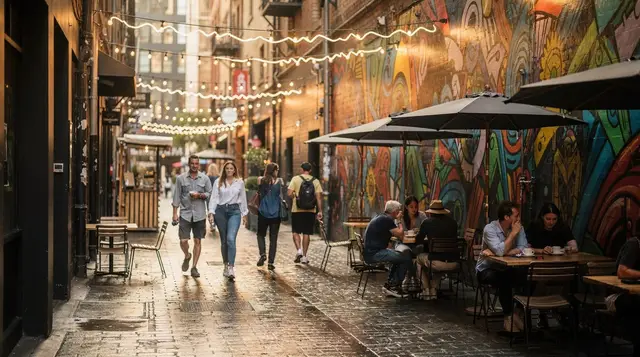
Hosier Lane runs off Flinders Street directly opposite Federation Square, and it is Melbourne’s most concentrated legal street art wall — cobblestones, fire escapes, dumpsters and every available surface painted, pasted or stencilled, with the work constantly overpainted by new artists. Because of that turnover, no photo of Hosier Lane you’ve seen online reflects what’s actually there today; it is one of the few Melbourne attractions that is genuinely different on every visit. Rutledge Lane, the short connector at the northern end, is quieter and often has newer work.
Around the corner, AC/DC Lane — officially renamed for the band, who have Melbourne roots — is narrower and lined with band posters, and its bars lean toward rock memorabilia and vinyl.
For context on how the street art culture developed (and why some of it is legal and some genuinely illegal), see our Hosier Lane and street art guide and the broader Melbourne street art guide, which also covers Fitzroy and Collingwood’s larger-scale wall art.
Melbourne street art walking tour with a working street artistThe arcades: Block, Royal, Causeway
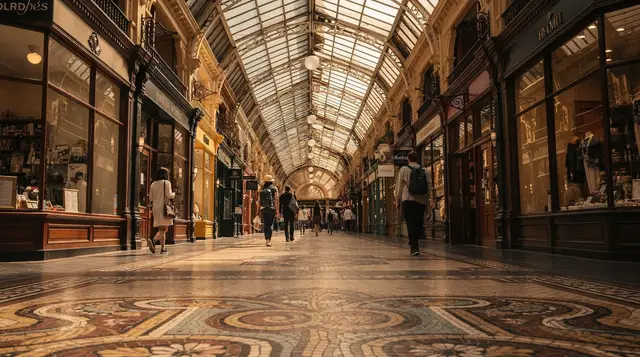
Melbourne’s 19th-century arcades are a different, older layer of the same laneway logic. The Royal Arcade (1869–70), running between Bourke Street Mall and Little Collins Street, is the oldest surviving arcade in Australia, with the mechanical figures Gog and Magog striking the hour above the clock at its southern end. The Block Arcade (1891–93), just off Collins Street, has an ornate mosaic-tiled floor modelled on Milan’s Galleria Vittorio Emanuele II and houses the Hopetoun Tea Rooms, a heritage tearoom operating since 1892. The Causeway, a narrower, scruffier arcade between Bourke Street Mall and Little Collins Street, is a useful shortcut and home to some long-running independent shops.
See Melbourne’s arcades and laneways for a self-guided route linking all three with the newer café laneways.
Degraves Street, Centre Place and the café laneways
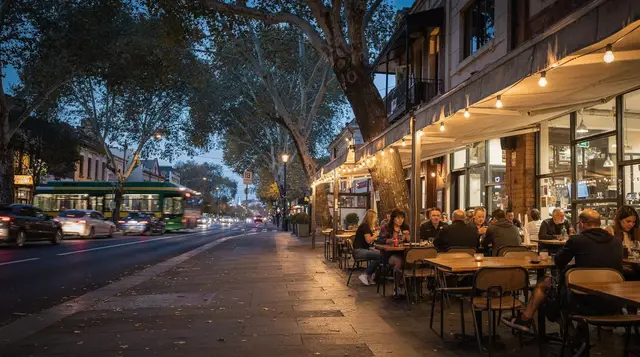
Degraves Street, running south from Flinders Street Station toward Flinders Lane, is the most photographed café laneway in the city — narrow, awning-covered, tables spilling into the walkway. It is also the most tourist-priced; a coffee here runs a dollar or two above the CBD average, and the food is decent rather than exceptional. Centre Place, its narrower neighbour one block east, has a similar format with slightly better value. Block Place, tucked behind the Block Arcade, is quieter still.
For the coffee locals actually queue for on a weekday, the better bet is to walk a few minutes further to Little Bourke Street for Patricia Coffee Brewers (a stand-up-only espresso bar, no seating, extremely fast turnover) or to cross into Fitzroy and Collingwood for the roasters that supply half the city’s cafés. See our full Melbourne coffee guide and best laneway cafés for a street-by-street comparison, including which of the famous spots are genuinely worth the queue.
Melbourne secret laneways food tourHidden bars
The laneway logic extends to nightlife: some of the CBD’s best-regarded bars are deliberately unmarked, reached through a phone box, a laundromat facade, or an unlabelled black door. This is partly heritage (small-bar licensing reforms in the early 2000s made it viable to open tiny venues in leftover spaces) and partly branding — “hidden” bars generate their own word-of-mouth. The format is consistent: small room, short but considered cocktail or wine list, standing room more common than seating. Expect a cocktail to run 22–26 AUD. See hidden bars and laneway legends — or more directly, our rooftop bars guide if you’d rather trade the hidden-door hunt for a CBD skyline view.
Melbourne laneways: larrikins and liquor walking tourA short history of how this happened
Melbourne’s laneways were not planned as a tourist attraction — they were service alleys, and for most of the 20th century they were where you put the bins, not where you opened a business. Two things changed that. First, a wave of postwar Italian and Greek migration brought a café culture that needed cheap, informal space, and the laneways provided it. Second, and more decisively, Victoria’s 1990s and early-2000s liquor licensing reforms created a specific small-bar licence that made it commercially viable to open a venue with only a handful of seats — previously, Victorian licensing law had effectively favoured large pubs and clubs.
Within a decade, hundreds of small bars, cafés and shops had moved into spaces that were, by any conventional retail logic, unlettable: no street frontage, no signage, sometimes no natural light.
The look of “found,” ad hoc, semi-industrial charm that visitors now associate with Melbourne is a direct result of that regulatory shift, not an accident of urban decay.
Chinatown and Bourke Street Mall
Little Bourke Street, running through the eastern end of the CBD grid, holds one of the oldest continuously operating Chinatowns outside Asia, dating to the gold rush era of the 1850s. It runs for about four blocks between Swanston and Spring Streets, marked by ornamental gates at each end, and mixes long-running Cantonese restaurants with newer Sichuan, Japanese and Korean venues packed into the same laneway-adjacent format as the rest of the CBD. Bourke Street Mall, the pedestrianised tram-only stretch of Bourke Street between Swanston and Elizabeth Streets, is the main department-store shopping strip (Myer and David Jones both have flagship stores here) and a useful east-west reference point between the laneways and the arcades.
Shopping beyond the arcades
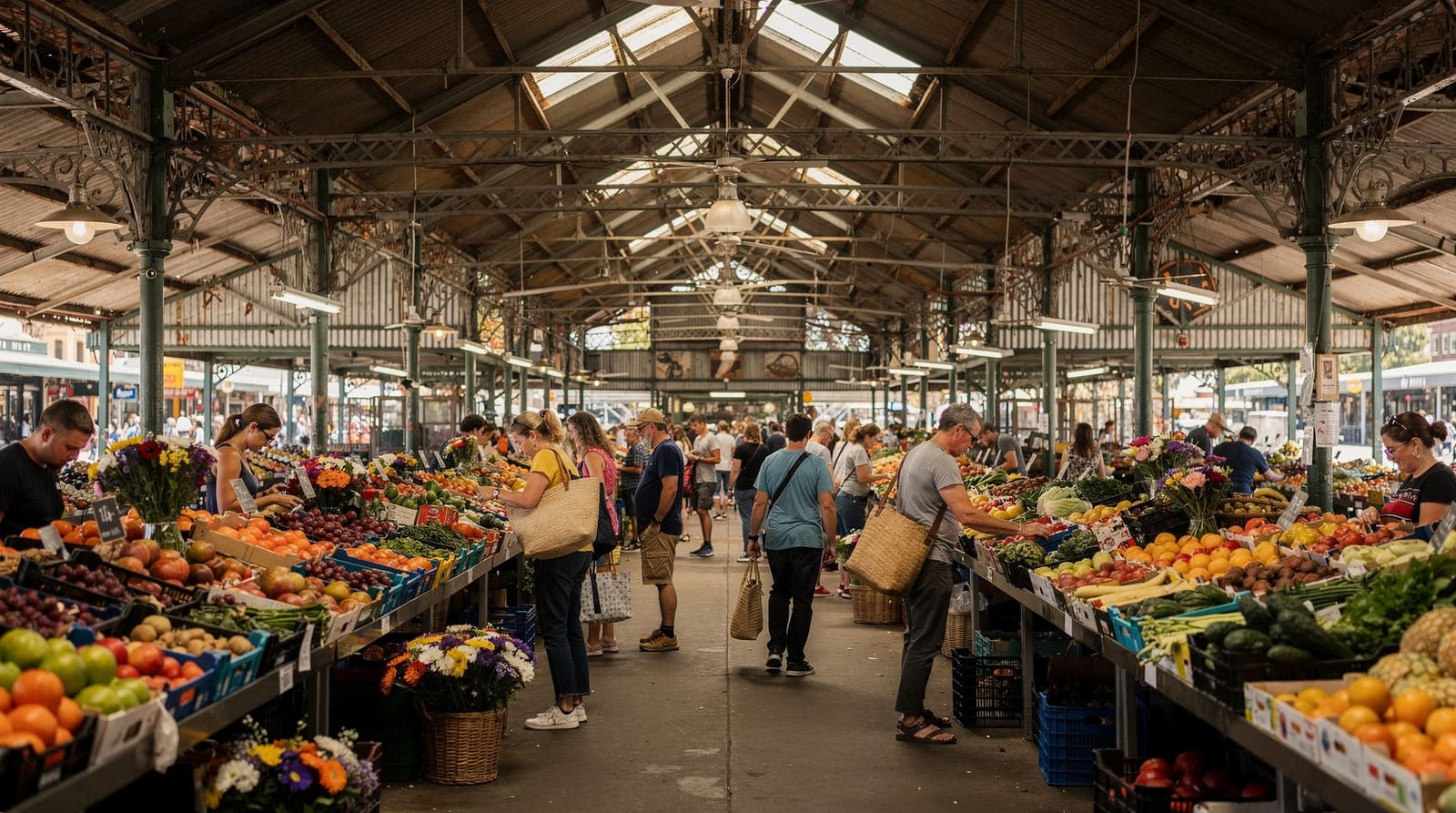
Melbourne Central, the large shopping centre built around the heritage-listed Coop’s Shot Tower (an 1889 gunshot manufacturing tower now enclosed under a glass cone), is the main indoor shopping option in the CBD, directly above Melbourne Central train station. For a more targeted, independent shopping experience, the laneways themselves hold a scattering of small designer and vintage stores, particularly around Flinders Lane, historically the city’s rag-trade and fashion-wholesale street. See Bourke Street Mall and Melbourne markets for a broader shopping picture including Queen Victoria Market.
Practical layout and getting around
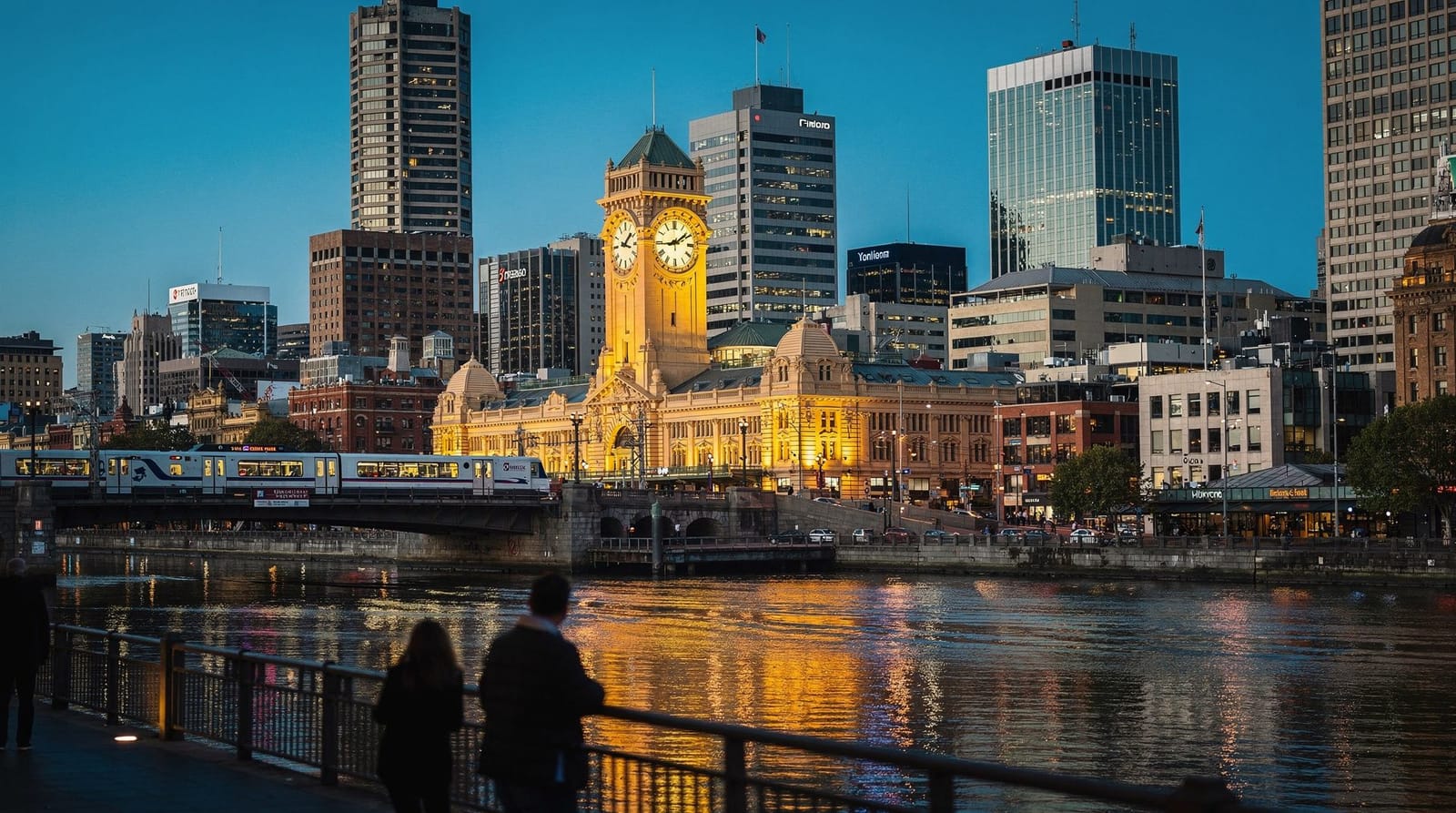
The entire CBD laneway network sits inside the Free Tram Zone, so you do not need to touch on with a Myki card to move between laneways, arcades and Federation Square — walking is usually faster than a tram for these short distances anyway. Flinders Street Station is the natural starting point for Hosier Lane, Degraves Street and Centre Place; Bourke Street Mall (trams only, pedestrianised) is the reference point for the Royal and Block Arcades; Chinatown on Little Bourke Street sits just north. The whole area is flat and comfortably walkable in under two hours if you’re moving with purpose, or a full leisurely day if you’re stopping for coffee at every second lane.
Weekday lunchtimes (roughly 12:00–14:00) see the highest foot traffic from office workers; the laneways empty out noticeably by mid-afternoon and fill again with a different, younger crowd from around 18:00 for the bars. Weekend mornings are the quietest time to photograph Hosier Lane without other tourists in every frame.
Flinders Lane and the fashion-wholesale legacy
Flinders Lane, running the length of the CBD parallel to Flinders Street, was historically Melbourne’s rag-trade and fashion-wholesale street through much of the 20th century, and that legacy still shapes the area today — a scattering of independent designer boutiques and showrooms occupy former wholesale spaces alongside newer laneway cafés and galleries. It’s a useful east-west spine for orientation if you’re moving between Hosier Lane at the eastern end and the arcades and Degraves Street further west, and a good source of small, independent shopping stops if the department stores on Bourke Street Mall feel too generic.
Budget for a laneway day
A laneway-focused day is relatively cheap by Melbourne standards, since the main “attraction” — the street art and architecture — is free. Budget roughly 5–6 AUD for a coffee, 15–22 AUD for a laneway café lunch (a toastie or brunch dish), and 18–26 AUD per cocktail if you’re doing the hidden-bar circuit in the evening. A three-hour guided laneway walking tour with food tastings typically runs 90–140 AUD per person, which is reasonable if you’d rather have a local point out which doors lead somewhere and which don’t, rather than guessing. Arcade shopping (Block, Royal) skews toward mid-range and gift items rather than bargains — Melbourne Central and the department stores on Bourke Street Mall are better for straightforward retail.
See the budget calculator to fold this into a full day’s spending.
Rooftop bars: the laneway logic goes vertical
The same hidden-venue instinct that drives the laneway bar scene also applies above street level: several of the CBD’s best-regarded bars sit on unmarked rooftops reached through an ordinary-looking street entrance and a lift ride, trading the laneway’s horizontal hunt for a vertical one. Rooftop venues generally charge similar prices to the laneway bars below but add a skyline view, making them a reasonable alternative on a clear evening, or in winter when a laneway’s narrow, unheated alley feels less appealing than an enclosed rooftop space. See our rooftop bars guide for specific recommendations and which ones take walk-ins.
Federation Square and the laneways’ southern edge
Federation Square, directly opposite Hosier Lane’s northern entrance, is the CBD’s main public gathering space and a useful orientation point before heading into the laneways proper — built in the early 2000s in a deliberately fragmented, geometric style that divided opinion on completion but has since become one of the city’s default meeting points. It hosts a rotating program of free public events, screenings and markets, and its steps are a popular, low-key spot to sit before or after a laneway walk.
Where this connects
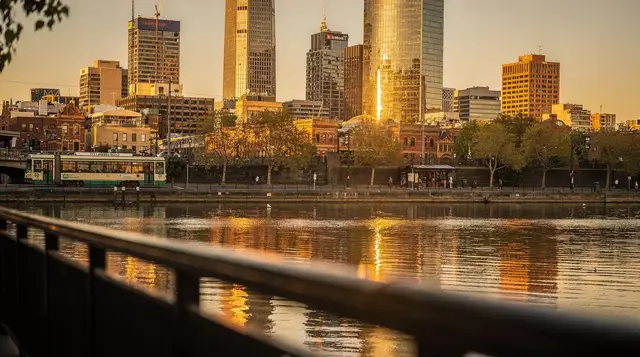
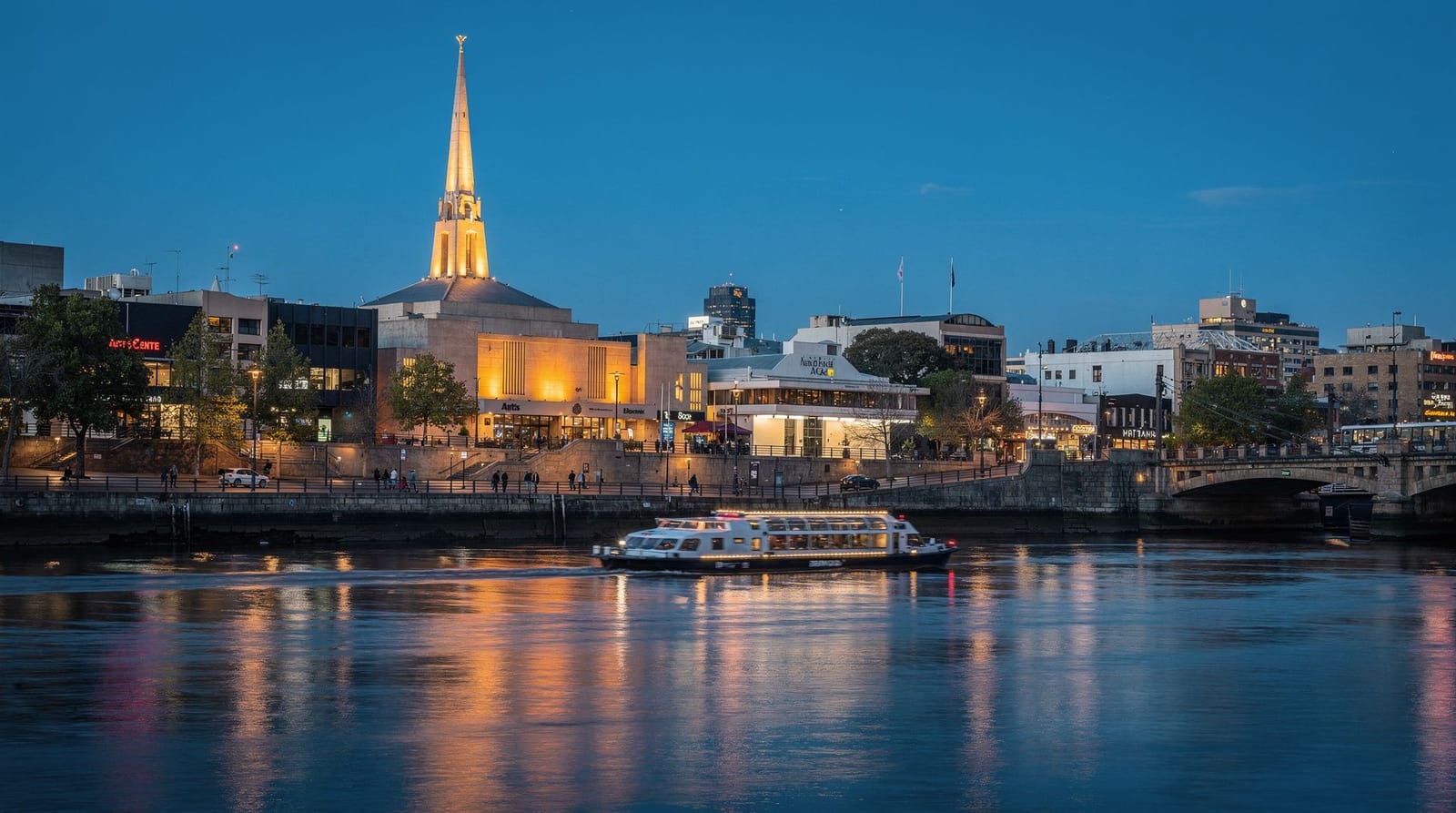
The CBD laneways sit within easy walking distance of Southbank and the arts precinct across the Yarra (via Princes Bridge or the Southbank promenade), and of Queen Victoria Market a 10–15 minute walk north. For a half-day itinerary that strings the laneways together with Federation Square and the river, see our 3-day Melbourne itinerary or the car-free Melbourne without a car itinerary. If you’re building a food-and-coffee-focused trip, our food and coffee 3-day itinerary uses the laneways as its spine.
Frequently asked questions about the CBD and laneways
Is Hosier Lane worth visiting if I’ve already seen photos of it?
Yes — the art turns over constantly (murals are painted over within weeks or months), so photos online rarely match what’s currently there. It also takes under ten minutes to walk through, so the time cost of checking is minimal.
Are the laneway cafés overpriced?
Degraves Street and Centre Place carry a small tourist premium (roughly 50 cents to a dollar over the CBD average for a coffee) because of foot traffic and rent, but they are not dramatically overpriced by international standards. Better value and often better coffee is a short walk away in Fitzroy, Collingwood or the CBD’s own specialty roasters.
Do I need to book the hidden bars?
Most take walk-ins, though the smallest venues (a handful of seats) can fill up on Friday and Saturday nights. Arriving before 20:00 avoids most queues.
Is the laneway area safe at night?
Yes, generally — it is a heavily trafficked, well-lit part of the CBD. Standard city precautions apply after midnight on weekends when bar closing times bring larger crowds onto the streets.
How long does it take to see the main laneways?
A focused walk through Hosier Lane, AC/DC Lane, Degraves Street, Centre Place and the Block and Royal Arcades takes about two hours. Add coffee and lunch stops and it easily fills half a day.
Can I do the laneways as part of a guided tour?
Yes — several operators run 2–3 hour laneway walking tours combining street art, food and hidden bars, which is a reasonable option if you’d rather not hunt for unmarked doors yourself.
What’s the best time of day to photograph Hosier Lane?
Midday for even light on the artwork itself; early evening for a moodier, less crowded shot as the surrounding bars light up.
Is Chinatown part of the laneway network?
Little Bourke Street’s Chinatown runs parallel to the main laneway cluster a few blocks east and follows the same narrow-street logic, though it predates the modern café-laneway trend by more than a century, dating to the 1850s gold rush.
Is Federation Square worth stopping at?
Yes as an orientation point and for its rotating free events, though it’s more of a public gathering space than an attraction in its own right — a five-minute stop before or after Hosier Lane rather than a destination requiring dedicated time.
Can I see the CBD laneways and Southbank in one day?
Yes — Southbank and the Arts Precinct are a 10–15 minute walk across Princes Bridge from Flinders Street Station, making it easy to combine a laneway morning with an NGV or riverside afternoon.
Top experiences
Bookable activities with verified prices and instant confirmation on GetYourGuide.