Bendigo
Victoria's second gold rush city, two hours from Melbourne: grand gold-era architecture, a significant Chinese heritage museum, and a working mine tour.
Ballarat: Melbourne private ballarat sovereign hill gold mine tours
Quick facts
- Distance from Melbourne CBD
- ~150 km, ~1h45-2h by car or train
- Population
- ~120,000 — regional Victoria's third-largest city
- Signature attraction
- Central Deborah Gold Mine, Golden Dragon Museum
- Train access
- V/Line direct from Southern Cross Station
- Architecture
- One of Australia's best-preserved gold-boom streetscapes
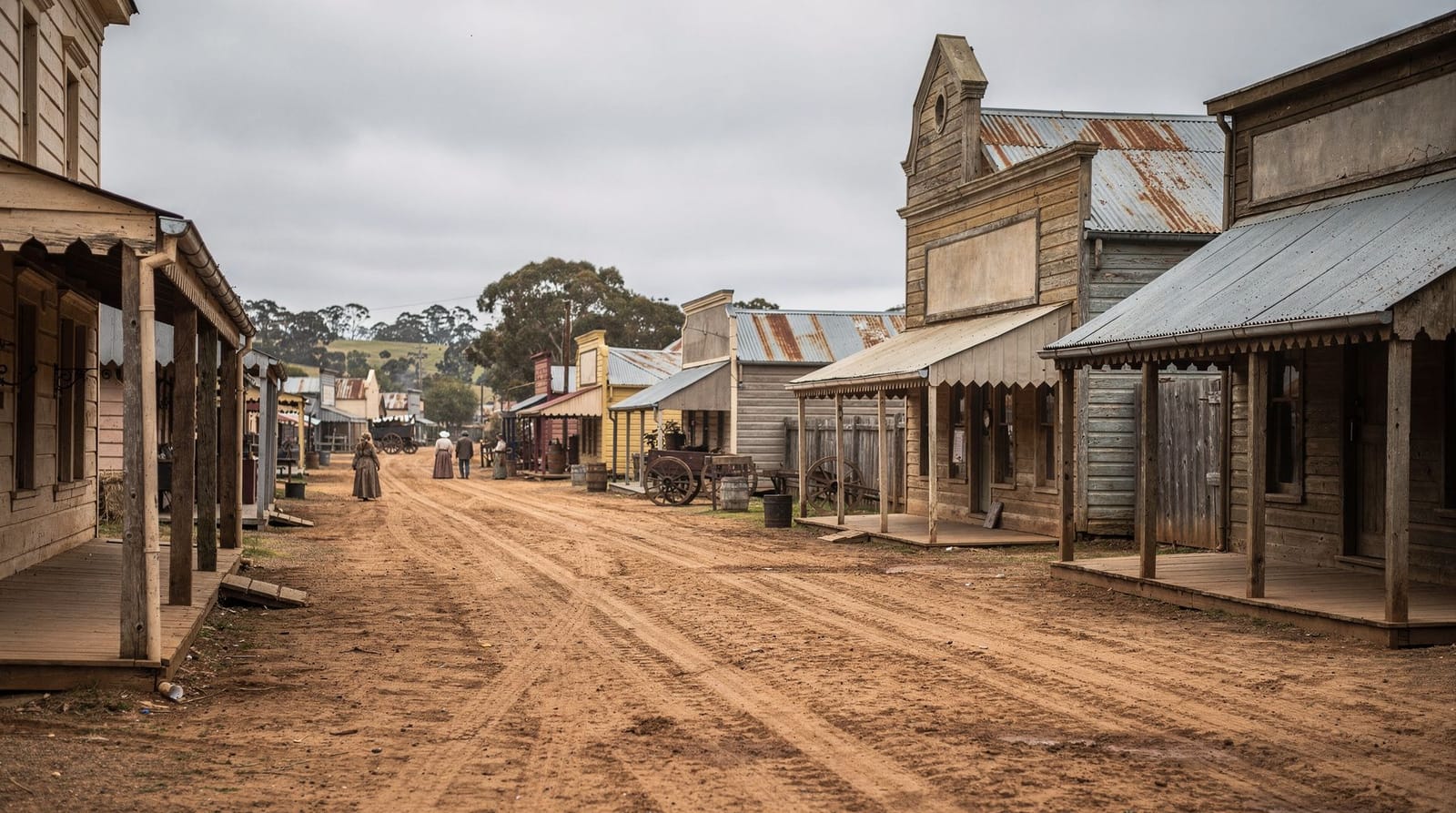
Is Bendigo just a smaller version of Ballarat? Not really — it shares the same gold rush origin story but tells a different part of it. Where Ballarat’s Sovereign Hill recreates the working goldfields as an immersive living-history museum, Bendigo’s history is told through its still-standing 19th-century civic architecture, a genuinely significant Chinese heritage museum reflecting the large Chinese mining population that settled here permanently, and an actual former working mine you descend into rather than a recreation. It’s about two hours from Melbourne, roughly twice Ballarat’s distance, which is the main reason it sees fewer day-trippers despite comparable historical significance.
| Central Deborah Gold Mine tour | Around AUD 30-45 depending on tour length |
| Time needed | Full day for the CBD, mine tour and one museum |
| Getting there | V/Line train from Southern Cross (~1h45-2h) or self-drive |
| Golden Dragon Museum entry | Modest separate admission, well under 20 AUD |
| Best time | Year-round; Easter weekend for the dragon procession, expect crowds |
The gold-boom streetscape
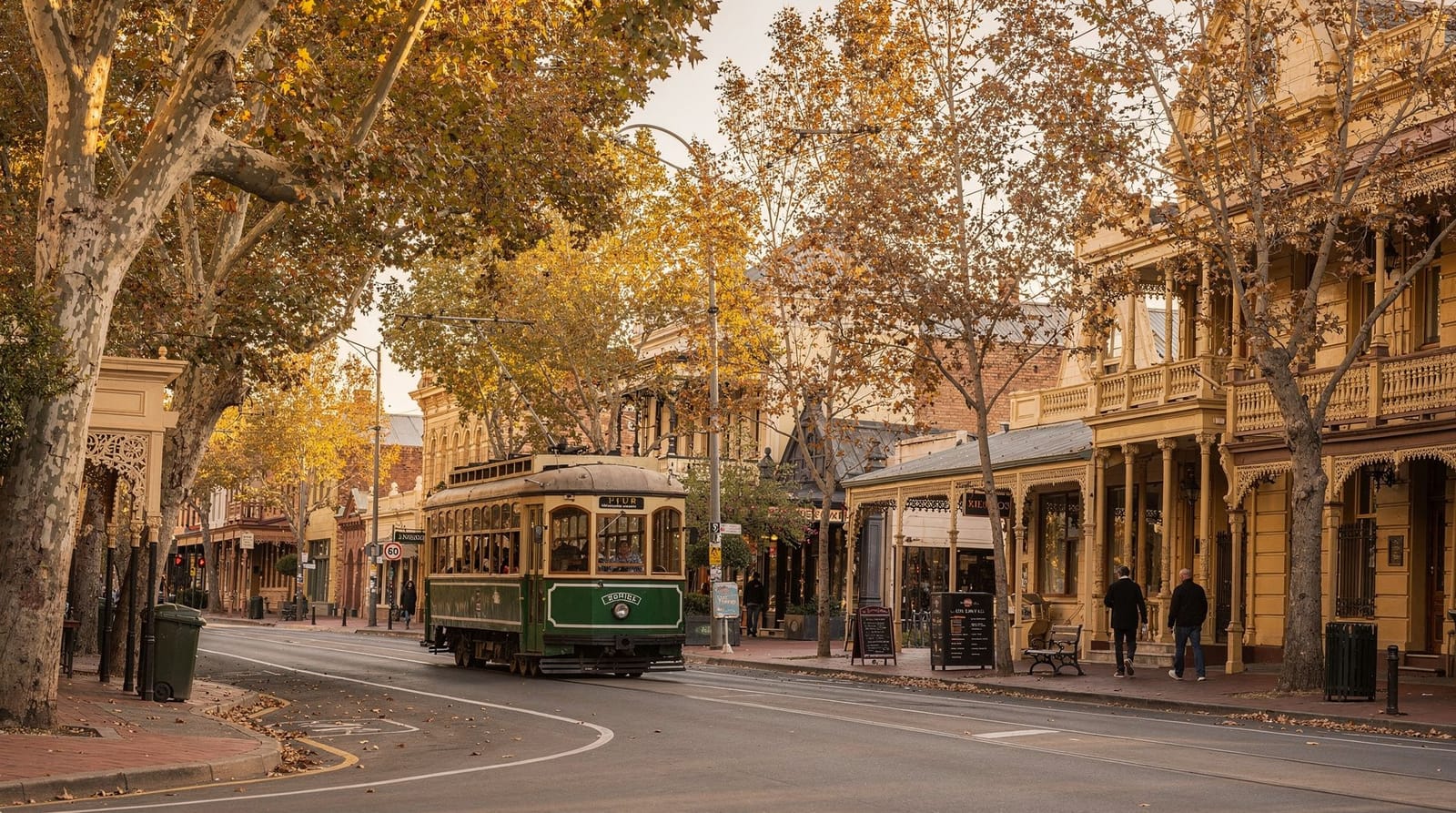
Bendigo’s gold rush, beginning in 1851 alongside Ballarat’s, eventually proved even richer in total gold extracted, and the wealth shows in the city’s civic architecture — the domed Bendigo Town Hall, the ornate Alexandra Fountain, and a scattering of grand former bank buildings and hotels along Pall Mall and View Street, several now housing the Bendigo Art Gallery, one of regional Victoria’s oldest and most significant public galleries. Unlike Ballarat’s Sovereign Hill, which recreates a mining township, Bendigo’s history is largely visible simply by walking the working city centre itself.
Central Deborah Gold Mine
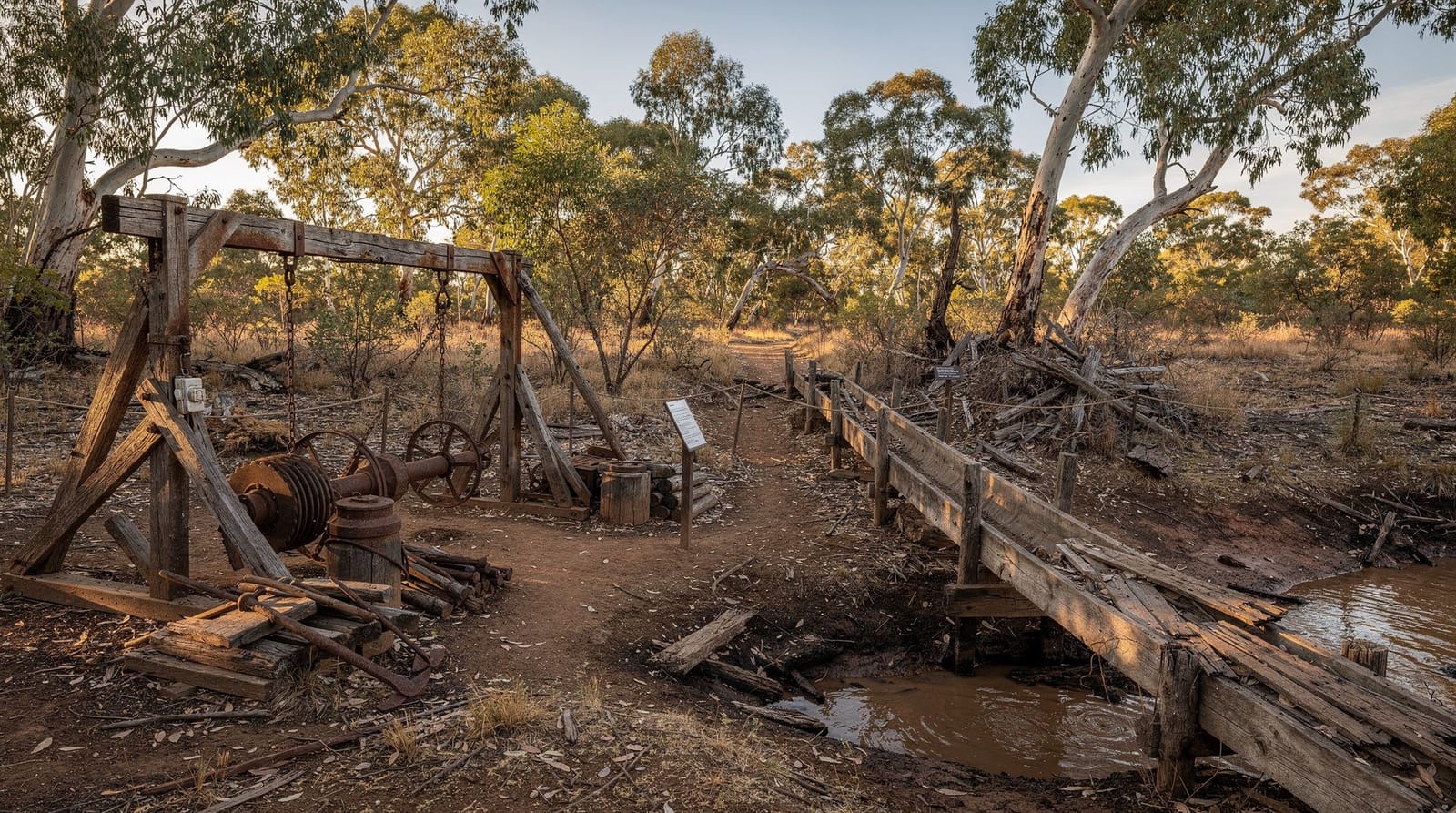
Central Deborah, a former working mine operating until 1954, offers underground tours descending into the actual mine shafts and tunnels — a genuinely different experience from an open-air recreation, giving a visceral sense of the depth, heat, and danger involved in deep-lead gold mining, a different (and more dangerous) technique than the shallow alluvial mining that dominated Ballarat’s early goldfields. Tour options range from a shorter overview to longer, more physically demanding tours for visitors wanting the full experience, including sections requiring genuine crawling through narrow original tunnels.
The Golden Dragon Museum and Chinese heritage
Bendigo’s Chinese mining population was, like Ballarat’s, among the largest immigrant groups on the Victorian goldfields, and the city’s Golden Dragon Museum and adjoining Yi Yuan Chinese Gardens preserve this heritage in more depth than almost anywhere else in regional Australia — including ceremonial dragons used in Bendigo’s annual Easter procession, one of which (Loong, dating to 1892) is recognised as among the oldest imperial Chinese dragons in the world still in existence.
The Bendigo Easter Festival, held over the Easter long weekend, features a major street procession with these dragons and draws substantial crowds from across the region — worth planning around, whether to join in or to time a quieter visit around it instead.
Bendigo Pottery and other heritage sites
Bendigo Pottery, established in 1858, is Australia’s oldest working pottery, with a heritage kiln site, working demonstrations, and a retail shop — a smaller, more specific stop than the mine or the museums, worth a visit if ceramics or industrial heritage particularly interest you. The Sacred Heart Cathedral, a large Gothic Revival cathedral built from local sandstone over several decades from the 1890s, is another significant example of the gold wealth translated into civic and religious architecture.
The vintage talking tram
Bendigo retains a short heritage tram network, with restored vintage trams (some dating to the early 20th century) running a scenic loop from the Central Deborah Gold Mine through parts of the city and out to the tram museum, complete with recorded commentary on the city’s history along the route — a relaxed, low-effort way to see more of Bendigo than the compact CBD core, particularly useful for visitors with limited mobility or a shorter time window who still want a broader sense of the city beyond Pall Mall.
Rosalind Park and the Poppet Head lookout
Rosalind Park, in the heart of the city, is Bendigo’s main green space, laid out in the 1860s with formal garden beds, a fernery, and a rotunda, offering a pleasant walking break between the more history-dense stops. A restored poppet head (mining shaft winding tower) within the park doubles as a small lookout, giving a view over the city and a physical reminder of the mining infrastructure that once dominated the same ground now used for gardens.
Practical information
Bendigo’s train station sits close enough to the CBD to walk (10-15 minutes) or take a short taxi ride, and most of the city’s key attractions cluster within a comfortable walking loop from there — genuinely one of the more convenient regional Victorian day trips for visitors without a car. Parking is straightforward and largely free if driving. Mobile signal is reliable throughout the city. Bendigo’s inland location means summers can run hotter and drier than Melbourne, while winters are similarly cool — dress for whichever season you’re visiting in rather than assuming coastal Melbourne conditions apply.
Getting there and getting around
Bendigo’s train station, like Ballarat’s, is a substantial piece of gold-era railway architecture in its own right, and its proximity to the CBD is one of the practical reasons Bendigo works so well as a car-free day trip. Bendigo is one of the more accessible regional Victorian cities without a car: V/Line trains run directly from Southern Cross Station, taking roughly 1 hour 45 minutes to 2 hours depending on the service, with regular departures throughout the day. By car, it’s about 150 km via the Calder Freeway, a similar travel time outside peak periods. Once in Bendigo, the CBD’s main attractions (the Town Hall, Pall Mall, the Bendigo Art Gallery, Central Deborah, and the Golden Dragon Museum) are all within comfortable walking distance of each other and of the train station — unusual for a Victorian regional day trip, most of which require a car or taxi once you arrive.
Where to eat and stay
Bendigo’s dining scene has developed a genuine reputation of its own in recent years, with a cluster of well-regarded modern Australian and Asian-influenced restaurants around the CBD reflecting both the city’s size (Victoria’s third-largest regional city) and its Chinese heritage. Accommodation ranges from heritage hotels in converted gold-era buildings to standard chain options, generally with more availability and less price pressure than Ballarat or the Grampians during peak periods, given Bendigo’s larger overall size relative to its tourist volume.
A sample day plan
Arrive by mid-morning via the direct train, walk Pall Mall and View Street to take in the Town Hall, Alexandra Fountain, and the gold-era bank buildings, then Central Deborah Gold Mine for an underground tour around midday. In the afternoon, the Golden Dragon Museum and Yi Yuan Gardens make a natural pairing, followed by a walk through Rosalind Park before catching the train back to Melbourne in the early evening. Visitors staying overnight can extend this with the Bendigo Art Gallery and Bendigo Pottery the following morning, both of which are easy to skip on a single-day visit without feeling like you’ve missed the city’s core story.
Planning the trip from Melbourne
Most of the effort in a Bendigo day is in the getting there, so it helps to settle the transport first. The V/Line regional trains guide explains how the regional services work, and getting around Melbourne covers the city-side leg to Southern Cross Station. If you are watching costs, Melbourne on a budget shows where a regional day out fits against the rest of a trip. Architecture fans will also enjoy the Victorian architecture guide, which puts Bendigo’s civic buildings in the context of the wider colonial building boom, while those building a longer route can slot this city into the Great Ocean Road and Grampians road trip planning for a sense of how regional Victoria links together.
If you prefer to see the goldfields with a guide, a private tour of Sovereign Hill and its gold mine makes a useful companion to the underground experience at Central Deborah.
Honest take: why it sees fewer visitors than Ballarat, and whether that matters
Bendigo’s greater distance from Melbourne (roughly double Ballarat’s) is the main reason it doesn’t feature as prominently in short Melbourne trip itineraries, not any lesser historical significance — if anything, the depth of its Chinese heritage collection and the genuine underground mine tour offer a different, arguably more substantial experience than Sovereign Hill’s family-oriented recreation.
For visitors with time for only one gold rush city on a short Melbourne trip, Ballarat’s closer distance and Sovereign Hill’s broader appeal make it the more practical choice; for a longer regional Victoria trip, or for visitors specifically interested in Chinese-Australian history or genuine underground mining, Bendigo rewards the extra travel time.
Bendigo Joss House Temple
Beyond the Golden Dragon Museum, the Bendigo Joss House Temple, in the suburb of Emu Point, is one of the few surviving 19th-century Chinese temples in regional Australia still in something close to its original form, built around 1860s-1870s during the peak of Chinese immigration to the goldfields. It’s a smaller, quieter site than the Golden Dragon Museum’s more curated exhibition space, offering a more direct sense of what an operating goldfields-era Chinese place of worship actually looked like, rather than a museum reconstruction. Combining a visit here with the Golden Dragon Museum gives a fuller picture of the city’s Chinese heritage than either site alone.
White Hills and the Bendigo Botanic Gardens
The Bendigo Botanic Gardens at White Hills, on the city’s northern edge, offer a quieter, less structured green space than Rosalind Park in the CBD, with a significant tree collection developed since the gardens’ establishment in the 1850s — contemporaneous with the gold rush itself, though laid out and expanded gradually over the following century rather than built in a single burst of gold-era wealth like much of the CBD’s civic architecture.
Budget for a Bendigo day
Central Deborah’s mine tours run roughly 30-45 AUD depending on length, the Golden Dragon Museum’s entry sits well under 20 AUD, and Bendigo Art Gallery charges a similarly modest admission for special exhibitions (permanent collection viewing is often free). A meal in the CBD’s restaurant cluster runs 20-30 AUD for a casual lunch, reflecting the city’s genuine dining reputation rather than a tourist premium. The V/Line return fare from Melbourne is inexpensive relative to the day’s other costs — overall, Bendigo is comparable to or slightly cheaper than Ballarat for a full day out, with the trade-off being the longer travel time to get there.
Sacred Heart Cathedral and the CBD’s other churches
Beyond the Sacred Heart Cathedral itself, Bendigo’s gold-boom wealth funded a cluster of other substantial churches within a short walk of the CBD core, several with their own stained glass and stonework worth a look for anyone interested in colonial-era religious architecture. None require a special detour — they’re simply part of the same walkable loop that takes in the Town Hall, Pall Mall and the Alexandra Fountain.
Nearby regions
Bendigo pairs naturally with Daylesford & Hepburn Springs (about an hour southwest) and Ballarat (roughly an hour and three-quarters) for a longer multi-day goldfields itinerary, rather than being combined with either as a single day trip from Melbourne given the distances involved.
If the goldfields story is what draws you, the gold rush history guide sets out the wider background that Bendigo and Ballarat share, and the Bendigo day trip guide turns this destination page into a practical schedule. For the contrasting living-history approach, the Sovereign Hill guide and the Ballarat day trip guide cover the other side of the comparison. Anyone who would rather have the logistics handled can look at a guided goldfields tour to Sovereign Hill from Melbourne, which pairs well with a separate, slower visit to Bendigo.
Discovery Science and Technology Centre and other family options
For families visiting with children less interested in gold rush history, the Bendigo Discovery Science and Technology Centre offers hands-on science exhibits and demonstrations — a straightforward, air-conditioned option for a hot day or as a break from the history-heavy itinerary that otherwise dominates a Bendigo visit. The Bendigo Botanic Gardens at White Hills, on the city’s edge, offer a further, quieter green space alternative to the more central Rosalind Park.
Bendigo’s wine and craft beer scene
The Bendigo region, part of the wider Heathcote and central Victorian wine area, has a small but genuine wine industry within a short drive of the city, alongside a growing number of craft breweries in the CBD itself — a lower-key complement to the more famous wine regions closer to Melbourne, worth knowing about for visitors staying overnight and wanting an evening option beyond the restaurant strip.
Bendigo vs Ballarat at a glance
| Bendigo | Ballarat | |
|---|---|---|
| Distance from Melbourne | ~150 km, ~1h45-2h | ~110 km, ~1h15-1h30 |
| Signature experience | Central Deborah underground mine tour | Sovereign Hill living-history museum |
| Crowds | Lighter, even on weekends | Busier, especially with families |
| Best for | Chinese-Australian heritage, standing architecture | Immersive recreation, families with kids |
| Walkability once there | Very walkable CBD loop | Sovereign Hill needs a taxi/rideshare from the station |
Frequently asked questions about Bendigo
How far is Bendigo from Melbourne?
About 150 km, roughly 1 hour 45 minutes to 2 hours by car via the Calder Freeway, or a similar time by direct V/Line train from Southern Cross Station.
Is Bendigo worth visiting if I’ve already been to Ballarat?
Yes — Bendigo tells a different part of the same gold rush story, with a genuine underground mine tour, a more substantial Chinese heritage museum, and gold-boom civic architecture still standing and in use, rather than a recreated township.
Can you visit Bendigo without a car?
Yes, more easily than most other regional Victorian destinations — V/Line trains run directly from Melbourne, and the main CBD attractions are within walking distance of the train station and each other.
What is the Bendigo Easter Festival?
An annual festival over the Easter long weekend featuring a major street procession with ceremonial Chinese dragons, including Loong, among the oldest imperial Chinese dragons still in existence — reflecting Bendigo’s significant Chinese mining heritage.
Is the Central Deborah Gold Mine tour physically demanding?
It depends on the tour chosen — shorter overview tours are accessible to most visitors, while longer tours involve genuine crawling through narrow original mine tunnels and are more physically demanding.
How does Bendigo compare to Daylesford?
They’re quite different — Bendigo is a genuine gold rush heritage city with museums and a working mine tour; Daylesford is a smaller spa town built around mineral springs and relaxation. Both sit in the same broader goldfields region and are often combined on a longer regional trip.
Is Bendigo walkable once you arrive?
Yes — this is one of its practical advantages over other regional Victorian destinations. The Town Hall, Pall Mall’s historic buildings, Bendigo Art Gallery, Central Deborah Gold Mine, and the Golden Dragon Museum are all within a comfortable walking loop of the CBD and the train station.
Does Bendigo have a wine or craft beer scene worth visiting?
Yes, on a modest scale — the wider Heathcote and central Victorian wine region is within a short drive of the city, and a growing number of craft breweries have opened in the CBD itself, a good option for an evening if staying overnight.
Is one day enough to see Bendigo properly?
A full day covers the main highlights (the mine tour, the CBD architecture, and either the Golden Dragon Museum or the Art Gallery), but seeing everything comfortably, including Bendigo Pottery and a slower pace through Rosalind Park, is easier with an overnight stay.