Daylesford & Hepburn Springs
Mainland Australia's mineral spring capital, an hour and a half from Melbourne: bathhouses, a lakeside village, and a well-known Sunday market.
Melbourne: Melbourne half day puffing billy steam train experience
Quick facts
- Distance from Melbourne CBD
- ~110 km, ~1h30 drive
- Known for
- Highest concentration of mineral springs in mainland Australia
- Signature site
- Hepburn Bathhouse & Spa
- Character
- Lakeside village, boutique food and antiques scene
- Community
- Long-established, prominent LGBTQ+-friendly tourism town
Why is Daylesford known as Australia’s spa capital? Because it sits on the largest concentration of naturally carbonated mineral springs anywhere on the Australian mainland — a geological quirk exploited since the 1860s, first by Swiss-Italian immigrants who recognised the springs’ resemblance to spa towns back home, and now by a modern wellness industry built around the same water. Daylesford and its smaller twin village, Hepburn Springs, sit about 110 km northwest of Melbourne, roughly an hour and a half’s drive, and have become one of Victoria’s best-known short-break destinations for couples specifically seeking a slower, spa-and-good-food weekend rather than a sightseeing-heavy trip.
| Where | Daylesford & Hepburn Springs, ~110 km / ~1h30 NW of Melbourne |
| Cost | Bathhouse session around 40–90 AUD/person; free entry to the town, lake and gardens |
| Time needed | Full day trip, or one to two nights for a proper spa weekend |
| Getting there | Self-drive (no direct train); Woodend or Ballarat V/Line plus onward connection |
| Best time | Winter for the bathhouse contrast; autumn for food and mild weather |
The mineral springs and Hepburn Bathhouse
The springs themselves are naturally carbonated (naturally sparkling) mineral water, distinct from the geothermally heated water found at the Mornington Peninsula’s Peninsula Hot Springs — Daylesford’s springs are prized more for their mineral content and taste than heat, and several public taps around the district let visitors fill bottles for free with the naturally sparkling water straight from the source.
The Hepburn Bathhouse & Spa, in Hepburn Springs, is the region’s central bathing facility, offering mineral pools, private baths, and a range of spa treatments in a purpose-built modern facility on the site of the original 1895 bathhouse. Bookings are close to essential, particularly for weekend sessions and private baths, which sell out well ahead during peak periods (winter weekends especially).
The town and Lake Daylesford
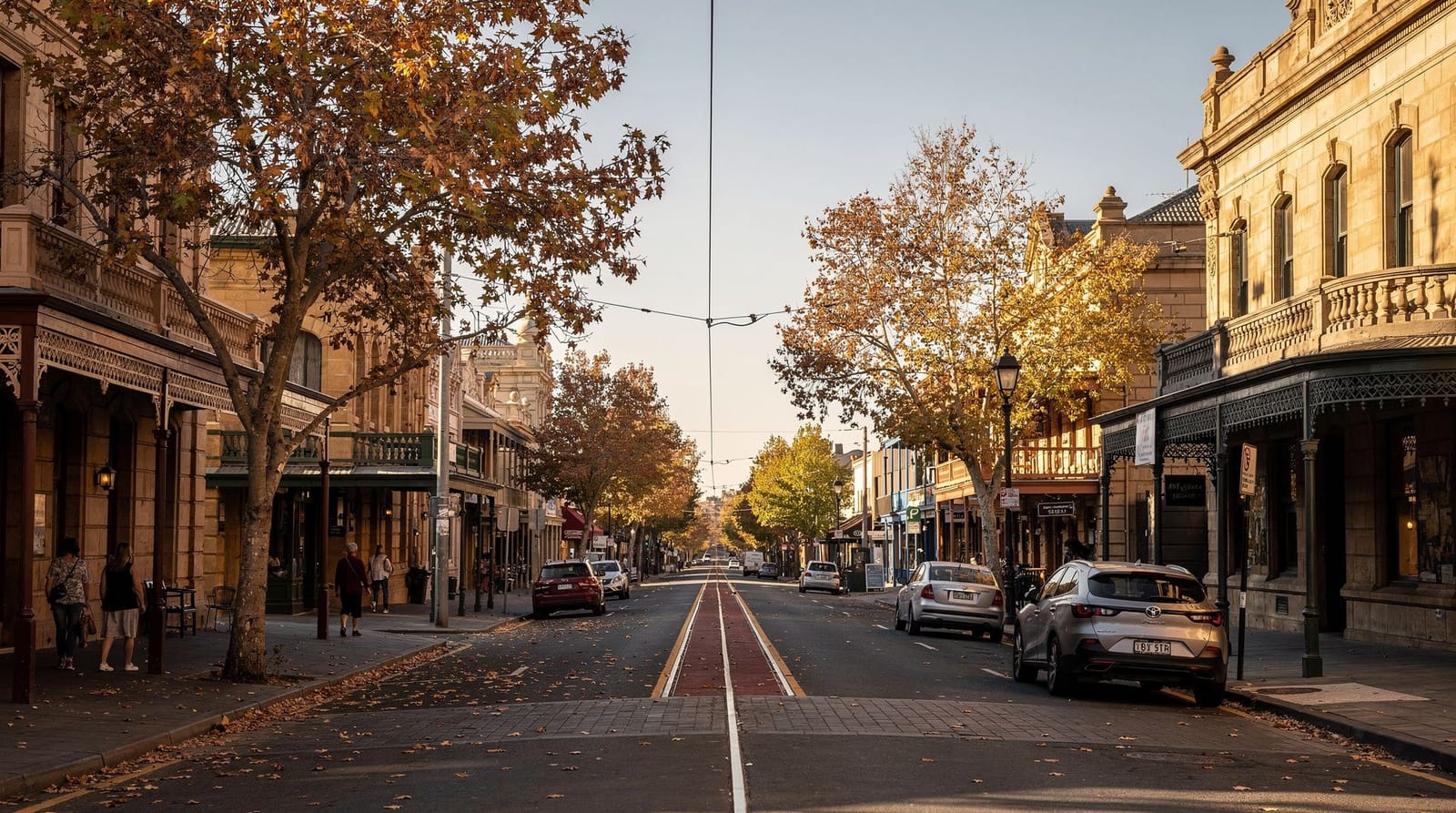
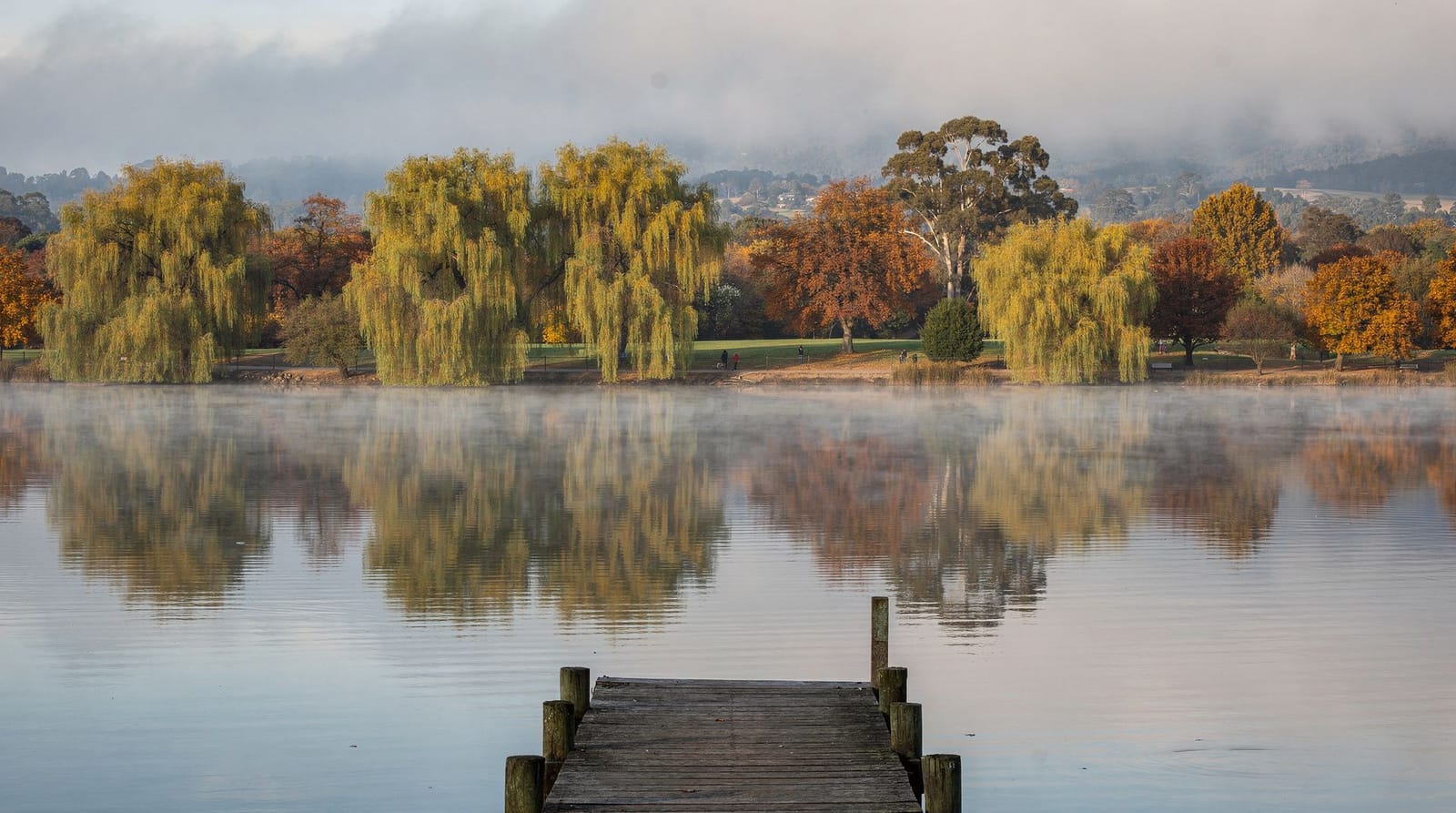
Daylesford’s compact town centre sits above Lake Daylesford, an artificial lake ringed by a walking track through bushland — a pleasant, easy loop (about 40 minutes at a relaxed pace) and a popular spot for canoe and paddle boat hire in warmer months. The main street holds a genuinely well-regarded concentration of cafes, restaurants, and boutique shops, disproportionate to the town’s small permanent population, reflecting decades of weekend visitors from Melbourne sustaining a food and retail scene well beyond what a town this size would normally support.
The Sunday Market and antiques
The Daylesford Sunday Market, held at the railway station precinct, is one of regional Victoria’s best-known weekly markets, selling local produce, crafts, and antiques — worth timing a visit around if a Sunday works with your schedule. The wider district also has a strong antiques and vintage retail scene, with several dedicated shops around both Daylesford and Hepburn Springs drawing dedicated collectors from Melbourne.
An inclusive, long-established LGBTQ+ tourism destination
Daylesford has been one of regional Australia’s most prominent LGBTQ+-friendly tourism towns for decades, home to a significant number of LGBTQ+-owned guesthouses, restaurants, and businesses, and hosting ChillOut, one of regional Australia’s longest-running LGBTQ+ festivals, each March — a well-established part of the town’s identity rather than a recent addition, and a genuine point of local pride reflected in the broader welcoming character of the district’s hospitality businesses.
Wombat Hill Botanic Gardens and other sights
Wombat Hill Botanic Gardens, on a hill above the town centre, combines a 19th-century botanic collection with panoramic views over the district and, on a clear day, back toward Melbourne — a quieter, less commercial alternative to the lake walk. The wider Hepburn Shire also includes smaller villages and additional mineral spring reserves scattered through the surrounding forest, rewarding slower exploration by car for visitors staying more than a single day.
The history of the springs and Swiss-Italian heritage
The mineral springs were first commercially recognised in the 1860s by Swiss-Italian immigrants who had arrived during the gold rush and noticed the water’s similarity to the alpine spa towns of their homeland — a heritage still visible today in local place names, historic buildings, and a handful of businesses that trace their origins to this early Swiss-Italian community. This distinguishes Daylesford’s spa tradition from more recently developed wellness destinations elsewhere in Victoria, giving it a genuine 19th-century pedigree rather than a purely modern wellness-tourism invention.
Convent Gallery and other cultural stops
The Convent Gallery, housed in a former 19th-century convent building on a hill above the town, combines art exhibitions, a cafe, and gardens with sweeping views over Daylesford — one of the district’s better-known cultural landmarks and a good complement to the more nature-focused lake and gardens walks. Smaller galleries and studios are scattered through both Daylesford and Hepburn Springs, reflecting the district’s long-standing appeal to Melbourne-based artists and craftspeople as well as day-tripping visitors.
Practical information
Parking in central Daylesford is generally straightforward outside peak weekends, when the town’s popularity with Melbourne day-trippers and weekenders puts real pressure on the compact main street. Mobile signal is reliable in both Daylesford and Hepburn Springs, though patchier through the surrounding forest reserves. The district sits at a meaningful elevation (around 600 m), making it noticeably cooler than Melbourne year-round and genuinely cold on winter nights — pack accordingly if staying overnight outside summer.
Getting there and getting around
By car, Daylesford is about 110 km from Melbourne, typically around an hour and a half via the Western Freeway and Midland Highway through Ballan or Woodend. There’s no direct train; the closest V/Line services reach Woodend or Ballarat, with the final leg requiring a car, taxi, or bus connection — making a car the practical way for most visitors to reach the district, whether self-driven or via a private tour.
Where to eat and stay
Daylesford’s dining scene is disproportionately strong for a town of its size, with a concentration of well-regarded modern Australian and produce-focused restaurants drawing food-motivated visitors from Melbourne on their own terms, independent of the spa attractions. Accommodation ranges from boutique guesthouses (many with their own private spa baths) to larger hotels, with pricing and availability tightening considerably on weekends and during the ChillOut festival in March — booking well ahead for a weekend visit is close to essential.
A sample weekend plan
Day one: arrive late morning, lunch on Vincent Street, an afternoon walk around Lake Daylesford or Wombat Hill Botanic Gardens, dinner at one of the town’s well-regarded restaurants. Day two: a bathhouse session at Hepburn Bathhouse & Spa booked well ahead, browsing the antique shops or the Sunday Market if the timing lines up, and a stop at the Convent Gallery before heading back to Melbourne in the afternoon. This pacing gets far more out of the district than trying to compress the same activities into a single rushed day.
Trentham and the wider Hepburn Shire
The broader Hepburn Shire surrounding Daylesford includes smaller villages worth knowing about for visitors staying more than a single day. Trentham, about 20 minutes northwest, has its own growing food and antiques scene along with Trentham Falls, one of regional Victoria’s taller single-drop waterfalls, reached via a short walk from a car park just outside town — a good half-day addition for visitors basing themselves in Daylesford but wanting to see beyond the two main villages. Hepburn township itself (distinct from Hepburn Springs) and the surrounding forest reserves hold further, less-visited mineral spring sites for anyone keen to seek out quieter alternatives to the main bathhouse.
Local produce and the region’s reputation for slow food
Daylesford and its surrounding district have built a reputation over several decades as one of regional Victoria’s strongest “slow food” destinations, with a concentration of producer-driven restaurants, farm gates, and a farmers’ market that draws food-focused visitors independent of the spa attractions. This reputation developed alongside, rather than purely because of, the spa tourism — the fertile volcanic soils of the district support strong local produce, and a critical mass of Melbourne chefs and food producers relocated to the area from the 1990s onward, reinforcing both trends together over time.
Practical notes on visiting with children
While Daylesford markets itself primarily to couples and wellness-focused visitors, families do visit, particularly for the lake, gardens, and market — though the Hepburn Bathhouse itself has age restrictions on some of its private bath and spa facilities, worth checking before assuming the full spa experience is available for a family group. The town’s slower pace and boutique-focused retail can also feel less immediately engaging for younger children than the more overtly family-oriented destinations elsewhere in this region, such as the Dandenong Ranges’ Puffing Billy.
For families who would rather spend a day on something more active, a half-day steam train outing in the Dandenongs is an easy alternative, and the Melbourne with kids guide collects more ideas that suit younger travellers. The Puffing Billy railway guide explains the experience in more detail.
Honest take: what justifies the trip
Daylesford rewards an overnight stay far more than a single day trip — the whole point of the district is a slower pace, and rushing the bathhouse, a restaurant booking, and the lake walk into a single day undersells what makes the town appealing in the first place. If time only allows a day trip, prioritise a bathhouse session (booked well ahead) and lunch in town over trying to also fit in the lake walk, the gardens, and the market on the same visit.
Planning around the weather and the calendar
Because the bathhouse is at its best when the air is cold, many visitors build Daylesford into a cold-season trip. The Melbourne winter long weekend itinerary shows how a couple of nights in the city can sit alongside a spa stop, and the Melbourne in winter guide explains what to expect from the weather. For the bigger picture across the year, the best time to visit Melbourne page helps you decide where a goldfields weekend fits, and the packing guide covers the layers that make a chilly evening in the hills far more comfortable. If you are weighing a spa weekend against other getaways, the Melbourne trip cost guide is a useful place to compare what a short break might involve.
Reaching Daylesford without a car
A car is the practical choice, but it is not the only one. The V/Line regional trains guide explains the rail legs that get you closest, and the Melbourne without a car itinerary is a good reminder of how much of the state can be handled with public transport. If you do drive, the driving in Victoria guide covers the rules and habits worth knowing before you leave the city, especially for visitors unused to driving on the left. A dedicated Daylesford day trip guide lays out the same journey as a single outing.
The gold-rush backdrop
The springs were found in the middle of a gold-rush landscape, and the town’s story makes more sense with that context. The gold rush history guide and the Sovereign Hill guide fill in the wider picture of how the goldfields shaped the towns in this part of Victoria, which is why a Daylesford weekend pairs naturally with a look at the region’s past.
If you want a geothermal soak as well
Some visitors like to compare the two bathing styles in the same trip. Daylesford offers naturally sparkling mineral water and a quieter village atmosphere, while the Mornington Peninsula offers heated pools set into the hillside. A guided outing such as a transfer to the Peninsula Hot Springs from the city is an easy way to try the second style without hiring a car. The Mornington Peninsula wineries guide and the Mornington Peninsula day trip guide show what else that coast offers.
Nearby regions
Daylesford sits within easy reach of both Ballarat (about 45 minutes southeast) and Bendigo (about an hour northeast), making it a natural midpoint stop on a longer goldfields-region road trip rather than only a standalone destination from Melbourne.
Hepburn Springs Reserve and other free spring taps
Beyond the paid Hepburn Bathhouse, the surrounding Hepburn Springs Reserve contains a number of free public mineral water taps and pumps scattered through bushland, each drawing from a slightly different spring with its own mineral profile and taste — some notably higher in iron or sulphur than others, with small signs at each pump explaining the water’s characteristics. Locals and regular visitors often have a favourite; trying two or three of the different taps rather than just the first one you encounter is worth the modest extra walking involved.
Food and produce beyond the restaurants
Beyond the town’s well-regarded restaurant scene, the surrounding district supports a genuine local food and produce culture, including small vineyards, orchards, and boutique food producers scattered through the hills around Daylesford and neighbouring Trentham — worth a slower, self-driven exploration for visitors with a full weekend rather than a single day, and a natural complement to the food-focused reputation the town has built over recent decades.
Cool-climate wineries near Daylesford
The Macedon Ranges and the wider goldfields district around Daylesford support a small but well-regarded cool-climate wine scene, centred on pinot noir, chardonnay and sparkling wine grown at elevation — cooler and generally lighter in style than the Yarra Valley’s more famous wine region. Several cellar doors sit a short drive from town, making a self-driven wine loop a reasonable add-on to a spa weekend for visitors with a car and a full two days, though the district’s wine scene is a genuine secondary attraction here rather than a primary reason to visit the way it is at Yarra Valley.
Daylesford compared with Ballarat and Bendigo
All three goldfields towns sit within a similar drive time of Melbourne, but they suit different trips. Daylesford is the smallest and most relaxation-focused of the three; Ballarat and Bendigo are larger regional cities built more around gold-rush history and heritage architecture than wellness tourism.
| Town | Best for | Distance from Melbourne | Vibe |
|---|---|---|---|
| Daylesford | Spa weekends, food, lake walks | ~110 km, ~1h30 | Small, slow-paced village |
| Ballarat | Sovereign Hill gold-rush history | ~115 km, ~1h15 | Larger regional city |
| Bendigo | Victorian-era architecture, gold history | ~150 km, ~1h45 | Larger regional city |
Visitors combining two of the three towns in one trip most often pair Daylesford with Ballarat, since they sit only about 45 minutes apart on the same general route west of Melbourne — see the Ballarat day trip guide for how the two combine.
Frequently asked questions about Daylesford and Hepburn Springs
How far is Daylesford from Melbourne?
About 110 km, typically around an hour and a half by car via the Western Freeway and Midland Highway.
What’s the difference between Daylesford’s springs and the Mornington Peninsula’s hot springs?
Daylesford’s mineral springs are naturally carbonated (sparkling) and prized for mineral content rather than heat; the Mornington Peninsula’s Peninsula Hot Springs draws on naturally heated geothermal bore water. They’re different phenomena that both support a bathing and wellness tourism industry.
Do I need to book the Hepburn Bathhouse in advance?
Yes, particularly for weekend sessions and private baths, which regularly sell out ahead of time, especially in winter when the contrast of warm mineral water against cold air is most appealing.
Is Daylesford good for a day trip, or does it need an overnight stay?
It works as a day trip, but the town’s appeal is built around a slower pace, and an overnight stay lets you properly enjoy the bathhouse, a considered dinner, and the lake walk without rushing.
Is Daylesford an LGBTQ+-friendly destination?
Yes, and prominently so — it’s been one of regional Australia’s best-known LGBTQ+ tourism towns for decades, home to the long-running ChillOut festival each March and a significant number of LGBTQ+-owned local businesses.
Can you drink the mineral spring water for free?
Yes — several public mineral water taps around the Daylesford and Hepburn Springs district let visitors fill bottles for free directly from natural springs, separate from the paid bathhouse facilities.
What is the Convent Gallery?
An art gallery, cafe, and garden set in a former 19th-century convent building on a hill above Daylesford, with sweeping views over the town — one of the district’s best-known cultural landmarks.
Is Daylesford close to Ballarat or Bendigo?
Yes — Ballarat is about 45 minutes southeast and Bendigo about an hour northeast, making Daylesford a practical midpoint stop on a longer goldfields road trip.
Is there wine tasting near Daylesford?
Yes — the Macedon Ranges and surrounding goldfields district have a small cool-climate wine scene (pinot noir, chardonnay, sparkling), with several cellar doors a short drive from town, though it’s a secondary attraction here compared with the Yarra Valley’s larger wine region.
Should I visit Daylesford or Ballarat if I only have time for one?
It depends on what you want — Daylesford for a slower spa-and-food weekend, Ballarat for gold-rush history and Sovereign Hill. Couples wanting to relax generally prefer Daylesford; history- and family-focused visitors usually get more from Ballarat.