Victoria's gold rush history: how it built Melbourne
Ballarat: Melbourne private ballarat sovereign hill gold mine tours
What was the Victorian gold rush and why does it matter to Melbourne?
Gold was discovered near Ballarat and Bendigo in 1851, triggering a rush that made Victoria briefly the richest place on earth and multiplied Melbourne's population roughly tenfold within a decade. That wealth built the grand Victorian-era buildings, arcades and boulevards that still define the CBD today, and it's best experienced firsthand at Sovereign Hill in Ballarat, an hour and a half from the city.
Gold, discovered near Ballarat and Bendigo in 1851, briefly made Victoria the richest place on earth and multiplied Melbourne’s population roughly tenfold within a decade — wealth that built the grand Victorian-era arcades, banks and boulevards still defining the CBD today. This guide covers where that history is visible in Melbourne itself, and where to experience it firsthand at Sovereign Hill.
| Where | Ballarat (90 min) & Bendigo (2hrs) from Melbourne |
| Cost | Sovereign Hill general admission varies by ticket type |
| Time needed | Full day (4-5 hours on-site plus travel) |
| Getting there | V/Line train from Southern Cross, or self-drive |
| In the CBD | State Library, arcades & Collins Street bank facades |
The decade that made Melbourne rich
In 1851, prospectors found payable gold near Ballarat and Bendigo, months after Victoria had separated from New South Wales as its own colony. What followed was one of the largest gold rushes in world history: within a decade, Victoria’s population grew from roughly 77,000 to over half a million, driven by prospectors arriving from across Australia, Britain, continental Europe, the United States and, significantly, China — Bendigo and Ballarat both developed substantial Chinese mining communities whose descendants and cultural legacy remain visible in both towns today.
Melbourne, as the colony’s port and administrative capital, absorbed an outsized share of that wealth even though the actual gold came from goldfields well inland. Merchants, banks, shipping agents and the colonial government all captured a cut of the gold economy passing through the city, and by the 1880s that accumulated wealth had funded a building boom so extravagant it earned Melbourne the nickname “Marvellous Melbourne” — briefly one of the wealthiest cities in the world per capita, richer at the time than London by some contemporary measures.
Where the gold-rush wealth is still visible in Melbourne
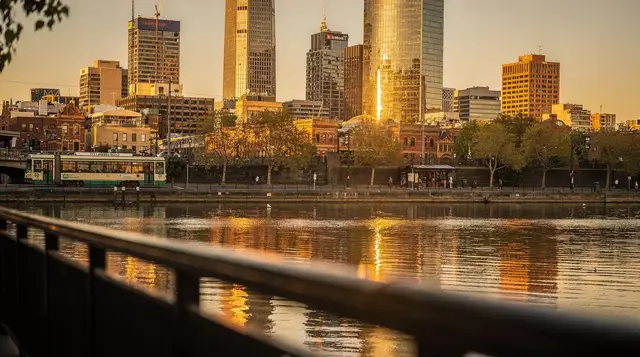
Almost every grand Victorian-era building in the CBD owes its existence, directly or indirectly, to gold-rush and post-gold-rush wealth. Block Arcade (1893) and Royal Arcade (1870) were built as gold-era retail statements, modelled on European shopping galleries specifically because Melbourne’s merchant class had the money and the confidence to compete with London and Paris on architectural ambition.
The grand bank facades along Collins Street’s “Paris end,” the State Library of Victoria’s original 1854 building (founded remarkably early, directly funded by gold-rush prosperity), and much of the ironwork lacework verandahs across inner suburbs like Carlton and Fitzroy all trace back to the same wealth wave.
Flinders Street Station, while completed later (1910) than the initial boom, exists in its current grand form because Melbourne’s rail network had to expand rapidly to move the gold-rush population and freight between the port, the CBD and the goldfields beyond — infrastructure investment justified entirely by gold-era economic momentum even decades after the initial rush had slowed.
Sovereign Hill: the best place to experience it firsthand
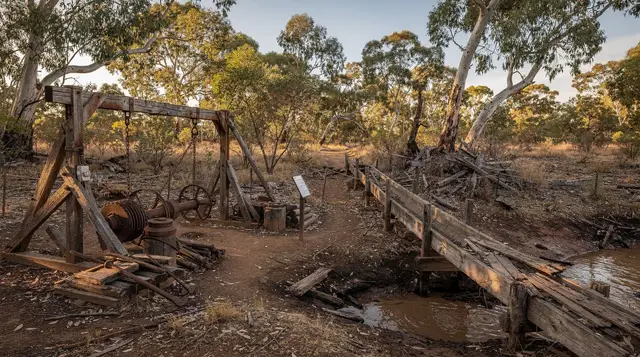
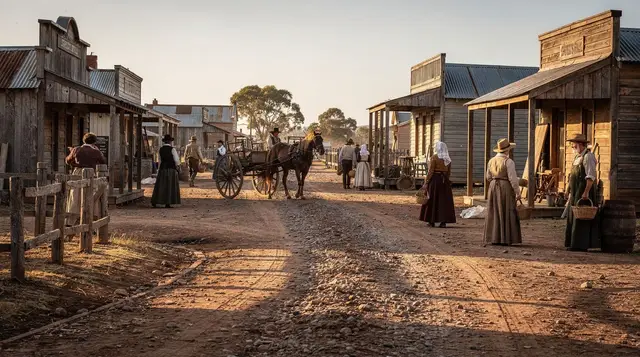
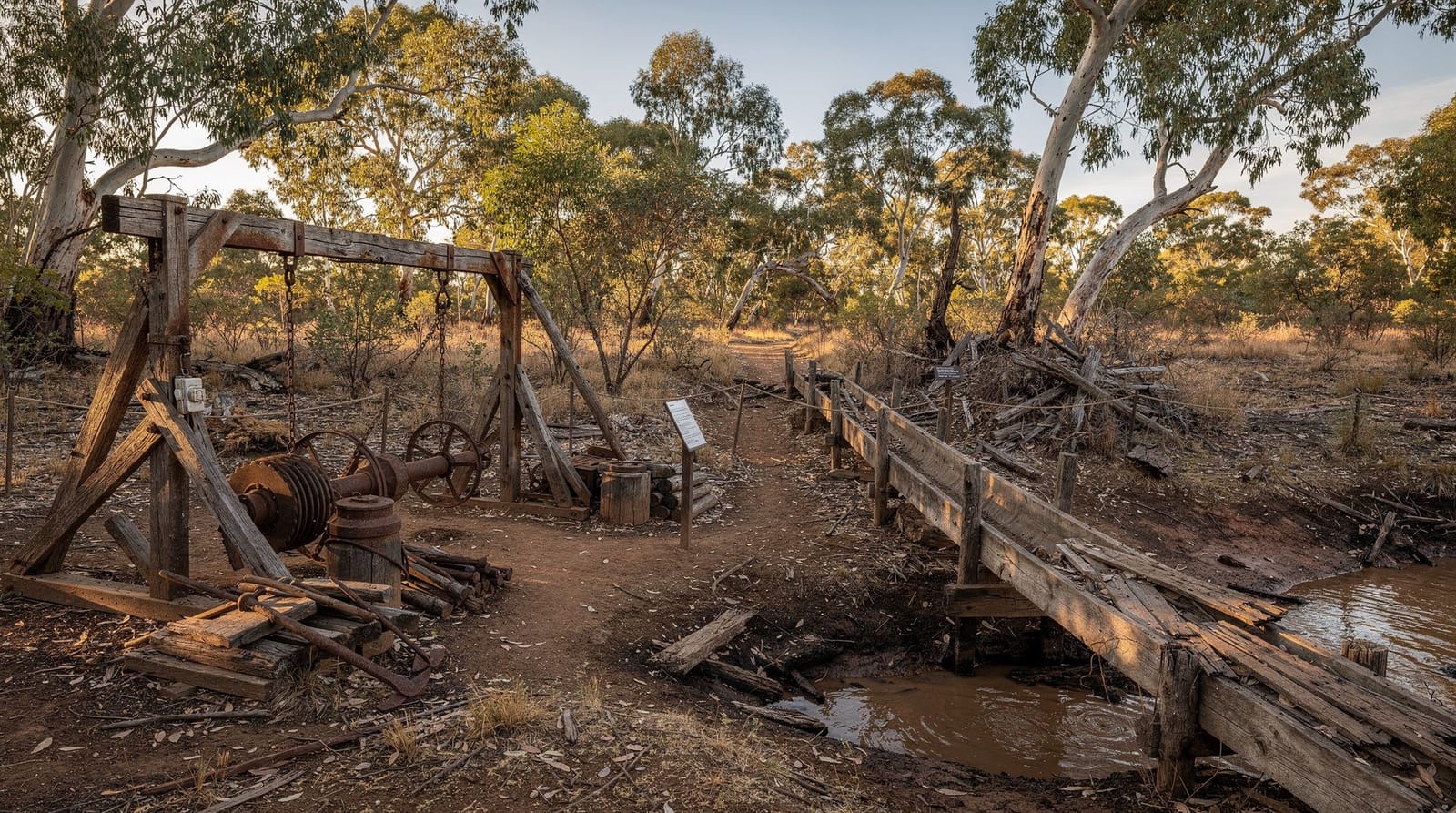
For the goldfields experience itself rather than just Melbourne’s inherited wealth, Sovereign Hill in Ballarat, roughly 90 minutes from Melbourne by car or train, is a recreated 1850s gold-mining township built on an actual former goldfield. It’s a living-history museum rather than a static one: costumed staff run period shops, a working underground mine tour takes you beneath the original diggings, and a genuine gold-panning creek lets visitors try their luck (finding small flecks of real gold is common enough to keep it interesting without being guaranteed).
 Melbourne private ballarat sovereign hill gold mine toursCheck availability
Sovereign Hill sits directly across the road from the Eureka Centre, marking the site of the Eureka Stockade — the 1854 armed uprising by miners protesting licence fees and demanding political representation, which, despite ending in military defeat for the miners within twenty minutes, is widely taught in Australian schools as a formative moment in the country’s move toward democratic reform, including its influence on eventual voting rights expansion.
book a full-day Ballarat gold rush tour from MelbourneBendigo: the other goldfields city
Bendigo, roughly two hours north-west of Melbourne, developed alongside Ballarat as Victoria’s other major goldfields city, and retains its own distinct gold-era character: an unusually grand main street lined with Victorian bank and civic buildings for a regional city of its size, plus one of Australia’s most significant Chinese heritage precincts, reflecting the large Chinese mining population that settled there during and after the rush. Bendigo’s Golden Dragon Museum documents this history in more depth than Sovereign Hill’s broader colonial focus, worth combining if Chinese-Australian gold rush history specifically interests you.
The Chinese diggers’ story
One of the more significant and under-told threads of Victoria’s gold rush is the Chinese mining community’s experience. Tens of thousands of Chinese prospectors, overwhelmingly from Guangdong province, arrived at Victorian ports through the 1850s and 60s, some walking hundreds of kilometres inland from landing points chosen specifically to avoid colonial taxes levied on Chinese arrivals at Melbourne’s own port. Chinese miners faced significant discrimination, including violent riots at Buckland River and Lambing Flat (the latter in New South Wales but part of the same broader goldfields story), alongside restrictive colonial legislation that would eventually harden into the White Australia Policy decades later.
Despite this, Chinese communities in Bendigo and Ballarat built lasting infrastructure — temples, associations, market gardens — some of which survives today, and Bendigo’s Easter Sunday Chinese procession, featuring the Sun Loong dragon, has run continuously since the 1870s, making it one of the longest-running community festivals of its kind in Australia.
Why the gold rush mattered beyond Victoria
The scale of the Victorian gold rush is easy to understate from a modern vantage point. Between 1851 and 1860, Victoria produced roughly a third of the world’s gold output at the time — an extraordinary concentration for a colony that barely existed as a separate administrative entity before the rush began. That output briefly made Melbourne one of the wealthiest cities on the planet per capita, ahead of many established European centres, and drew immigrants not just from Britain but from continental Europe, North America and China in numbers that permanently reshaped Australia’s demographic makeup.
Melbourne’s population multiplied roughly tenfold within a decade of the 1851 discovery, a growth rate that infrastructure, housing and governance all struggled to keep pace with, producing chaotic boomtown conditions in the goldfields themselves even as the capital grew rich on the proceeds.
The gold rush also accelerated Victoria’s political development. The colony had only just separated from New South Wales when gold was discovered, and the sudden influx of population and wealth forced rapid institution-building — courts, police, local government structures — that might otherwise have taken decades longer to establish.
The licence-fee grievances that sparked the Eureka Stockade were, at their core, a dispute over taxation without representation, echoing constitutional arguments familiar from other British colonial contexts, and the eventual political reforms that followed (moving toward manhood suffrage and secret ballot voting, both unusually progressive for the era) are frequently cited in Australian civics education as directly traceable to the goldfields unrest.
How the gold rush shaped Melbourne’s civic institutions
Gold-rush wealth didn’t just build private arcades and bank facades — it funded a wave of civic institution-building that still defines the city. The University of Melbourne (established 1853), the State Library of Victoria (1854), the National Gallery of Victoria’s original incarnation, and the Royal Exhibition Building (completed 1880, built for Melbourne’s International Exhibition, itself a direct showcase of gold-era colonial confidence) all emerged from the same two-to-three-decade window of concentrated wealth.
Few Australian cities of comparable size, then or now, built this density of major cultural and educational institutions within a single generation, and it’s a direct consequence of gold flowing through Melbourne’s banks and merchant houses even though none of it was mined within the city itself.
Visiting the goldfields region as a day trip or overnight
Sovereign Hill and Ballarat work well as either a full-day trip from Melbourne (roughly 90 minutes each way, leaving 5-6 hours on-site) or an overnight if you want to add Ballarat’s Victorian-era streetscape, the Art Gallery of Ballarat, and the Ballarat Wildlife Park to the itinerary without rushing. Bendigo is a further hour beyond Ballarat, making a combined Ballarat-and-Bendigo day trip a long one (12+ hours round trip) better split across two days if both cities genuinely interest you.
Werribee mansion sovereign hill tourCheck availability
What the gold rush didn’t build: a note of honesty
It’s worth resisting the temptation to credit gold-rush wealth with everything grand in Melbourne — the city’s tram network, its parks system, and much of its 20th-century civic architecture came later, funded by other economic waves (wool, manufacturing, post-war immigration and growth) rather than the 1850s-80s gold boom specifically. The clearest, most defensible gold-era legacy is the CBD’s dense cluster of Victorian-era commercial and civic buildings constructed roughly between 1860 and 1890, plus the initial population surge that made Melbourne a genuine world city rather than a minor colonial outpost.
Treat any claim that “the gold rush built modern Melbourne” as shorthand for that specific 30-year window, not the whole of the city’s subsequent 150-plus years of development.
Practical tips
Sovereign Hill is a full-day commitment, not a quick stop — budget at least 4-5 hours on-site to see the mine tour, gold panning, and the township’s shops and demonstrations properly, on top of the roughly 90-minute drive or train journey each way.
Book the underground mine tour in advance if possible — it runs on a timed schedule with limited capacity per group, and can sell out on weekends and school holidays.
Bring warm layers even in summer for the underground mine tour, since the tunnels stay cool year-round regardless of surface temperature.
Combine with the Eureka Centre directly across the road for the Eureka Stockade story — it’s a separate, smaller museum but adds meaningful context to the Sovereign Hill experience and is easy to fit into the same day.
Where this fits in your Melbourne trip
Gold rush history is one of Victoria’s most distinctive whitespace themes — it’s a story most international visitors don’t associate with Australia at all, expecting beaches and wildlife rather than a 19th-century wealth boom that briefly made this corner of the world one of the richest on earth. A single day trip to Ballarat and Sovereign Hill covers the story properly, and pairs naturally with a look at Melbourne’s Victorian architecture and arcades to connect the goldfields wealth directly to the buildings you’ll walk past in the CBD.
For travellers building a broader regional Victoria itinerary, the Grampians sit within reach of the same goldfields region, and Daylesford and the wider goldfields-and-spa-country belt extend the theme further if you have more than a single day to spend outside the city. Staying in the CBD makes an early departure to Ballarat straightforward via either the V/Line train from Southern Cross Station or a self-drive along the Western Freeway.
If you’d rather layer the history into an already-planned CBD day rather than a dedicated regional trip, start with the State Library of Victoria (itself a gold-era institution), walk the arcades built on the same wealth, and finish near Flinders Street Station — a compact loop that tells the gold-rush story entirely within the city centre for anyone who can’t make it out to Ballarat or Bendigo on this trip.
And for a very different but related angle on 19th-century Victorian history, the region’s Aboriginal heritage sites tell the other, often harder side of the same colonial-era story that the gold rush accelerated.
Ballarat versus Bendigo, side by side
| Ballarat / Sovereign Hill | Bendigo | |
|---|---|---|
| Distance from Melbourne | ~90 minutes | ~2 hours |
| Best for | Immersive, hands-on living history | Chinese-Australian gold heritage depth |
| Signature experience | Underground mine tour, real gold panning | Golden Dragon Museum, grand civic streetscape |
| Time needed | Full day | Full day, or combine with Ballarat over 2 days |
Gold rush heritage beyond the goldfields towns
Melbourne’s gold-era wealth also shaped smaller regional towns across the goldfields belt, including Daylesford and the wider spa-country region, which grew as mineral-spring resort towns partly on the back of goldfields-era prosperity and rail connections built during the boom. Travellers with more than a single day for regional Victoria can extend a Ballarat visit into this broader goldfields corridor, though Sovereign Hill and the Eureka Centre remain the most concentrated, visitor-ready way to experience the era firsthand.
Photography and what to expect on site
Sovereign Hill photographs well throughout the day, with costumed staff, period shopfronts and the underground mine entrance all offering genuine, unstaged photo opportunities rather than manufactured photo-ops. The underground mine tour itself is cool and occasionally cramped, worth knowing if claustrophobia is a concern — staff are used to accommodating visitors who’d rather skip that specific component while still enjoying the rest of the township.
More tours on Viator
Top-rated experiences with verified reviews, bookable on Viator (a Tripadvisor company).


Frequently asked questions about Victoria's gold rush history
When did the Victorian gold rush start?
Gold was found in payable quantities near Ballarat and Bendigo in 1851, just months after Victoria separated from New South Wales as its own colony. The rush peaked through the mid-1850s and reshaped the colony's population and economy within a single decade.Why is Melbourne's architecture so grand if the gold wasn't found there?
Melbourne was the colony's port and administrative capital, so merchants, banks and government all captured a share of gold-rush wealth passing through the city even though the mining happened inland at Ballarat and Bendigo. That concentrated wealth funded the 1880s building boom that gave Melbourne its 'Marvellous Melbourne' nickname.What was the Eureka Stockade?
The Eureka Stockade was an armed uprising by gold miners at Ballarat in December 1854, protesting mining licence fees and demanding political representation. Colonial troops crushed the rebellion militarily within about twenty minutes, but it's widely credited in Australian history as a catalyst for democratic reforms including expanded voting rights.Is Sovereign Hill worth the trip from Melbourne?
Yes, for most visitors — it's a full-day commitment (roughly 90 minutes each way plus 4-5 hours on-site) but delivers a genuinely immersive recreated 1850s goldfields township with a working underground mine tour and real gold panning, unlike a static museum you walk through in an hour.What happened to Chinese miners during the gold rush?
Tens of thousands of Chinese prospectors, mostly from Guangdong province, worked the Victorian goldfields and faced significant discrimination, including violent riots and restrictive colonial taxes aimed specifically at Chinese arrivals. Despite this, lasting Chinese community institutions survive in Bendigo and Ballarat, including Bendigo's continuously run Easter Chinese procession dating to the 1870s.Should I visit Ballarat or Bendigo if I only have time for one?
Ballarat and Sovereign Hill for most first-time visitors — it's closer to Melbourne (90 minutes versus Bendigo's two hours) and offers the more immersive, hands-on living-history experience. Choose Bendigo instead if Chinese-Australian gold rush heritage specifically is your priority, since its Golden Dragon Museum covers that history in more depth.Can I still pan for real gold today?
Yes — Sovereign Hill's gold-panning creek uses real alluvial gravel, and finding small flecks of genuine gold is common enough to keep the activity interesting without being guaranteed on every visit. It's included in general admission rather than a separate paid add-on.Is the gold rush history walkable within Melbourne's CBD itself?
Yes, to a meaningful extent — the State Library of Victoria, Block Arcade and Royal Arcade, and the grand Collins Street bank facades were all funded by gold-era wealth and sit within a compact CBD walking loop, giving a genuine taste of the story even for visitors who can't make it out to Ballarat or Bendigo.
Top experiences
Bookable activities with verified prices and instant confirmation on GetYourGuide.