Brighton & the bayside beaches
Brighton guide: the coloured bathing boxes on Dendy Street Beach, Church Street shopping, Middle Brighton's café strip, and how to get there by train.
Melbourne: Melbourne brighton beachbathing boxes photoshoot
Duration: 1 hour
Quick facts
- Distance from CBD
- ~11 km south, ~25 minutes by train
- Landmark
- 82 heritage-listed bathing boxes on Dendy Street Beach
- Train line
- Sandringham line from Flinders Street to Middle Brighton or Brighton Beach
- Key street
- Church Street — main shopping and café strip
- Best for
- Photogenic beach walk, upmarket shopping, calm swimming
Brighton is one of Melbourne’s most recognisable postcard images without being one of its most-visited destinations — the row of 82 brightly painted, heritage-listed bathing boxes lining Dendy Street Beach shows up in tourism marketing constantly, but the suburb itself sees a fraction of St Kilda’s foot traffic, largely because it’s a genuinely residential, upmarket bayside suburb rather than a purpose-built entertainment strip. That mismatch between fame and visitor numbers is, honestly, part of the appeal: the bathing boxes are one of the few classically “iconic Melbourne” sights you can see without fighting a crowd for the photo.
Brighton sits about 11 km south of the CBD along Port Phillip Bay, reached directly by train on the Sandringham line, and it makes a natural half-day pairing with St Kilda a few stops back up the same coastline — St Kilda for beach culture and nightlife, Brighton for the photogenic walk and a quieter, more affluent shopping strip.
| Where | Dendy Street Beach and Church Street, Middle Brighton |
| Cost | Free to view the bathing boxes; a photoshoot session runs around 60-100 AUD |
| Time needed | Half a day, or an hour or two if just seeing the boxes |
| Getting there | Sandringham line train, ~25 minutes from Flinders Street |
| Best time | Early morning or late afternoon for photography and quieter beach |
The bathing boxes
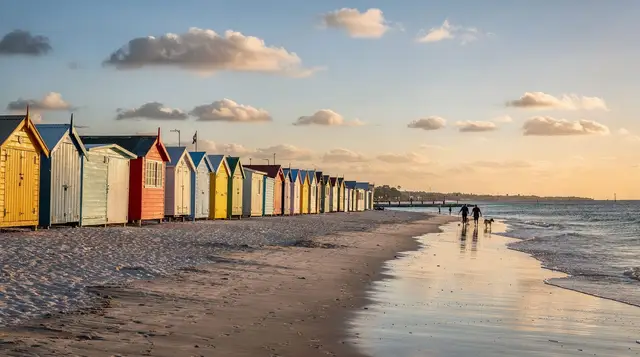
The 82 timber bathing boxes along Dendy Street Beach date from the Edwardian era (many built in the early 1900s to 1930s), when bay-side bathing etiquette required a private structure for changing and storing swimming equipment away from public view. Each box is privately owned — ownership passes with the surrounding real estate market and boxes rarely change hands, occasionally selling for surprising sums given they’re uninsulated timber sheds with no plumbing — and owners repaint them in a personal palette, creating the row of individually distinct, brightly coloured facades that make the beach one of the most photographed stretches of coastline in Australia.
They are heritage-listed and cannot be structurally altered, which is why the row has kept its essentially unchanged Edwardian silhouette for over a century even as the colours shift. Early morning and late afternoon give the most even, least crowded light for photos; midday sun tends to wash out the colour contrast.
Melbourne: Brighton beach bathing boxes photoshootMiddle Brighton and Church Street
Church Street, running inland from Middle Brighton railway station, is Brighton’s main shopping and dining strip — noticeably more upmarket and boutique-focused than St Kilda’s Acland or Fitzroy Streets, reflecting Brighton’s status as one of Melbourne’s wealthier suburbs. It’s a pleasant, unhurried strip for a coffee or lunch rather than a nightlife destination, and it closes down considerably earlier in the evening than the bayside suburbs further north.
The beach and swimming
Brighton’s beach is calm bay water, similar in character to St Kilda’s but generally quieter and, locals would argue, marginally cleaner given the lower foot traffic. It’s a good swimming option away from the CBD crowds, with a long, flat sandy stretch suited to a walk regardless of whether you swim. Middle Brighton Baths, a heritage sea-bathing complex just off the beach, offers a historic alternative to open-water swimming, including seasonal pool access.
Billilla and Brighton’s heritage mansions
Brighton’s status as a 19th-century wealthy retreat from the city has left a scattering of grand heritage mansions along its foreshore streets, of which Billilla — an Italianate 1878 mansion with public gardens, now used for community events and occasional open days — is the most accessible for visitors without a specific invitation. The broader residential streets around Brighton and Brighton Beach stations are worth a slow walk for anyone interested in Melbourne’s Victorian and Edwardian domestic architecture, distinct from the terrace-house density of Fitzroy or Carlton.
Melbourne bayside cycling tour with refreshmentsDendy Park and the wider Brighton foreshore
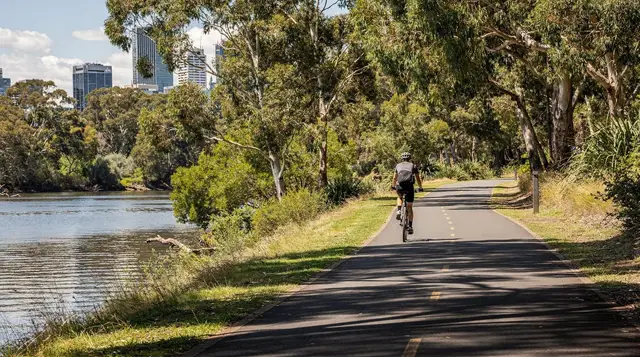
Inland from the beach, Dendy Park offers a large, leafy green space with sports ovals and walking paths, a useful, less touristy stop if the beach itself is crowded on a warm weekend. The Bay Trail, a shared cycling and walking path, runs the length of the Brighton foreshore and connects north toward St Kilda and south toward Sandringham, making a self-guided coastal walk or ride a realistic way to see more of the bayside suburbs than the bathing boxes alone. For a broader sense of how Brighton fits into a wider Melbourne itinerary, see our free things to do guide, since a Brighton beach walk costs nothing.
Brighton vs St Kilda at a glance
| Brighton | St Kilda | |
|---|---|---|
| Distance from CBD | ~11 km, ~25 min by train | ~6 km, ~15-20 min by tram |
| Signature sight | Dendy Street bathing boxes | Luna Park, penguin colony, Acland Street |
| Atmosphere | Quiet, residential, upmarket | Lively, beachy, more nightlife |
| Best for | Photography, a calm swim | Nightlife, food variety, families |
| Transport | Train only, no direct tram | Tram (Free Tram Zone nearby) and train |
A brief history of Brighton
Brighton was one of Melbourne’s earliest seaside subdivisions, laid out from the 1840s and named, like several of the city’s bayside suburbs, for its English namesake — a deliberate branding exercise aimed at attracting the same wealthy retreat-seeking clientele that Regency-era Brighton drew in England. Its early development as a genteel Victorian seaside resort, rather than a working port or industrial suburb, is why it retains such a concentration of large 19th-century mansions along its foreshore streets, in contrast to the more working-class origins of suburbs like Footscray or Williamstown across the bay.
The bathing boxes themselves emerged from this same resort culture, formalising a bathing etiquette that required separate, semi-private structures for changing rather than the more casual beach culture that developed later in the 20th century.
Comparing Brighton to Melbourne’s other bayside suburbs
Brighton’s quieter, more residential character contrasts with Williamstown across the bay, which trades Brighton’s beach-mansion wealth for a working maritime history and its own foreshore walk — worth knowing about if the bathing boxes’ particular brand of upmarket calm isn’t quite the vibe you’re after and a different bayside flavour appeals instead.
Elwood and Sandringham
Elwood, between St Kilda and Brighton along the same coastline, offers a quieter, more residential stretch of foreshore with its own smaller beach and a canal-side park (Elwood Canal) popular with local families — a useful stop if walking or cycling the bay path between the two better-known suburbs. Sandringham, a few stops further south past Brighton on the same rail line, has its own low-key beach and yacht club scene, generally visited by locals rather than tourists, and marks the southern end of the Sandringham line.
Shaping your visit
Brighton rewards a loose plan rather than a tight schedule. Start on the sand while the light is soft, walk the length of the bathing boxes at an easy pace, and only then decide whether the rest of the day belongs to the water, the shops or the foreshore path. Our dedicated Brighton bathing boxes guide goes deeper on the boxes themselves, so this page can stay focused on the suburb around them.
If you are building a wider trip, a bayside half day slots neatly into a two-day Melbourne itinerary as a calm counterweight to the busier city-centre days. Travellers with more time can lean on the three-day first-timer plan and drop Brighton in on whichever morning the weather looks best. Because the beach is the whole point, a clear forecast matters more here than almost anywhere else in the city, and the Melbourne packing guide is worth a glance for layers, sun protection and a windproof top, since bay breezes can turn a mild day cooler than expected.
Pairing Brighton with other bayside stops
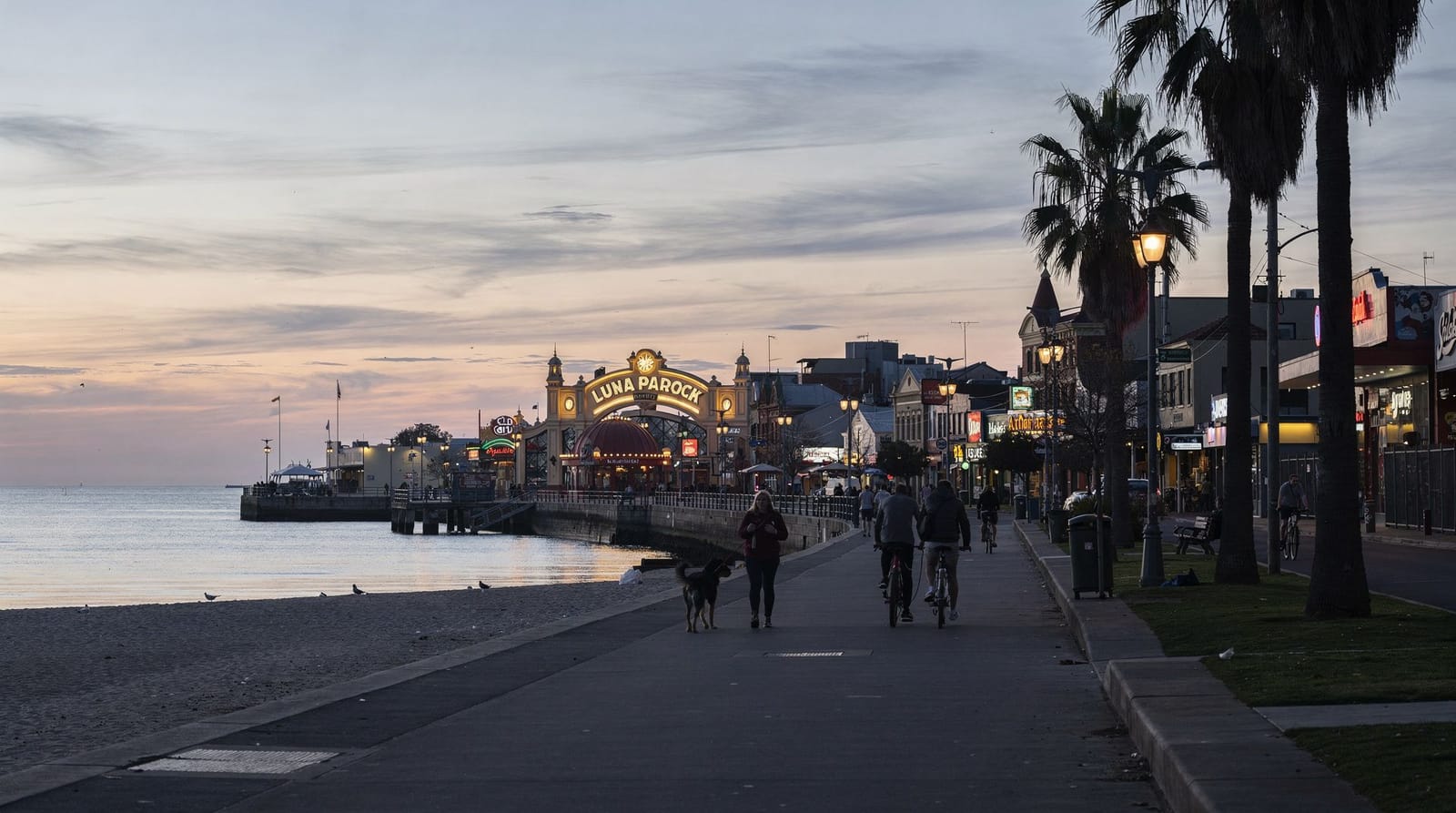
The natural companion is St Kilda, where Luna Park and the pier give the day a livelier second half. Ride the train out to Brighton first for the quiet part, then work your way back north so that the evening ends somewhere with more energy and more food choice. Families can fold this into a broader plan using the Melbourne with kids guide, since the calm shoreline and flat walking suit younger children far better than a busy city-centre afternoon.
Cyclists have an easy way to stretch the day: the foreshore path links the bayside suburbs, and the bike tours guide explains the options if you would rather ride with a guide than navigate alone. The Capital City Trail guide is a useful companion for anyone who wants to connect the coast with the rest of Melbourne on two wheels. For a longer escape beyond the suburbs, the Mornington Peninsula continues the bayside theme with more beaches and a slower pace, and it works well as a separate day rather than an add-on.
Seasons on the bay
Brighton changes character with the weather. In the warmer months the beach fills with locals and the foreshore feels social; the Melbourne in summer guide covers what to expect from the heat and how to plan around it. In the cooler months the sand is nearly empty, the boxes stand out against grey skies, and a long coastal walk followed by a warm café stop is a perfectly good way to spend a morning. The Melbourne in winter guide helps you judge whether a bayside outing suits the season you are travelling in. Whatever the time of year, the light on the water is the real draw, so allow time to simply stand and look rather than rushing between stops.
Staying nearby or visiting from the city
Most visitors treat Brighton as a day trip, and that is the sensible approach: the train is simple, the suburb is easy to read, and returning to the centre in the evening keeps your options open. If you are still deciding where to base yourself, the where to stay in Melbourne guide compares the main areas, and the getting around Melbourne guide explains how trains, trams and the Myki card fit together so the journey out to the bay never becomes a puzzle.
Getting there
The Sandringham railway line runs directly from Flinders Street Station to Middle Brighton and Brighton Beach stations, taking roughly 25 minutes and covered by a standard Myki fare (Brighton sits outside the Free Tram Zone and has no direct tram service, unlike St Kilda). Middle Brighton station is the more central stop for Church Street and the bathing boxes; Brighton Beach station is a short walk further south. Driving is straightforward but street parking near the beach can be tight on warm weekends.
Budget for a Brighton day
The bathing boxes and beach walk are free. A Church Street coffee and light lunch runs 20–30 AUD per person, broadly comparable to or slightly above the citywide average given the suburb’s affluence. A guided photoshoot session at the bathing boxes typically runs 60–100 AUD depending on length and inclusions. Overall, Brighton is one of the cheaper bayside options if you’re mainly there for the beach and the photo rather than shopping or dining extensively.
Frequently asked questions about Brighton and the bathing boxes
Can I go inside the bathing boxes?
No — they are privately owned and not open to the public. Viewing and photographing from the beach is the standard way to experience them.
How do I get to Brighton from the CBD?
The Sandringham line runs direct from Flinders Street Station to Middle Brighton or Brighton Beach in about 25 minutes; there is no direct tram, unlike St Kilda.
What’s the best time of day to photograph the bathing boxes?
Early morning or late afternoon, when the light is more even and the beach is quieter; midday sun tends to flatten the colour contrast between boxes.
Is Brighton better than St Kilda for a beach day?
They serve different purposes — St Kilda has more nightlife, food variety and the penguin colony; Brighton has the bathing boxes, a quieter beach and a more upmarket shopping strip. Many visitors combine both in one day along the Sandringham line.
Can I swim at Brighton Beach?
Yes — it’s calm bay water suitable for swimming, generally quieter than St Kilda’s beach.
Is Brighton expensive?
It’s one of Melbourne’s wealthier suburbs and prices reflect that on Church Street, though the core attraction — the bathing boxes and beach — costs nothing to visit.
How much do the bathing boxes cost to buy?
They occasionally sell for surprising sums, sometimes well into six figures, purely as heritage-listed structures with no services — a reflection of Brighton’s real estate market rather than any functional value.
Top experiences
Bookable activities with verified prices and instant confirmation on GetYourGuide.