Williamstown
Williamstown guide: the ferry across Port Phillip Bay, Nelson Place's Victorian waterfront, HMAS Castlemaine, and the best skyline view of Melbourne.
Melbourne: Melbourne city and suburbs highlights bus and walk tour
Duration: 3 hours
Quick facts
- Distance from CBD
- ~8 km southwest by road; ferry across the bay from Southbank/Docklands
- Founded
- 1835, one of Melbourne's earliest settlements
- Landmark
- HMAS Castlemaine, a preserved WWII minesweeper
- Best for
- Ferry ride, seafood, Melbourne skyline views across the bay
Williamstown sits on a small peninsula across Port Phillip Bay from the CBD, and it holds a genuinely different claim among Melbourne’s suburbs: founded in 1835, the same year as Melbourne itself, it was briefly considered as an alternative site for the colony’s main settlement before the Yarra’s location won out, and it functioned for over a century afterward as a working naval and merchant port largely separate in character from the rest of the city.
| Where | Small peninsula across the bay, ~8 km southwest of the CBD |
| Cost | Free to walk; ferry fare and a seafood lunch are the main costs |
| Time needed | Half a day |
| Getting there | Ferry from Southbank/Docklands (~20–30 min) or train (~30–40 min) |
| Best time | Clear afternoons for skyline views on the ferry crossing |
That maritime history is still the main reason to visit — Williamstown has more intact 19th-century waterfront streetscape than almost anywhere else in inner Melbourne, precisely because its economic decline through the mid-to-late 20th century (as shipping and naval activity wound down) left it without the redevelopment pressure that reshaped the CBD and inner suburbs.
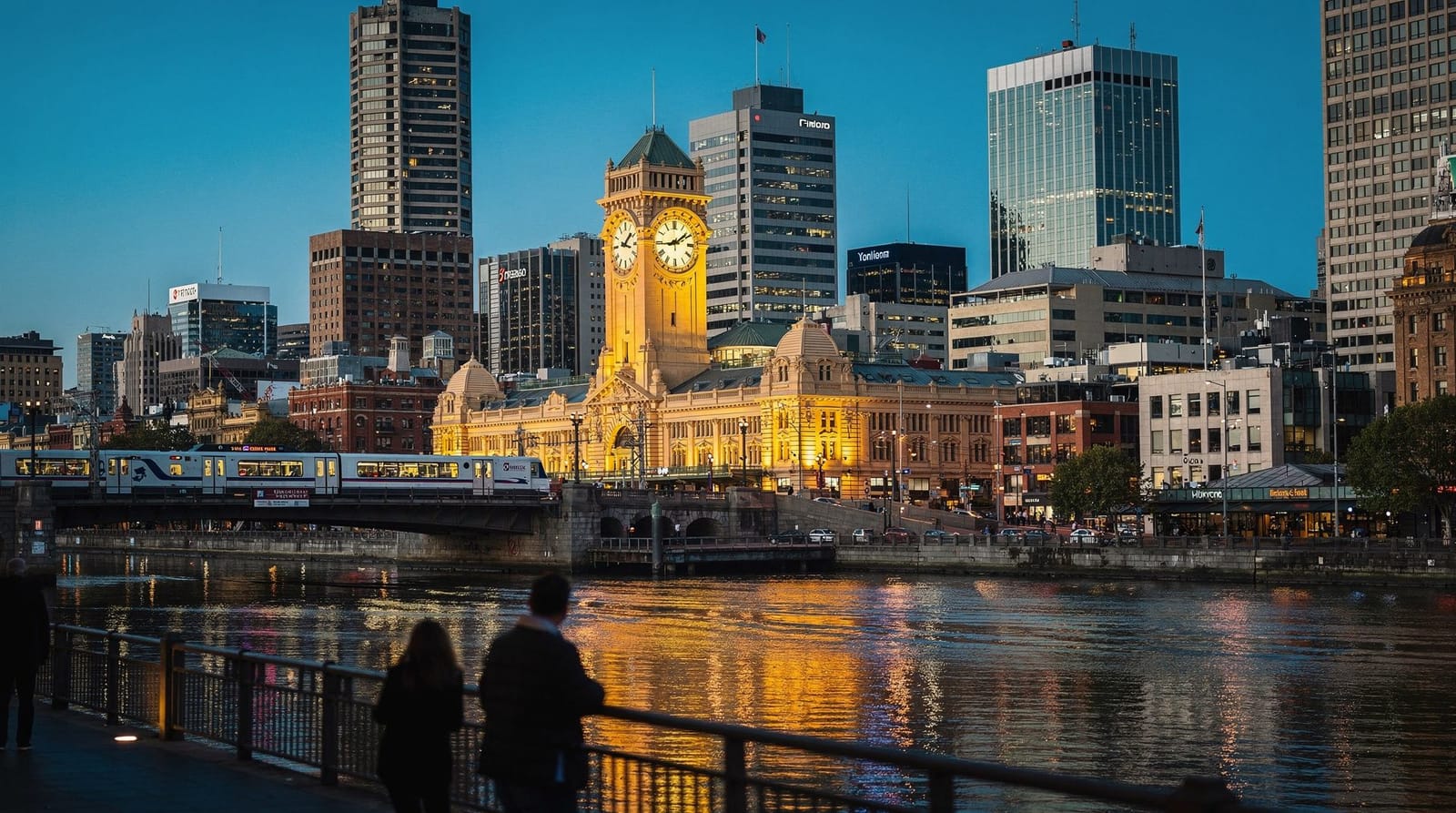
The most distinctive way to arrive is by ferry rather than road — services cross the bay from Southbank or Docklands, giving a genuinely different vantage point on the Melbourne skyline than any land-based view, with the CBD towers receding across open water in a way that makes clear how much of the city sits directly on the bay.
Nelson Place and the waterfront
Nelson Place, Williamstown’s main waterfront strip, retains a run of intact Victorian-era commercial buildings facing the bay, now largely occupied by seafood restaurants, cafés and pubs rather than the shipping offices and chandleries that once lined it. It’s one of the more architecturally coherent 19th-century streetscapes left in greater Melbourne, and considerably quieter than equivalent heritage strips closer to the CBD.
HMAS Castlemaine and naval history
HMAS Castlemaine, a preserved Bathurst-class corvette that served as a minesweeper during the Second World War, is now a museum ship moored at Williamstown, maintained by a volunteer naval history society. It’s a niche but genuine attraction for anyone interested in Australia’s wartime naval history, and a visible reminder of Williamstown’s long functional relationship with the Royal Australian Navy, whose dockyard operated in the area for well over a century.
Seafood and the local dining scene
Williamstown’s waterfront restaurant strip leans heavily toward seafood, reflecting its port history, and is generally better value than comparable water-view dining in Southbank or Docklands, given the suburb’s lower tourist foot traffic. Fish and chips eaten on the foreshore, looking back across the bay toward the city skyline, is a genuinely pleasant, unpretentious way to spend an afternoon here.
Gem Pier and the Timeball Tower
Gem Pier, at the heart of Williamstown’s waterfront, remains a working small-craft harbour and the arrival point for the passenger ferry, lined with fishing boats and pleasure craft rather than the commercial shipping that once dominated it. Nearby, the Timeball Tower — an 1852 lighthouse and navigational aid later fitted with a time-signalling ball that dropped daily to let ships in the harbour set their chronometers — is one of the more unusual surviving pieces of maritime infrastructure in Australia, a reminder of how central accurate timekeeping was to 19th-century navigation before radio signals made the mechanism obsolete.
Williamstown Botanic Gardens
A short walk from Nelson Place, the Williamstown Botanic Gardens offer a smaller, quieter alternative to the Royal Botanic Gardens in the city — Victorian-era formal plantings, a rotunda and duck ponds, popular with local families rather than tourists, and a pleasant, unhurried stop if combining a Williamstown visit with a longer walk around the peninsula.
Why Williamstown feels different from the rest of Melbourne
Because Williamstown sits on its own peninsula, separated from the rest of Melbourne by the bay and the mouth of the Yarra rather than directly adjoining other suburbs, its development has always been somewhat self-contained — a genuine port town in its own right for over a century rather than an inner suburb that grew outward from the CBD.
That geographic isolation is part of why its Victorian-era streetscape survived largely intact through the 20th century: without through-traffic or adjoining suburban expansion pushing redevelopment, Williamstown was left, in effect, on the sidelines of Melbourne’s growth for several decades, and only in recent years has it seen renewed residential and tourism interest as a heritage-and-water destination in its own right.
Getting there
The passenger ferry from Southbank or Docklands is the most distinctive way to reach Williamstown, taking roughly 20–30 minutes and offering the best skyline views of any approach; check current timetables, as ferry frequency is lower than trams or trains and doesn’t run as late into the evening. By train, the Williamstown line runs from Flinders Street via a longer inland route through Melbourne’s western suburbs, taking around 30–40 minutes. By road, it’s about 8 km southwest of the CBD via the Westgate Freeway or local roads.
Budget for a Williamstown visit
The ferry crossing typically costs a modest one-way or return fare, cheaper than an equivalent harbour cruise elsewhere in the city. A seafood lunch on Nelson Place runs 20–35 AUD per person, generally better value than Southbank’s equivalent waterfront dining. HMAS Castlemaine charges a small entry fee, typically operating on a limited weekend schedule — check current opening days before visiting specifically for the ship.
A relaxed half-day plan
The simplest way to use Williamstown is to let the ferry set the rhythm of the day. Head out on a clear afternoon, sit on the side of the boat that faces the skyline, and let the towers shrink behind you. On arrival at Gem Pier, walk the short distance to Nelson Place, pick a seafood spot with a view of the water, and take your time over lunch rather than rushing to the next sight.
After lunch, the rest of the peninsula is best done on foot. Wander the foreshore, look at the boats, and climb toward the Timeball Tower to see how the old harbour fitted together. If HMAS Castlemaine is open on the day you visit, it makes a good indoor interlude; if it isn’t, the Botanic Gardens are an easy substitute for a slow walk. Keep an eye on the return ferry timetable so that the crossing back, with the city lights or late sun on the glass towers, becomes the highlight rather than a scramble.
What to pair with Williamstown
Williamstown works best as a contrast to Melbourne’s busier districts. Spend a morning in the CBD laneways for coffee and street art, then take the afternoon on the water. Or pair it with Footscray on another day, since the western side of the city rewards a slower approach. For visitors planning several days, the Melbourne 3-day itinerary shows where a bayside half-day can slot in without crowding the main sights, and the Melbourne 2-day plan is a useful reminder of what to cover first if time is tight.
If you would rather see several parts of the city without arranging transport yourself, a guided option such as a bus tour through the inner suburbs and laneways gives useful context before you head out to the bay on your own. Those who prefer an overview first can start with a group tour of the city highlights by bus, then keep Williamstown for a quieter second outing.
Heritage and architecture on the peninsula
Part of Williamstown’s appeal is simply how its older buildings sit together. Stone and brick façades, verandahs and pub frontages give the streets a settled, coastal-town feel that is hard to find nearer the centre. If the subject interests you, the Victorian architecture guide explains what to look for in Melbourne’s 19th-century buildings, and the gold rush history guide helps explain why the colony grew so quickly and why ports mattered so much to it.
Take it slowly: read the plaques, look up above the shopfronts where the original detailing often survives, and notice how the street plan opens toward the water. It is this combination of working harbour, civic buildings and quiet residential streets that makes the suburb feel like a small town rather than a district of a big city.
Weather, light and timing
Melbourne’s changeable weather affects a bayside trip more than a museum day, because wind off the water can make a mild day feel cooler. Bring a layer and something waterproof, as described in the four seasons in one day article, and check the forecast before committing to the ferry. The best time to visit Melbourne guide is a good companion for choosing the season, while a still, clear day gives the most rewarding skyline views from the crossing.
Late afternoon light tends to flatter both the waterfront buildings and the city across the bay, which is another reason to plan lunch late and linger. On a grey or blustery day, lean on the indoor options and shorten the foreshore walk.
Moving around once you arrive
Williamstown is compact, and most of what visitors come for sits within an easy stroll of the pier. That makes it a good fit for travellers who are tired of tram timetables and want a day on foot. For fares and ticketing on the way there and back, the Myki card guide covers how the card works across Melbourne’s public transport, and the Melbourne tram guide is helpful if your day also includes a tram leg before or after the ferry.
Families with young children will find the flat, walkable layout forgiving, and the Melbourne with kids guide has more ideas for pacing a day so that nobody runs out of energy before the return crossing.
Williamstown vs Docklands vs Footscray
Williamstown, Docklands and Footscray all sit on or near the Yarra’s mouth and the western bay, but each offers a different flavour of “not quite the CBD.”
| Williamstown | Docklands | Footscray | |
|---|---|---|---|
| Character | Intact 19th-century port town | Modern waterfront redevelopment | Working multicultural suburb, food-driven |
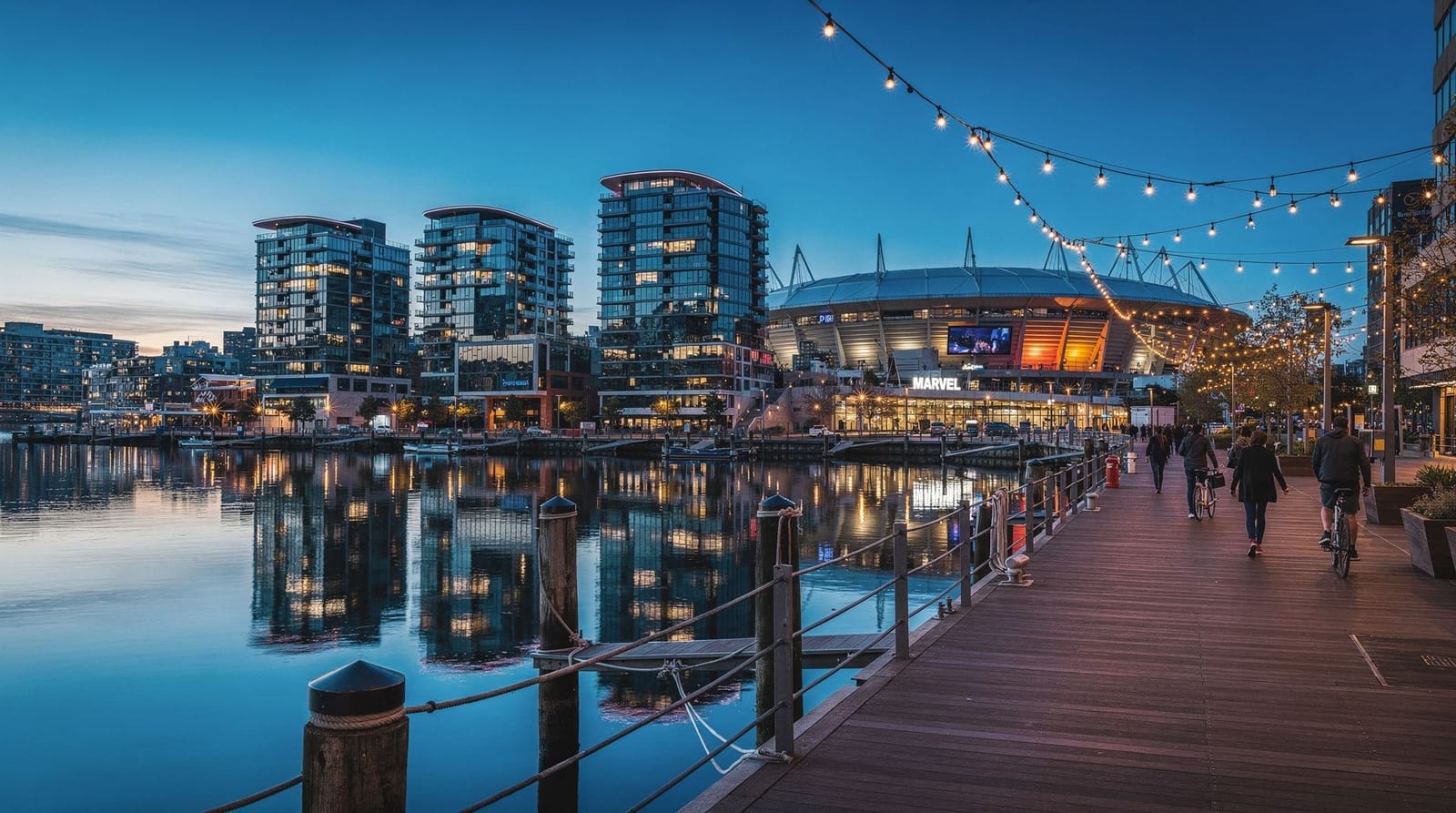
| Best for | Ferry ride, seafood, heritage streetscape | Stadium events, waterfront apartments | Vietnamese and East African food |
| Getting there | Ferry or Williamstown train line | Tram or a short walk from the CBD | Train (Sunshine/Werribee lines) |
| Pace | Slow, quiet, self-contained | Busier around events, otherwise quiet | Busy, local, less tourist-oriented |
None of the three is a must-see on a short first Melbourne trip, but each rewards a specific interest — Williamstown for maritime heritage, Docklands for waterfront dining near a stadium, Footscray for food. See the Melbourne destination page for how these fit into a wider itinerary, and the getting around Melbourne guide for ferry and train fare basics.
Frequently asked questions about Williamstown
How do I get to Williamstown from the CBD?
The most scenic option is the passenger ferry from Southbank or Docklands (20–30 minutes); alternatively, the Williamstown train line runs from Flinders Street via the western suburbs in about 30–40 minutes.
Is Williamstown worth a visit if I’m short on time in Melbourne?
It’s a good half-day option for visitors who want a genuinely different, quieter, more historic waterfront experience than the CBD or Southbank, particularly combined with the ferry ride itself as part of the experience — less essential if your time in Melbourne is very limited and you haven’t yet covered the CBD basics.
Is HMAS Castlemaine open every day?
No — it typically operates on a limited schedule, often weekends only; check current opening days before planning a visit specifically to see it.
What’s the best reason to visit Williamstown?
The ferry ride itself and the resulting view of the Melbourne skyline from across the bay, combined with a genuinely intact 19th-century waterfront streetscape rarely found elsewhere in inner Melbourne.
Can I combine Williamstown with other bayside suburbs in one day?
It’s geographically separated from St Kilda and Brighton by the mouth of the Yarra and the bay, so combining it with those suburbs in one day generally means a longer loop by road rather than a simple coastal walk; most visitors treat Williamstown as its own half-day excursion.
Is Williamstown good for families?
Yes — the ferry ride, HMAS Castlemaine, the Botanic Gardens and the foreshore playgrounds make it a reasonably relaxed, low-key option for a family day away from the CBD’s busier attractions.