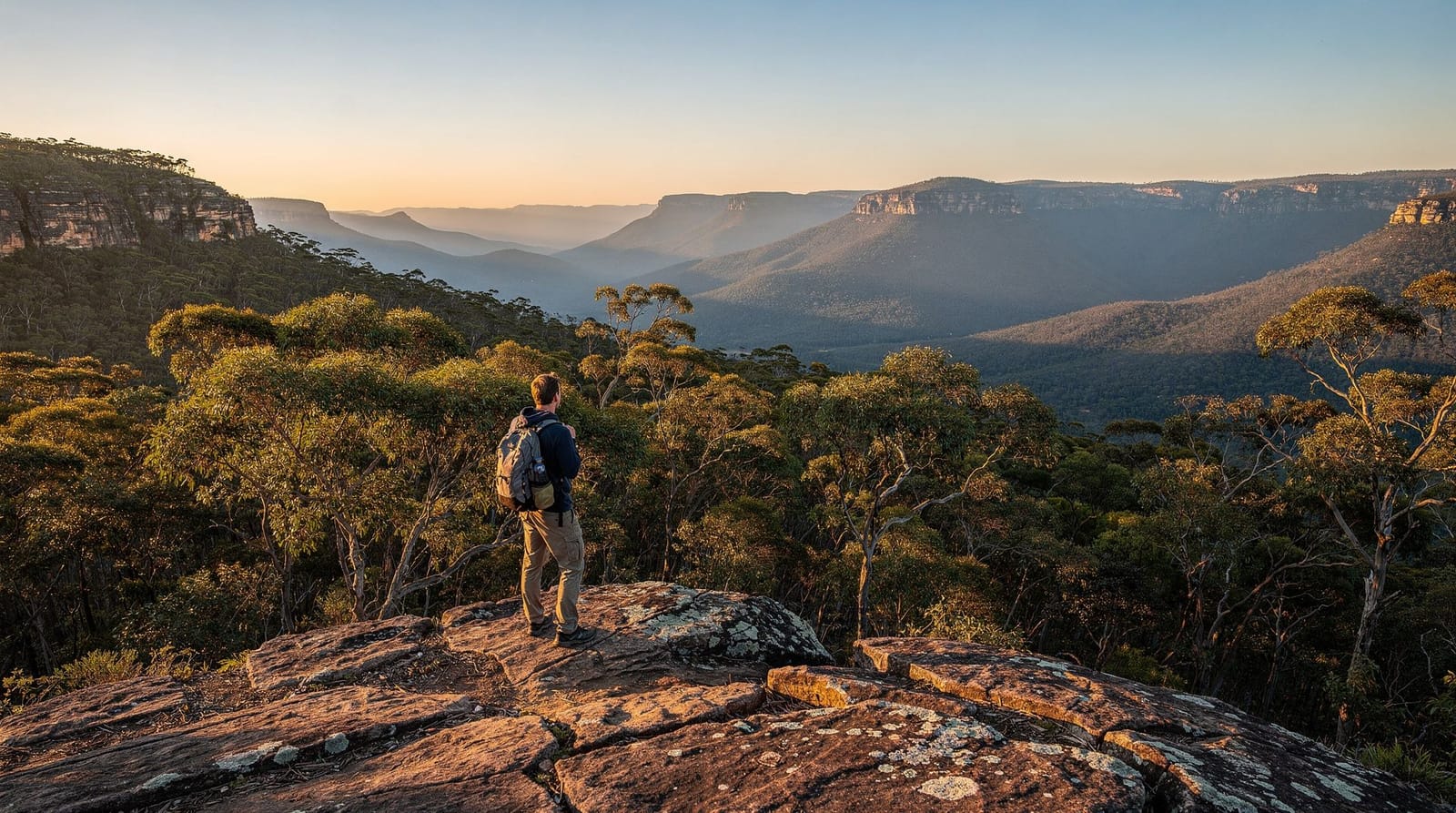
The Grampians (Gariwerd)
Sandstone ranges, Aboriginal rock art and Victoria's biggest waterfall, three hours west of Melbourne — why it needs two or three days, not a rushed trip.
Melbourne: Grampians tour 1 day
Quick facts
- Distance from Melbourne CBD
- ~235-260 km, ~3h drive
- Traditional name
- Gariwerd (Djab Wurrung and Jardwadjali peoples)
- Main township
- Halls Gap
- Signature sights
- The Pinnacle, MacKenzie Falls, The Balconies
- Rock art
- Around 90% of Victoria's Aboriginal rock art sites
Is the Grampians doable as a Melbourne day trip? Technically yes, but honestly — it’s a stretch. At roughly 235-260 km and about three hours’ drive each way, a single day means six hours in the car and only a handful of hours actually in the park. The Grampians (called Gariwerd by the Djab Wurrung and Jardwadjali people whose land this is, and increasingly referred to by both names) rewards a proper two- or three-day visit far more than any of the region’s other day-trip destinations, because the sights are spread across a genuinely large mountain range rather than clustered around one town.
Sandstone ridgelines rising abruptly from flat farmland, more Aboriginal rock art than anywhere else in Victoria, one of the state’s best spring wildflower displays, and a waterfall with the largest water volume in Victoria all sit within the one national park — this is Victoria’s most complete outdoor destination, but it demands the travel time to match.
| Where | Halls Gap, ~235–260 km / ~3h west of Melbourne |
| Cost | Free park entry; guided day tours around 150–220 AUD/person |
| Time needed | Minimum 2–3 days; a rushed single day trip covers only a fraction |
| Getting there | Self-drive via Western Highway, or V/Line train-and-coach to Stawell |
| Best time | Spring for wildflowers; check fire conditions before a summer visit |
Gariwerd: the Aboriginal heritage of the ranges
The Grampians hold roughly 90% of all known Aboriginal rock art sites in Victoria, reflecting tens of thousands of years of continuous occupation by the Djab Wurrung and Jardwadjali peoples before European settlement. Bunjil Shelter, near Stawell at the range’s southern end, contains one of Australia’s few known rock art depictions of Bunjil, the creator spirit central to Aboriginal cosmology across much of southeastern Australia — a genuinely significant cultural site, protected behind a viewing screen rather than freely touchable. Gulgurn Manja and Ngamadjidj shelters, both accessible by short walks, hold further stencil and painted art.
The Brambuk Cultural Centre, just outside Halls Gap, is owned and operated by five Aboriginal groups with traditional connections to the ranges and is the essential starting point for understanding Gariwerd properly — its distinctive angular architecture is itself meant to evoke the wings of the Brambuk, a creation-story cockatoo, and the centre runs guided walks, cultural displays, and a bookshop with material you won’t find anywhere else in the region.
The Pinnacle and the big lookouts
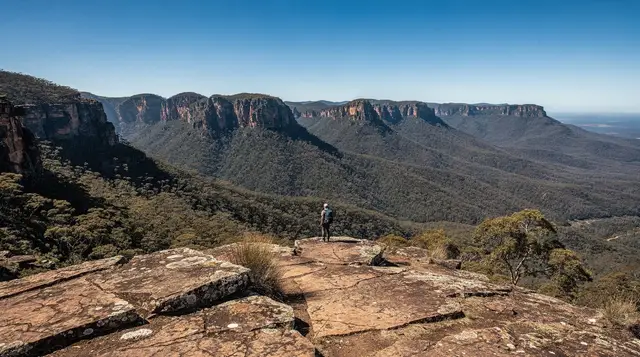
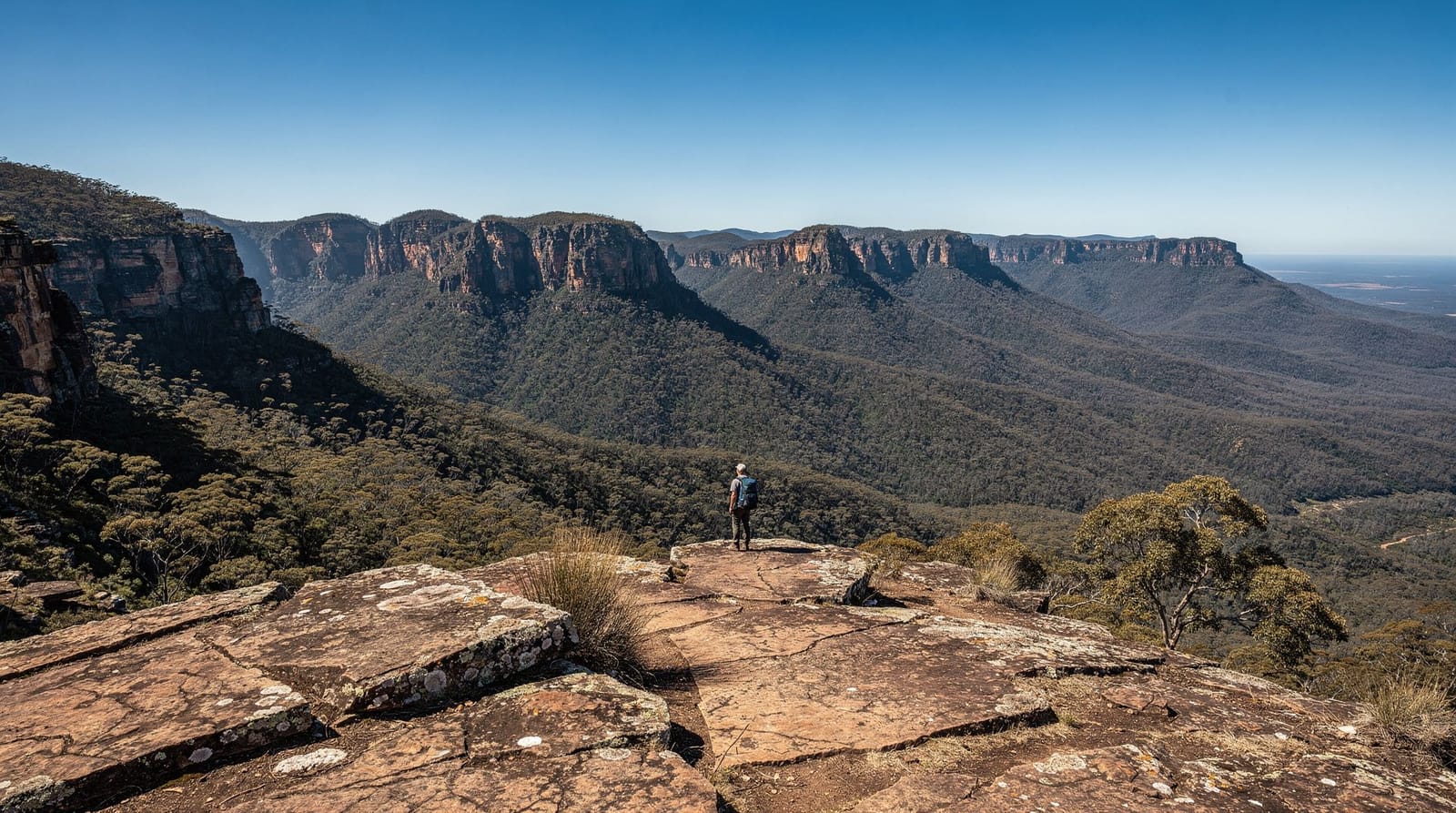
The Pinnacle is the Grampians’ most iconic walk — a moderate 2-3 hour return hike from Halls Gap (or a shorter version from the Sundial car park, for visitors wanting the view without the full climb) leading to a narrow rock lookout with sweeping views back over Halls Gap and the Fyans Valley. It’s the single most-photographed spot in the park and, on a clear day, worth the effort even for otherwise casual walkers.
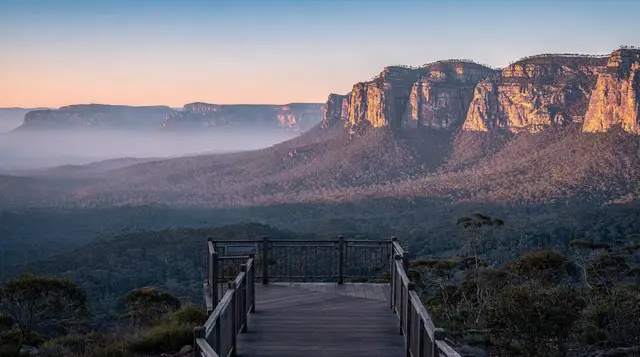
Reed Lookout and The Balconies (formerly known as the Jaws of Death, renamed for its resemblance to a rock balcony rather than the earlier morbid name) is a shorter, easier walk to a dramatically overhanging rock ledge — one of the best sunset spots in the park and accessible without the fitness required for the Pinnacle.
Boroka Lookout, similarly short and accessible, gives wide views over Halls Gap, Lake Bellfield, and the surrounding farmland — a good option if time or mobility limits a longer hike.
small-group Grampians bushwalking day tourMacKenzie Falls
MacKenzie Falls, Victoria’s largest waterfall by water volume, drops into a deep gorge reached by a steep set of stairs from the main car park — a genuinely impressive sight, especially after winter and spring rains, though the return climb is a real workout and the falls can reduce to a trickle during dry summer periods. A gentler lookout near the car park gives a view without the full descent for anyone not up for the stairs both ways.
Wildlife and wildflowers
Kangaroos are reliably seen around dusk on the Halls Gap golf course and oval, one of the most consistent, easy wildlife encounters in regional Victoria — no tour or park fee required, just a dusk visit to the right open grassy area on the edge of town. Emus, echidnas, and a wide range of native birds also inhabit the park.
Spring (September-November) brings one of Victoria’s best wildflower displays, with over 800 native plant species recorded across the ranges, including significant orchid diversity that draws dedicated wildflower tourists from across the state specifically for this window.
Grampians day tour with kangaroo spottingHalls Gap village itself
Beyond serving as the park’s accommodation and services hub, Halls Gap is a genuinely pleasant small township in its own right, tucked at the base of the range with a handful of cafes, a pub, a small supermarket and a scattering of galleries and gift shops along its short main strip. Wildlife wanders into town regularly enough that kangaroos grazing on nature strips or verandas is a normal, low-key occurrence rather than a novelty, and the mountain backdrop rising directly behind the buildings gives even a quick coffee stop a dramatic setting most Victorian towns can’t match. It’s a good base for an evening meal after a day of hiking, though the range of dining options is genuinely limited compared with a larger regional town like Ballarat or Bendigo — don’t expect big-city variety.
Rock climbing and bouldering
The Grampians is internationally recognised as one of the world’s best bouldering and rock-climbing destinations, drawing climbers from overseas specifically for the sandstone. Access to some climbing areas has been restricted or closed in recent years due to Aboriginal cultural heritage protections on rock art sites within climbing zones — check current access rules with Parks Victoria or a local climbing guide before planning a dedicated climbing trip, since the situation has changed over time and continues to be actively managed.
Bushfire risk and access
The Grampians region has experienced major bushfires in recent years, including significant fires that reshaped sections of the park and periodically closed roads and trails for extended rebuilding and safety work. Summer and early autumn carry real fire risk, and total fire ban days can result in park-wide or trail-specific closures announced with little notice — always check the Parks Victoria website or the VicEmergency app before a summer visit, rather than assuming the park will be fully open.
Zumsteins and other wildlife spots
Zumsteins, an old picnic and camping area on the Wannon River within the park, is a well-known spot for reliable kangaroo sightings, alongside emus and a range of native birds along the riverside walking track — a good, gentler wildlife stop for visitors who’ve already done the Halls Gap golf course at dusk and want a second location, or who prefer a daytime sighting over a dusk visit. The surrounding river red gum woodland is also a pleasant, shaded picnic spot in its own right, distinct from the drier ridgeline scenery at the park’s higher lookouts.
Lake Bellfield and water activities
Lake Bellfield, a reservoir just south of Halls Gap supplying water to the wider region, offers a scenic drive and a lookout over the water framed by the surrounding ranges — not a swimming or boating destination in the way some other Victorian lakes are, since it functions as a working water supply reservoir, but a worthwhile short stop for the view alone, particularly combined with a visit to nearby Boroka Lookout on the same loop.
Practical information
Halls Gap has the park’s only real concentration of fuel, supermarket, and other services — worth fuelling up and stocking supplies there before heading further into the park, since facilities thin out quickly once you’re away from the main township. Mobile signal is reliable in Halls Gap itself but drops out significantly at many of the lookouts, walking trails, and back roads within the park — download offline maps and let someone know your planned route if undertaking a longer hike. Parking at the more popular sights (the Pinnacle trailhead, MacKenzie Falls, Reed Lookout) can fill on weekends and during school holidays, particularly in the spring wildflower season; arriving earlier in the day avoids the worst of it.
A sample two-day plan
Day one: arrive by early afternoon, visit Brambuk Cultural Centre, then Reed Lookout and The Balconies in the late afternoon for sunset. Day two: an early start on the Pinnacle walk before the day heats up, MacKenzie Falls around midday, a stop at Zumsteins or Lake Bellfield in the afternoon, and a dusk visit to the Halls Gap golf course for kangaroo spotting before dinner. This pacing covers the park’s headline sights without the rushed feeling of a single-day visit, while still being achievable for visitors without an extra day to spare on a longer regional Victoria trip.
Getting there and getting around
By car, the Grampians are about 235-260 km from Melbourne, roughly three hours via the Western Highway through Ballarat and Ararat, or a slightly longer alternative route via Skipton and Dunkeld from the south. There’s no direct train to Halls Gap; a V/Line train-and-coach combination reaches Stawell, with a connecting bus into the park, but a car (self-driven or via an organised tour) is the practical way to see more than the immediate Halls Gap township, given how spread out the key sights are across the range.
full-day Grampians National Park tour from Melbourne small-group Grampians hiking and wildlife eco experienceWithin the park, distances between the Pinnacle, MacKenzie Falls, Boroka Lookout, and Reed Lookout are all a genuine 15-30 minute drive apart — a day tour or a self-driven day covering three or four of these sights, rather than trying to walk between them, is the realistic approach.
Where to stay
Halls Gap is the only real township inside the park and holds the bulk of the accommodation — motels, caravan parks, and a scattering of B&Bs, all set against the dramatic backdrop of the range rising directly behind the main street. Booking ahead matters more here than at most of Victoria’s other day-trip regions, since the accommodation stock is genuinely limited relative to demand in peak wildflower season (spring) and summer school holidays.
Where to stay beyond Halls Gap
While Halls Gap holds almost all of the park’s accommodation, a handful of guesthouses and farm stays in the surrounding townships — Dunkeld to the south, and Stawell and Ararat further east — offer alternatives for visitors approaching from those directions or wanting a quieter, more rural base outside the main tourist township. Dunkeld in particular sits at the southern end of the range with its own dramatic mountain backdrop (Mount Sturgeon and Mount Abrupt) and a well-regarded regional restaurant scene, worth considering if arriving from the Great Ocean Road side via the southern route rather than through Ballarat.
Honest take: what a day trip actually gets you, and what it doesn’t
If you truly only have one day, a realistic itinerary covers Brambuk Cultural Centre, one major lookout (the Pinnacle or Reed Lookout/The Balconies), and MacKenzie Falls — accepting that this leaves most of the park, including the rock art sites further from Halls Gap and any serious hiking beyond a single trail, unseen. Visitors expecting to “do the Grampians” in a single rushed day from Melbourne consistently come away feeling like they only scratched the surface, more so than with any other destination on this site.
Two or three days, ideally as part of a longer loop combining the Great Ocean Road with the Grampians, or the Grampians with Ballarat and Daylesford, lets you properly cover the rock art, more than one big hike, and a wildlife-watching dusk in Halls Gap without rushing.
The Grampians by season
Because the park’s key attractions — wildflowers, waterfall flow, hiking comfort and fire risk — all shift meaningfully across the year, timing a visit deliberately matters more here than at most Victorian destinations.
| Season | Conditions | Highlight | Watch for |
|---|---|---|---|
| Spring (Sep–Nov) | Mild, occasional rain | Over 800 wildflower species in bloom | Busiest period, book accommodation ahead |
| Summer (Dec–Feb) | Hot, dry | Long daylight for hiking | Total fire ban days can close trails with little notice |
| Autumn (Mar–May) | Mild, settling weather | Good hiking conditions, thinner crowds | Shorter daylight for longer hikes |
| Winter (Jun–Aug) | Cool, wet | MacKenzie Falls at its fullest | Muddy higher trails; check closures after rain |
Ballarat and Daylesford as part of a longer loop
Visitors approaching the Grampians from Melbourne’s goldfields side rather than directly via the Western Highway often build in a stop at Ballarat or Daylesford en route, turning a straight there-and-back drive into a longer, more varied loop. Ballarat’s Sovereign Hill and Daylesford’s spa culture are both genuinely different experiences from the Grampians’ hiking and rock art focus, making them a complementary rather than competing stop on the same trip — see the Grampians day trip guide for route-specific options, and the 5-day Great Ocean Road and Grampians itinerary for combining both regions properly.
Frequently asked questions about the Grampians (Gariwerd)
Is the Grampians the same as Gariwerd?
Yes — Gariwerd is the name used by the Djab Wurrung and Jardwadjali peoples for the same mountain range now also known as the Grampians. Both names are used, often together, reflecting the ongoing recognition of Aboriginal heritage in the park.
How long does it take to drive from Melbourne to the Grampians?
About three hours, roughly 235-260 km via the Western Highway through Ballarat and Ararat, or a slightly longer route via Skipton and Dunkeld.
Can you visit the Grampians in a single day trip from Melbourne?
Yes, but it’s a long day (about six hours of driving) that only allows time for one or two major sights, such as Brambuk Cultural Centre and one lookout or waterfall. Most visitors who properly explore the park stay at least one night in Halls Gap.
What is the best time of year to visit the Grampians?
Spring (September-November) for wildflowers, one of Victoria’s best displays with over 800 native species. Autumn is mild and good for hiking. Summer carries real bushfire risk and possible closures; check conditions before a summer visit.
Is the Pinnacle walk difficult?
It’s a moderate 2-3 hour return hike from Halls Gap with some steep sections, suited to reasonably fit walkers in proper shoes. A shorter route from the Sundial car park reaches the same lookout with less climbing for those wanting an easier option.
Can you climb or boulder in the Grampians?
Yes, and it’s internationally recognised for it, but access to some areas has been restricted due to Aboriginal cultural heritage protections around rock art sites. Check current access rules with Parks Victoria or a local guide before planning a dedicated climbing trip.
Where’s the best place to see kangaroos in the Grampians?
The Halls Gap golf course and oval reliably attract grazing kangaroos around dusk — no tour or fee required, just a visit to the right open grassy area at the right time of day.
Are there fire risks or closures to check before visiting?
Yes — the region has experienced significant bushfires in recent years, and total fire ban days can close parts of the park or specific trails with little notice, particularly in summer and early autumn. Check the Parks Victoria website or VicEmergency app before travelling in fire season.
Should I combine the Grampians with Daylesford or Ballarat?
Yes, if time allows — both make sense as an add-on stop on the drive out from Melbourne, turning a there-and-back trip into a longer loop, and both offer a genuinely different experience (spa culture at Daylesford, gold-rush history at Ballarat) from the Grampians’ hiking and rock art focus.
Can I combine the Grampians with the Great Ocean Road?
Yes — several multi-day itineraries link the two regions via the southern route through Dunkeld, letting visitors cover both Victoria’s most famous coastal drive and its most complete outdoor destination in one longer trip; see the 5-day combined itinerary for a suggested pacing.
Top experiences
Bookable activities with verified prices and instant confirmation on GetYourGuide.