A weekend in the Grampians
Further than Melbourne’s other regional trips, and better for it as an overnight
Travellers deciding whether the extra distance is worth it compared with Melbourne’s closer regional options should know upfront that the Grampians rewards patience with genuinely different scenery and hiking depth than anywhere closer to the city offers.
The Grampians (known in the local Djab Wurrung, Jardwadjali and other language groups as Gariwerd) sit around three hours west of Melbourne — noticeably further than the Great Ocean Road, Phillip Island or Yarra Valley. This distance pushes it firmly toward an overnight trip for most travellers rather than a single very long day, and honestly, that’s the better version of the trip anyway: the range’s hiking trails, wildlife and rock art sites reward unhurried time that a rushed day simply can’t accommodate.
| Where | Halls Gap, around 3 hours west of Melbourne |
| Time needed | overnight minimum; a weekend is better |
| Getting there | self-drive or guided tour — a car is close to essential locally |
| Best time | spring (Sep-Nov) for wildflowers and hiking weather |
| Booking | book Halls Gap accommodation a month+ ahead in peak periods |
Why go for a weekend rather than a day
A single-day round trip from Melbourne to the Grampians and back means roughly six hours of driving alone, leaving only a handful of hours for actual hiking or sightseeing — a poor trade-off given the range’s genuine hiking depth. An overnight stay in Halls Gap, the small township at the range’s heart, lets you do a proper sunrise or late-afternoon hike, see wildlife at dawn or dusk when it’s most active, and still have a full second day before the drive home. If a day trip is genuinely all your schedule allows, our Grampians day trip guide covers how to make the most of the shorter version.
a combined Great Ocean Road and Grampians overnight tourThe significance of Gariwerd to Traditional Owners
Beyond its scenery, Gariwerd holds deep and continuing cultural significance to the Djab Wurrung, Jardwadjali, Wotjobaluk and other Traditional Owner groups, whose connection to the land spans tens of thousands of years. The range contains one of the highest concentrations of Aboriginal rock art in southeastern Australia, and several sites are managed jointly with Traditional Owner input to balance visitor access with cultural protection.
Approaching a visit to Bunjil Shelter or the Gulgurn Manja shelter with genuine respect for this ongoing significance — rather than treating them purely as scenic photo stops — makes for a more meaningful visit and reflects the site’s actual importance to the people for whom it remains a living cultural landscape, not simply a historical curiosity.
Choosing accommodation in Halls Gap
Halls Gap’s accommodation options range from budget caravan parks and backpacker lodges to mid-range motels and a small number of higher-end lodges with valley views. Given the town’s modest size, options genuinely do sell out during peak periods — Victorian and interstate school holidays, long weekends, and the spring wildflower season in particular — so booking a month or more ahead for these periods is worth the effort. Outside peak times, same-week or even same-day bookings are often realistic.
What to actually do there
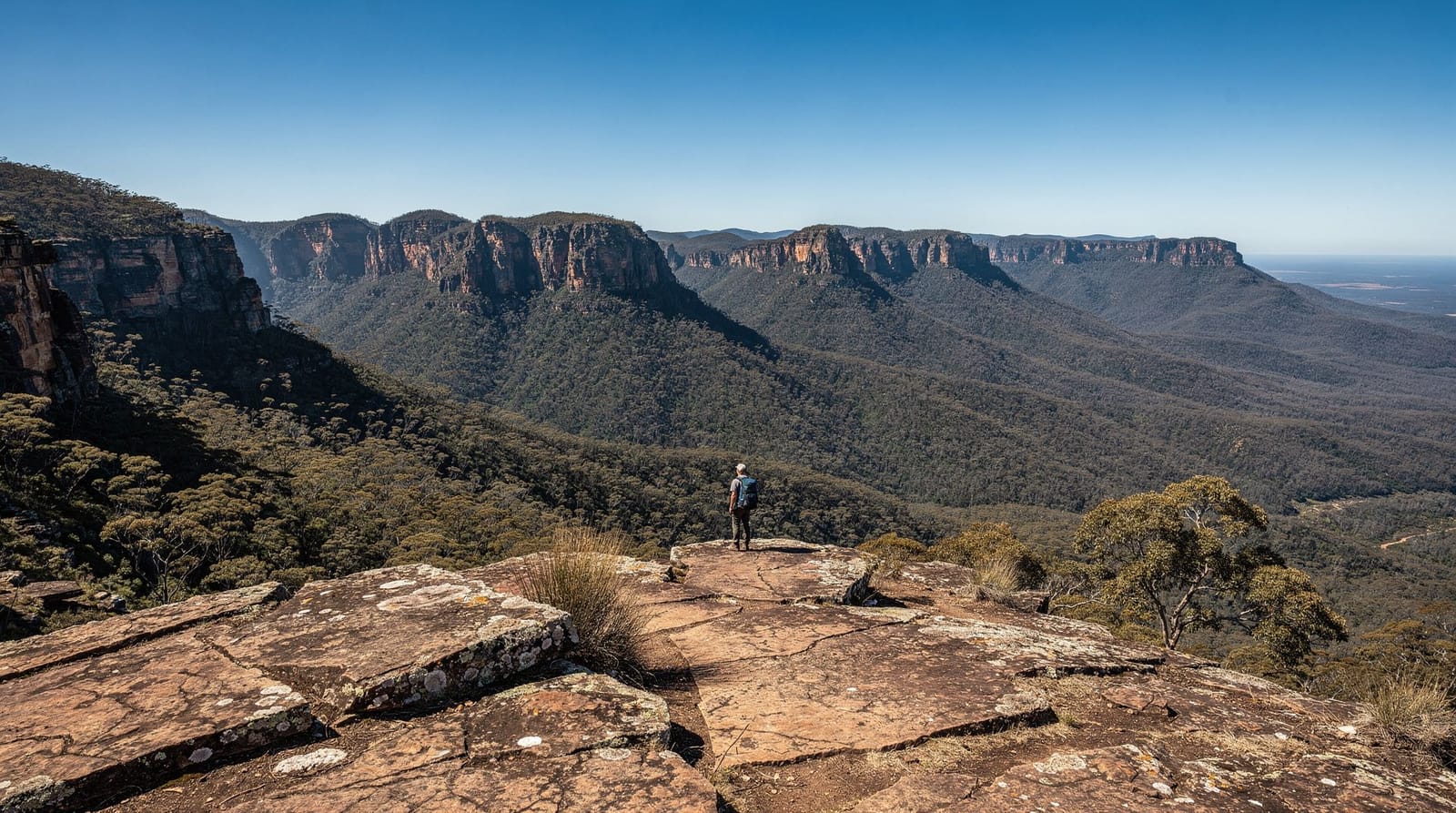
Hiking is the Grampians’ main draw — trails range from short, family-friendly walks to the Pinnacle Lookout (a genuinely rewarding, moderately steep walk with a dramatic payoff view over Halls Gap) to longer full-day routes for experienced hikers. Wildlife is abundant and easy to see without a tour — kangaroos graze openly around Halls Gap’s oval and campgrounds at dawn and dusk, genuinely tame in a way that surprises first-time visitors. Aboriginal rock art sites, including Bunjil Shelter and the Gulgurn Manja shelter, hold some of Victoria’s most significant Aboriginal rock art and are worth visiting with context on Gariwerd’s cultural significance to Traditional Owners, rather than treating them as a passing photo stop.
 From melbourne grampians national park bushwalking tourCheck availability
Combining with Ballarat and the Goldfields
Many self-drive itineraries break the three-hour trip into two shorter legs via Ballarat or Daylesford, stopping at Sovereign Hill’s gold rush township or Daylesford’s spa town on the way out or back — a genuinely sensible way to spread the driving and add variety to what would otherwise be a long single-direction trip.
Grampians small group hiking wildlife eco experienceCheck availability
A sample two-day itinerary
Day one: leave Melbourne mid-morning, stop in Ballarat or Daylesford for lunch, arrive in Halls Gap by mid-to-late afternoon, and do a shorter walk (the Pinnacle Lookout via the Wonderland loop, roughly 2-3 hours return) before dinner in Halls Gap. Day two: an early start for a longer hike or wildlife-spotting walk while the light and temperature are best, lunch back in Halls Gap, then the drive home via a different route (the direct Western Highway) to see fresh scenery on the return leg rather than retracing the outbound drive exactly.
| Day | Morning | Afternoon/Evening |
|---|---|---|
| Day 1 | drive out, lunch in Ballarat or Daylesford | arrive Halls Gap, Pinnacle Lookout walk (2-3hrs), dinner |
| Day 2 | early hike or wildlife walk | lunch in Halls Gap, drive home via a different route |
For a shorter regional trip that doesn’t need an overnight, see our best day trips from Melbourne guide, and if you’re driving yourself either way, our driving tips guide covers left-hand driving basics that apply just as much on the Western Highway as the coast.
Rock climbing and other activities
Beyond hiking, the Grampians has become one of Australia’s most significant rock climbing destinations, with a huge range of established routes across the range’s sandstone cliffs suited to everything from beginner top-rope climbing to serious multi-pitch routes for experienced climbers. Several operators in Halls Gap run guided climbing and abseiling sessions for visitors without their own gear or experience, worth considering if you want a more active alternative to straightforward hiking on your second day.
Practical logistics
Halls Gap has a small but adequate range of accommodation, from caravan parks to mid-range motels and a handful of nicer options — book ahead in peak periods (school holidays, weekends in wildflower season around September-November) since options are genuinely limited compared with a larger town. A car is close to essential for exploring the range properly; public transport options into and within the Grampians are minimal.
Wildflower season in detail
Spring’s wildflower display is a genuine drawcard in its own right — the Grampians hosts an unusually high diversity of native flora for its size, with over 900 recorded plant species, many blooming in a concentrated window from September through November. Guided wildflower walks run seasonally out of Halls Gap during this period, and even a self-guided walk along any of the range’s lower trails during peak bloom is likely to turn up a striking variety of colour that isn’t visible the rest of the year.
Best time to visit
Spring (September-November) brings wildflowers across the range and is widely considered the best season for hiking, with comfortable temperatures and good visibility. Summer can bring genuine heat and total fire ban days that close some trails — check conditions before committing to a specific hike. Autumn and winter are quieter and cooler, with winter bringing occasional mist and moodier light that some photographers specifically seek out.
Frequently asked questions about visiting the Grampians
How far is the Grampians from Melbourne?
Around three hours by car, noticeably further than the Great Ocean Road or Phillip Island, which is why an overnight stay generally makes more sense than a single-day round trip.
Is the Grampians worth visiting as a day trip?
It’s possible but not ideal — roughly six hours of driving alone leaves little time for hiking, which is the range’s main appeal. An overnight in Halls Gap is the better version of this trip.
What is Gariwerd?
Gariwerd is the name used by the Djab Wurrung, Jardwadjali and other Traditional Owner groups for the Grampians range, which holds significant cultural and spiritual meaning, including some of Victoria’s most important Aboriginal rock art sites.
Do you need a car to visit the Grampians?
Yes, effectively — public transport into and within the range is minimal, and a car is necessary to reach trailheads and lookouts across the park.
Can you go rock climbing in the Grampians?
Yes — it’s one of Australia’s most significant climbing destinations, with routes across the range’s sandstone cliffs for all experience levels. Several Halls Gap-based operators offer guided sessions and gear hire for visitors without their own equipment.
What’s the best hike in the Grampians for a first visit?
The Pinnacle Lookout via the Wonderland loop is the most commonly recommended first hike — moderately steep, roughly 2-3 hours return, with a dramatic payoff view over Halls Gap that suits most reasonably fit visitors.
Is the Grampians good for wildlife spotting?
Yes — kangaroos are commonly and easily seen grazing around Halls Gap itself at dawn and dusk, genuinely tame in a way that surprises first-time visitors, alongside a wide range of native birds throughout the range. See our kangaroo spotting guide for more on where and when sightings are most reliable across Victoria.
Should I do the Grampians as a day trip or an overnight?
An overnight is genuinely the better version of this trip — see the itinerary above for how a two-day visit typically breaks down, and our best day trips from Melbourne guide for how it compares to Melbourne’s shorter regional options.