Great Otway National Park: rainforest along the Great Ocean Road
Melbourne: From melbourne coastal highlights forest wildlife tour
What is Great Otway National Park and is it free to visit?
Great Otway National Park covers the rainforest, tall eucalypt forest and coastline of the Otway Ranges along the Great Ocean Road between Torquay and Princetown. Entry and most walking tracks are free, but a few separately operated attractions inside and near the park, like the Otway Fly and Cape Otway Lightstation, charge their own admission.
Rainforest in the same day as surf beaches
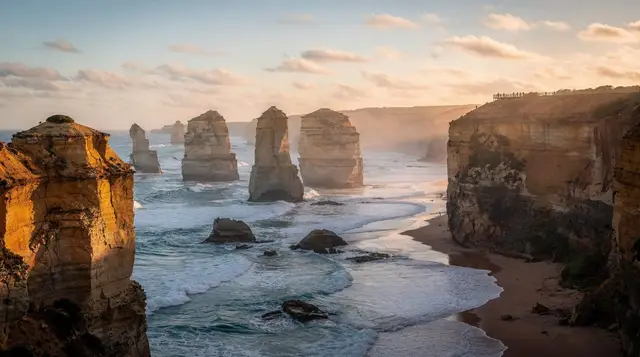
Most visitors think of the Great Ocean Road purely as a coastal drive — cliffs, surf beaches, the Twelve Apostles — and are genuinely surprised to learn that a short detour inland puts you in cool temperate rainforest, thick with tree ferns and centuries-old myrtle beech. That’s Great Ocean Road, though the Otway Ranges shift the mood entirely: shaded gullies, waterfalls, and a real chance of spotting koalas in roadside gum trees, all within an hour or two of the coastline.
Great Otway National Park stretches along and inland from the Great Ocean Road roughly between Torquay and Anglesea in the east and Princetown in the west, absorbing the bulk of the Otway Ranges’ forested high country. It’s less a single attraction than a patchwork of walks, waterfalls and lookouts spread across a genuinely large area, which is exactly why planning matters: trying to see everything in one rushed afternoon usually means seeing very little properly.
| Where | Otway Ranges, Great Ocean Road between Torquay and Princetown |
| Cost | Free entry and most walks; Otway Fly and Lightstation ticketed separately |
| Time needed | Half-day for a couple of stops, a full day for the interior properly |
| Getting there | Self-drive around 2-2.5hrs from Melbourne, or a guided day tour |
| Best time | Autumn or spring for cooler walking and thinner crowds |
Free entry, but not everything inside is free
The park itself has no gate fee for day visitors, and the vast majority of its walking tracks cost nothing beyond your time and petrol to reach them. This is worth stating plainly because a few well-known, heavily marketed attractions sit inside or right on the edge of the park and are commonly mistaken for part of the free national park experience.
The clearest example is the Otway Fly Treetop Adventures near Beech Forest — a privately operated, separately ticketed elevated steel walkway and zipline course through the rainforest canopy. It’s a legitimate, well-run attraction and a genuinely different way to experience the forest from above rather than below, but it is not a Parks Victoria site and it does charge its own admission, distinct from anything you’d pay (or not pay) to enter the national park itself. Similarly, Cape Otway Lightstation — Australia’s oldest surviving mainland lighthouse, in a dramatic coastal setting at the park’s western edge — is separately ticketed and privately managed, not a free park feature.
Camping fees also apply if you’re staying overnight at Parks Victoria campgrounds within the park, though these are modest compared to commercial caravan parks nearby. The honest planning takeaway: budget separately for any of these standalone attractions rather than assuming a national park visit is automatically free from end to end.
A management change worth knowing about
From 1 July 2026, some parks and campsites along the Great Ocean Road are transitioning to management by the Great Ocean Road Coast and Parks Authority (GORCAPA), rather than sitting solely under Parks Victoria as before. This is an administrative shift rather than something that changes what you’ll see on a walk, but it can affect which website has the current opening hours, fees or closure notices for a specific site. If you’re checking details for a particular campground or track close to your trip, it’s worth confirming which authority currently manages that specific location rather than assuming Parks Victoria’s website covers everything along the coast.
Maits Rest: the best short free walk in the whole region
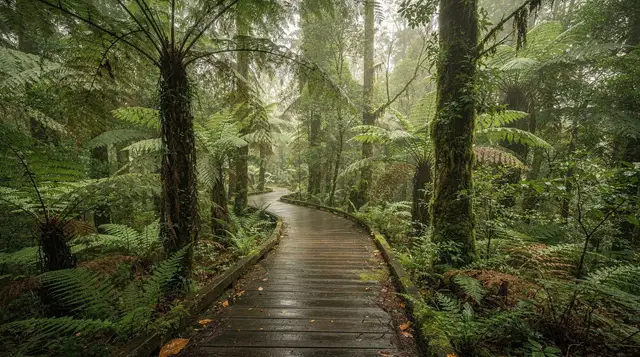
If you only do one walk in the Otways, make it Maits Rest. This short, free boardwalk loop winds through a genuinely ancient stand of myrtle beech and tall tree ferns, and it’s one of the most accessible rainforest experiences anywhere along the entire Great Ocean Road route — flat, well-signed, and doable in around 30-40 minutes without any hiking experience or special footwear beyond closed shoes.
What makes Maits Rest stand out isn’t just its ease but its authenticity: this is old-growth cool temperate rainforest, not a manicured garden, and the boardwalk keeps foot traffic off the fragile root systems while still putting you right among towering trees and deep green fern gullies. It’s an easy stop to build into any Great Ocean Road day trip without derailing your schedule, and arguably delivers more atmosphere per minute spent than several of the paid attractions nearby.
Waterfalls around Beech Forest and Lavers Hill
The area around Beech Forest and Lavers Hill holds several short, free waterfall walks that reward the inland detour from the coast road. Triplet Falls is a popular choice — a loop walk through fern gullies leading to viewing platforms over a set of cascading falls, generally under an hour return and well-maintained throughout. Hopetoun Falls, nearby, offers a similarly short walk down to a lookout over a single, taller waterfall dropping into a fern-lined gorge, and is often quieter than Triplet Falls despite being just as photogenic.
Neither walk requires technical hiking gear, though the tracks can be muddy after rain given the rainforest setting, so sturdy, closed footwear is a sensible minimum. Combining Maits Rest with one of these waterfall walks makes a satisfying half-day inland loop if you’re basing yourself in or near Apollo Bay.
Koala spotting at Kennett River and Cape Otway
For many visitors, koalas are the headline wildlife draw of a Great Ocean Road trip, and the Otways region delivers some of the most reliable sightings in the state. Kennett River, a small coastal town along the Great Ocean Road itself, is well known for koalas visible in roadside eucalypts, sometimes low enough to see clearly without binoculars. The roads around Cape Otway, further west near the lightstation, offer similar opportunities, often in a quieter, less crowded setting than Kennett River during peak season.
It’s worth being honest about what this actually is: these are wild koalas living in roadside and private trees, not animals in an enclosure, and sightings depend on the individual koala’s mood and the time of day (they’re most active, though still mostly sedentary, in cooler parts of the day). Good etiquette matters here — view quietly from a respectful distance, never attempt to touch, feed or coax a koala down, and pull well off the road rather than stopping in a traffic lane, since these roadside sightings do create genuine hazards for both wildlife and other drivers if handled carelessly.
Our dedicated koala spotting in Victoria guide covers the other reliable viewing spots across the state, if the Otways whet your appetite for more.
Cape Otway Lightstation
At the park’s western edge, Cape Otway Lightstation is Australia’s oldest surviving mainland lighthouse, standing on a dramatic, exposed headland that’s also one of the more reliable spots for koala sightings on the drive in. Entry is separately ticketed and privately managed, covering the lighthouse tower, keeper’s cottages and a small history display, and it pairs naturally with a Kennett River or Cape Otway koala stop on the same leg of a Great Ocean Road day. It’s a worthwhile add if lighthouses or wartime coastal-lookout history interest you, but skippable without much loss if time is tight and the Twelve Apostles are still ahead.
Accessibility notes
Maits Rest is the most accessible walk in the park: a flat, well-formed boardwalk suitable for most fitness levels, though not fully wheelchair-friendly given occasional narrow sections and tree-root undulations. Triplet Falls and Hopetoun Falls both involve some steps and uneven, sometimes muddy, sections, so they suit moderate mobility rather than limited mobility. None of the free walks are strenuous by hiking standards, but none are flat, paved accessible trails either — if mobility is a real constraint, Maits Rest alone is the safest bet, with the Otway Fly’s walkway offering a paved, though ticketed, alternative for canopy views.
Coastal edges of the park
While the rainforest interior gets much of the attention, Great Otway National Park also runs along a rugged stretch of coastline, with cliff-top walks and beach access points scattered along the route toward Princetown. These coastal sections tend to be quieter than the crowded viewpoints further along the Great Ocean Road near the Twelve Apostles, and reward a short stop if you have flexible time, particularly for photography in softer late-afternoon light.
Fitting the Otways into a Great Ocean Road day
The honest planning question for most visitors is whether the Otways deserve their own dedicated day or fit within a broader Great Ocean Road itinerary. For a single-day Great Ocean Road trip from Melbourne, most self-drive travellers build in one or two Otways stops — typically Maits Rest plus a koala-spotting pause at Kennett River — on the way to or from the Twelve Apostles, rather than attempting the full inland detour to Beech Forest and the waterfalls as well.
If rainforest and waterfalls are more of a priority than ticking off every coastal lookout, it’s worth allocating a full day specifically to the Otways interior, ideally with an overnight stay in Apollo Bay or Lorne to avoid cramming everything into daylight hours on a return drive to Melbourne.
Our Great Ocean Road day trip guide works through the logistics of fitting these stops into a single day, our honest look at whether the Great Ocean Road is worth it covers the broader trade-offs of a rushed one-day drive versus a slower multi-day approach, and our tour vs drive comparison helps decide between joining an organised trip and self-driving the whole route.
For a longer trip that gives the Otways proper time alongside the rest of the coast, our Melbourne to Great Ocean Road 3-day itinerary is a useful starting template.
Self-drive vs joining a tour
Self-driving through the Otways gives you full flexibility to stop at whichever walks and lookouts appeal, linger at Maits Rest, or skip a waterfall walk if you’re running behind schedule. It does require confidence driving on winding inland roads and the usual reminder that Australians drive on the left — worth double-checking before setting off if you’re used to right-hand traffic. Our Great Ocean Road self-drive guide covers route planning, timing and road conditions in more depth.
If self-driving isn’t appealing, guided day tours from Melbourne that specifically build in Otways rainforest and wildlife stops solve the navigation and timing problem in one go. The Great Ocean Road coastal highlights, forest and wildlife tour combines the classic coastal stops with a dedicated Otways forest and koala-spotting component, while the Great Ocean Road and Otways rainforest full-day tour leans further into the rainforest side of the region alongside the coastal highlights.
Both remove the need to navigate unfamiliar roads yourself and typically include a guide who can point out koalas and explain the rainforest ecology as you go.
What to pack for the Otways
Rainforest walking calls for slightly different preparation than a beach-focused coastal day. Closed, sturdy shoes matter more here than thongs or sandals, given muddy boardwalk edges and occasional tree roots underfoot. A light rain layer is sensible year-round, since the Otways’ higher rainfall (part of what sustains the rainforest in the first place) means showers are common even when the coast nearby is dry. Insect repellent is worth having for the shadier gully walks, particularly in warmer months, and a camera or phone with decent low-light performance helps for photos under the rainforest canopy, where light levels drop noticeably compared to open coastal viewpoints.
Our general Melbourne packing guide covers the layer-up basics that apply across the whole state, including this kind of variable inland weather.
If whale watching is on your list as well, the coastline near the Otways is one of several spots along Victoria’s south coast where migrating whales pass close to shore in the cooler months — our whale watching in Victoria guide covers timing and the best vantage points. And if you’re combining the Otways with the eastern end of the Great Ocean Road, Geelong makes a sensible stop for fuel, food or an overnight break on the way in or out.
Wildlife beyond koalas
Koalas get most of the attention, but the Otways support a wider range of wildlife worth watching for. Echidnas occasionally shuffle across quieter forest tracks, especially in cooler months, and are easy to miss since they freeze rather than flee when disturbed — a slow, careful look at leaf litter along a track edge sometimes reveals one before you’d otherwise notice. Birdlife is abundant throughout the rainforest gullies, with lyrebirds present in the denser understorey, known for their extraordinary ability to mimic other birds and even mechanical sounds, though they’re shy and more often heard than seen.
Along the coastal fringes of the park, keep an eye out for swamp wallabies at dawn and dusk, particularly around quieter picnic areas away from the main tourist stops.
As with koala spotting, the same etiquette applies across all of this wildlife: observe quietly, keep your distance, resist the urge to approach for a closer photo, and never feed any animal you encounter. Feeding changes wild animals’ behaviour in ways that make them more vulnerable, including drawing them toward roads where vehicle strikes are a real risk throughout this region.
Best time of year to visit
Because the Otways sit in the Southern Hemisphere, remember that the seasons run opposite to the Northern Hemisphere calendar: summer (December-February) brings warmer, drier weather and the best chance of clear waterfall photography, but also the busiest crowds at Maits Rest and Kennett River, particularly around the Christmas and New Year period. Autumn (March-May) is a strong alternative, with cooler temperatures suited to walking and typically thinner crowds than peak summer.
Winter (June-August) is when the rainforest is at its most atmospheric — misty, green and quiet — though rainfall is highest, tracks can be muddier, and days are shorter, so plan walks earlier in the day. Spring (September-November) brings wildflowers to the understorey and generally comfortable walking conditions before the summer crowds return. Whatever the season, the Otways’ higher elevation and rainforest cover mean it typically runs several degrees cooler and wetter than the coast just a short drive away, so pack accordingly even on a warm coastal day.
| Season | Months | What to expect |
|---|---|---|
| Summer | Dec-Feb | Warmest, driest, busiest at Maits Rest and Kennett River |
| Autumn | Mar-May | Cooler, thinner crowds, reliable walking weather |
| Winter | Jun-Aug | Wettest, mistiest, most atmospheric, shorter daylight |
| Spring | Sep-Nov | Wildflowers, comfortable walking, crowds building back up |
Otway Fly Treetop Adventures in more detail
Because it’s the single most-marketed attraction in the region, it’s worth being specific about what the Otway Fly actually offers. The main draw is a steel walkway that climbs up into the rainforest canopy near Beech Forest, culminating in a spiral lookout tower well above the treetops, giving a genuinely different vantage point on the forest than any ground-level walk can. A separate, optional zipline course adds a faster, more adventure-focused way to move through the canopy for visitors who want more than a walk. Tickets are priced per activity and can add up quickly for a family doing both the walkway and the zipline, so check current pricing directly before budgeting, and treat it as a deliberate add-on rather than something bundled into a national park visit.
Camping inside the park
For visitors wanting more than a day trip, several Parks Victoria campgrounds sit within Great Otway National Park, generally basic (pit toilets, no powered sites) but well located for early starts on Maits Rest or the Beech Forest waterfalls before the day-trip crowds arrive. Booking ahead is sensible in summer and around long weekends, since sites are limited and popular. Commercial caravan parks around Apollo Bay and Lorne offer a more comfortable alternative with power and amenities, at a higher nightly cost, for anyone not keen on a basic bush camp.
A realistic sample day
For a single full day dedicated to the Otways interior rather than the coast: start early at Maits Rest before the tour buses arrive, continue inland to Beech Forest for Triplet Falls and Hopetoun Falls, stop at the Otway Fly if the canopy walkway appeals, then loop back via Kennett River in the late afternoon for a koala-spotting pause on the drive out. That’s a full, satisfying day without feeling rushed, and it deliberately leaves the coastal lookouts and the Twelve Apostles for a separate day or the other half of a multi-day Great Ocean Road trip.
Where to base yourself
Apollo Bay is the most practical base for exploring the Otways, sitting on the coast at the eastern edge of the ranges with a reasonable range of accommodation, cafes and a supermarket for stocking up before a day of inland walking. It puts Maits Rest, Kennett River and the Beech Forest waterfalls all within a manageable drive, without the longer backtrack required from towns further along the Great Ocean Road toward Port Campbell.
Lorne, further east, is a popular alternative with a larger selection of dining and accommodation, though it adds extra driving time to reach the Beech Forest waterfalls and Cape Otway compared to Apollo Bay. For a longer stay focused specifically on the Otways interior rather than the coast, some visitors base themselves directly around Beech Forest or Forrest, small townships with limited but functional accommodation options that cut driving time to the inland walks significantly. Our Apollo Bay and the Otways destination guide covers accommodation and logistics for the area in more depth.
Driving conditions and safety
The inland roads through the Otways are narrower and windier than the main coastal stretch of the Great Ocean Road, with sections that climb and descend through forested hills. They’re well-maintained and sealed throughout, but drivers used to flatter, straighter roads should slow down and allow extra time, particularly if driving toward dusk when wildlife on the road is a genuine hazard. Mobile phone reception drops out in patches through the deeper forest sections, so it’s sensible to have offline maps or printed directions if you’re navigating to specific waterfalls or lookouts rather than relying solely on live data.
As throughout Australia, remember to drive on the left, and be especially attentive on the single-lane sections common through the forested interior, where oncoming traffic can appear suddenly around tight bends. If you’re combining the Otways with the more famous coastal lookouts near the Twelve Apostles later the same day, budget honestly for the inland detour’s extra time rather than assuming it will simply slot in alongside an already packed coastal itinerary.
Photography notes
Light is the main variable that changes how the Otways photograph. Inside the rainforest at Maits Rest or along the Beech Forest waterfall walks, the dense canopy cuts direct sunlight significantly, so overcast days often produce more even, usable light than harsh midday sun, which tends to create blown-out highlights against deep shadow in the gullies. Early morning is generally the quietest time at Kennett River if you’re hoping for an uncrowded koala photo, and it also tends to be when koalas are marginally more active before settling into their long midday rest.
For the waterfalls, a slower shutter speed captures the classic smooth-water look, though this requires a stable surface or a small tripod, since low light levels in the gullies often push handheld shots toward blur at slower speeds. None of this requires specialist gear — a phone camera handles most of these scenes competently — but knowing when the light works in your favour saves a wasted trip if photography is a priority.
Final honest take
Great Otway National Park rewards visitors who treat it as more than a five-minute pull-over on the way to the Twelve Apostles. Maits Rest alone is worth the short detour for free, koala sightings around Kennett River and Cape Otway are genuinely likely if you look in the right spots and stay patient, and the waterfall walks near Beech Forest add real variety to a Great Ocean Road trip that can otherwise become a long string of coastal lookouts. Just keep the free-versus-paid distinction straight when budgeting, and check which authority currently manages a specific site if you’re relying on its opening hours.
More tours on Viator
Top-rated experiences with verified reviews, bookable on Viator (a Tripadvisor company).


Frequently asked questions about Great Otway National Park
Is Great Otway National Park free to enter?
Yes, there's no gate fee to enter the park or use most walking tracks. Camping at Parks Victoria campgrounds within the park does carry a fee, and a small number of standalone attractions inside or bordering the park, such as the Otway Fly Treetop Adventures and Cape Otway Lightstation, are separately ticketed private or heritage operations, not free Parks Victoria sites.Is the Otway Fly part of the free national park?
No. The Otway Fly Treetop Adventures is a privately operated attraction near Beech Forest, with its own admission fee, separate from Parks Victoria's free walking tracks. It's a legitimate way to see the rainforest canopy from an elevated steel walkway, but budget for a ticket rather than assuming it's covered by simply being in the national park.Where can I see koalas in the Great Otway National Park?
Kennett River and the roads around Cape Otway are the most reliable spots, with koalas often visible in roadside eucalypts. Sightings aren't guaranteed since these are wild animals, and etiquette matters: view quietly from a respectful distance, don't touch or feed them, and don't block the road while stopping to look.What's a good free rainforest walk in the Otways?
Maits Rest is the standout choice: a short, free, well-maintained boardwalk loop through ancient myrtle beech forest and tree ferns, and one of the most accessible short rainforest walks anywhere along the Great Ocean Road. It takes around 30-40 minutes and needs no special fitness or gear.Who manages the parks along the Great Ocean Road now?
From 1 July 2026, some parks and campsites along the Great Ocean Road are transitioning to management by the Great Ocean Road Coast and Parks Authority (GORCAPA) rather than Parks Victoria alone. If you're checking opening hours, fees or closures for a specific site, confirm which authority currently manages it, since the split is ongoing.Can you do the Otways as a day trip from Melbourne?
It's usually combined with the wider Great Ocean Road rather than visited alone, since the drive from Melbourne is around 2-2.5 hours to reach the Otways section. Most self-drive itineraries treat it as one stretch of a full Great Ocean Road day, though it genuinely deserves its own dedicated day if your schedule allows.How long is the walk to Triplet Falls and Hopetoun Falls?
Both are short, free walks near Beech Forest and Lavers Hill, generally under an hour return each, on well-formed tracks through fern gullies. Neither requires technical hiking experience, though sturdy footwear is sensible given occasional muddy or uneven sections.
Top experiences
Bookable activities with verified prices and instant confirmation on GetYourGuide.