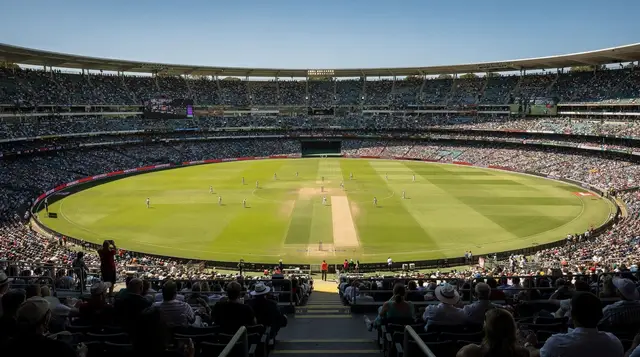
Going to an AFL match in Melbourne: a first-timer's guide
Melbourne: Melbourne melbourne cricket ground mcg guided tour
Duration: 75 minutes
How do I get tickets to an AFL match in Melbourne?
Regular-season tickets (March-September) are sold through the AFL's official ticketing platform and individual club membership systems, generally straightforward to buy online for non-blockbuster fixtures a week or more ahead. Finals tickets, especially the Grand Final in late September, are far harder to secure through general sale and are often allocated through club membership ballots months in advance.
Why Melbourne is the genuine home of Australian Rules football
No other city comes close to Melbourne’s claim on Australian Rules football (AFL). Ten of the league’s eighteen clubs are based here, meaning on almost any weekend during the March-to-September season there’s at least one, often several, matches happening somewhere in the city — a density of top-flight sport unmatched anywhere else in Australia. For a visitor with even passing interest in sport, attending a live AFL match is one of the more genuinely local experiences available, closer to the city’s actual weekend culture than almost any museum or tour.
| Where | MCG or Marvel Stadium (Docklands) — check your ticket, not assumptions |
| Cost | General admission from around AUD 30–50; more for reserved seats, finals and blockbusters |
| Season | March–August home-and-away, finals through September |
| Getting there | Train to Richmond/Jolimont (MCG) or Southern Cross (Marvel Stadium); avoid driving on matchday |
| Booking | Book as soon as travel dates are confirmed for marquee fixtures; regular matches often available closer to matchday |
When the season runs
The home-and-away season runs 23 rounds from March through August, followed by a four-week finals series in September that culminates in the AFL Grand Final on the last Saturday of the month at the MCG — an event so significant that the Friday before it is a public holiday across Victoria. If your Melbourne trip falls within the March-September window, checking the fixture list for your travel dates against the ten local clubs’ home games is well worth the five minutes it takes, since there’s a good chance a match lines up with your stay without any special planning.
Which stadium you’ll be at
Most Melbourne club home games split between the MCG and Marvel Stadium in Docklands, with occasional matches at smaller suburban venues. There’s no fixed rule for which stadium hosts which club on a given weekend — it depends on the specific round and broadcast scheduling — so always check the venue printed on your actual ticket rather than assuming. The MCG is larger, open-air and historically the more prestigious venue for blockbuster fixtures; Marvel Stadium’s retractable roof makes it the more weather-proof option, relevant given Melbourne’s genuinely unpredictable conditions even mid-season.
MCG vs Marvel Stadium compared
| MCG | Marvel Stadium | |
|---|---|---|
| Roof | Open-air, no cover | Retractable, closes in bad weather |
| Capacity | Larger, hosts the biggest fixtures and the Grand Final | Smaller, more intimate atmosphere |
| Getting there | Train to Richmond or Jolimont | Train to Southern Cross |
| Best for | Blockbusters, finals, a classic open-air atmosphere | Wet-weather matches, a more sheltered experience |
| Combine with | A stadium tour on a non-match day | Nearby Docklands dining and Harbour Town |
Getting tickets as a visitor
Regular-season tickets for non-blockbuster fixtures are straightforward to buy through official AFL and club ticketing platforms, often available right up to matchday for less popular pairings. Marquee rivalry matches (Collingwood versus Carlton or Essendon, for instance) and anything involving a top-of-table club sell out further ahead, so book as soon as your travel dates are confirmed if you have a specific match in mind.
Finals tickets, and especially Grand Final tickets, are considerably harder to access through general sale — much of the allocation goes to club members through ballot systems locked in months ahead — so treat attending a Grand Final in person as a stretch goal requiring early planning rather than something bookable on short notice.
What the atmosphere is actually like
AFL crowds are loud, passionate and — by most first-timers’ account — surprisingly welcoming to visitors and neutral spectators, even amid genuine rivalry intensity. Chants, club songs sung after a win, and a running commentary of good-natured heckling from surrounding fans are all part of the standard experience rather than anything to be nervous about. Alcohol is sold at most grounds with standard responsible-service limits, and family sections exist at every venue for those wanting a quieter, more measured atmosphere.
If you can’t get to an actual match
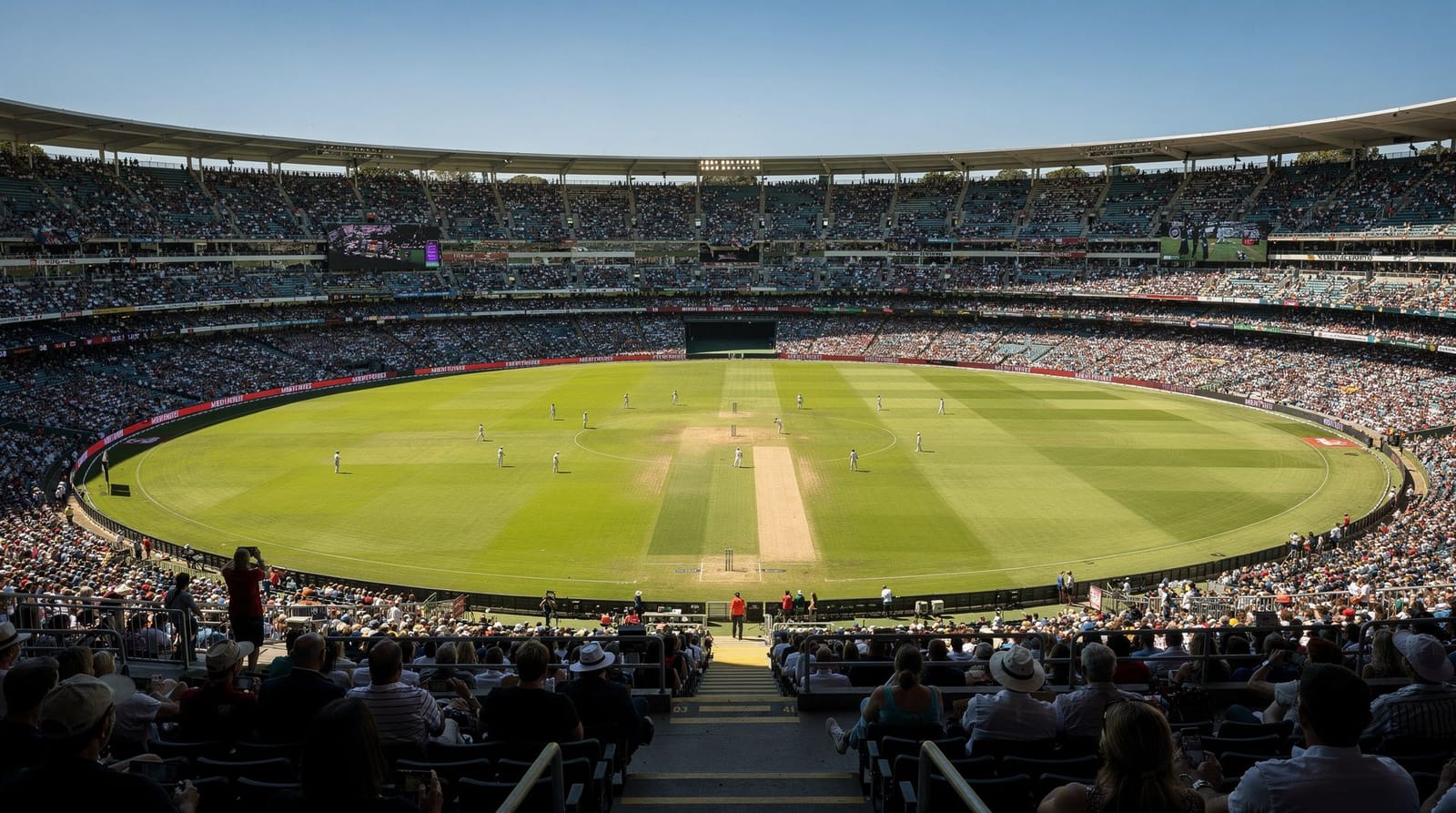
If your dates don’t line up with a fixture, or tickets to your preferred match have sold out, a guided MCG stadium tour still gives a genuine sense of the scale and history involved — walking onto the actual arena and standing in the players’ race conveys some of what match day feels like, even without the crowd.
 Melbourne melbourne cricket ground mcg guided tourCheck availability
A broader sports-themed tour covering multiple Melbourne venues is another option for filling the gap between an actual match and a purely historical museum visit.
book a broader Melbourne sports tourThe basics of the game for first-timers
Australian Rules football is played on an oval field considerably larger than a soccer pitch, with 18 players per side and continuous, free-flowing action punctuated by relatively few stoppages compared with codes like rugby or American football. The core objective is kicking or handballing the oval ball between four posts at each end of the ground: a kick between the two central posts scores a goal (six points), while a kick between a central and outer post scores a “behind” (one point) — meaning the running score updates constantly and can look unusual to first-timers used to codes with less frequent scoring.
Matches run four quarters, each roughly 25-30 minutes of actual play plus stoppage time, for a total match duration usually landing somewhere around two to two and a half hours including breaks.
You don’t need to understand every rule to enjoy a match — picking up the general flow (kicking, marking a caught ball for a free kick, tackling) within the first quarter is usually enough to follow the excitement even as a complete newcomer.
Melbourne’s ten AFL clubs
Uniquely among Australian cities, Melbourne is home to ten of the league’s eighteen clubs, each with genuine historical roots in specific inner and middle suburbs even though most now play at the MCG or Marvel Stadium rather than smaller suburban grounds. Collingwood and Carlton carry Melbourne’s most storied and passionate rivalry, rooted in inner-city, working-class-versus-establishment historical narratives from the league’s earliest decades. Essendon, Richmond, Hawthorn, St Kilda, Melbourne (the club, distinct from the city), North Melbourne, the Western Bulldogs and Geelong (based just outside metropolitan Melbourne but firmly part of the same competitive ecosystem) round out the local contingent.
Each carries distinct colours, songs and supporter cultures — genuinely worth a quick read-up before choosing a side to support for your visit, since picking a team with some resonance (colours you like, a suburb you’re staying in or visiting) adds a bit more personal investment to the afternoon than a purely random choice.
Choosing a team to support for the day
If you have no existing allegiance, picking a side based on jersey colours, club history, or simply which team the friend or local you’re with supports is entirely normal and low-stakes — AFL crowds are used to first-timers and tourists picking a team for the afternoon rather than having generations of family history behind their choice. Collingwood (black and white) and Carlton (navy blue) carry two of the deepest historical rivalries and biggest supporter bases if you want a genuinely intense atmosphere for a single match.
Practical matchday tips
Arrive early for major fixtures. Security screening and ticket gates at the MCG for finals and blockbuster matches can involve genuine queuing; arriving 45-60 minutes before the first bounce avoids the worst of it.
Use trains, not cars, for big matches. Parking near either major stadium on match day is scarce and heavily restricted; trains to Richmond or Jolimont (for the MCG) or Southern Cross (for Marvel Stadium) run boosted services specifically for events.
Dress for open-air conditions at the MCG. Unlike the roofed Marvel Stadium, the MCG is fully exposed to weather — bring a layer even on a day that starts warm, since Melbourne’s conditions can shift markedly across a three-hour match.
Check food and drink policies. Most grounds prohibit bringing in outside food and drink beyond a sealed water bottle; budget for stadium concessions, which run at typical major-venue prices.
AFL for families and first-timers
Family sections at both major stadiums offer a quieter, alcohol-restricted seating zone suited to first-time attendees or those with young children unfamiliar with the noise level of general admission areas. The game itself — four bouncing quarters of continuous, high-speed play with minimal stoppages compared with some other football codes — tends to hold children’s attention better than a slower-paced sport, even for first-time viewers unfamiliar with the rules.
Songs, chants and matchday traditions
Each AFL club has its own theme song, traditionally sung by players and supporters together in the changing rooms and stands after a win — a genuinely charming tradition that dates back decades and gives even a neutral spectator something to look out for at full time. Supporter chants during play vary by club and rivalry, generally good-natured heckling of the opposition rather than anything genuinely hostile, and joining in (even just clapping along) is a normal way for a first-timer to feel part of the crowd rather than an observer.
The Grand Final in particular carries additional pageantry — a pre-match entertainment program, guard-of-honour presentations for the two competing teams, and often a musical performance — that turns the day into more of a citywide event than a standard weekly fixture.
Weather and what to expect across the season
Given the season runs March through September, spanning three of Melbourne’s four seasons, weather conditions at a match vary considerably depending on when your visit falls. Early-season March and April matches can still carry genuine late-summer warmth; the bulk of the season through winter (June-August) brings Melbourne’s characteristically cool, often wet conditions, with the open-air MCG offering no shelter from rain or wind; and September finals fall in early spring, typically milder but still unpredictable.
Checking the forecast the day before and dressing in genuine layers — rather than assuming a jacket alone will suffice for a full match at an open-air ground — makes a meaningful difference to comfort over a two-to-three-hour sitting.
Buying tickets: official channels vs resale
Stick to the AFL’s official ticketing platform or individual club membership systems as the default, safest route, particularly for popular fixtures. Third-party resale marketplaces exist and are legal within set price caps for most matches, but carry more risk of inflated prices or, less commonly, invalid tickets — official channels remain the more reliable option unless a specific match is genuinely sold out everywhere else.
AFL versus cricket at the MCG: two very different atmospheres
If your trip spans both an AFL match and the cricket season crossover in September or a Big Bash fixture, it’s worth knowing the atmospheres differ meaningfully — AFL crowds are louder and more continuously vocal through a fast-paced match, while cricket, particularly Test matches, has a slower rhythm with crowd noise building around specific moments (wickets, milestones) rather than continuously. Our cricket at the MCG guide covers the cricket-specific experience in full.
Where AFL fits in a broader Melbourne sports itinerary
If live sport is a priority for your trip, pairing an AFL match with a daytime MCG stadium tour on a different day, and — depending on your travel dates — the Australian Open in January, Formula 1 in March, or the Melbourne Cup in November, builds a genuinely comprehensive live-sport itinerary that few other cities in the world could match across such a range of codes. See our sports precinct guide for how all these venues sit relative to each other across the city.
The bottom line
An AFL match is one of the most authentically local experiences a Melbourne visitor can have, and — outside finals and blockbuster fixtures — genuinely accessible without advance club membership or insider knowledge. Check the fixture list against your travel dates early, book regular-season tickets through official channels as soon as a match interests you, and treat a Grand Final ticket as a long-shot bonus rather than something to plan a trip around unless you already have a path to one.
Combining a match with the rest of your Melbourne trip
An AFL Saturday works well as a standalone day rather than something to squeeze between other sightseeing — arrive with time for a pre-match pub or craft beer stop near the stadium, watch the match, then wind down with dinner rather than rushing to a second attraction the same evening. If your trip has more sport-curious days than just this one, see our getting around Melbourne guide for how the tram and train network handles event-day crowds, since boosted services run specifically around major fixtures.
More tours on Viator
Top-rated experiences with verified reviews, bookable on Viator (a Tripadvisor company).


Frequently asked questions about Going to an AFL match in Melbourne
When is AFL season in Melbourne?
The home-and-away season runs March to August, followed by a finals series in September culminating in the Grand Final on the last Saturday of the month. Melbourne, uniquely, is home to ten of the league's eighteen clubs, so there's almost always a match to see somewhere in the city during the season.Which stadium hosts AFL matches in Melbourne?
Most Melbourne-based clubs split their home games between the MCG and Marvel Stadium, with a handful of matches also played at smaller suburban grounds. Which stadium you'll be at depends entirely on which clubs are playing and the round — check your specific ticket rather than assuming a fixed venue.Can tourists easily attend an AFL match?
Yes — regular-season matches are genuinely tourist-friendly, with general admission and reserved seating both available to anyone through official ticketing, no club membership required for most fixtures. Only marquee blockbuster matches and finals require more planning ahead.How much are AFL match tickets?
General admission to a regular-season match typically starts in the modest range of a few dozen AUD, rising for reserved seating and considerably more for marquee fixtures and finals. Prices vary significantly by opponent and round — a mid-table Tuesday-equivalent fixture costs far less than a rivalry blockbuster.What is Melbourne's AFL rivalry culture like?
Genuinely intense by Australian standards — Melbourne is the only city with ten AFL clubs, meaning inner-city and suburban rivalries (Collingwood versus Carlton, Essendon versus Hawthorn, and others) carry generations of history, and crowds are vocal but overwhelmingly good-natured toward visiting fans and first-timers.What should I wear or bring to an AFL match?
Club colours if you've picked a side to support for the day, layered clothing given Melbourne's changeable weather (open-air MCG matches can turn cold and windy fast), and cash or card for stadium food, since most grounds are increasingly card-only at food and drink outlets.How does the AFL finals system work?
The top eight teams after the 23-round home-and-away season enter a finals series over four weeks, with the two grand finalists meeting at the MCG on the last Saturday of September in the AFL Grand Final — one of Australia's single biggest annual sporting events, drawing a full-capacity crowd and a citywide public holiday in Victoria the following Friday.Should I book an MCG stadium tour instead of, or as well as, a match?
As well as, if your schedule allows — a stadium tour and an actual match are genuinely different experiences. The tour gives access to areas (change rooms, the players' race) you won't see on matchday, while attending a live game delivers the crowd atmosphere no tour can replicate. If your dates simply don't line up with a fixture, the tour is a solid stand-alone alternative rather than a lesser substitute.Is it better to sit in general admission or book reserved seating?
For a first-timer wanting maximum atmosphere, general admission among a specific team's supporters is usually the more memorable choice, provided you're comfortable with a louder, more crowded section. Reserved seating suits those wanting a guaranteed, more comfortable seat regardless of how early they arrive, and is generally the safer choice for families or anyone wanting to avoid standing for parts of the match.
Top experiences
Bookable activities with verified prices and instant confirmation on GetYourGuide.