Cricket at the MCG: Boxing Day Test and Big Bash guide
Melbourne: Melbourne melbourne cricket ground mcg guided tour
Duration: 75 minutes
What is the Boxing Day Test?
An annual five-day Test cricket match beginning 26 December at the MCG, one of the fixed dates on the international cricket calendar and typically the best-attended Test match of the Australian summer, regularly drawing crowds in the tens of thousands on its opening day alone. It's part of a broader summer of cricket at the ground that also includes Big Bash League Twenty20 matches.
The MCG’s other great sporting tradition
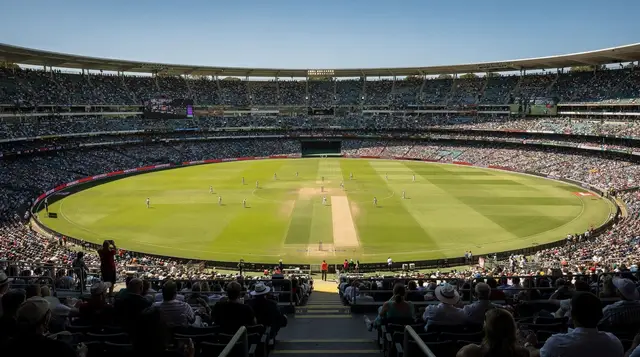
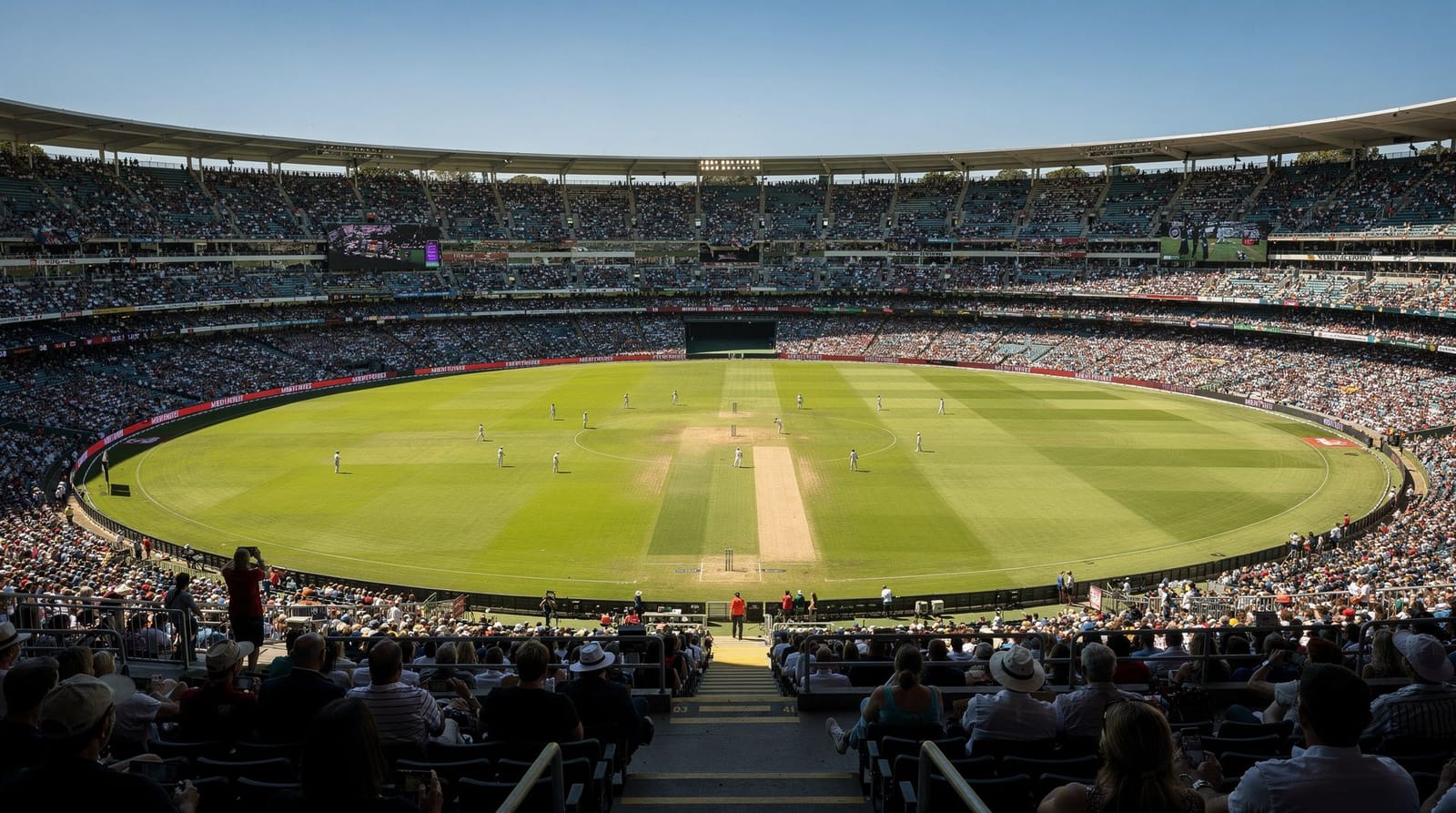
If the AFL Grand Final is the MCG’s September highlight, the Boxing Day Test is its December equivalent — a fixed annual date on the international cricket calendar that transforms the ground into arguably the best-attended Test cricket venue in the world. Starting on 26 December every year, the match regularly draws crowds in the tens of thousands on its opening day, a genuinely unusual scale for a format (five-day Test cricket) that struggles for attendance in many other countries. Combined with the Big Bash League’s shorter, louder Twenty20 fixtures running through the same summer window, the MCG hosts a genuine “summer of cricket” that’s as central to Melbourne’s sporting calendar as AFL is through the winter.
The Boxing Day Test explained
Test cricket is the longest format of the sport, played over up to five days with each team batting and bowling in two innings apiece, and a match can end in a win, loss or — uniquely among major world sports — a draw if five days pass without a definitive result. The Boxing Day fixture is always an international Test against a touring team, part of the broader home summer series against whichever nation is visiting that year, and the MCG’s capacity (around 100,000, though Test crowds rarely fill it entirely) still delivers some of the largest single-day cricket attendances anywhere in the world, particularly on the traditionally popular first two days.
A brief history of cricket at the MCG
The MCG hosted the very first Test cricket match in history back in 1877, a fixture between Australia and England that effectively established the format still played today, and the ground has remained central to Australian cricket ever since. The Boxing Day Test tradition specifically dates back decades, though it wasn’t always a fixed annual date the way it is now — the tradition solidified through the mid-to-late 20th century into the reliable, calendar-anchored fixture Australians now plan their Christmas period around.
Sir Donald Bradman, statistically the greatest batsman in cricket history, played some of his most celebrated innings at the MCG, and the ground’s museum holds genuine memorabilia from his career alongside artefacts from more recent Australian cricket greats.
The MCG’s cricket pitch itself is considered one of the more challenging and historically significant surfaces in world cricket, with its own reputation among players for how it behaves across the different days of a Test match as conditions change.
Getting tickets
Tickets are sold day by day through Cricket Australia’s official platform — you buy access to a specific day (day one, day two, and so on) rather than a single pass covering the whole five-day match, since most spectators attend one or two days rather than the full stretch. Day one, played on Boxing Day itself, is consistently the most popular and sells out fastest given the public holiday timing and traditional significance of the fixture; later days, especially if the match looks likely to finish early, can be considerably easier and cheaper to attend on shorter notice.
Big Bash League: cricket’s shorter, louder alternative
Running through December and January alongside the Test summer, the Big Bash League (BBL) is Australia’s domestic Twenty20 competition — matches last around three hours rather than up to thirty across five days, with a faster, more overtly entertainment-focused format including music, fireworks and a generally louder, more family-friendly atmosphere than Test cricket’s more measured rhythm. Melbourne fields two BBL teams, the Melbourne Stars (who play home games at the MCG) and the Melbourne Renegades (based at Marvel Stadium), giving visitors a genuine choice of venue and slightly different match-day experience depending which team’s fixture lines up with their travel dates.
Understanding cricket basics for first-time spectators
For visitors with no cricket background, a few basic concepts make the day considerably more enjoyable. A team’s innings ends when ten of its eleven batting players are dismissed (or, in limited-overs formats like the Big Bash, when a set number of overs — six-ball bowling sequences — is completed). The bowling team is trying to dismiss batters (bowled, caught, leg-before-wicket and other methods) while the batting team accumulates runs by hitting the ball and running between wickets, or scoring boundaries (four runs for a ball that reaches the fixed rope on the ground, six runs if it clears the rope without bouncing).
In Test cricket, the team with the higher combined run total across both their innings, once the match concludes, wins — or the match is drawn if time runs out before a result is reached.
Big Bash matches, being single-innings, limited-over affairs, resolve more like a single quick chase: whichever team scores more runs within their allotted overs wins, a simpler and faster structure for newcomers to follow than Test cricket’s more layered format.
The Boxing Day Test crowd experience across five days
Each day of the Boxing Day Test carries a genuinely different atmosphere worth knowing about if you’re choosing which day to attend. Day one (26 December itself) is consistently the most crowded, most anticipated, and carries the strongest sense of occasion, given the public holiday timing and traditional significance. Day two often remains busy, particularly if the first day’s play was competitive or a milestone (a century, a five-wicket haul) looks achievable.
Days three through five typically see progressively smaller, more dedicated cricket-following crowds, and can offer considerably easier, cheaper access if the result remains genuinely uncertain going into the later days — though there’s real risk the match finishes early (via an innings victory) before day five arrives, so day five tickets carry some genuine uncertainty about whether play will even occur.
Which format suits first-timers?
Test cricket (Boxing Day Test) rewards patience and offers unmatched atmosphere and history, but the slower rhythm — periods of tactical build-up punctuated by bigger moments — is a genuine adjustment for spectators used to continuously fast-paced sport. It’s worth attending at least a partial day even without deep cricket knowledge, purely for the scale and occasion of a full-house Boxing Day crowd.
Big Bash League gives a shorter, louder, more immediately accessible entry point — three hours, constant action, and an atmosphere closer to a rock concert than traditional cricket’s reputation for genteel quiet. For families or anyone unsure whether cricket will hold their attention, BBL is the lower-risk, higher-certainty choice of the two formats.
Visiting the MCG when there’s no match on
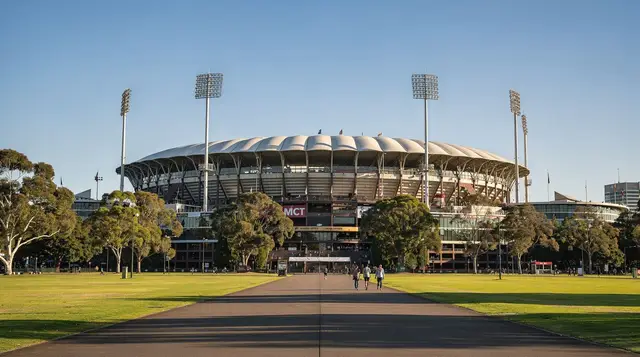
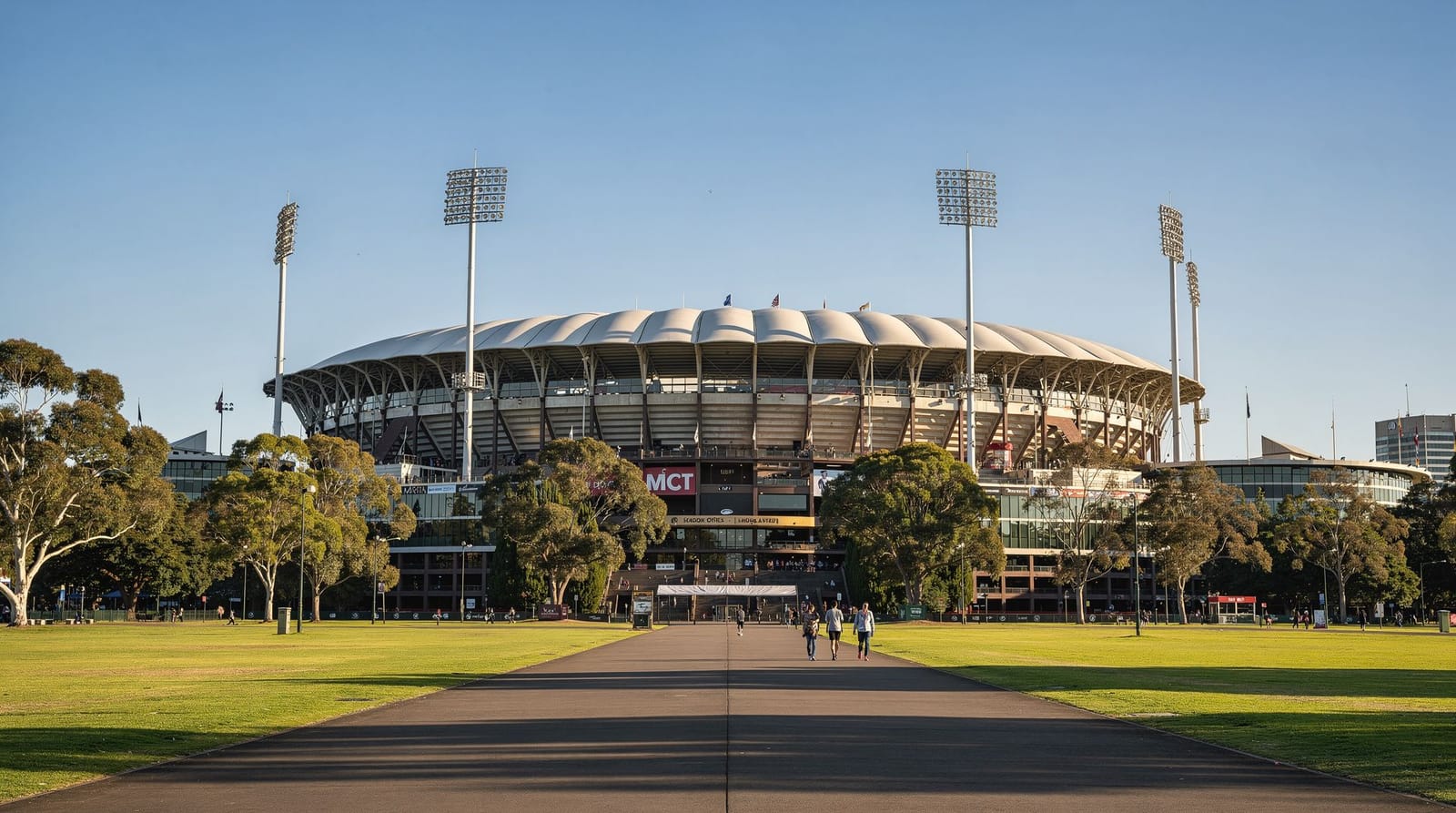
If your dates don’t align with either the Boxing Day Test or a Big Bash fixture, a guided stadium tour still delivers a genuine sense of the ground’s cricket history, walking through areas normally reserved for players and officials.
 Melbourne melbourne cricket ground mcg guided tourCheck availability
Combined with the National Sports Museum housed within the stadium, which holds genuine historic cricket memorabilia spanning from the Bradman era through to recent Ashes and World Cup campaigns, a non-match-day visit gives real context even without live play.
 Melbourne visites du mcg et du national sports museumCheck availability
Practical tips for attending
Sun protection is essential. A full day of cricket, whether Test or BBL, involves extended time outdoors during Melbourne’s peak summer heat (late December-January) — a hat, sunscreen and a refillable water bottle matter more here than at almost any other Melbourne sporting event.
Check bag and outside food policies. Most grounds restrict large bags and prohibit outside food and drink beyond a sealed water bottle; budget for stadium concessions accordingly.
Book Boxing Day (day one) well ahead if that specific date matters. It’s consistently the highest-demand single day of the entire cricket summer at the MCG.
Consider a shaded or covered seating section for full-day Test attendance. Five or six hours of direct summer sun is a genuine endurance test in its own right — check seating maps for shade coverage if you’re planning to stay the full day.
The Ashes and other marquee touring fixtures
Every few years, the Boxing Day Test carries additional historical weight when the touring team is England, part of the storied Ashes series — one of the oldest and most fiercely contested rivalries in international sport, dating back to the 1880s. An Ashes Boxing Day Test at the MCG typically sells out further ahead and carries an even more intense atmosphere than a standard touring fixture, given the rivalry’s depth of history and the large numbers of travelling England supporters who make the trip specifically for this series.
If your Melbourne visit happens to coincide with an Ashes summer, expect noticeably higher demand and pricing for Boxing Day tickets than in years featuring a different touring nation, and book considerably further ahead if this specific fixture matters to your trip.
Where cricket fits in a broader sports itinerary
A cricket visit pairs naturally with the wider MCG guide covering stadium tours on non-match days, and sits alongside AFL, the Australian Open in January and Melbourne Cup in Melbourne’s genuinely packed annual sporting calendar — see our sports precinct guide for the full picture across venues and seasons. If you’re travelling with family and want a shorter, gentler introduction to the MCG precinct without a five-hour cricket commitment, the National Sports Museum tour alone is a solid half-day option.
Weather and rain delays
Cricket is genuinely more weather-affected than most other Melbourne sports covered in this guide, since play stops entirely for rain or unsafe conditions, unlike AFL, which continues in most weather short of genuine danger. Given Melbourne’s unpredictable summer conditions, a rain delay or complete washout of a day’s play is a real possibility worth factoring into expectations, particularly for a single-day ticket where a rained-out day offers little recourse beyond standard refund or credit policies specific to the ticketing provider.
Checking the forecast a day or two ahead, while not something you can act on to change your ticket, at least helps set realistic expectations for how much actual cricket you’re likely to see on a specific day.
Getting to the ground and moving around on match day
Match days at the MCG are easiest when you treat the journey as part of the plan rather than an afterthought. The ground sits close to the city centre, and most visitors arrive by public transport rather than trying to park nearby. Load your card before you leave the hotel — our Myki card guide explains how it works — and read the Melbourne tram guide and the getting around Melbourne overview so you know which route suits your accommodation. If you are staying in the centre, the Free Tram Zone guide is worth a look before you assume you need to pay for every leg of the trip.
Allow generous time on day one of the Boxing Day Test, when queues at the gates and on the way home are at their longest. Leaving a little before the final session ends is a common way to beat the rush, but if the match is tight you may prefer to stay put and let the crowd thin out around you.
Choosing where to sit
The MCG is enormous, and where you sit shapes your day almost as much as which day you pick. Seats in the shade are a blessing during a long afternoon, while seats in the sun suit those who want to soak up the atmosphere and don’t mind the heat. Think about whether you want to be near the action or among the more boisterous sections of the crowd; families and first-timers often prefer a calmer area where they can ask questions, move about and take breaks without disturbing anyone.
It also helps to decide in advance how much of the day you really want to watch. Many spectators come and go, wandering the concourses, visiting the food stalls and returning for the big moments. Going in without the pressure to watch every ball makes Test cricket far more enjoyable, especially if the format is new to you.
Making a day of it around the cricket
A cricket day need not be your only plan. Because play runs for long stretches, you can fit a lot into the mornings and evenings on either side. A walk through the nearby Fitzroy Gardens or the Royal Botanic Gardens is a gentle way to start the day, and the Shrine of Remembrance is another worthwhile stop if you want something reflective before the noise of the stadium. If you would rather spend the evening in the centre, the Melbourne nightlife guide and the rooftop bars guide have plenty of ideas for winding down after stumps.
Visitors who prefer a view of the city from above can pair a match with the Eureka Skydeck, and families can balance a long sitting day with something more active, as laid out in our Melbourne with kids guide. If your dates are flexible, our Melbourne events calendar shows what else is happening in the city around the same time, and the Melbourne in summer guide covers what to expect from the season in general.
Cricket etiquette and spirit of the crowd
Australian cricket crowds are known for being good-humoured, and a bit of banter between supporters of opposing sides is part of the fun. Applaud good play from either team, keep your conversation light and be considerate of those around you, especially during tense moments when everyone is concentrating. If you are unsure what just happened, ask a neighbour; most people are delighted to explain a dismissal or a field change to a curious newcomer.
Take your cue from the people around you on when to stand, when to cheer and when to keep quiet. The rhythm of a Test match has its own unwritten rules, and you will pick them up quickly once you have watched a few overs. Pacing yourself, drinking water regularly and taking breaks in the shade will leave you in better shape to enjoy the final session, which is often where the day’s most memorable moments happen.
Planning your trip around the cricket
If cricket is the reason you are visiting, build the rest of your stay around the match dates. A short stay might focus on the match and the city centre, as in our Melbourne 3-day itinerary, while a longer visit leaves room for day trips and a second match. Our where to stay in Melbourne page helps you choose a base with easy access to the ground, and the best time to visit Melbourne guide puts the cricket summer in the context of the rest of the year. For a first look at the sport itself before you go, the AFL for first-timers article offers a useful comparison with Melbourne’s other great football tradition.
The bottom line
The MCG’s summer of cricket — the historic, high-attendance Boxing Day Test followed by the faster, louder Big Bash League — gives visitors genuine choice between cricket’s most traditional format and its most modern, accessible one. Book Boxing Day tickets early if that specific fixture matters to your trip, consider Big Bash as the lower-commitment, higher-certainty option for first-timers or families, and don’t discount a non-match-day stadium tour if your dates simply don’t align with either.
More tours on Viator
Top-rated experiences with verified reviews, bookable on Viator (a Tripadvisor company).


Frequently asked questions about Cricket at the MCG
How do I get Boxing Day Test tickets?
Tickets are sold through Cricket Australia's official ticketing platform well ahead of the 26 December date, with day-by-day tickets available (each of the five days sells separately) rather than one pass for the whole match — the first two days, especially day one, are traditionally the most popular and sell out fastest.How long does a Test match last?
Up to five days, each running roughly six hours of playing time with breaks, though matches can finish early if one team is dismissed twice (an innings victory) or the match is drawn out to the final session of day five without a result — Test cricket, uniquely among major sports, can end in a draw.What is the Big Bash League?
Australia's domestic Twenty20 cricket competition, running through December and January with matches typically lasting around three hours — a shorter, higher-energy, more family-friendly format than Test cricket, and Melbourne's two BBL teams (Melbourne Stars and Melbourne Renegades) both play regular home fixtures at the MCG and Marvel Stadium respectively.Is Test cricket boring for first-timers?
It has a genuinely slower rhythm than T20 formats, with periods of tactical build-up between big moments (wickets, milestones, boundaries) — some first-timers find the pace an adjustment, but the crowd atmosphere around key moments and the sheer scale of a full-house Boxing Day Test session is memorable regardless of cricket knowledge.What should I bring to a day of Test cricket at the MCG?
Sun protection is essential given full days spent largely outdoors in Melbourne's summer sun (late December, peak heat), along with a hat, sunscreen and a refillable water bottle. Most grounds restrict large bags and outside food and drink beyond a sealed water bottle, so check current bag policies before arriving.Which is better to attend: Test cricket or Big Bash?
Depends on your interest — Test cricket at the Boxing Day fixture offers unmatched atmosphere and history but requires more patience with the format; Big Bash League gives a shorter, louder, more immediately accessible introduction to live cricket, especially good for families or first-timers unsure whether cricket will hold their attention.
Top experiences
Bookable activities with verified prices and instant confirmation on GetYourGuide.