Cycling the Capital City Trail: Melbourne's 29km loop
Melbourne: Classic melbourne bike tour
What is the Capital City Trail and how long does it take to cycle?
The Capital City Trail is a 29km shared-use path that loops around Melbourne's inner city, mixing riverside parkland, Docklands scenery and inner-suburban creek corridors. The full loop takes roughly 2.5 to 4 hours at a leisurely pace with stops, though shorter out-and-back sections are equally popular for less time or energy.
A full loop of Melbourne without a car
Melbourne rewards visitors who get out of the CBD on two wheels, and the Capital City Trail is the clearest way to do that without any real logistical hassle. It’s a 29km shared-use path that loops entirely around the city’s inner suburbs, built up from several separate trails linked together over the years: the Merri Creek Trail, the Main Yarra Trail, the Moonee Ponds Creek Trail and the Inner Circle Rail Trail. Ridden as a full circuit, it strings together river parkland, industrial-heritage Docklands scenery and quieter inner-suburban creek corridors in a single, mostly traffic-separated ride.
What makes it worth doing rather than just admiring on a map is the variety packed into a single loop. Few cities let you ride from a riverside arts precinct to a converted industrial waterfront to a leafy creek valley and back to your starting point, all in a single morning or afternoon, without needing a car or public transport connection at any point.
Starting point and route overview
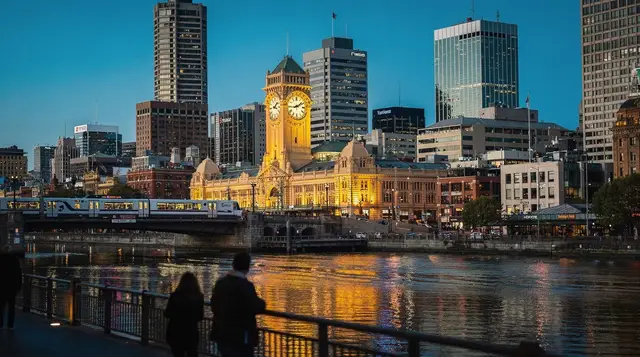
Princes Bridge, right by Flinders Street Station, is the most convenient and commonly used starting point, sitting at the edge of the CBD with easy access to bike hire, public transport and food options before or after your ride. From Princes Bridge, the loop can be ridden in either direction, though most visitors head along the Yarra first, since it’s the most immediately scenic stretch and the easiest to navigate without prior local knowledge.
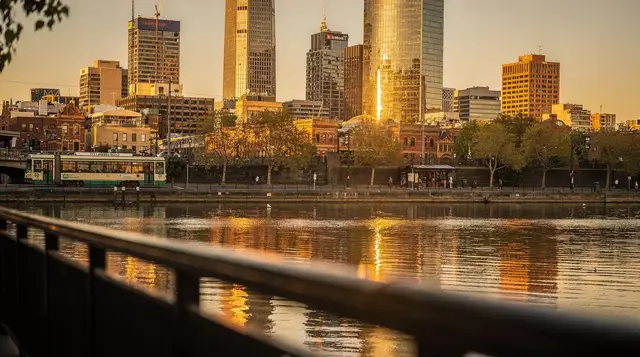
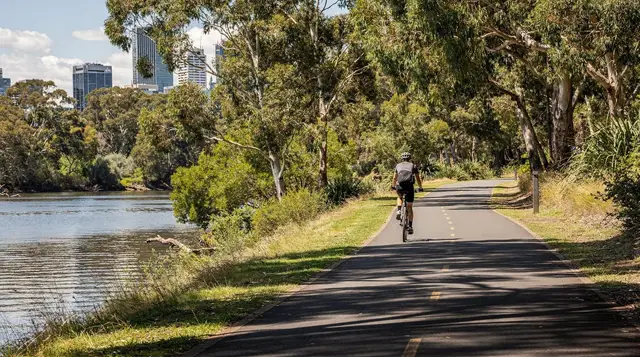
Heading along the river from the CBD, the trail passes Southbank’s arts precinct and continues toward Richmond and the Botanic Gardens area, offering some of the loop’s best riverside views along tree-lined paths with the Yarra close beside you for much of the way. Crossing to the Docklands side introduces a completely different character: converted wharves, modern apartment towers and open water views replace the leafy river scenery, giving the ride a genuinely varied visual rhythm rather than one long, samey stretch.
Further around, the trail threads through North Melbourne and up into the Moonee Ponds Creek corridor before swinging east through Brunswick, where the Merri Creek Trail section runs through a series of green, creek-side parklands that feel a world away from the CBD despite being only a few kilometres out. The loop then continues down through Clifton Hill before rejoining the Yarra and looping back through Richmond toward the CBD, closing the circuit near where you started.
How long the full loop takes
At a leisurely pace, with stops for photos, a coffee break or simply resting in a park along the way, the full 29km loop takes roughly 2.5 to 4 hours. Confident, fitter riders moving at a steadier pace without many stops can complete it faster, but there’s little reason to rush it — the whole point of the trail is the variety of scenery, and stopping to enjoy a particular section (the Botanic Gardens riverside stretch, or a quiet spot along Merri Creek) is arguably better use of the day than setting a personal best time.
Because the trail loops back to its starting point, there’s no need to arrange return transport or backtrack the same route, which makes it a genuinely convenient full-day or half-day activity for visitors without a car.
Shorter options if you don’t want the full loop
Not every visitor wants to commit half a day to the full circuit, and the trail’s linked-sections structure makes it easy to do a shorter piece instead. The most popular shorter ride is the Yarra River stretch from the CBD out to Studley Park, ridden as an out-and-back rather than continuing around the full loop. This captures much of the trail’s best riverside scenery — the Botanic Gardens area, tree-lined banks, glimpses of rowers on the water — in a fraction of the time and effort of the complete loop.
Other visitors choose to ride just the Docklands section for its distinct industrial-waterfront character, or just the Merri Creek stretch through Brunswick if a quieter, more suburban parkland ride appeals more than riverside CBD scenery. There’s no wrong way to break up the trail — treating it as a menu of options rather than an all-or-nothing 29km commitment is entirely reasonable and arguably how most casual riders actually use it.
Bike hire options
Visitors without their own bike have straightforward options in the CBD and Docklands area, where both standard bike hire and electric bike rental are available. E-bikes are worth considering if you’re planning the full loop but aren’t confident about your fitness for a sustained multi-hour ride, since the electric assist flattens out the effort significantly, particularly on any of the loop’s gentle inclines away from the flat riverside sections.
Whichever type you hire, check the basics before setting off: working brakes, a properly adjusted seat height, and a bell, which is genuinely useful (and often legally required) for signalling to pedestrians and slower riders when overtaking on shared sections of path. Booking ahead is sensible on weekends and during warmer months, when hire demand from both visitors and locals is highest.
Who the trail suits
The Capital City Trail is flat, well-surfaced and mostly separated from vehicle traffic, which makes it a comfortable ride for confident casual cyclists, including families with older children who can handle a multi-hour ride and basic bike handling. It’s less suited to very young children, partly because of the sheer distance involved in the full loop, and partly because some sections do cross roads or share space with faster-moving commuter cyclists heading to and from the CBD, particularly during weekday peak hours.
If you’re riding with less experienced cyclists or young kids, sticking to one of the shorter, quieter sections — the Merri Creek parklands rather than the busier inner-CBD sections, for instance — is a more realistic and enjoyable choice than attempting the full loop with a group of mixed ability and confidence.
Safety and shared-path etiquette
Australians drive and cycle on the left, and this applies just as much on shared paths like the Capital City Trail as it does on roads, so keep to the left-hand side of the path, particularly around blind corners or narrower sections near bridges. A bell is genuinely useful here, not a formality — ring it with reasonable warning before overtaking pedestrians, dog walkers or slower riders, rather than assuming they’ve heard you coming.
Give way at path junctions and any road crossings along the route, since some sections of the trail do cross active streets where vehicle traffic has the right of way despite the trail’s otherwise separated character. Weekends and weekday commuting hours both bring higher path traffic in different ways — weekends draw more pedestrians and families, while weekday mornings and early evenings see faster-moving commuter cyclists using the trail as a genuine transport corridor rather than a leisure ride, so adjust your pace and awareness accordingly depending on when you’re riding. Our Melbourne tram guide covers the wider transport picture, including how cycling fits alongside trams, trains and walking.
Combining the ride with a picnic or café stop
Part of what makes the Capital City Trail satisfying rather than just a fitness exercise is how easily it invites a stop along the way. The riverside stretch near the Botanic Gardens and Southbank has plenty of grassy spots suited to a picnic, and several cafés sit close enough to the trail in Richmond and along the Docklands waterfront to make a coffee or lunch break easy to fold into your ride without a long detour.
Packing a simple picnic from a Queen Victoria Market stop beforehand, or planning your route to pass through Richmond around lunchtime, turns the ride from a straightforward point-to-point activity into a more leisurely day out, which is arguably the better way to experience the trail’s variety rather than treating it as a race to complete the loop. The Royal Botanic Gardens sit right beside the riverside stretch of the trail too, and make a natural spot to lock up the bike and stretch your legs on foot for a while.
Trams remain free within Melbourne’s Free Tram Zone if you’d rather swap the bike for a tram partway through your day — our Free Tram Zone guide explains exactly where that zone starts and ends relative to the trail’s CBD sections.
Self-guided vs joining a tour
Riding the Capital City Trail yourself gives you complete flexibility over pace, stops and which sections to prioritise, and the route is well-signed enough that self-navigation is realistic for most visitors, particularly with a phone map as backup. This suits travellers who want to set their own rhythm, linger somewhere scenic, or skip a section that doesn’t interest them.
If you’d rather have a local guide handle navigation, share context about the neighbourhoods you’re passing through, and build in stops at Melbourne’s better-known sights along the way, a guided bike tour is a solid alternative. The classic Melbourne bike tour covers many of the same central sections as the Capital City Trail with a guide narrating the route, while the electric bike sightseeing tour uses e-bike assistance to cover more ground with less physical effort, useful for visitors who want the sightseeing without the workout.
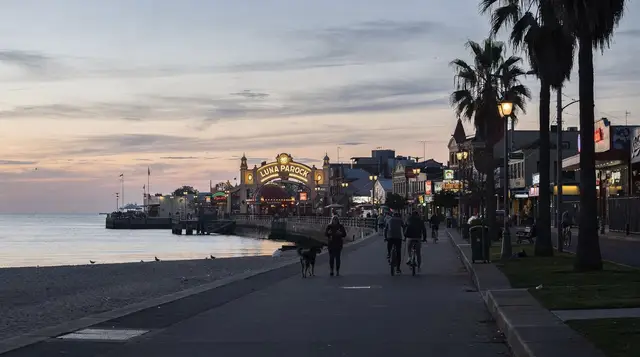
For a different flavour, the bayside cycling tour heads out toward St Kilda and the bay rather than following the inner-city loop, and a further city bike tour option offers another guided alternative if the timing of the others doesn’t suit your schedule.
These guided options work particularly well for solo travellers, visitors short on time who want a guide to prioritise the best stops, or anyone who’d simply rather not navigate an unfamiliar city on two wheels alone.
Combining with the rest of Melbourne’s transport network
The Capital City Trail is a genuinely good complement to Melbourne’s tram and train network rather than a replacement for it — useful for the sections of a Melbourne visit where you want fresh air and a slower pace, while trams and trains handle the parts of your trip where speed matters more. Our Melbourne tram guide covers the city’s famous tram network, including the free CBD zone, as a complementary way of getting around when you’re not on the bike, and our dedicated Melbourne bike tours guide goes deeper into the range of guided cycling options available if the Capital City Trail whets your appetite for more.
The loop also passes directly through or near several neighbourhoods worth exploring further on foot once you’ve parked the bike, including Docklands, with its waterfront dining and modern architecture, and Richmond, known for its shopping strips and food scene along Bridge Road and Victoria Street. The Southbank arts precinct sits right along the riverside stretch of the trail too, making it an easy add-on stop if you’re riding the Yarra section near the CBD.
What to bring
A refillable water bottle is worth carrying for the full loop, since not every section passes shops or cafés, particularly through the quieter Merri Creek and Moonee Ponds stretches. Sun protection matters year-round given Australia’s strong UV levels, so sunscreen and a hat (assuming your helmet allows it) are sensible even on a mild-feeling day. Given Melbourne’s changeable weather, a light rain layer packed away in a small bag is a reasonable precaution, particularly if you’re riding the full loop over several hours where conditions can shift partway through, in keeping with the city’s famous “four seasons in one day” reputation.
Best time of year and time of day to ride
Melbourne’s weather runs on the Southern Hemisphere calendar, so summer (December-February) brings the warmest, longest days but also the strongest UV exposure, making an early morning or late afternoon ride more comfortable than the midday heat. Autumn (March-May) is arguably the best season for the trail, with mild temperatures and often clearer air, while the Yarra Valley-adjacent foliage along parts of the route takes on attractive colour. Winter (June-August) is cooler and wetter, so a rain layer becomes more of a necessity than an optional extra, though the trail remains rideable year-round given its mostly sealed, well-drained surface. Spring (September-November) is comfortable and increasingly popular as the weather warms.
Time of day matters as much as season. Early morning offers the quietest paths and the softest light for photos along the riverside sections, while weekday early evenings bring out a genuine wave of commuter cyclists using the trail as a transport corridor rather than a leisure route, worth keeping in mind if you’re riding at a slower, more sightseeing-focused pace during that window.
A brief note on the trail’s creek corridors
The Merri Creek and Moonee Ponds Creek sections of the loop are worth calling out specifically, since they surprise a lot of first-time riders who expect the whole trail to feel like an urban path. Both corridors run through genuinely green, parkland-lined valleys, with the creek itself often lined by native vegetation and used by local wildlife including waterbirds. These sections tend to be quieter than the Yarra and Docklands stretches, and make a good choice if you specifically want a calmer, more nature-focused portion of the ride rather than the busier inner-CBD sections.
The Inner Circle Rail Trail section, which links parts of the loop through the inner north, follows a former rail corridor and has a distinctly different, straighter character compared to the winding creek paths, useful to know if you’re trying to picture how the different linked trails feel before setting off.
Group rides and rental logistics
If you’re travelling with a group, most CBD and Docklands bike hire operators can typically accommodate several bikes at once, though it’s worth calling ahead or booking online during busier weekend periods to guarantee availability for everyone in your group at the same time and location. Matching bike sizes and confirming everyone’s comfortable with basic road and path rules before setting off saves time and hassle once you’re underway, particularly for a group with mixed cycling experience.
For groups with a wide range of fitness or confidence levels, splitting into a shorter loop for less experienced riders and a longer loop for stronger riders, then reconvening back at the CBD starting point, is often more enjoyable than forcing everyone to match pace across the full 29km. If you’re planning a longer stay and want to fold a ride like this into a broader schedule, our Melbourne 4-day itinerary shows where an activity like this fits alongside the city’s other major sights.
Counting the link trails that make up the loop
It helps to think of the Capital City Trail less as one single-purpose path and more as a stitched-together loop of pre-existing trails, each with its own character and, in some cases, its own local following well before the combined loop became a recognised route in its own right. The Main Yarra Trail predates the full loop by decades and remains popular with runners and commuters independent of anyone doing the complete circuit. The Merri Creek Trail similarly functions as its own destination for Brunswick and Coburg locals, regardless of whether a rider intends to continue all the way around.
Understanding this patchwork nature explains why signage, surface quality and crowding can vary noticeably between sections — you’re moving between trails built at different times for somewhat different purposes, loosely but effectively linked into a single loop for cyclists wanting to do the whole thing in one ride.
Pairing the ride with other stops
The trail makes a good anchor for a wider day. Its CBD end sits close to Flinders Street Station, which is handy for meeting a group or heading home by train when your legs have had enough. If you’d rather turn the ride into a food stop, the Queen Victoria Market guide explains how to shop for a picnic, and the best laneway cafés are an easy detour before or after you ride.
For the Yarra stretch, the Melbourne free things to do list shows what else you can fold in without spending anything, from gardens to galleries. Travellers without a car can see how a ride fits a longer plan in the Melbourne without a car itinerary, and anyone planning how many days to give the city can start with how many days in Melbourne.
Final honest take
The Capital City Trail is one of the better low-cost, high-reward ways to see a genuinely wide slice of Melbourne beyond the CBD core, and it doesn’t require much beyond a rented bike, a bell, and a willingness to keep left. Do the full 29km loop if you have half a day and reasonable fitness, or pick a shorter out-and-back section like the Yarra stretch to Studley Park if your time or energy is more limited — either way, it’s a satisfying, flexible alternative to seeing the city purely on foot or by tram.
More tours on Viator
Top-rated experiences with verified reviews, bookable on Viator (a Tripadvisor company).


Frequently asked questions about Cycling the Capital City Trail
How long is the Capital City Trail?
The full loop is about 29km, built up from linked sections including the Merri Creek Trail, Main Yarra Trail, Moonee Ponds Creek Trail and Inner Circle Rail Trail. Most casual riders take somewhere between 2.5 and 4 hours to complete the whole loop, depending on pace and how many stops they make.Where do you start the Capital City Trail?
Princes Bridge, near Flinders Street Station, is a popular and convenient starting point, since it sits right in the CBD with easy access to bike hire and public transport. From there the trail can be ridden in either direction around the loop.Is the Capital City Trail suitable for families?
It's flat, well-surfaced and mostly separated from traffic, which suits confident casual riders and families with older kids. It's less ideal for very young children, since some sections cross roads and share space with faster commuter cyclists, so adult supervision and a bit of route planning around busier sections is sensible.Can you hire a bike for the Capital City Trail?
Yes. Bike hire, including both standard and electric bike options, is available in the CBD and Docklands area, so visitors without their own bike can still ride the trail. It's worth booking or checking availability ahead on weekends, when hire demand is higher.Can you do a shorter version of the Capital City Trail?
Yes, and many locals do exactly this rather than the full loop. A popular shorter option is the Yarra River stretch from the CBD out to Studley Park, ridden as an out-and-back, which captures much of the riverside scenery without committing to the full 29km.Do cyclists ride on the left in Melbourne?
Yes. Australians drive and cycle on the left-hand side, and this applies to shared paths like the Capital City Trail as well as roads. Keep left, use a bell to signal when overtaking pedestrians or slower riders, and give way at path junctions and road crossings.Is it better to self-guide or join a bike tour in Melbourne?
Both work well depending on what you want. Self-guiding the Capital City Trail suits confident riders who want flexibility to stop where they like, while a guided bike tour suits visitors who'd rather have a local guide narrate the route, handle navigation and bike logistics, and cover some of Melbourne's highlights without needing to plan the ride themselves.
Top experiences
Bookable activities with verified prices and instant confirmation on GetYourGuide.