Old Melbourne Gaol: tickets, tours and Ned Kelly's cell
Melbourne: Old melbourne gaol entry ticket souvenir
How much does Old Melbourne Gaol cost?
General admission is around 38 AUD for adults, 30 AUD for students and seniors, and 22 AUD for children 5-15, with family tickets from around 70-90 AUD. It's open daily 10am-5pm and includes self-guided access plus a downloadable audio guide; separate night-time guided ghost tours cost extra and run on selected evenings.
Melbourne’s most confronting heritage site
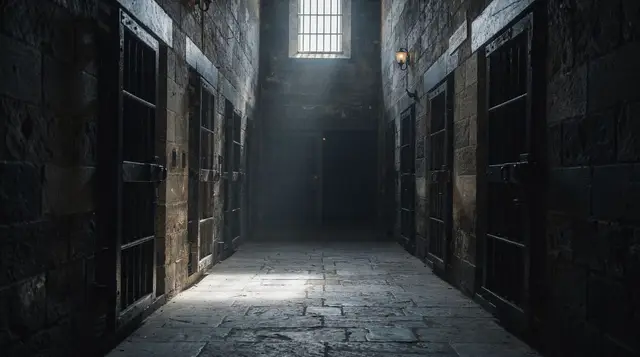
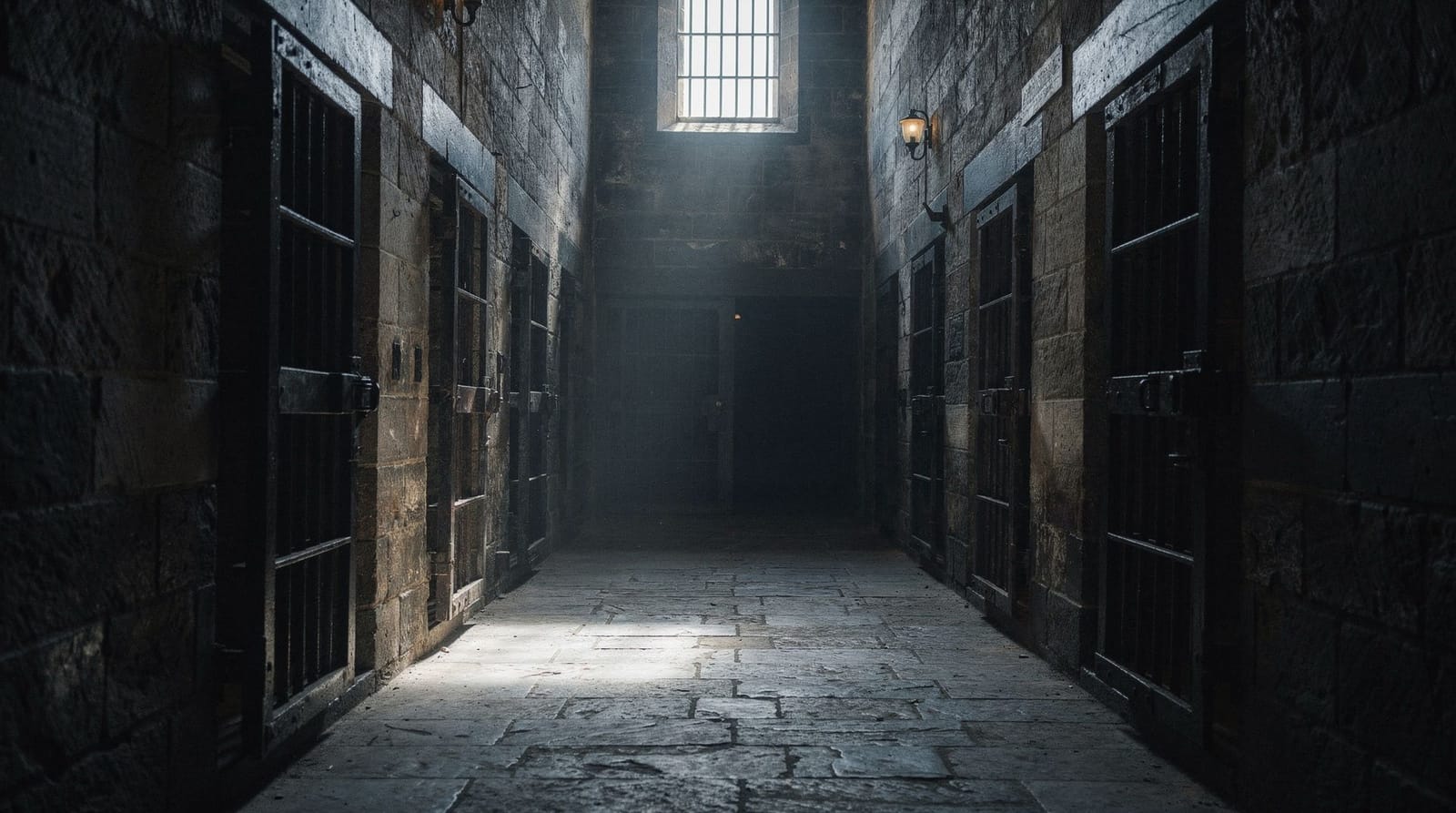
Old Melbourne Gaol operated as a working prison from 1841 to 1929, and in that time it held and executed some of colonial Victoria’s most notorious offenders, most famously the bushranger Ned Kelly, hanged here in November 1880 after his capture at Glenrowan. Today the bluestone cell blocks are preserved as a heritage museum, and the building’s genuinely oppressive atmosphere — narrow cell corridors, cramped stone cells, the preserved gallows area — gives visitors a far more visceral sense of 19th-century colonial justice than a conventional history museum’s glass cases and wall text ever could.
| Where | 377 Russell Street, CBD |
| Cost | Around AUD 38 adult / AUD 30 concession / AUD 22 child |
| Time needed | 1.5-2 hours daytime; around 90 minutes for the ghost tour |
| Getting there | Free Tram Zone; 10-minute walk from Flinders Street Station |
| Best time | Winter weekday mornings for the quietest visit |
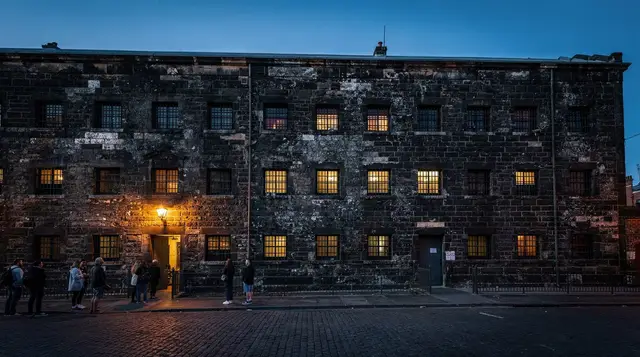
It’s also, notably, right in the middle of the CBD, wedged next to RMIT University on Russell Street, meaning most visitors walk past its unassuming bluestone facade without realising quite how dark the history inside is.
Tickets and opening hours
The gaol is open seven days a week from 10am to 5pm. Adult general admission runs around 38 AUD, with students and seniors at around 30 AUD and children aged 5-15 at around 22 AUD. Family tickets are available from roughly 70 AUD for one adult and two children up to around 90 AUD for two adults and two children, with a modest per-child charge for additional kids beyond that. National Trust members enter free, and admission includes access to a downloadable audio guide app that adds narrated context to each cell block as you move through self-paced.
 Old melbourne gaol entry ticket souvenirCheck availability
Ned Kelly’s connection to the gaol
Ned Kelly remains the gaol’s most famous historical figure, and the collection includes his death mask — a plaster cast taken from his face shortly after his hanging, a common 19th-century forensic and phrenological practice — along with related artefacts and interpretive material about his capture, trial and execution. The gallows area where he was hanged is preserved and forms one of the more sobering stops on the self-guided route.
For visitors interested in extending the Kelly story beyond Melbourne itself, the wider Victorian goldfields region around Ballarat and the Kelly Country area further north carries additional related heritage sites, though the gaol remains the most concentrated single dose of the story available within the city.
The death mask display in particular tends to be the single most photographed and discussed exhibit among first-time visitors, partly because it’s a genuinely rare kind of historical artefact — few other Australian heritage sites hold an object with this direct, physical a connection to such a well-known historical figure’s final hours.
Night ghost tours
Beyond the daytime self-guided visit, Old Melbourne Gaol runs evening guided experiences built around its reputation as one of Melbourne’s most atmospheric reputedly haunted sites — cell blocks lit only by lantern light, guides in period dress, and a script leaning into the building’s darker stories (unexplained deaths, harsher punishments, and the psychological toll of 19th-century incarceration) more than the daytime visit’s more measured historical framing. These run as a separate ticketed experience on selected evenings and are explicitly not included in daytime general admission.
They’re a genuinely different product from the day visit — more theatrical, more atmosphere-driven — rather than simply a nicer version of the same tour, so it’s worth thinking of them as a distinct evening activity choice rather than an upgrade.
book an evening ghost and murder-mystery walking tourWhat you’ll see on the self-guided visit
The self-guided route moves through several levels of the original cell block, each floor illustrating a different aspect of 19th-century prison life: overcrowded holding cells, solitary confinement spaces, and the gallows and condemned cell used for prisoners awaiting execution. Interpretive panels and the audio guide cover broader themes beyond individual notorious cases — the treatment of women and children in the colonial justice system, mental illness and its (frequently punitive rather than therapeutic) treatment within the prison system, and the disproportionate impact of harsh sentencing on Aboriginal Victorians and poor settlers alike.
It’s a genuinely more nuanced experience than the “Ned Kelly’s gaol” framing that dominates most marketing suggests, and worth allowing time to actually read the panels rather than moving straight to the most photographed cells.
A brief history of the gaol beyond Ned Kelly
While Ned Kelly’s execution is by far the gaol’s best-known story, the site’s 88 years of operation held a far broader cross-section of colonial Victorian society than the bushranger narrative alone suggests. Records held by the museum document the incarceration of debtors, the mentally ill (housed here in the absence of adequate dedicated psychiatric facilities for much of the 19th century), women convicted under laws that would be considered grossly disproportionate today, and a significant number of Aboriginal Victorians caught up in a colonial justice system that applied European legal frameworks to a population it had displaced by force.
In total, 133 people were hanged at the gaol during its operational life, and the preserved gallows and condemned cells make this history tangible in a way few other Australian heritage sites manage.
Many of those executed were far less notorious than Ned Kelly, and the museum makes a deliberate effort to tell some of their stories alongside his, giving a more complete picture of who actually passed through the gaol’s system rather than letting a single famous case stand in for the whole institution’s history.
The building closed as a functioning prison in 1929, was used for various institutional purposes in the following decades, and was progressively opened to the public and preserved as a heritage site from the mid-20th century onward, eventually passing into the care of the National Trust of Australia (Victoria), which operates it today.
Comparing Old Melbourne Gaol to other true-crime and dark-history sites
Melbourne’s broader true-crime and dark-history offering extends beyond the gaol itself — ghost tours elsewhere in the CBD cover additional reputedly haunted sites, and walking tours focused on colonial-era crime and punishment sometimes incorporate the gaol as one stop among several rather than the sole focus. If you’re building a themed evening or day around this material, Old Melbourne Gaol is genuinely the anchor site — the others generally reference or build on its history rather than offering comparably substantial preserved architecture and object collections of their own.
Is it worth the ticket price?
At around 38 AUD for an adult, Old Melbourne Gaol sits at the higher end of Melbourne’s paid heritage attractions relative to a visit that takes under two hours. Whether it’s worth it depends on your interest level: for visitors with a genuine interest in colonial Australian history or true-crime-adjacent stories, it delivers a uniquely atmospheric, well-preserved site that most cities simply don’t have an equivalent of. For visitors purely looking for an efficient use of a short CBD visit, the free alternatives nearby — State Library Victoria a few minutes’ walk away, or NGV’s permanent collection a little further afield — arguably offer more content per dollar.
Our honest take: it earns its place on an itinerary with at least three days in Melbourne, but is a reasonable one to skip on a rushed one-day visit if budget is tight.
Practical visiting tips
Use the audio guide properly rather than rushing. It’s included in the ticket price but easy to skip past if you’re moving quickly — slowing down to listen at each stop is where the actual value of the ticket lives, since the cells themselves, without narration, can feel repetitive after the first floor.
Book the ghost tour separately and in advance. These evening sessions have limited capacity and sell out, particularly around Halloween and school holiday periods, more reliably than the daytime self-guided visit, which rarely requires advance booking outside major events.
Combine with RMIT’s heritage buildings next door. Old Melbourne Gaol sits directly beside RMIT University’s city campus, which itself occupies a mix of heritage and modern buildings worth a glance if you’re already in the area, including some architecturally striking recent additions that make an interesting contrast with the 1840s bluestone gaol.
Allow buffer time if doing a ghost tour the same evening as a day visit elsewhere. The gaol’s evening tours run as fixed-length guided sessions with a specific start time, so build in transport buffer if you’re coming from further afield in the city.
Accessibility and facilities
As a heritage bluestone building constructed in the 1840s, Old Melbourne Gaol has real physical accessibility constraints — narrow original staircases and uneven stone floors in parts of the cell blocks mean full wheelchair access isn’t possible throughout every level, though ground-floor areas and key exhibits remain accessible, and staff can advise on the most accessible route through the site before you begin. There’s a small gift shop near the entrance with history books, Ned Kelly memorabilia and National Trust merchandise, but no on-site café, so plan a meal before or after your visit rather than during — Russell Street and the surrounding CBD blocks have no shortage of options within a few minutes’ walk.
Toilets are available on-site, and staff at the entrance desk can advise on the current condition of specific staircases or cell blocks if mobility is a particular concern for anyone in your group — conditions in a heritage building of this age can vary slightly with ongoing conservation work, so a quick check on arrival is worth the minute it takes.
Seasonal notes
Visitor numbers rise noticeably around Halloween (late October) when the evening ghost tour program is often expanded with additional seasonal sessions, and during Victorian school holidays when family day-visit numbers increase. Winter weekday mornings (June-August) are consistently the quietest time to do the self-guided day visit, letting you move through the cell blocks without queuing behind larger groups at the narrowest points, such as the condemned cell and gallows area.
Getting there
Old Melbourne Gaol is at 377 Russell Street, in the CBD, about a 10-minute walk from Flinders Street Station or Melbourne Central train station, and close to Melbourne Central shopping centre and Queen Victoria Market. Trams along Swanston Street and several CBD routes stop within a short walk, and the site sits inside the Free Tram Zone.
Combining with a CBD history day
The gaol pairs naturally with a broader CBD history theme: the Melbourne street art and laneways circuit a few blocks away, Chinatown for lunch, and Queen Victoria Market for an afternoon browse. If you’re specifically drawn to Melbourne’s grittier historical stories, our ghost tours guide covers other after-dark options across the CBD that complement a gaol visit without repeating the same content.
Booking tips and combining with other tickets
If you’re set on doing both the daytime self-guided visit and an evening ghost tour, treat them as two separate trip-planning decisions rather than one combined ticket — pricing, timing and booking windows are entirely independent. Some seasonal bundle offers combine gaol entry with other National Trust Victoria properties, worth checking if your itinerary includes other heritage sites around the state, such as regional homesteads or historic goldfields buildings around Ballarat and Bendigo, both under National Trust or similar heritage management.
As with most Melbourne paid attractions, booking online ahead of a specific date guarantees entry during busy periods and, on the ghost tour specifically, is the only realistic way to secure a spot given the fixed, limited-capacity nature of each evening session.
What the museum collection covers beyond the cells
Alongside the cell blocks themselves, the museum holds a collection of artefacts and archival material relating to the gaol’s operation — original punishment records, tools used in daily prison life, and interpretive displays on the evolution of Victorian penal policy across the 19th and early 20th centuries. This broader collection is easy to skim past if you’re focused purely on the Ned Kelly story, but it’s genuinely worth the extra 15-20 minutes, since it contextualises the gallows and condemned cell within a much longer, more complicated institutional history than any single case.
Comparing the daytime visit and the ghost tour side by side
| Daytime self-guided visit | Evening ghost tour | |
|---|---|---|
| Format | Self-paced, audio guide included | Fixed-length guided group |
| Atmosphere | Measured, historical | Theatrical, lantern-lit |
| Suitable for | Most ages from around 8-10 up | Teenagers and adults |
| Booking | Rarely required in advance | Book ahead — limited capacity |
What surprises first-time visitors most
Beyond the Ned Kelly connection most visitors already know about, the detail that consistently surprises first-time visitors is how recently the gaol operated — closing only in 1929 means the building’s use overlapped with living memory for some Victorians’ grandparents or great-grandparents, rather than belonging to a distant, purely colonial past. The narrowness of the cell corridors and the sheer physical smallness of individual cells also tends to land harder in person than in photographs, and the preserved condemned cell and gallows area is genuinely more affecting walked through at your own pace than described secondhand.
Honest planning notes
The gaol works best as a deliberate, focused visit rather than a casual add-on between other CBD errands — the subject matter rewards giving it your full attention rather than treating it as a quick photo stop for the Ned Kelly connection alone. Families should think carefully about age-appropriateness: the daytime visit’s frank treatment of executions and 19th-century punishment is more intense than most family museums in the city, and the evening ghost tours are explicitly pitched at teenagers and adults rather than young children.
For a lighter, still-historical alternative better suited to younger kids, Melbourne Museum’s Bunjilaka and natural history galleries are a gentler starting point for a family history day in the CBD.
More tours on Viator
Top-rated experiences with verified reviews, bookable on Viator (a Tripadvisor company).


Frequently asked questions about Old Melbourne Gaol
How much are Old Melbourne Gaol tickets?
Adult general admission is around 38 AUD, students and seniors around 30 AUD, and children 5-15 around 22 AUD. Family tickets run roughly 70-90 AUD depending on the combination of adults and children, and National Trust members enter free.Is Ned Kelly's cell at Old Melbourne Gaol?
Yes — the gaol displays artefacts connected to bushranger Ned Kelly, who was hanged here in 1880, including his death mask and armour-related items in the museum's collection. The gallows area where he was executed is part of the self-guided tour.Are Old Melbourne Gaol ghost tours worth it?
The evening guided ghost tours add genuine theatrical atmosphere with the building lit only by lantern light and staff in period costume sharing darker stories than the daytime self-guided visit covers. They're a different, more atmospheric experience from the daytime tour rather than a strict upgrade, and worth doing as an evening activity in their own right rather than instead of a day visit.How long does a visit to Old Melbourne Gaol take?
Budget 1.5-2 hours for the self-guided day visit including the audio guide, and around 90 minutes for the separate evening ghost tour, which runs as a fixed-length guided experience rather than a self-paced wander.Is Old Melbourne Gaol scary or suitable for kids?
The daytime self-guided visit is generally suitable for children from around age 8-10 up, though the subject matter (executions, harsh 19th-century punishment) is more confronting than a typical family museum. The night ghost tours are explicitly aimed at teenagers and adults and are not recommended for young children.Where is Old Melbourne Gaol located?
It's at 377 Russell Street in the CBD, next to RMIT University, about a 10-minute walk from Flinders Street Station or Melbourne Central, making it an easy add-on to a CBD walking day.
Top experiences
Bookable activities with verified prices and instant confirmation on GetYourGuide.