Driving the Great Ocean Road: tips before you set off
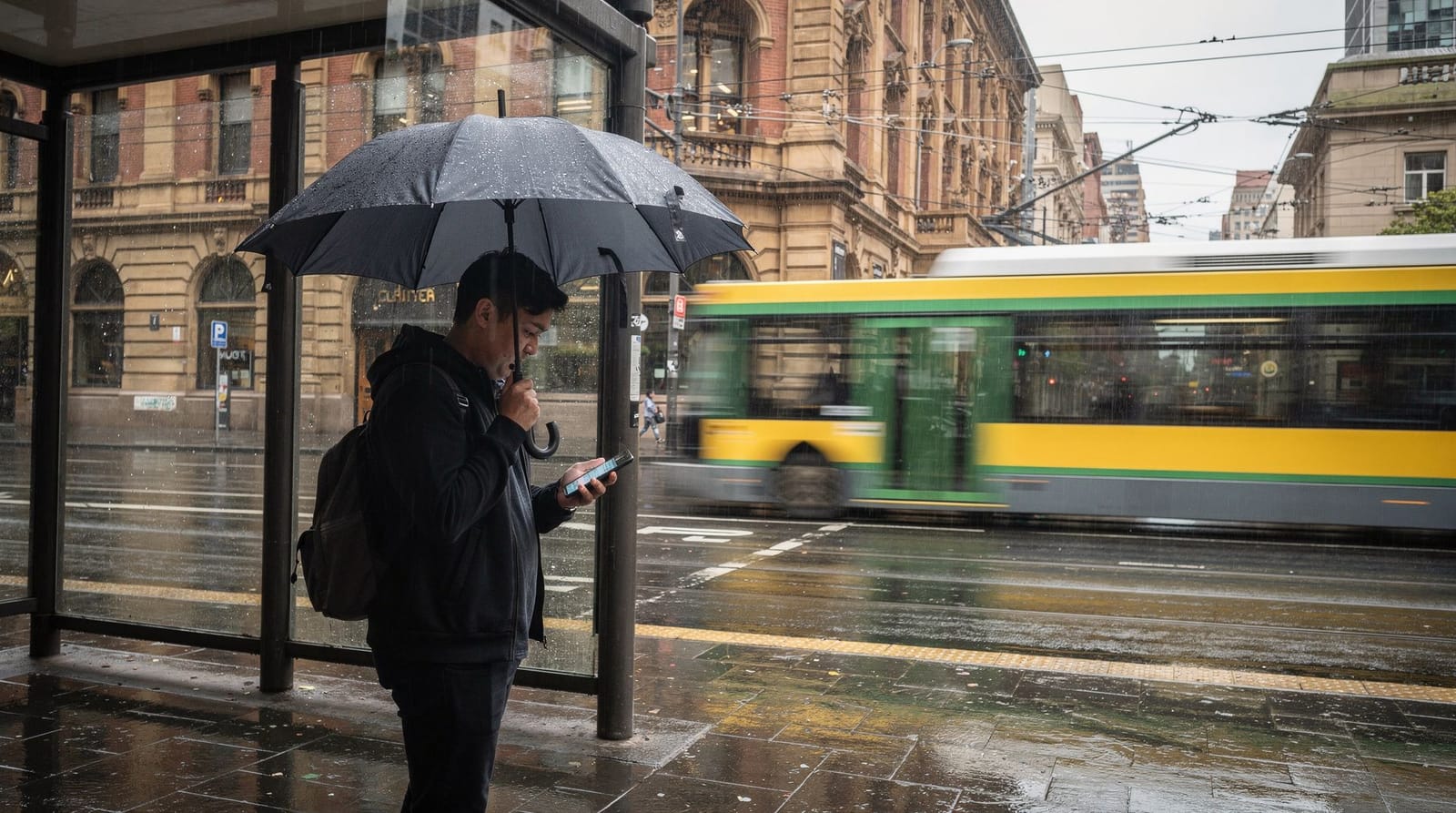
Driving on the left is the first adjustment, and it matters more here than in the city
These tips are aimed specifically at the practical driving realities of this particular road, rather than generic road-trip advice that applies equally anywhere — the Great Ocean Road has a handful of genuinely specific quirks worth knowing before you set off.
| Distance | around 240km, Torquay to Allansford (near Warrnambool) |
| Time needed | full day self-drive one way; 2 days for a relaxed loop |
| Driving side | left — the biggest adjustment for many visitors |
| Fuel stops | Geelong, Torquay, Lorne, Apollo Bay |
| Signal | patchy through the Otways — download offline maps |
Australia drives on the left, which is a manageable adjustment in Melbourne’s grid-pattern CBD with clear signage and slow traffic, but becomes a genuinely bigger deal on the Great Ocean Road’s narrow, winding coastal sections, where instinctive muscle memory from right-hand-drive countries can put you dangerously wide on a blind corner. If you’re not confident on left-hand roads, seriously consider a guided tour instead — this is one trip where the driving itself is a genuine source of stress for a meaningful share of self-drive visitors. Our driving in Victoria guide covers the broader road rules if this is your first time driving in the state.
 From melbourne great ocean road 12 apostles tourCheck availability
What the road is actually like
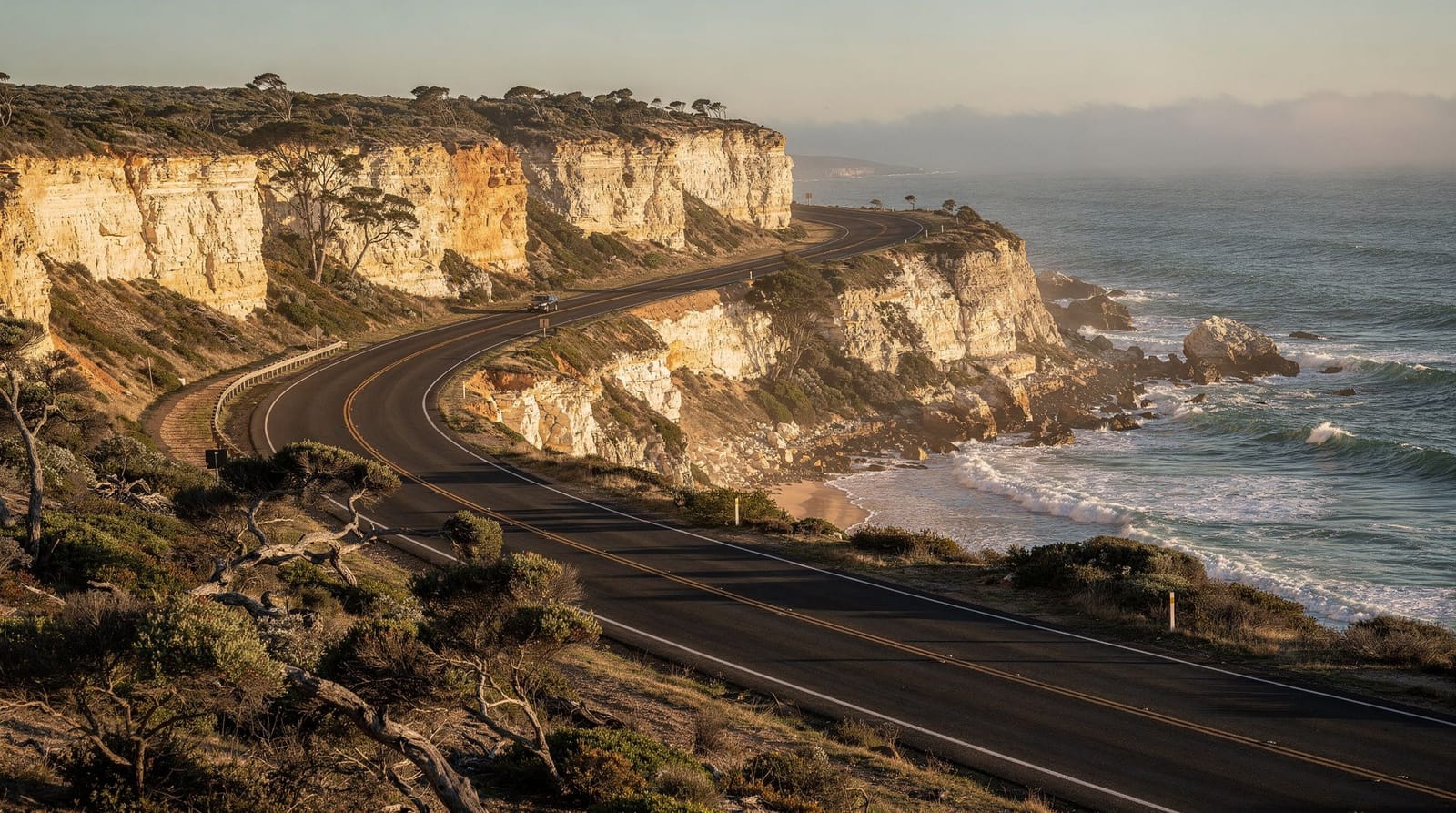
The Great Ocean Road itself is a well-maintained, sealed two-lane road for its entire length, but it’s genuinely narrow and winding in the coastal sections between Lorne and Apollo Bay, with limited overtaking opportunities and cliff-edge drops on the ocean side. Speed limits drop significantly through these stretches (often to 60-80km/h) and are strictly enforced with speed cameras — don’t assume open, empty-looking road means it’s safe to push the limit.
Speed cameras and fines
Victoria enforces speed limits along the Great Ocean Road strictly, with both fixed and mobile speed cameras operating in various sections, and fines for rental car drivers are typically charged directly to the credit card on file, often with an administration fee added on top of the base fine. Given how the road’s speed limit changes frequently through the coastal sections — sometimes dropping from 100km/h to 60km/h with little warning — it’s worth being more conservative with speed here than instinct might suggest based on how open the road looks.
Fuel and facilities
Fuel stations are reasonably spaced along the route (Geelong, Torquay, Lorne, Apollo Bay all have stations), but distances between them on the more remote western stretch (beyond Apollo Bay toward Port Campbell) are longer than they first appear, so fill up whenever you’re below half a tank rather than waiting for a specific low-fuel warning. Mobile phone reception is patchy or absent in several stretches, particularly through the Otways rainforest sections, so don’t rely on live navigation the entire way — download offline maps beforehand.
Timing your stops around light and crowds
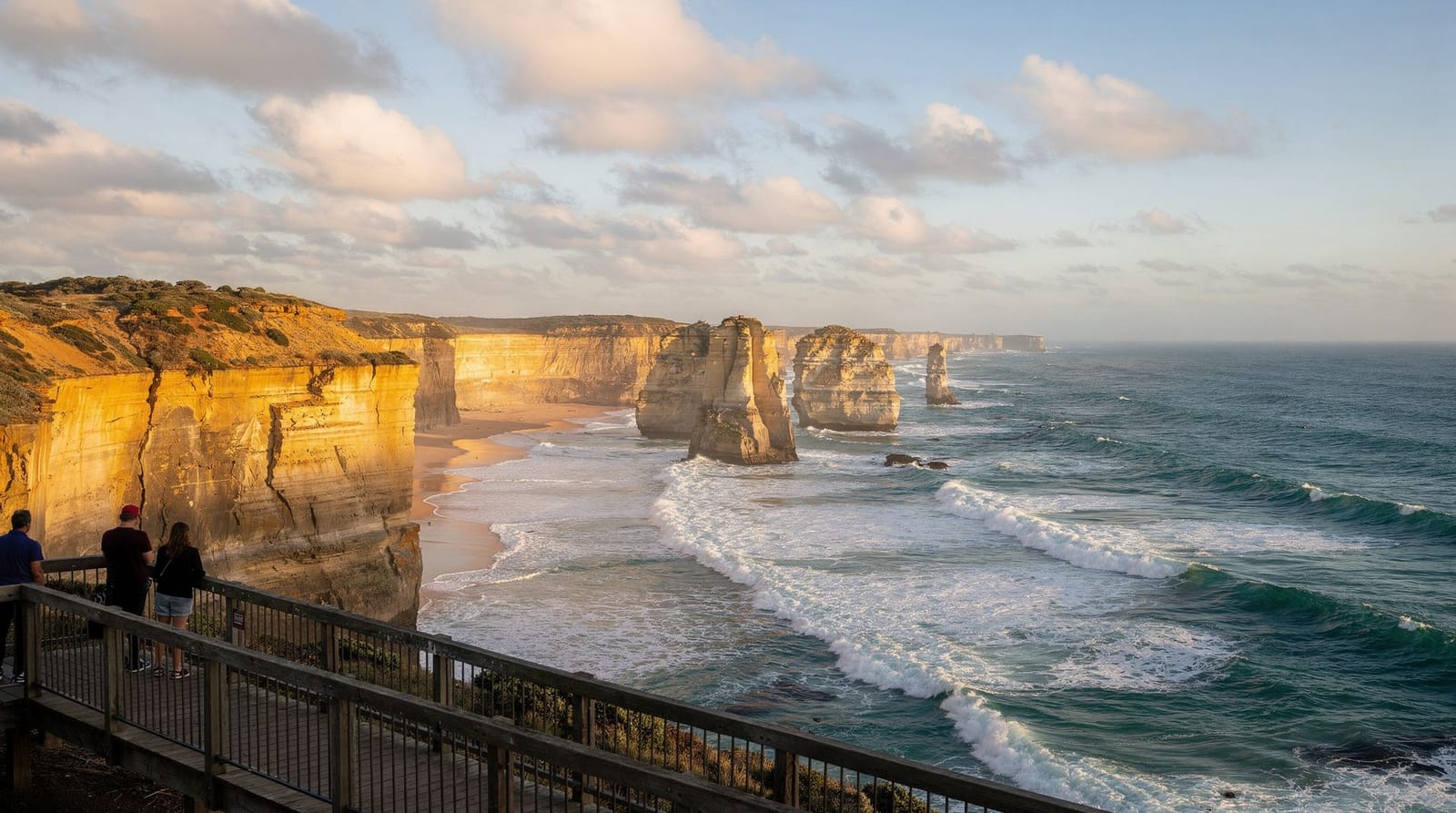
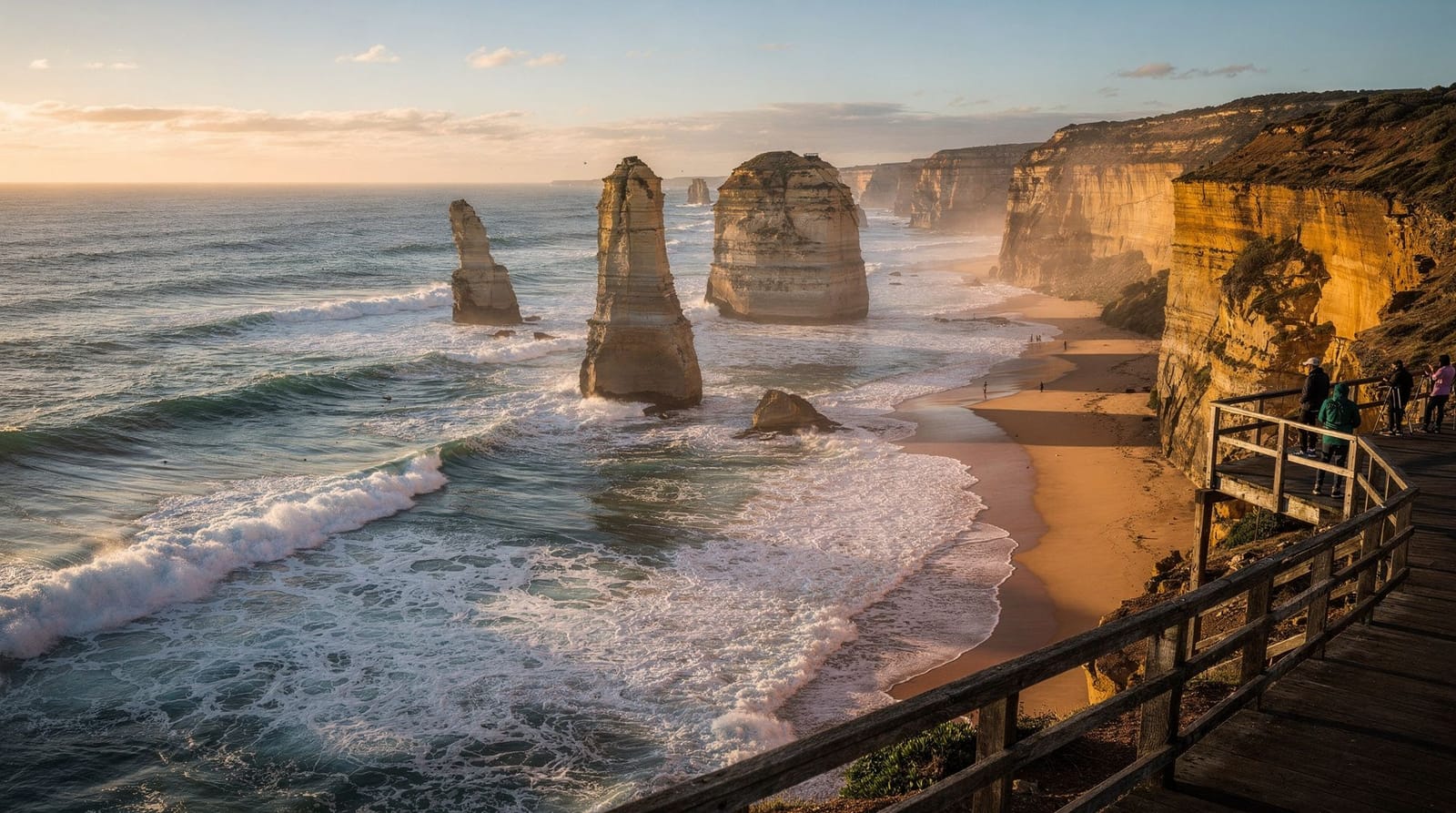
Most self-drivers instinctively travel clockwise from Melbourne, arriving at the Twelve Apostles in early-to-mid afternoon under harsher light and the heaviest crowds, since every tour bus and rental car on the same clockwise loop arrives around the same window. If your schedule allows, consider driving the inland route out via the Princes Highway first and approaching the coast from Port Campbell, arriving at the Apostles in the late afternoon — noticeably quieter and better lit for photography.
Wildlife on the road
Kangaroos and wallabies are a genuine hazard, particularly around dawn and dusk in the more rural stretches near the Otways and toward Port Campbell — reduce speed in these windows and be prepared to brake for animals crossing unexpectedly. Koalas are occasionally visible in roadside eucalypts around the Kennett River area, worth a slow, careful stop if you spot one, but never stop suddenly on the road itself.
Should you rent a car or take a tour?
Renting makes sense if you’re a confident left-hand driver, travelling with others to split costs, and want to linger somewhere off the fixed tour schedule — a quiet beach, an unplanned coffee stop, an extra 20 minutes at a lookout. A guided tour makes more sense for a first-time visitor to Australia unfamiliar with left-hand driving, for solo travellers without anyone to share fuel and driving duties, or simply for anyone who’d rather look at the scenery than watch the road on a genuinely demanding stretch of driving. Our full tour vs. self-drive comparison weighs both options in more depth if you’re still undecided, and our self-drive guide has a fuller stop-by-stop route if you do choose to drive yourself.
| Self-drive | Guided tour | |
|---|---|---|
| Best for | confident left-hand drivers, groups splitting cost | first-timers, solo travellers, unfamiliar with left-hand roads |
| Flexibility | full control of stops and pace | fixed schedule, no driving stress |
| Cost | rental + fuel + insurance, cheaper split across a group | single per-person price, no hidden extras |
Insurance and rental car considerations
If you’re renting a car specifically for the Great Ocean Road, check the rental agreement’s excess and coverage details carefully — some standard policies carry a genuinely high excess (sometimes 3,000-5,000 AUD) for damage, and given the route’s narrow sections and occasional loose gravel at lookout car parks, it’s worth considering a reduced-excess add-on for peace of mind on unfamiliar roads. Confirm whether the rental company allows one-way drop-off if your itinerary continues past the coast rather than looping back to Melbourne, since not all companies permit this without an extra fee.
Overnight stops if you extend the trip
If you decide to split the drive over two days rather than returning in one, Apollo Bay and Port Campbell are the two most practical overnight bases — Apollo Bay sits roughly midway and offers a wider range of accommodation and dining, while Port Campbell puts you closest to the Twelve Apostles for an early, quiet morning visit before the day’s tour buses arrive. Booking ahead during summer and school holidays is worth doing, since both towns have genuinely limited accommodation capacity relative to demand in peak season.
Toilet stops and other practicalities
Public toilets are available at the major visitor centres (Twelve Apostles, Loch Ard Gorge) and in each of the coastal towns, but are more sparse along the stretches between them — use facilities when you stop rather than assuming another will appear shortly, particularly on the less populated western half of the route beyond Apollo Bay.
Parking at popular stops
The Twelve Apostles’ main visitor centre has a large car park that fills quickly in peak season (summer, school holidays) — arriving before 10am or after 4pm avoids the worst of it. Smaller lookouts along the route (Loch Ard Gorge, the Grotto) have limited roadside parking, so be prepared to walk a short distance from your car if the closest spots are taken.
If you’d rather see it in one focused push without an overnight stop, our Great Ocean Road in one day guide lays out a realistic single-day route, and it’s one of several options compared in our best day trips from Melbourne guide. For other first-visit driving pitfalls beyond this specific road, our first-timer mistakes guide is worth a read too.
Frequently asked questions about driving the Great Ocean Road
Is it hard to drive the Great Ocean Road?
The road is well-maintained and sealed throughout, but the coastal sections between Lorne and Apollo Bay are narrow and winding with cliff-edge drops, which can be genuinely demanding for drivers unused to left-hand roads or unfamiliar with winding coastal driving.
Do you need an international driving permit to drive in Victoria?
Most visitors from English-speaking countries can drive on their home licence for a limited period, but requirements vary by country of origin — check current rules for your specific licence before renting a car.
Is mobile phone signal reliable along the Great Ocean Road?
No — reception is patchy or absent through several stretches, particularly the Otways rainforest sections. Download offline maps before setting off rather than relying on live navigation the entire way.
Should I drive the Great Ocean Road clockwise or anti-clockwise?
Most visitors default to clockwise from Melbourne, which puts you at the Twelve Apostles in the busiest, harshest-light window. Approaching from the western end in the afternoon, if your schedule allows, gives noticeably quieter, better-lit viewing.
Should I get extra insurance for a Great Ocean Road rental car?
It’s worth considering — standard rental excess can run 3,000-5,000 AUD for damage, and the route’s narrow sections and gravel lookout car parks make a reduced-excess add-on a reasonable precaution for unfamiliar drivers.
Where should I stay overnight if I split the Great Ocean Road over two days?
Apollo Bay, roughly midway along the route, or Port Campbell, closest to the Twelve Apostles, are the two most practical bases. Both have limited accommodation capacity, so book ahead for summer and school holiday periods.
Are there toilets along the Great Ocean Road?
Yes, at major visitor centres and each coastal town, but they’re sparse on the stretches between — use facilities whenever you stop rather than assuming another will appear shortly.
Is a guided tour better than self-driving for a first visit?
For a first-time visitor unfamiliar with left-hand driving, generally yes — a guided tour removes the driving stress entirely and lets you focus on the scenery. See our tour vs. self-drive comparison for a fuller breakdown of when each option makes more sense.
Can I drive the Great Ocean Road as a single day trip from Melbourne?
Yes, though it’s a long day — around 11-13 hours round trip including stops. Our Great Ocean Road in one day guide covers how to structure the day realistically.