Eureka Skydeck: tickets, prices and is it worth it
Melbourne: Melbourne eureka skydeck 88 entry
Is Eureka Skydeck worth it?
Yes for a first Melbourne visit — Skydeck 88 is the tallest public viewing point in the Southern Hemisphere at 285 metres, with 360-degree views over the CBD, Port Phillip Bay and the Dandenong Ranges. General admission runs roughly 30-33 AUD booked online (40 AUD at the door); the glass Edge cube costs more and is a genuine thrill rather than a gimmick, but skip it if you have a fear of heights or a tight budget.
Why Melbourne’s tallest viewpoint is a genuine first-day stop
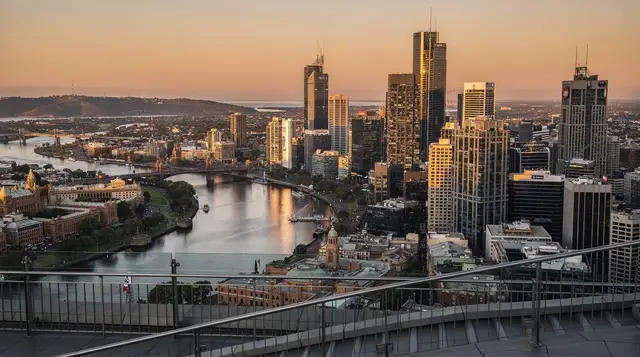
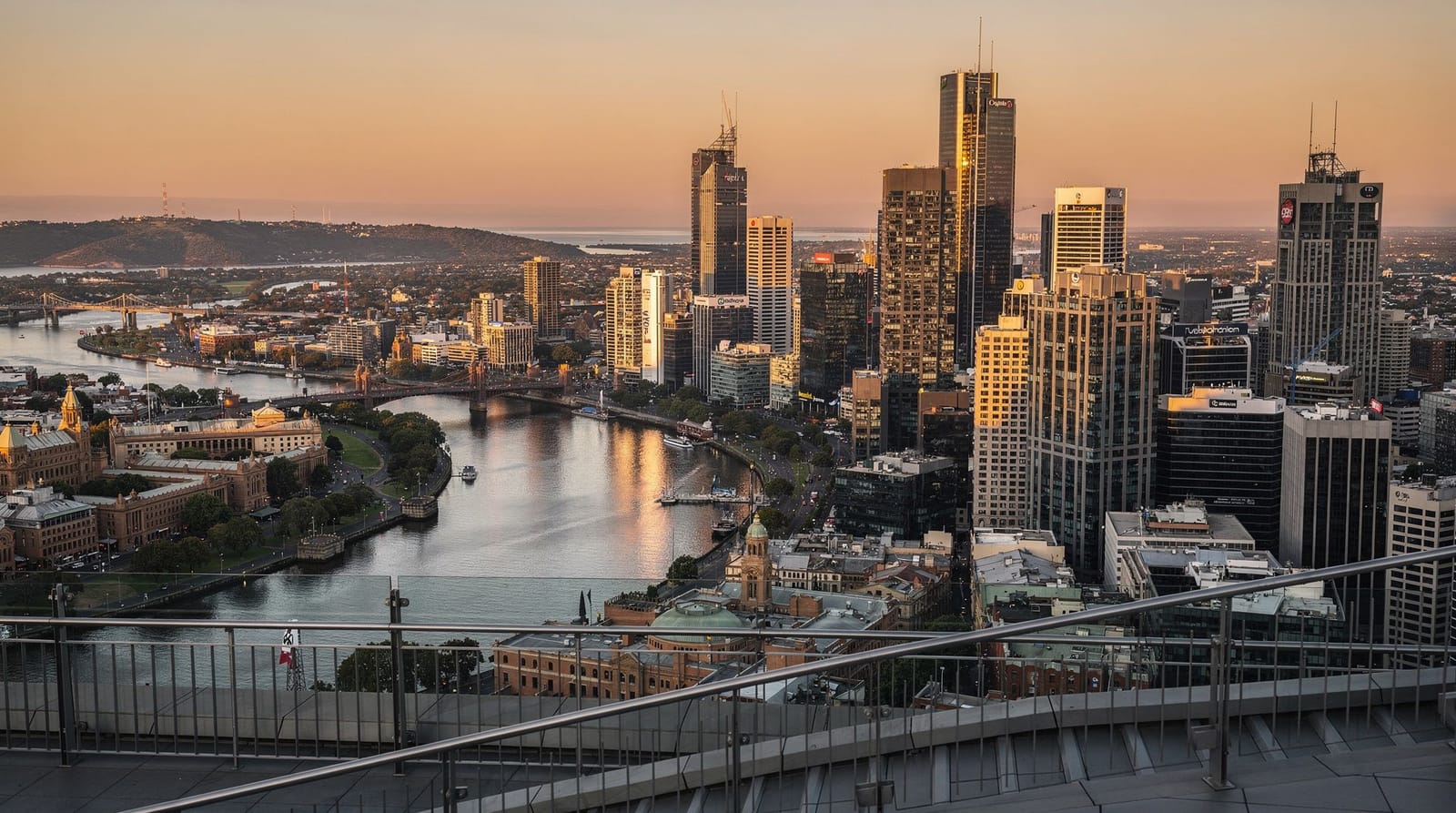
Eureka Tower dominates the Southbank skyline with its gold-crowned top, and Eureka Skydeck 88 — the observation deck on level 88, 285 metres up — is the tallest publicly accessible viewing point in the Southern Hemisphere. It is not the only view in Melbourne (the Melbourne Star observation wheel in Docklands and various rooftop bars compete for the title), but it is the highest, the most central, and the one that gives you a genuinely useful mental map of the city on day one: the Yarra River snaking through Southbank and the CBD, the MCG and Rod Laver Arena to the east, Port Phillip Bay to the south, and on a clear day the Dandenong Ranges on the horizon.
Practically, Skydeck sits at 7 Riverside Quay, Southbank, a five-minute walk from Flinders Street Station across Princes Bridge, making it one of the easiest big-ticket attractions to slot into a first afternoon alongside Federation Square and the Southbank arts precinct.
| Where | 7 Riverside Quay, Southbank — 5 min walk from Flinders Street Station |
| Cost | Around 30-33 AUD online (adult), ~40 AUD at the door; Edge adds ~15-20 AUD |
| Time needed | 45-75 minutes |
| Best time | Late afternoon, ~60-90 min before sunset |
| Booking | Online in advance recommended, especially weekends and school holidays |
Tickets and pricing
General admission tickets bought online in advance run roughly 30-33 AUD for an adult; buying at the ground-floor counter on the day costs closer to 40 AUD, so pre-booking is a genuine saving, not just a queue-jump. Children, students and seniors get reduced rates, and family passes bring the per-person price down further if you are travelling with kids.
The building opens daily, typically from around 10am, with last entry roughly an hour before closing (closing times shift seasonally, later in summer). Tickets are timed but reasonably flexible — you are booking a day and rough window rather than an exact minute, and the express lifts move fast enough that queuing rarely becomes a bottleneck outside Australian school holidays.
 Melbourne eureka skydeck 88 entryCheck availability
Is the Edge experience worth it?
The Edge is Skydeck’s signature upsell: a glass cube that mechanically slides out from the side of the building at level 88, leaving you standing on a transparent floor with no visible support and 285 metres of open air beneath your feet. It costs extra on top of general admission — typically another 15-20 AUD — and is genuinely worth doing once if you have any tolerance for heights at all. It is a slow, controlled 30-second cycle in, pause, and back, not a ride, so it is less intense than it sounds, but staff do warn (accurately) that people freeze up.
Skip it if you have vertigo, are travelling with a toddler who won’t stay still, or are watching the budget closely — the main deck’s floor-to-ceiling windows already deliver 90% of the photo opportunity for free. If you do want the full package, the Ultimate Experience combines general admission with the Edge and sometimes VR add-ons at a bundled rate that undercuts buying each separately.
book the Edge glass-cube add-onWhat you’ll actually see from level 88
The deck runs the full circumference of the floor, so you get four distinct views without moving far:
- North-west, over the CBD: the grid of Melbourne’s streets, laneways and towers, with Flagstaff Gardens and the Queen Victoria Market district visible beyond.
- North-east: the MCG’s distinctive light-towers and Yarra Park, useful for orienting yourself before a match-day visit.
- South, over Port Phillip Bay: on a clear day you can trace the bay’s curve toward St Kilda and, in exceptional visibility, further down the Mornington Peninsula.
- East, toward the Dandenongs: the low blue-green ridge of the Dandenong Ranges, roughly an hour’s drive away and worth knowing what you’re looking at if you’re planning a Puffing Billy day trip.
Coin-operated telescopes and free information panels help identify landmarks, and interactive touch-screens layer historical photos over the current skyline — a nice, unhurried way to spend the extra ten minutes many visitors don’t expect to want.
Practical tips for a smooth visit
Go at the right time of day. Late afternoon, roughly 60-90 minutes before sunset, is the sweet spot: enough daylight to make out the bay and Dandenongs, then a slow transition into the city lighting up beneath you. Midday visits in summer can be hazy; winter mornings (June-August) often give the sharpest long-distance visibility because the air is drier and cooler.
Bring a jacket even in summer. Level 88 has efficient climate control, but the lift ride and the queuing area near the entrance doors can feel different from street level, and the Edge cube in particular can feel cooler.
Photography works better than you’d expect. The windows are angled and treated to reduce reflection, but a polarising phone lens attachment or simply pressing the camera close to the glass cuts most glare. Avoid flash — it just bounces back at you.
Combine it with a Southbank stroll. Eureka Tower sits directly on the Yarra promenade, so pairing Skydeck with a walk along the river to NGV International or the Arts Centre spire makes for an efficient half-day that covers views, art and the river in one loop.
Weekday mornings beat weekend afternoons. Skydeck is popular with school groups and weekend day-trippers; a Tuesday or Wednesday 10am-12pm slot is consistently quieter than a Saturday afternoon.
How Eureka Skydeck compares to other Melbourne viewpoints
Melbourne has three realistic “get above the city” options, and it’s worth being honest about how they stack up:
Eureka Skydeck wins on height (285m) and centrality — it’s the only one of the three you can walk to from Flinders Street Station in under ten minutes.
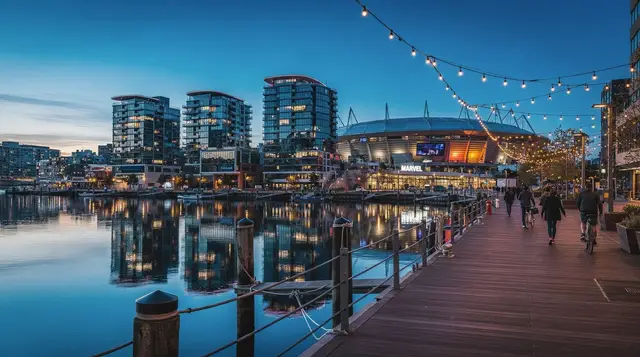
Melbourne Star, the observation wheel in Docklands, gives a different, more panoramic vantage from the ground up rather than from within the skyline, but it has a troubled operating history: it closed in September 2021 and, after years in administration, is only scheduled to reopen in the second half of 2026 following a creditor-backed refurbishment. Check current status before planning around it — as of this guide’s last review it was not yet confirmed open.
Rooftop bars (several around the CBD and Southbank) offer lower, closer views with a drink in hand rather than a formal ticketed deck experience — a good complementary evening activity rather than a substitute.
For a first-time visitor with one “big view” to fit into the itinerary, Skydeck remains the safest, most reliable choice.
| Eureka Skydeck | Melbourne Star | Rooftop bars | |
|---|---|---|---|
| Height | 285m | Lower, ground-level wheel | Varies, typically 8-15 storeys |
| Location | Southbank, walkable from Flinders St | Docklands | Scattered CBD/Southbank |
| Status | Open year-round | Closed since 2021, reopening H2 2026 | Open, weather-dependent |
| Best for | Reliable, central, ticketed views | Panoramic from ground up, when open | Evening drinks with a view |
A short history of Eureka Tower
Eureka Tower was completed in 2006 and briefly held the title of tallest residential building in the world, a claim that speaks to how much of the tower above the Skydeck level is actually private apartments rather than office or hotel space. The building’s name and design reference the 1854 Eureka Stockade rebellion at Ballarat — the gold-crown finish at the top nods to the goldfields, the red stripe below it to the bloodshed of the uprising, and the horizontal gold and blue banding pattern lower down the tower’s cladding represents the Eureka flag’s stars on a blue background.
It’s a detail almost nobody notices from the observation deck itself (you’re inside it, not looking at it), but it’s worth knowing before you go if you like a bit of context with your view — and it connects neatly to the goldfields history covered on a Ballarat and Sovereign Hill day trip if that’s elsewhere on your itinerary.
Eureka Skydeck for families and kids
Skydeck works well with children roughly six and up, who are old enough to appreciate the height without needing to be right against the glass. Younger kids often enjoy it too, but the appeal is shorter-lived — budget 20-30 minutes rather than the 45-75 minutes adults might spend. The touch-screen landmark panels are genuinely engaging for primary-school-age children, turning “spot the MCG” into a game rather than a passive look-and-leave.
The Edge glass cube is a harder call for families. Operators generally allow children on, but very young kids can be startled by the sensation, and staff will not run the cube with anyone visibly distressed standing on it — group experiences pause until everyone is settled. If you’re travelling with a mixed-age family and only some members want the Edge, splitting the group (one adult stays with younger kids in the main deck while others do the Edge) works better than trying to keep everyone together for that particular add-on.
Pram access is straightforward via the lifts, and there’s no walking required once you’re on level 88 — a genuine advantage over some of Melbourne’s more outdoor, on-your-feet attractions on a day when legs are tired.
Weather, seasons and visibility
Melbourne’s famous “four seasons in one day” weather affects Skydeck’s payoff more than most attractions, simply because the entire point is the view. A few honest notes from repeated visits across the seasons:
- Summer (December-February) brings long daylight hours and dramatic sunsets, but also more atmospheric haze and, on total-fire-ban days, smoke haze from regional bushfires that can significantly reduce long-distance visibility toward the Dandenongs and bay.
- Autumn (March-May), widely considered Melbourne’s best season overall, tends to deliver the most reliably clear, calm conditions — a good window if the view is your priority over any single day’s headline weather.
- Winter (June-August) is cooler and shorter on daylight, but cold fronts that blow through often leave crystal-clear air in their wake; a bright winter morning after rain is one of the best-visibility windows of the year, even if it means rugging up more than you’d expect for an indoor attraction.
- Spring (September-November) is changeable, similar to summer’s haze risk but with less consistent heat.
If the view is genuinely important to you (rather than the experience being enough on its own), check the day’s forecast that morning and, where your schedule allows, shift a Skydeck visit to a clearer day rather than locking it into a fixed slot regardless of conditions.
Ticket types compared
| Ticket | Roughly | Includes |
|---|---|---|
| General admission (online) | 30-33 AUD | Level 88 deck, all four viewing directions |
| General admission (door) | ~40 AUD | Same as above, no pre-booking discount |
| Edge add-on | +15-20 AUD | Glass cube experience, timed entry |
| Ultimate Experience | Bundled rate | General admission + Edge (+ sometimes VR) |
| Family passes | Varies, per-person savings | Discounted rate for travelling families |
Queue times and how to avoid them
Skydeck’s express lifts genuinely move fast, so the deck itself rarely bottlenecks — the queues that do build up are almost always at the ground-floor ticket counter, not the lift. Booking online in advance skips that counter entirely, since you go straight to a dedicated entry point with your confirmation. During Australian school holidays and weekends, counter queues can run 20-30 minutes at peak times (typically late morning through early afternoon), while a booked weekday morning or a booked late-afternoon slot rarely involves any meaningful wait at all.
Budget tips: bundling versus paying separately
If you know you want the Edge experience, book it as part of the Ultimate Experience bundle rather than buying general admission and the Edge separately — bundled pricing usually saves a meaningful amount over the two add-on prices combined. Families should specifically check the family-ticket rate, since per-person savings can be substantial compared with buying individual adult and child tickets.
Anyone holding an entry visa processing confirmation or arriving with limited AUD cash should note that Skydeck is card/online only for tickets — there’s no cash-only workaround, which simplifies budgeting if you’re using our currency converter to plan spending in your home currency before you land.
Solo travellers and short-notice visits
Skydeck works well as a solo activity — there’s no group minimum, and the express-lift, self-paced format means you’re never waiting on anyone else’s timing. If your schedule opens up unexpectedly (a free hour before dinner, a cancelled plan), it’s one of the few big-ticket Melbourne attractions genuinely doable on short notice, provided you’re comfortable paying the modestly higher door price rather than the online rate. Solo visitors on a budget can reasonably skip the Edge and still leave with a full sense of the city from the main deck’s windows alone.
Getting there and accessibility
Eureka Tower is at 7 Riverside Quay, Southbank. On foot, it’s a five-minute walk from Flinders Street Station over Princes Bridge, or a similar walk from Southern Cross Station via the Yarra promenade. Trams along St Kilda Road and Flinders Street stop within a few minutes’ walk, and the whole route sits inside the Free Tram Zone if you’re coming from the CBD side of the river. Paid parking is available in the Eureka Tower building itself and nearby Southbank car parks, though driving into this part of the city on a weekday is rarely the fastest option.
The building is fully accessible, with lifts throughout, accessible toilets on the observation level, and staff trained to assist visitors with mobility needs. The Edge experience has its own accessibility considerations — ask staff on arrival if you have specific requirements. Wheelchair and companion-card concessions are generally available; check current terms when booking online rather than assuming a standard discount applies automatically.
Common mistakes to avoid
Buying at the door out of habit. Travellers used to attractions where online prices barely undercut walk-up rates are sometimes surprised how much Skydeck’s gap actually is — booking the night before, even on your phone from the hotel, saves real money for zero downside.
Treating it as a full-morning activity. Unless you’re doing the Edge and lingering over every viewing angle with a coffee from the small café area, most visits are naturally 45-90 minutes. Don’t leave three hours in the schedule expecting to need them — better to pair it with something else nearby.
Ignoring the weather entirely. A view-based attraction on a socked-in, foggy day is a materially worse experience than the same ticket on a clear one. If your dates are flexible even by a day, check the forecast.
Forgetting it’s genuinely close to other things. Because Skydeck sits inside its own tower, some visitors treat it as a standalone excursion requiring transport, when in fact it’s a short walk from Flinders Street Station, the Arts Centre, and the start of the Yarra River promenade — easy to fold into a walking day rather than a dedicated trip.
Where Skydeck fits in a Melbourne itinerary
If you’re building a first 1-day itinerary, Skydeck works well as a late-afternoon anchor after a morning in the laneways and a Queen Victoria Market visit. On a longer 3-day itinerary, it pairs naturally with a Southbank/arts-precinct day alongside the NGV and Arts Centre. Families often combine it with the nearby SEA LIFE Melbourne Aquarium for a rainy-day pair of indoor attractions within walking distance of each other.
For travellers weighing up whether Skydeck earns a place on a tight schedule against Melbourne’s many free alternatives — the Shrine of Remembrance, Royal Botanic Gardens, State Library Victoria — our honest take is that it’s the one paid, purely scenic attraction in the city core that consistently delivers on the ticket price, precisely because Melbourne is otherwise low on natural high ground from which to see itself. See our broader guide to Melbourne’s free things to do if you want to balance the budget with no-cost alternatives on the same day.
Combined with a walking loop through Hosier Lane’s street art and a coffee stop in the laneway café scene, Skydeck rounds out a solid, non-touristy-feeling introduction to the city that doesn’t rely on organised tours to deliver a genuine “aha” moment about how Melbourne is laid out.
More tours on Viator
Top-rated experiences with verified reviews, bookable on Viator (a Tripadvisor company).


Frequently asked questions about Eureka Skydeck
How much are Eureka Skydeck tickets?
General admission is around 30-33 AUD for adults when booked online in advance, rising to about 40 AUD if bought at the counter on the day. The Edge glass-cube experience adds roughly 15-20 AUD on top of general admission. Children under 4 usually enter free; family tickets bring the per-person cost down.What is the Edge experience at Eureka Skydeck?
The Edge is a glass cube that slides out from the building at level 88, leaving you standing on transparent glass with nothing but 285 metres of air below. It is a separate, timed add-on to general admission, not included by default, and queues can add 20-30 minutes at peak times.What time should I visit Eureka Skydeck for the best views?
Late afternoon into sunset (roughly 90 minutes before dusk) gives you daylight views of the bay and Dandenongs plus the city lighting up as you leave. Clear winter mornings (June-August) also give sharp long-distance visibility, since summer haze can soften the horizon.Do I need to book Eureka Skydeck tickets in advance?
Booking ahead online is the only way to get the cheaper rate and to guarantee entry during school holidays or weekends, when queues at the ground-floor counter can run 30-45 minutes. Walk-ups are usually fine on a weekday morning outside peak season.How long does a Eureka Skydeck visit take?
Budget 45-75 minutes: about 5 minutes in the express lift, then as long as you want on level 88. Most visitors spend 30-45 minutes taking in the views and photographing the four directions before heading back down.Is Eureka Skydeck better than Melbourne Star?
For most travellers, yes, and not a close call. Eureka Skydeck is nearly three times higher, sits above the actual skyline rather than in Docklands looking at it from a distance, and — unlike the Melbourne Star, which was closed from 2021 and is only scheduled to reopen in the second half of 2026 — has operated continuously with no closure risk.Can you see the Great Ocean Road or Yarra Valley from Eureka Skydeck?
No, both are too far away to pick out specific landmarks, though on an exceptionally clear day the general direction of the Yarra Valley to the north-east is visible as distant hills rather than any identifiable detail. Skydeck's views are genuinely useful for Melbourne itself, the bay and the closer Dandenong Ranges, not for spotting regional attractions further afield.Is there a café or restaurant at Eureka Skydeck?
There's a small café area on level 88 for coffee, snacks and light refreshments while you take in the views, but it's not a full restaurant experience — most visitors treat Skydeck as a standalone hour rather than a meal stop, saving dining for the many options around Southbank and the CBD nearby.
Top experiences
Bookable activities with verified prices and instant confirmation on GetYourGuide.