Melbourne's best laneway cafés and where to find them
Melbourne: Melbourne coffee lovers walk
Duration: 2.5 hours
Which laneway has the best cafés in Melbourne?
Degraves Street, running off Flinders Street between Flinders Street Station and Collins Street, has the highest concentration of well-regarded café tables crammed along a genuinely narrow bluestone laneway. Centre Place and Block Place, both nearby, offer a similar experience with slightly fewer tourists and marginally better odds of a free table on weekend mornings.
The specific difference between a laneway and an arcade
It’s worth clarifying a distinction that trips up some first-time visitors: laneways (Degraves Street, Centre Place, Block Place) are open-air, though often narrow enough to feel enclosed, while arcades (Block Arcade, the Royal Arcade) are fully roofed, indoor Victorian-era shopping passages, generally more formal in architecture and retail mix than the more casual, café-dominated laneways.
Both are worth exploring, and they’re often physically connected (Block Place literally links Block Arcade to Little Collins Street), but knowing the difference helps set the right expectations — an arcade visit is more of an architectural and retail experience, while a laneway visit is more specifically about the café and casual dining culture covered in this guide.
| Where | Degraves Street, Centre Place, Block Place, CBD |
| Cost | A coffee and pastry typically around AUD 12–18 |
| Best time | Weekday mornings before 8am or after 10:30am |
| Booking | Not needed; walk-in counter service is standard |
| Getting there | Steps from Flinders Street Station |
Why Melbourne’s laneways became café real estate
Melbourne’s CBD was laid out on a Victorian-era grid with narrow service laneways running behind the main boulevards — originally built for deliveries, rubbish collection and rear building access, not for pedestrians. From the 1980s onward, cheap rents and generous unused space in these laneways let small operators open tiny cafés that the big streets couldn’t accommodate, and the format stuck: narrow, characterful, often no bigger than a corridor, with a handful of outdoor tables squeezed against exposed brick and fire escapes. It’s a large part of why Melbourne’s coffee reputation reads so differently from most cities — the cafés themselves are part of the atmosphere, not just a functional stop.
Degraves Street: the famous one
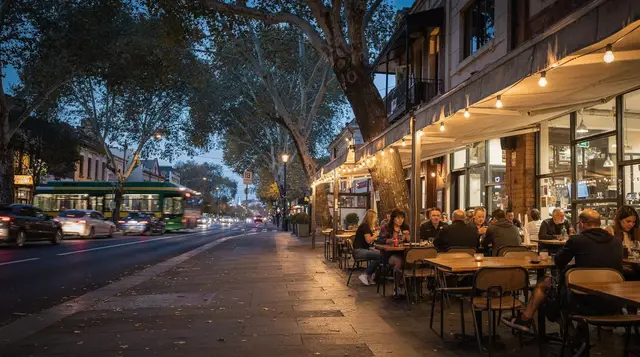
Degraves Street runs from Flinders Street, directly opposite Flinders Street Station’s iconic clocks, up to Collins Street, and it is unambiguously the most photographed laneway café strip in the city. Café tables line both sides for the entire length, awnings overlap overhead, and on a sunny weekday lunchtime it can feel closer to a European piazza than an Australian city laneway. Degraves Espresso is the anchor café most visitors default to, serving straightforward breakfast and coffee from early morning.
The trade-off for the fame is crowding: weekend mornings between 9am and noon routinely see every table full and a loose queue for anything free. Come on a weekday before 9am, or accept a takeaway coffee and a nearby step, and it’s a genuinely pleasant five minutes rather than a managed queue.
 Melbourne coffee lovers walkCheck availability
Centre Place: narrower, quieter, still excellent
A block over, Centre Place connects Flinders Lane to Collins Street via a genuinely narrow, slightly grungier laneway lined with street art, small cafés and vintage-adjacent fashion boutiques. It has a rougher, more lived-in character than Degraves Street — fewer awnings, more exposed brick and pipework — and slightly fewer tourists relative to its quality, since it doesn’t photograph quite as cleanly for a single hero shot. Sonido and a rotating cast of small operators keep the laneway’s counter-service coffee culture running; check current tenancy on arrival since small laneway cafés turn over more often than street-front venues.
Block Place: the arcade connection
Block Place links Block Arcade — Melbourne’s grand 1891 Victorian shopping arcade with its mosaic-tiled floor — through to Little Collins Street, and its cafés benefit from the architectural drama of the arcade itself as a backdrop. It’s a shorter strip than Degraves or Centre Place, so treat it as a five-minute add-on if you’re already exploring the arcades rather than a standalone destination.
Hardware Lane: good for lunch, less essential for coffee
Hardware Lane, running between Little Bourke and Lonsdale Streets, has a different character — wider than the others, lined mostly with sit-down restaurants (Italian, Spanish tapas, modern Australian) rather than counter-service cafés, and noticeably more tourist-oriented at midday, with a few venues running active spruiking for passers-by. It’s a reasonable lunch option if you want to sit down with a proper menu, but it’s honestly the weakest of the laneway strips for the specific coffee-and-quick-bite experience covered in this guide; Degraves, Centre Place and Block Place all edge it out on food quality relative to price.
a small-group secret laneways food tourThe Causeway and Meyers Place: two more worth knowing
The Causeway, connecting Bourke Street to Little Collins Street near the Bourke Street Mall end of the CBD, is a narrower, quieter laneway than Degraves Street, with a handful of smaller cafés and bars that see meaningfully less foot traffic despite sitting close to one of the city’s busiest shopping strips. Meyers Place, off Bourke Street near Spring Street at the eastern edge of the CBD, is one of the laneways credited with helping start Melbourne’s small-bar movement in the late 1990s and early 2000s, though it leans more toward evening bars than daytime cafés — still worth a mention for context on how the laneway format spread from a handful of pioneering spots into the dense network that exists today.
A realistic half-day laneway itinerary
If you want a single, well-paced plan rather than piecing one together yourself, here’s a realistic structure: start at 8am with coffee and a pastry at Degraves Espresso before the queue builds, then walk five minutes to Block Arcade and Block Place for a browse and a second coffee if you’re that way inclined. From there, head to Hosier Lane (ten minutes on foot) for the street art while the morning light is still good for photos, then loop back through Centre Place around 10:30-11am for an early lunch before the midday crowd arrives.
This covers three of the CBD’s best laneways plus its most famous street art lane in around three hours, leaving the rest of the day free for a bigger attraction like Queen Victoria Market or the Southbank arts precinct.
Laneways compared at a glance
| Laneway | Character | Crowds | Best for |
|---|---|---|---|
| Degraves Street | Wide, iconic, awning-covered | Busiest, especially weekends | First-time visitors, photos |
| Centre Place | Narrow, grungy, street art | Fewer tourists relative to quality | A quieter version of the classic experience |
| Block Place | Short, arcade-adjacent | Light, quick stop | Pairing with Block Arcade |
| Hardware Lane | Wider, restaurant-heavy | Tourist-oriented at midday | Sit-down lunch, not quick coffee |
What locals actually think of the “laneway café” reputation
It’s worth a note of honesty here: not every Melburnian is uncritically proud of how thoroughly the laneway café scene has become a tourist checklist item. Some locals feel that the constant photography and occasional crowding at Degraves Street specifically has changed the character of what was once a genuinely low-key, functional shortcut rather than a destination — a mild, good-natured grumble rather than a serious complaint, but worth knowing if you want to blend in a little more rather than treating every laneway purely as a photo backdrop.
Ordering something, sitting for a genuine coffee rather than just snapping a photo and moving on, and being mindful of blocking the narrow walkway all go some way toward being a considerate visitor rather than contributing to the mild fatigue some locals feel about the more famous laneways’ tourist status.
Manchester Lane and ACDC Lane: coffee and character further out
Manchester Lane, off Collins Street near the top of the CBD, is home to Dukes Coffee Roasters, which roasts on-site behind the counter and gives the laneway a genuine working-café feel rather than a purely decorative one. ACDC Lane, named for the rock band and covered in tribute street art, is more of a nightlife laneway (Cherry Bar anchors it) but has a couple of daytime coffee spots worth a look if you’re already walking past on a Hosier Lane street art loop.
How to plan a laneway café crawl
A tight, efficient loop starting at Flinders Street Station covers the essentials in under two hours: coffee at Degraves Espresso, a walk through Block Arcade to Block Place, over to Centre Place via Collins Street, then north to Manchester Lane for a Dukes coffee if you want a second stop. Pair this with Hosier Lane’s street art, which sits a short walk south-east, for a single morning that covers two of the CBD’s signature attractions.
If you’d rather have a guide narrate the history and architecture as you go rather than navigating solo, a small-group laneway food or coffee walk covers three or four of these strips with a local host, useful on a first visit when you don’t yet have a mental map of which laneway connects to which street.
A short history of the laneway café format
Melbourne’s CBD laneways were laid out in the 19th century as service access — rights-of-way for deliveries, rubbish collection and rear entrances to the grand Victorian-era buildings fronting the main streets — not as pedestrian thoroughfares in their own right. For much of the 20th century they were genuinely unglamorous, often used for parking or storage rather than anything resembling hospitality. The shift began in the 1980s and accelerated through the 1990s and 2000s, as licensing changes and cheap rents made these narrow, previously overlooked spaces attractive to small operators who couldn’t afford or didn’t want a conventional street-front lease.
What makes Melbourne’s version of this trend distinctive compared with similar “hidden laneway” scenes in other cities is how thoroughly it took hold — rather than one or two showcase laneways, dozens of them across the CBD grid now host cafés, bars and small retailers, woven into daily foot traffic patterns rather than existing as a novelty.
Weather contingency planning
Melbourne’s changeable weather (the city’s own “four seasons in one day” reputation is not marketing exaggeration) matters more for laneway cafés than for street-front venues, since much of the seating is only partially covered by awnings. A sudden downpour — genuinely common even in summer — will quickly fill the handful of indoor tables each café has and push everyone else to huddle under awnings with a takeaway cup. If rain is forecast, either build in flexibility to shift your laneway visit to a clearer window later in the day, or treat it as a quick takeaway stop rather than planning to linger.
Conversely, a clear, mild morning (common in Melbourne’s excellent autumn season, March-May) is when these laneways are at their most genuinely pleasant, worth prioritising if your schedule has any flexibility around weather.
Solo travellers and quick visits
Laneway cafés work particularly well for solo travellers, since the counter-service format and shared outdoor tables make sitting alone entirely normal rather than conspicuous, unlike some sit-down restaurant formats where a solo diner can feel like the odd one out. If you’re short on time, a takeaway coffee consumed while wandering rather than sitting down still counts as a legitimate way to experience the laneway atmosphere — Melburnians themselves frequently grab a coffee on the move between meetings rather than always sitting to drink it, so there’s no real etiquette breach in doing the same as a visitor.
Photography and laneway etiquette
Melbourne’s laneways are among the most photographed urban spaces in Australia, and it’s worth a moment of consideration for the people actually trying to eat and work in these spaces before setting up an elaborate photo shoot. A quick phone photo of the laneway itself or your coffee is entirely normal and unremarkable; a longer, staged shoot that blocks the narrow walkway or occupies a table without ordering anything is a genuine source of mild local frustration, particularly at the busiest laneways during peak breakfast hours. If photography is a priority, early mornings before the lunch rush give you both better light and more room to work without holding up other visitors trying to get their coffee.
Timing, crowds and practical tips
Weekday mornings (7-9am) and early afternoons (2-4pm) are consistently the quietest windows across every laneway café strip. Weekend mornings (9am-noon) are the busiest, especially at Degraves Street, where queues for tables can run 10-20 minutes. Weather matters more here than at street-level cafés — many laneway tables are only partially covered, so a wet Melbourne day (common even outside winter, given the city’s famous “four seasons in one day” unpredictability) will noticeably thin the outdoor seating and push people toward the handful of indoor tables each café has.
Cash versus card: card and phone payment work everywhere; cash is rarely needed but some of the smallest, oldest operators still prefer it.
Combine with the arcades: Block Arcade, the Royal Arcade and the Causeway are all within a few minutes’ walk of these laneways and worth a look even if you’re not buying anything — see our broader guide to Melbourne’s arcades and laneways for the full architectural context.
Laneways at night: what changes after dark
While this guide focuses on daytime coffee culture, several of these same laneways transform after dark — Meyers Place and ACDC Lane in particular shift toward small bars and evening drinks once the coffee counters close, and Degraves Street’s cafés generally wind down by early evening rather than running into dinner service. If you’re planning an evening laneway visit specifically, check our laneway bars guide and rooftop bars guide for the after-dark version of this same CBD grid, since the daytime café crowd and evening bar crowd are largely different scenes.
Combining laneways with a broader coffee crawl
If specialty coffee itself, rather than the laneway setting, is the main draw, it’s worth knowing that some of Melbourne’s most acclaimed roasters sit just outside the laneway strips covered here, in Fitzroy, Collingwood and Carlton. Treating a laneway crawl as the CBD leg of a longer coffee-focused day, then tramming out to one of those suburbs for a second stop, gives a more complete picture of the city’s coffee scene than the laneways alone — see our Melbourne coffee guide for the fuller suburb-by-suburb breakdown.
Ordering etiquette in a laneway café
Counter service is the norm across almost every laneway café — order and pay at the counter, take a number or find a seat, and staff bring food out when ready rather than table-side ordering. Tipping isn’t expected but rounding up or leaving small change in a tip jar is appreciated. If every table is full, it’s entirely acceptable to order takeaway and find a step or ledge nearby rather than waiting indefinitely for a seat to open up, particularly during the busiest weekend windows.
Common mistakes to avoid
Only visiting Degraves Street and assuming you’ve “done” the laneway café scene. Centre Place and Block Place are genuinely comparable in quality and less crowded — skipping them because Degraves is the famous one means missing some of the best individual cafés.
Expecting a full sit-down brunch experience at every café. Many laneway spots are counter-service only, with shared outdoor tables rather than table service — check before assuming a waiter will come to you.
Visiting Hardware Lane expecting the same counter-service café format as Degraves Street. It’s a different, more restaurant-oriented laneway; go there for a sit-down lunch, not a quick coffee stop.
Ignoring the arcades on either side. Block Arcade and the Royal Arcade are two minutes from these café laneways and among the most photogenic Victorian-era interiors in the city — easy to combine into the same short loop.
Where this fits in a Melbourne itinerary
On a first 1-day itinerary, a laneway café crawl is the natural opening move before Federation Square, the Southbank arts precinct or Queen Victoria Market. If you’re staying multiple days, treat it as a recurring morning ritual rather than a one-off — rotate between Degraves, Centre Place and a Fitzroy or Carlton café (see our Melbourne coffee guide for those) so you’re not queuing at the same famous spot every day. Combine an evening laneway walk with rooftop bars nearby for a full CBD day that starts and ends in a laneway.
More tours on Viator
Top-rated experiences with verified reviews, bookable on Viator (a Tripadvisor company).
 Viator
Yarra Valley Wine Tour w Exclusive Gin, Cider & Chocolate Tasting
FromAUD 115Check availability → Viator
Melbourne: Yarra Valley Wine, Gin, Whisky and Chocolate Tour
FromAUD 115Check availability → Viator
Melbourne: Epic Yarra Valley Wine Tour & Lunch - Gin/Beer Upgrade
FromAUD 179Check availability →Frequently asked questions about Melbourne's best laneway cafés and where to find them
What's the difference between Degraves Street and Centre Place?
Degraves Street is wider, more famous, and consequently busier — it appears in almost every photo essay about Melbourne. Centre Place is narrower, quieter, and lined with a mix of cafés and small fashion boutiques; it feels slightly more like a genuine shortcut locals use rather than a destination in itself, even though plenty of locals do treat it as one.Do laneway cafés take bookings?
Almost none of them do — laneway cafés are built around quick counter service and shared outdoor tables, not table reservations. Turning up and waiting a few minutes for a table (or ordering takeaway and finding a step to sit on) is the normal way these places work.What time should I visit to avoid crowds?
Before 8am or after 10:30am on weekdays is consistently the quietest window. Weekend mornings between 9am and noon are the busiest across every laneway café strip in the CBD, with waits of 10-20 minutes for a table at the most popular spots.Are laneway cafés good for more than just coffee?
Yes — most serve a full breakfast and light lunch menu (eggs, toast, salads, focaccia), not just coffee and pastries. Degraves Street Espresso and Journal Canteen (inside the State Library's Melbourne Journal, a short walk from Centre Place) are both solid lunch options, not just coffee stops.Is Hardware Lane worth visiting for food?
Hardware Lane leans more toward sit-down lunch and dinner restaurants with outdoor seating than counter-service cafés, and it's noticeably more geared toward tourists at midday, with menu boards and spruikers outside some venues — a mild honest-planner flag. It's fine for a relaxed lunch but skip it if you specifically want the counter-service laneway café experience.Can I find laneway cafés outside the CBD?
The laneway café format is a CBD-specific architectural quirk (Melbourne's 19th-century service laneways behind Victorian-era buildings), so you won't find true equivalents elsewhere. Fitzroy, Collingwood and Carlton have excellent cafés, but they're mostly on regular streets rather than tucked into narrow rights-of-way.Is it rude to just take a photo of a laneway café without ordering?
A quick phone photo of the laneway itself is entirely normal and unremarkable, but occupying a table without ordering anything, or staging a longer photo shoot that blocks the narrow walkway, is a genuine source of mild local frustration at the busiest laneways. Ordering something, even a takeaway coffee, before photographing is the more considerate approach.Which laneway café is best for a first-time visitor short on time?
Degraves Street remains the most efficient single stop if you only have time for one — it's the most concentrated, most photographed, and closest to Flinders Street Station, though a weekday morning visit is essential to avoid the worst of the weekend queue.
Top experiences
Bookable activities with verified prices and instant confirmation on GetYourGuide.