Great Ocean Road self-drive: route, timing and car hire guide
Melbourne: Great ocean road classic full day tour from melbourne
Should I self-drive or book a tour for the Great Ocean Road?
Self-drive if you want flexibility to stop wherever you like and stay overnight along the way; a tour if you're not comfortable driving on the left, want to avoid roughly 500-600 kilometres of round-trip driving in a single long day, or would rather relax and let someone else navigate. Doing it in a single day self-drive from Melbourne and back is genuinely long (11-13 hours), so an overnight stop is the better self-drive plan if your schedule allows it.
Self-driving the Great Ocean Road gives genuine flexibility no organised tour can match, but it demands real planning — the anti-clockwise route, realistic timing, car hire and a few safety specifics. This guide covers exactly what you need to make self-driving the right choice rather than a stressful one.
| Where | Melbourne to Twelve Apostles, ~230-250km one-way |
| Cost | Car hire ~45-90 AUD/day, plus fuel |
| Time needed | 11-13hr round trip in a day, or 2 days with an overnight |
| Best route | Anti-clockwise (inland out, coastal back) |
| Best time | Afternoon arrival at the Apostles for best light |
Why self-drive is worth considering
The Great Ocean Road is one of the world’s great coastal drives, and doing it yourself gives a genuine flexibility no organised tour can match — stopping at a random lookout that catches your eye, lingering an extra hour in Lorne if the beach is too good to leave, or breaking the trip into two days with an overnight stay rather than rushing back to Melbourne the same evening. The trade-off is real too: it’s a long day of driving on unfamiliar (left-hand) roads, some genuinely narrow and winding sections, and the responsibility of navigation on top of everything else.
This guide covers the practical planning — route direction, timing, car hire and safety — needed to make self-driving the right choice rather than a stressful one.
The route: anti-clockwise is the smart default
Most self-drive guides and experienced locals recommend driving the Great Ocean Road anti-clockwise from Melbourne: head out via the inland Princes Highway toward Geelong, then join the coast road through Torquay and Bells Beach, continuing along the ocean-hugging route through Lorne and Apollo Bay to the Twelve Apostles and Port Campbell, then returning to Melbourne via the faster inland Princes Highway route.
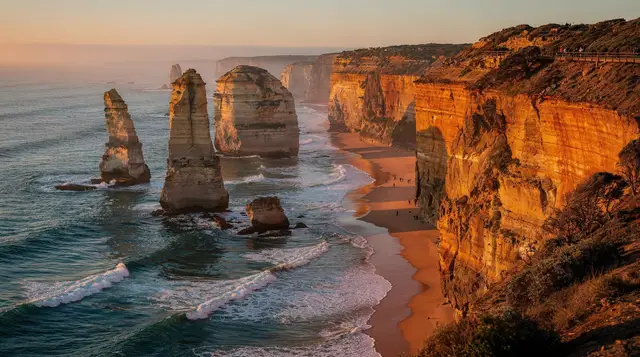
This direction puts your car on the ocean side of the road for the most scenic coastal stretch (a genuinely meaningful difference for the driver and passengers alike), and times your arrival at the Twelve Apostles for the afternoon, when the light and typically clearer conditions show off the limestone stacks better than an early-morning arrival often does.
A brief history of the road itself
The Great Ocean Road was built between 1919 and 1932, largely by returned World War I servicemen, as both an employment scheme during a period of economic hardship and a memorial to soldiers who died in the war — making it the world’s largest war memorial by some measures, a genuinely significant piece of context often missing from typical scenic-drive framing. Construction was extraordinarily difficult given the terrain, with workers using hand tools and basic equipment to carve a road through dense coastal forest and cliff faces, and the road wasn’t fully completed and opened to the public until 1932.
Memorial arches at Eastern View near Lorne commemorate this history explicitly, worth a brief stop and read if you’re driving through, since understanding the road’s origin as a memorial project adds genuine depth to what might otherwise register as simply a scenic coastal drive.
Realistic timing
Melbourne to the Twelve Apostles runs roughly 230-250 kilometres one-way via the coastal route, translating to about 3.5-4.5 hours of pure driving time without stops. Once you factor in photo stops, a lunch break, and time actually exploring each destination, a full round-trip day from Melbourne realistically runs 11-13 hours door to door — long, and honestly rushed if you want unhurried time at each stop. If your schedule allows it, an overnight stay in Apollo Bay or near Port Campbell breaks the drive into two far more relaxed days, giving genuine time to explore the Great Otway National Park rainforest and waterfalls that a single-day round trip typically has to skip entirely.
Car hire: what to expect
Car hire in Melbourne typically runs 45-90 AUD per day depending on vehicle size, season and how far ahead you book — smaller vehicles are considerably cheaper and perfectly adequate for the road itself, though a slightly larger car with more luggage space suits an overnight stop better. Hiring directly from Melbourne Airport makes sense if you’re planning to head straight for the Great Ocean Road rather than spending days in the CBD first; a city-centre rental location works equally well if you’re starting your drive from central Melbourne. Book well ahead during Australian school holidays and the December-February peak summer season, when vehicle availability tightens and prices rise accordingly.
Fuel and services along the route
Fuel stations are reasonably spaced through Torquay, Lorne and Apollo Bay, but become noticeably sparser between Apollo Bay and Port Campbell — a genuinely quiet stretch through the Otways with limited services. Filling up in Apollo Bay before continuing toward the Twelve Apostles is a sensible habit rather than relying on finding a station along the more remote middle section. Fuel prices in these smaller coastal towns also tend to run a little higher than Melbourne CBD prices, reflecting transport costs to more remote locations, though the difference is rarely dramatic enough to justify a detour purely to save on petrol.
What to pack for a self-drive road trip
Beyond the basics, a Great Ocean Road self-drive rewards specific preparation. A physical printed or downloaded offline map is worth having as backup, since mobile reception genuinely drops out in stretches of the Otways and along parts of the coast road, making a phone-only navigation plan risky if you lose signal at a critical turn. A phone car mount keeps navigation visible without needing to pick up the device while driving, both safer and legally required given Victoria’s strict handheld phone laws.
Snacks and water are worth carrying given the sparser services on the Apollo Bay-to-Port Campbell stretch, and a light jacket or layer matters even in summer, since coastal wind at lookout points is often noticeably cooler than inland temperatures suggest.
Stopping points beyond the headline destinations
Beyond Torquay, Lorne, Apollo Bay and the Twelve Apostles themselves, the drive passes numerous smaller lookouts and short walks worth building into a self-drive itinerary specifically because a tour bus schedule often can’t accommodate them. The Memorial Arch near Eastern View, Split Point Lighthouse near Aireys Inlet, and several short rainforest walks branching off the main road through the Otways all reward the flexibility a self-drive itinerary provides over a fixed tour schedule.
Building in genuine buffer time for these unplanned stops, rather than treating the drive as point-to-point transport between four major destinations, is part of what makes self-driving worth the extra planning effort compared with a tour.
Safety and driving notes specific to this route
Watch for wildlife at dawn and dusk. Kangaroos and wallabies cross rural roads unpredictably at these times, and the Great Ocean Road’s forested sections are a genuine risk zone — reduce speed and stay alert during the first and last hour of daylight especially.
The Lorne-to-Apollo Bay stretch is the most technically demanding. Narrow, winding, with limited overtaking room and a mix of tourist traffic (buses, campervans, cyclists) moving at very different speeds — patience and caution matter more here than anywhere else on the route.
Cyclists use this road regularly. Give a wide berth when overtaking, particularly on tight coastal curves with limited visibility.
Fatigue is real on the return leg. A full day of driving plus sightseeing leaves many self-drivers genuinely tired by the return trip — build in a proper break, or seriously consider the overnight-stay option instead of pushing straight back to Melbourne after a long day.
For a broader rundown of Victoria’s road rules, driving-on-the-left adjustment and general driving safety, see our companion driving in Victoria guide.
Insurance and rental agreement considerations
Before signing a hire car agreement, confirm the excess (the amount you’d be liable for in the event of damage) and whether reducing it via additional insurance coverage makes sense for your risk tolerance and how you’re paying (some credit cards include complimentary rental car excess coverage, worth checking before paying extra through the rental company). Given the Great Ocean Road’s winding sections and the genuine risk of wildlife strikes at dawn and dusk, some self-drive travellers specifically opt for reduced or zero excess coverage for this particular trip even if they’d decline it for routine city driving.
Also confirm whether your rental agreement permits driving on unsealed roads, since a small number of side detours and lookout access roads along the route aren’t fully sealed — most standard rental agreements do allow this, but it’s worth a specific check given some companies exclude unsealed roads from standard coverage.
Self-drive versus an organised tour
Choose self-drive if: you want full flexibility over stops and timing, you’re planning an overnight stay rather than a single rushed day, or you simply prefer independent travel and are comfortable with left-hand driving on winding roads.
Choose a tour if: you’d rather not drive on unfamiliar roads at all, you’re travelling solo and want to split the cost and the driving responsibility with a group, or you want to relax and take in the scenery without navigation duties.
 Great ocean road classic full day tour from melbourneCheck availability
For travellers who like the self-drive concept of ocean-side seating but would rather not drive themselves, some tours run the reverse (anti-clockwise-style) route specifically to replicate the better light and ocean views a self-driver would seek out.
book a small-group tour in reverse for better lightDriving with children on the Great Ocean Road
Families self-driving with young children should factor in more frequent stops than the standard timing estimates assume — a road with genuinely winding sections can trigger motion sickness in susceptible children, and regular breaks at lookouts double as both scenery stops and a chance for kids to stretch and reset before the next stretch of curves. Splitting the drive across two days with an overnight stay is particularly worth considering for families, since a single 11-13 hour round trip is a genuinely long day for children regardless of how well-planned the stops are.
Car seat requirements apply as standard in Victoria — confirm your rental company can supply an appropriate seat for your child’s age and size if you haven’t brought your own.
A suggested two-day self-drive itinerary
Day one: depart Melbourne early via Geelong, stop at Torquay and Bells Beach for a look at Australia’s surf culture heartland, continue to Lorne for lunch and a beach walk, then on to Apollo Bay for an overnight stay, with time for a short rainforest walk in the nearby Otways if daylight allows.
Day two: continue to the Twelve Apostles and Port Campbell for the signature limestone stack views in good morning light, explore the boardwalks and lookouts unhurried, then return to Melbourne via the faster inland Princes Highway route in the afternoon.
Toll roads and parking along the route
The Great Ocean Road itself has no tolls, and parking at the main lookouts and the Twelve Apostles is free and generally ample outside the very busiest midday summer window, when the main Apostles car park can fill temporarily. Lorne and Apollo Bay’s town centres have standard metered or time-limited street parking rather than paid car parks, worth having small change or a parking app ready for regardless. If you’re driving in via the inland Princes Freeway from Geelong, there are no toll sections on that route either, unlike some of Melbourne’s inner-city freeways.
Choosing the right car
A standard small or medium hatchback or sedan handles the entire sealed route comfortably — there’s no need for a 4WD or anything larger unless you’re specifically planning unsealed side detours or need extra luggage space for an overnight stay. A more compact car is genuinely easier to manage on the narrower, more winding Lorne-to-Apollo Bay stretch, where a smaller footprint makes overtaking cyclists and navigating tight bends noticeably less stressful.
Match the car to your bags and your plans: check the boot space against your luggage, and read the agreement for any limits on unsealed side detours before you pay. A compact model is all the sealed road asks for, so skip upgrades you will not use, and compare hatchbacks on DiscoverCars for a Great Ocean Road pick-up.
The bottom line
Self-driving the Great Ocean Road rewards confident, well-rested drivers with genuine flexibility a tour can’t match, provided you respect the realistic timing — this is not a quick day trip if done properly, and an overnight stop turns a rushed 11-13 hour slog into a far more enjoyable two days. Drive anti-clockwise for the best light and ocean-side seating, fuel up before the quiet Apollo Bay-to-Port Campbell stretch, and if driving on the left or a single very long day both feel like too much, a guided tour remains a genuinely good alternative rather than a compromise.
More tours on Viator
Top-rated experiences with verified reviews, bookable on Viator (a Tripadvisor company).


Frequently asked questions about Great Ocean Road self-drive
How long does the Great Ocean Road drive take from Melbourne?
Melbourne to the Twelve Apostles is roughly 230-250 kilometres one-way via the coastal route, taking around 3.5-4.5 hours of driving time without stops — a full there-and-back day trip with sightseeing stops realistically runs 11-13 hours, which is long but achievable if you start early.Should I drive the Great Ocean Road clockwise or anti-clockwise?
Anti-clockwise (out via the inland Princes Highway to Geelong then along the coast toward the Twelve Apostles, returning via the coast road back through Torquay) is widely recommended — it puts you on the ocean side of the road for the most scenic coastal stretch and times your arrival at the Twelve Apostles for better afternoon light, versus arriving there at the start of the day when it's often haziest.How much does car hire cost for the Great Ocean Road?
Roughly 45-90 AUD per day depending on car size, season and how far ahead you book, plus fuel. Booking through the airport or a CBD location both work; airport pickup is convenient if you're planning to drive to the Great Ocean Road directly from arrival rather than starting from central Melbourne.Is the Great Ocean Road a difficult drive?
Sections are narrow and winding, particularly between Lorne and Apollo Bay, with limited overtaking opportunities and a genuine need for caution around cyclists, wildlife at dawn and dusk, and tourist buses. It's manageable for a reasonably confident driver but requires more attention than a straight highway, especially if you're unused to driving on the left.Where should I stop along the way?
Torquay and Bells Beach for surf culture, Lorne for a lunch stop and beach walk, Apollo Bay and the Otways for rainforest and waterfalls, and the Twelve Apostles and Port Campbell for the signature limestone stack views — see our individual destination guides for each stop.Can I do the Great Ocean Road in one day from Melbourne?
Yes, but it's a genuinely long day (11-13 hours round trip with stops) and rushes the experience — an overnight stay in Apollo Bay or Port Campbell, or booking an organised tour instead, both give a noticeably less exhausting way to see the same sights.What kind of car is best for the Great Ocean Road?
A standard small or medium sedan or hatchback handles the entire route comfortably, since it's all sealed road — you don't need a 4WD or anything larger unless you're specifically planning unsealed side detours or carrying a lot of luggage for an extended trip. A more compact car is also easier to manage on the narrower Lorne-to-Apollo Bay stretch.Is fuel expensive along the Great Ocean Road?
Fuel prices in smaller coastal towns like Lorne and Apollo Bay tend to run a little higher than Melbourne CBD prices, reflecting the cost of transport to more remote locations, though the difference is rarely dramatic. Filling up before leaving the outer suburbs, and again in Apollo Bay before the quieter stretch toward Port Campbell, avoids paying a premium at the pump you didn't budget for.
Top experiences
Bookable activities with verified prices and instant confirmation on GetYourGuide.