Where to see koalas in Victoria: the honest options compared
Healesville Sanctuary: Healesville sanctuary general admission ticket
Where's the most reliable place to see koalas near Melbourne?
The Koala Conservation Centre on Phillip Island offers the best combination of reliability and genuine wildness — raised boardwalks put visitors at eye level with wild, free-ranging koalas in a protected reserve, about 140 km from Melbourne. Healesville Sanctuary and Moonlit Sanctuary offer near-guaranteed sightings in a more managed park setting closer to the city, while truly wild roadside sightings (particularly around the Great Ocean Road and Kennett River) are possible but unpredictable.
Koalas aren’t guaranteed anywhere — here’s where the odds are best
Koalas are wild animals, and no honest guide can promise a sighting with absolute certainty at any location, including managed reserves. What varies genuinely between Victoria’s options is how the odds and the format of the encounter differ: some places put visitors at close range to wild, free-roaming koalas in a natural setting with very good odds; others hold koalas in managed enclosures with near-certain sightings but a less wild feel; and truly wild roadside spotting offers the most authentic encounter with the least predictability. Understanding these differences up front sets realistic expectations rather than promising a guaranteed cuddly photo moment that most ethical operators in Victoria no longer offer anyway.
| Where | Phillip Island, Healesville, Moonlit Sanctuary, Kennett River |
| Cost | Free roadside spotting; managed sites around 35-50 AUD |
| Time needed | 30-60 min at a managed site; unpredictable roadside |
| Getting there | Self-drive or bundled wildlife day tours from Melbourne |
| Best time | Early morning or late afternoon, for active rather than sleeping koalas |
| Location | Wildness | Reliability | Distance from Melbourne |
|---|---|---|---|
| Phillip Island Koala Conservation Centre | Wild, protected reserve | Very good | ~140 km |
| Healesville Sanctuary | Managed enclosure | Near-certain | ~65 km |
| Moonlit Sanctuary | Managed enclosure | Near-certain | ~60 km |
| Kennett River / Great Ocean Road | Fully wild, roadside | Unpredictable | ~160 km |
| Melbourne Zoo | Managed enclosure | Near-certain | In the city |
Phillip Island’s Koala Conservation Centre — the best balance
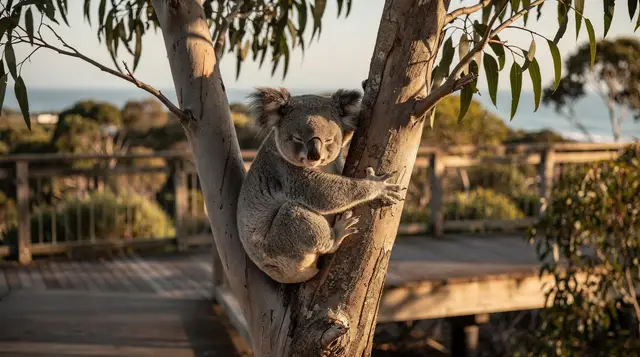
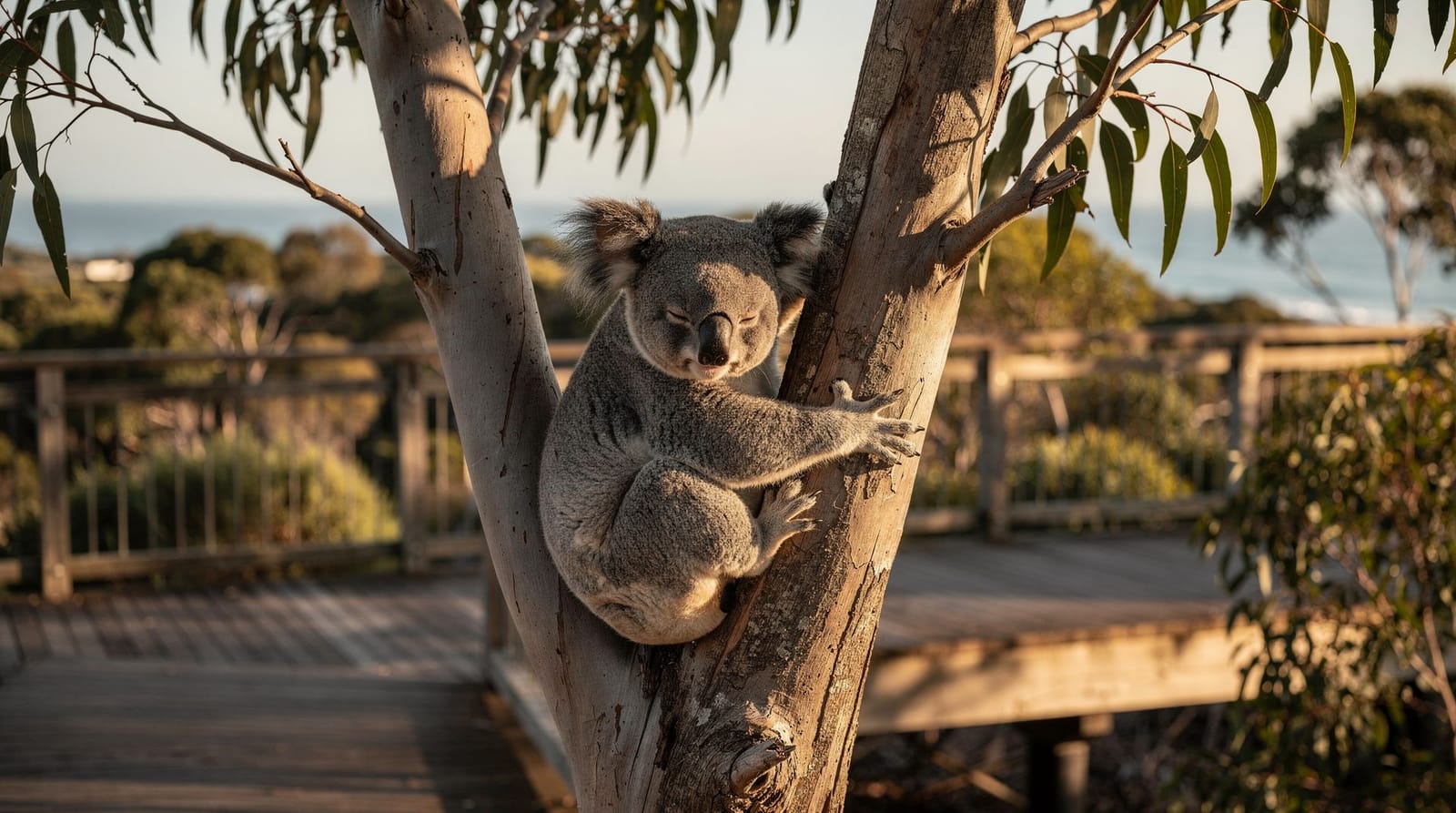
The Koala Conservation Centre on Phillip Island uses elevated timber boardwalks that lift visitors into the tree canopy itself, putting genuinely wild, free-ranging koalas at close, eye-level range within a protected reserve of manna gum woodland. These aren’t zoo animals in a fenced display — the boardwalk design exists specifically to let visitors observe wild koalas resting or feeding without disturbing them. Because the reserve is a defined, protected area rather than open bushland, the odds of a sighting here are considerably better than roadside spotting elsewhere in the state, while still preserving a genuinely wild feel.
For the fuller picture of everything else on Phillip Island worth combining with a koala visit, see Phillip Island wildlife, and for the evening centrepiece most visitors build their day around, the Penguin Parade guide.
The Phillip Island penguins and wildlife tour and the penguin parade and koala highlights tour both bundle koala viewing with the parade in one visit.
Healesville Sanctuary — a managed, near-certain sighting
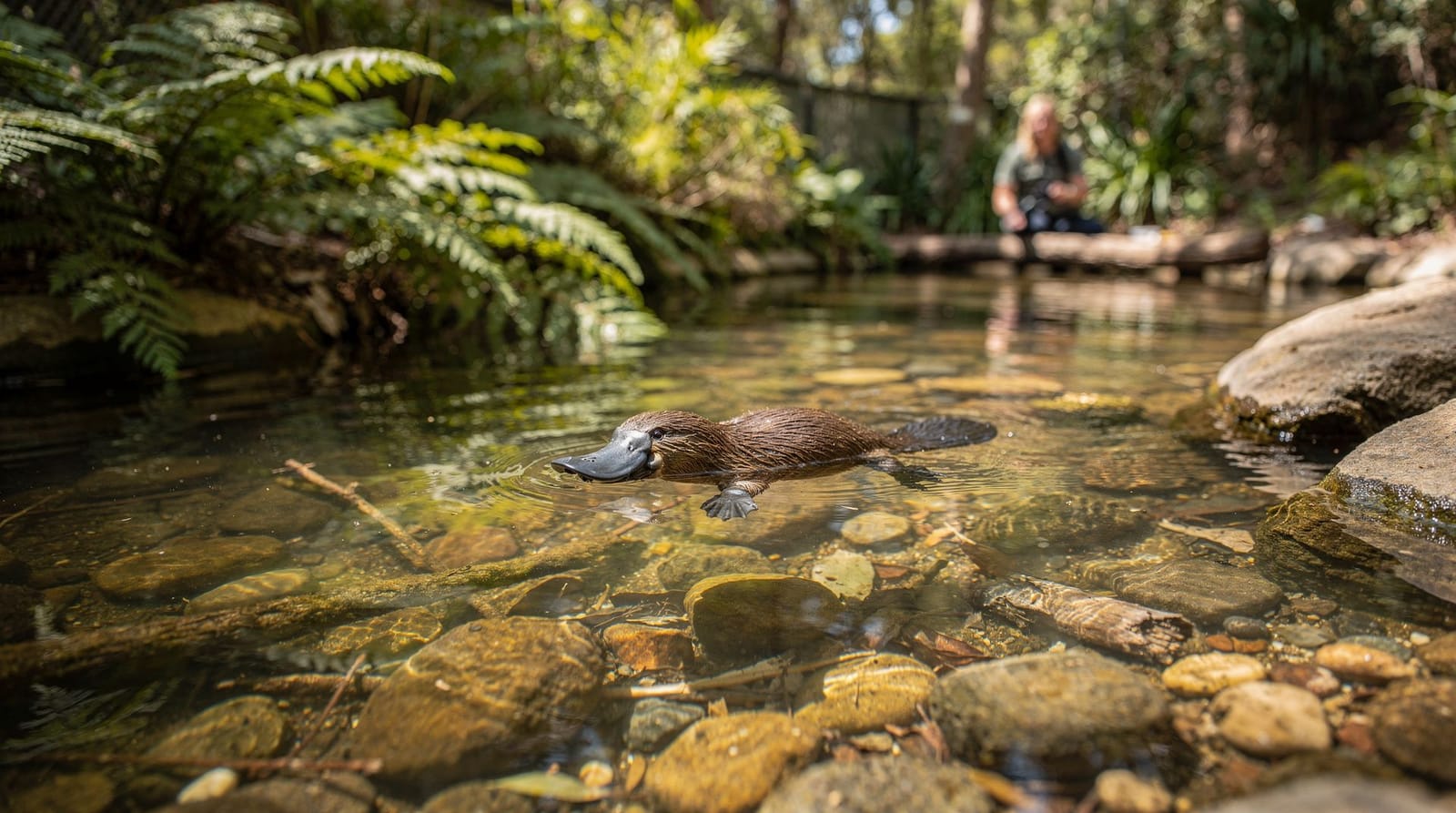
Healesville Sanctuary, about 65 km northeast of Melbourne in the Yarra Valley, holds koalas within its broader collection of native Australian species in a more traditional wildlife-park format — spacious, naturalistic enclosures rather than open reserve boardwalks, but with essentially guaranteed sightings given the managed setting. General admission covers the koala enclosure alongside the sanctuary’s platypus house, Tasmanian devils and free-flight Birds of Prey show, making it the better choice for visitors who want a wider range of native species in one stop rather than a koala-specific visit.
Moonlit Sanctuary — close-up, near Mornington Peninsula
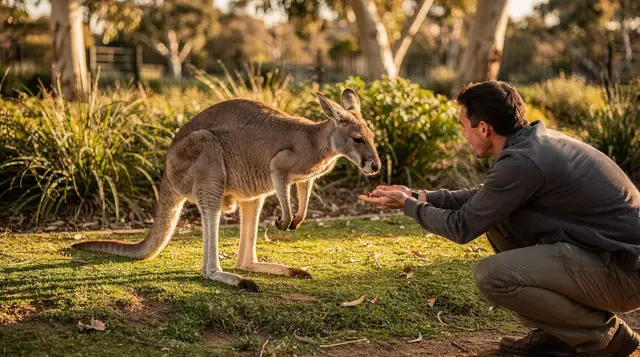
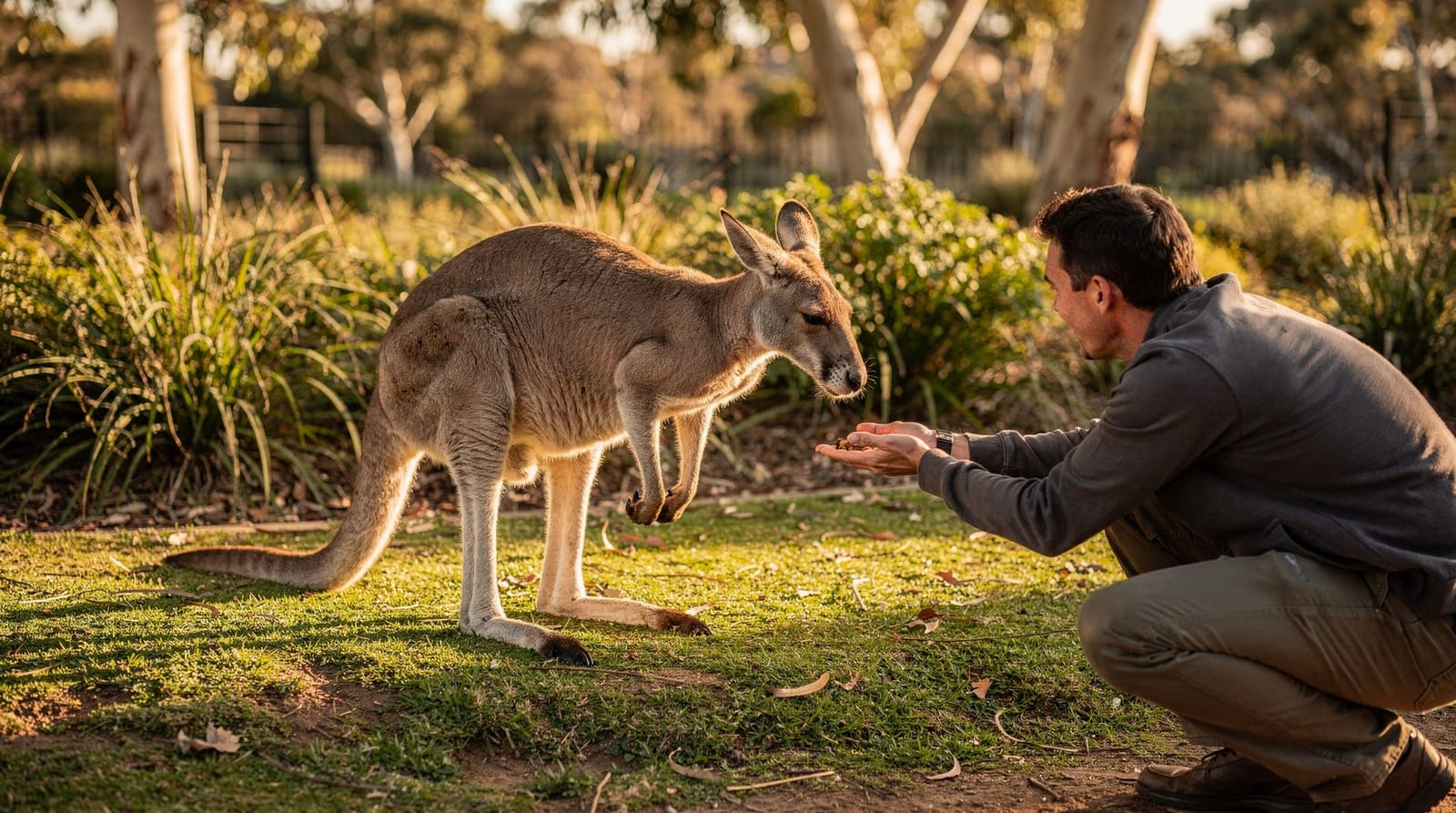
Moonlit Sanctuary, near Pearcedale on the way to the Mornington Peninsula, holds koalas among its other native species and, being roughly an hour from Melbourne, offers a closer option than either Phillip Island or Healesville for a shorter half-day trip. General admission covers the full site, and it pairs particularly well with the sanctuary’s other signature feature, its walk-through, hand-feeding kangaroo enclosure, for visitors wanting koalas and kangaroos in the same short trip.
Wild roadside sightings — Great Ocean Road and Kennett River
For travellers driving the Great Ocean Road, Kennett River and the surrounding Great Otway National Park are well-known unofficial spotting areas where wild koalas sometimes rest low enough in roadside manna gum trees to be visible from the ground without any entry fee, boardwalk or booking required. This is genuinely the most authentic wild encounter on this list, but also the least predictable — koalas move between trees over time, and a spot that had a resident koala last month may be empty on any given visit.
Locals and regular Great Ocean Road guides often know current likely trees; asking at a Kennett River café or general store is a reasonable, low-cost way to improve your odds before wandering the roadside yourself.
Melbourne Zoo — koalas within a broader city-based visit
Melbourne Zoo in Parkville holds koalas within its Australian bush precinct, useful for visitors who won’t make it out to a dedicated wildlife park during their trip and want at least one reliable koala sighting alongside a broader zoo visit reachable directly by train from the CBD.
Ethics — why hands-on koala experiences have mostly disappeared
Current animal welfare standards in Victoria mean that hands-on koala cuddling or holding is no longer offered at any of the state’s main ethical wildlife venues — Phillip Island, Healesville Sanctuary, Moonlit Sanctuary and Melbourne Zoo all operate on an observation-only model for koalas specifically, reflecting broader concerns about the stress handling causes this particular species. Any operator advertising koala cuddling or hands-on holding in Victoria should be treated with real caution rather than assumed to be a legitimate, welfare-focused business, since it runs against the standard practice followed by every major conservation-affiliated site in the state.
What time of day gives the best odds
Regardless of location, koalas spend an estimated 18-20 hours of each day asleep or resting, a physiological necessity given the extremely low caloric and nutritional value of their eucalyptus-leaf diet. Early morning and late afternoon visits give meaningfully better odds of seeing an active, feeding or moving koala rather than a motionless, curled-up animal — worth factoring into timing at any of the managed sites above, and especially relevant for roadside wild spotting, where an active koala is far easier to notice among foliage than a still, sleeping one.
Combining a koala visit with the rest of a Victoria itinerary
Because Phillip Island, Healesville and Moonlit Sanctuary sit in three different directions from Melbourne (southeast, northeast and south respectively), most visitors pick whichever fits their broader day-trip plans rather than making a dedicated koala-only trip. Anyone already planning a Yarra Valley wine day naturally passes near Healesville Sanctuary; a Great Ocean Road trip naturally passes Kennett River; and a Penguin Parade evening naturally builds in daytime hours at Phillip Island’s Koala Conservation Centre.
Building koala viewing into whichever excursion already suits your itinerary, rather than treating it as a separate trip, is the most efficient approach for most first-time Victoria visitors.
Identifying a koala from a distance
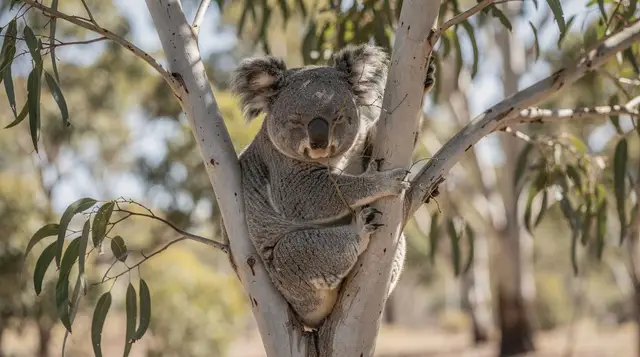
For visitors attempting independent roadside spotting along the Great Ocean Road or elsewhere, koalas are surprisingly easy to miss even when present, since their grey-brown fur blends closely with eucalyptus bark and they typically sit motionless, wedged into a fork between branches rather than perched conspicuously on an open limb. Looking for a rounded grey shape at a fork in the higher branches, rather than scanning the whole canopy, tends to be the more effective search technique, and locals who spot koalas regularly often describe training their eye to a specific silhouette rather than actively looking for movement, since a sleeping koala rarely moves at all during a typical passing glance.
What time of year brings the most koala joeys
Female koalas typically give birth to a single joey, usually between spring and early summer, and joeys remain in the pouch for several months before progressing to riding on their mother’s back as they grow. Visitors to managed sites like Healesville Sanctuary or the Koala Conservation Centre during late spring through summer occasionally have the chance to see a joey, whether still pouch-bound or riding visibly on a mother’s back, adding a further reason some visitors specifically time a Victoria wildlife trip for the warmer months beyond simply favourable weather for outdoor walking.
Understanding koala biology — why the odds vary so much
Koalas are folivores, feeding almost exclusively on eucalyptus leaves, which are toxic to most other mammals and provide extremely limited caloric and nutritional value. This dietary specialisation is the direct cause of their famously low activity levels — an estimated 18-20 hours of sleep or rest per day is a genuine physiological necessity for conserving energy, not a behavioural quirk.
It also explains why koala populations are patchy across the landscape rather than evenly distributed: they depend on specific eucalyptus species (manna gum and river red gum being particular favourites in Victoria) and will cluster in areas where those trees are abundant while being entirely absent from otherwise similar-looking bushland just a short distance away.
This is precisely why managed sites like Phillip Island’s Koala Conservation Centre, which specifically protects manna gum woodland, deliver such reliable sightings compared with general bushland exploration.
Regional koala population differences worth knowing
Victoria’s koala populations aren’t uniform in genetic health or density across the state — some regional populations, particularly around parts of the Great Ocean Road and French Island near Phillip Island, are descended from historic translocation programs run through the 20th century to bolster numbers after earlier population crashes, and can show comparatively lower genetic diversity as a result.
This is more of an ecological and conservation-management detail than something that affects the visitor experience directly, but it’s part of why Victoria’s various sanctuaries and conservation-focused sites place such emphasis on research and breeding-program work rather than treating their koala populations purely as static visitor attractions.
Threats facing wild koala populations in Victoria
Wild koala populations across Victoria face ongoing pressure from habitat loss due to land clearing, vehicle strikes on roads that cut through forest habitat, dog attacks in areas where bushland borders residential development, and chlamydia, a disease that significantly affects fertility and health in some regional populations. Bushfires pose an additional acute threat, given koalas’ limited mobility and their tendency to climb rather than flee when threatened, a survival strategy that works against fast-moving fire fronts.
Understanding these pressures adds context to why managed, protected sites like the Koala Conservation Centre and the various sanctuaries matter beyond simple visitor convenience — they represent genuinely safer habitat, actively managed against several of these threats, compared with unprotected roadside bushland.
What responsible koala tourism looks like in practice
Beyond avoiding hands-on cuddling experiences, responsible koala tourism in Victoria generally means keeping a respectful distance even at wild roadside sightings, never using flash photography close to a resting animal, never attempting to touch, feed or otherwise interact with a wild koala directly, and reporting injured or distressed animals to the appropriate wildlife rescue organisation rather than attempting to handle the situation independently.
Victoria has several dedicated wildlife rescue hotlines that operate specifically for situations like an injured roadside koala, and having this contact information on hand during a Great Ocean Road or regional Victoria drive is a sensible precaution for anyone spending significant time in koala habitat.
Seasonal patterns in koala visibility
Koala visibility shifts somewhat across the year — breeding season, roughly spring through summer (September to February), sees increased movement as males seek out females across larger territories, occasionally improving the odds of spotting an active, moving animal compared with the quieter winter months when koalas are more likely to remain settled in a single tree for extended periods. That said, the difference is subtle rather than dramatic, and the daily activity pattern (dawn and dusk over midday) remains a far more significant factor in sighting odds than the time of year.
Grampians and other regional koala populations
Beyond the well-known Great Ocean Road and Phillip Island options, wild koala populations exist across much of forested regional Victoria, including pockets within the Grampians and various state forests further inland. These populations tend to be less publicised and less consistently visible than the well-known spotting areas, partly because they’re more dispersed and partly because they simply haven’t developed the same local reputation among visitors and tour operators.
Travellers with a genuine interest in wildlife who are spending extended time in a particular region, rather than passing through on a single day trip, sometimes have luck asking at local visitor information centres about current known koala trees in the immediate area, since local rangers and long-term residents often track specific individual animals’ preferred trees more closely than any published guide can.
How koala sightings differ between guided tours and independent exploration
Joining a small guided wildlife tour, rather than attempting independent roadside spotting, generally improves the odds of a wild koala sighting meaningfully, since experienced local guides typically know current active trees and recent sighting locations that shift over time as individual koalas move between preferred feeding trees. This is particularly true along the Great Ocean Road, where several operators build wildlife spotting into broader day tours and maintain more current, granular knowledge of local koala movement than a general visitor could realistically develop during a single passing visit.
For visitors with limited time who specifically prioritise a wild koala sighting as a trip highlight, this local knowledge advantage can be worth the cost of a guided tour over self-driving and hoping for a lucky spot.
Combining koala spotting with a broader wildlife-focused Victoria trip
Travellers building an itinerary specifically around Australian wildlife encounters often structure a multi-day Victoria trip to include Phillip Island (penguins, koalas, kangaroos and fur seals), the Yarra Valley or Healesville (platypus, Tasmanian devils, koalas) and a Great Ocean Road drive (wild koala spotting at Kennett River, plus whale watching in season at Warrnambool if the itinerary extends that far). Structured this way, koala sightings become one thread running through a broader wildlife-focused trip rather than a single dedicated excursion, which tends to produce a richer overall set of encounters than trying to guarantee koalas in a single, isolated visit.
A note on koala welfare and hands-on tourism outside Victoria
Some Australian states and territories still permit closer, hands-on koala interactions under specific licensing conditions, and visitors arriving in Victoria after seeing such experiences advertised elsewhere in the country sometimes assume similar options exist locally. They generally don’t at any of Victoria’s main conservation-affiliated sites, and it’s worth setting that expectation before arriving specifically to avoid disappointment or confusion at the ticket counter.
If a hands-on koala experience is a genuine trip priority, researching current welfare-accredited operators specifically, wherever in Australia that experience is sought, is worth doing rather than assuming any operator advertising koala interaction meets consistent welfare standards.
A realistic verdict
For the best single combination of a genuinely wild feel and reliable odds, Phillip Island’s Koala Conservation Centre is the strongest overall choice, particularly since it slots naturally into a day already built around the Penguin Parade. For travellers prioritising a wider range of Australian species in one stop, Healesville Sanctuary is the better fit. And for anyone genuinely willing to accept lower odds in exchange for the most authentic wild encounter, Kennett River along the Great Ocean Road remains worth a look — just go in with realistic expectations rather than counting on a guaranteed sighting.
Weather and how it affects a koala visit
Managed sites like Phillip Island’s Koala Conservation Centre and Healesville Sanctuary remain worthwhile in most weather, since the boardwalks and walking loops are outdoors but short enough to comfortably do under an umbrella or light rain jacket if needed. Roadside wild spotting along the Great Ocean Road is a different matter — heavy rain reduces both driver visibility for spotting roadside trees safely and general comfort standing at the roadside scanning canopy, so a clear or lightly overcast day genuinely improves the experience for wild spotting specifically, even though it makes little difference at the boardwalk sites.
A sample two-day koala-focused plan
For visitors genuinely prioritising koala sightings as a trip highlight rather than a single stop, a two-day structure works well: day one, drive the Great Ocean Road with a Kennett River stop for the chance of a wild sighting, continuing on to the Twelve Apostles; day two, Phillip Island for the Koala Conservation Centre’s boardwalks in the afternoon, finishing with the Penguin Parade at dusk. This combination covers the full spectrum from genuinely wild and unpredictable to reliable and protected, without requiring a dedicated koala-only excursion on either day.
Photographing koalas responsibly
Koalas photograph well precisely because they sit still for long stretches, but that stillness is rest, not posing, so flash photography close to a resting animal is worth avoiding — it can startle an animal that’s otherwise undisturbed by quiet observation from a respectful distance. A zoom lens or phone’s zoom function generally captures a satisfying shot without needing to approach closely, and at boardwalk sites like Phillip Island’s Koala Conservation Centre, staying on the designated path rather than stepping off for a closer angle keeps both the koalas and the surrounding manna gum woodland undisturbed for the next visitor.
More tours on Viator
Top-rated experiences with verified reviews, bookable on Viator (a Tripadvisor company).


Frequently asked questions about Where to see koalas in Victoria
Are the koalas at Phillip Island's Koala Conservation Centre wild or captive?
Genuinely wild — they live freely in a protected patch of manna gum woodland, and the raised boardwalks simply let visitors observe them at canopy height without disturbing their rest, rather than koalas being held in fenced zoo enclosures.Can you see wild koalas along the Great Ocean Road?
Yes, Kennett River and the Great Otway National Park are well-known unofficial roadside koala-spotting areas, where wild koalas sometimes rest low enough in roadside trees to be visible without any boardwalk or entry fee — but sightings aren't guaranteed and depend entirely on which trees individual koalas happen to be using that day.What time of day are koalas most active?
Koalas sleep or rest 18-20 hours a day to conserve energy from their low-calorie eucalyptus diet, so early morning and late afternoon give the best chance of seeing one awake, feeding or moving between branches, rather than curled up asleep, which is how they spend the vast majority of daylight hours regardless of location.Is it okay to touch or hold a koala in Victoria?
No hands-on koala holding or cuddling is offered at any of Victoria's main ethical wildlife sites (Phillip Island, Healesville Sanctuary, Moonlit Sanctuary, Melbourne Zoo) — this reflects current welfare standards for the species, and any operator offering koala cuddling should be treated with caution rather than assumed to be a legitimate, welfare-focused option.Which is better for koalas — Phillip Island or Healesville Sanctuary?
Phillip Island's Koala Conservation Centre offers genuinely wild koalas in a natural reserve setting via elevated boardwalks; Healesville Sanctuary offers a more traditional wildlife-park format with a wider range of other native species (platypus, Tasmanian devils) alongside its koalas. Many visitors combine both across a longer Victoria trip rather than choosing one over the other.Do I need a guide to see koalas, or can I do it independently?
Both the Koala Conservation Centre and Healesville Sanctuary are fully self-guided (no ranger or guide required to walk the boardwalks and enclosures), making independent, self-paced visits straightforward. Wild roadside spotting, by contrast, benefits from local knowledge, and joining a small guided wildlife tour can meaningfully improve your odds if you don't have time to search independently.
Top experiences
Bookable activities with verified prices and instant confirmation on GetYourGuide.