Where to see kangaroos near Melbourne: wild and hand-feeding options
Melbourne: From melbourne grampians national park kangaroos
Where can you reliably see wild kangaroos near Melbourne?
The golf course at Anglesea, on the Great Ocean Road, is one of Victoria's most reliable wild kangaroo-spotting locations, with resident mobs grazing on the fairways most days. The Grampians (Gariwerd), about three hours west of Melbourne, has larger wild populations, particularly around Halls Gap at dusk. For guaranteed close-up, hand-feeding encounters, Moonlit Sanctuary near the Mornington Peninsula is the most reliable managed option.
How this guide is organised
Because kangaroo sightings in Victoria fall into two genuinely different categories — reliable wild encounters that cost nothing, and managed, guaranteed close-up experiences at a dedicated wildlife park — this guide covers both in turn, starting with the free wild-spotting locations before moving to Moonlit Sanctuary’s hand-feeding option, so readers can weigh up which approach best matches their itinerary, budget and appetite for a slightly less predictable outcome in exchange for a more authentic setting.
| Where | Anglesea (Great Ocean Road), Grampians, Yarra Valley, Phillip Island |
| Cost | Free at wild sites; Moonlit Sanctuary entry around 35-40 AUD |
| Time needed | 15-30 min for a roadside stop; a full day for the Grampians |
| Getting there | Self-drive or a bundled wildlife tour from Melbourne |
| Best time | Dawn or dusk, when mobs are actively grazing |
Wild, common, and easier to find than most visitors expect
Unlike koalas, which are genuinely difficult to spot in the wild given how much of the day they spend motionless and hidden in canopy, kangaroos are considerably easier to see across Victoria if you know roughly where and when to look. Wild eastern grey kangaroo populations are common across much of regional Victoria, and several locations have become genuinely reliable, well-known spotting sites rather than requiring luck.
Anglesea Golf Club — kangaroos on the fairway
Anglesea Golf Club, on the Great Ocean Road about 1h15 from Melbourne, has one of the most famous wild kangaroo populations in the state: several hundred eastern grey kangaroos live on and around the course, grazing the fairways most days of the year, visible to non-golfers from the club’s perimeter paths and public viewing areas without needing to play a round. It’s a genuinely reliable sighting, and one of the more surreal wildlife encounters in Victoria precisely because of the incongruous golf-course setting. Anglesea sits directly on the route of most Great Ocean Road day trips, making a short stop straightforward to build into an existing itinerary.
The Grampians (Gariwerd) — larger wild populations
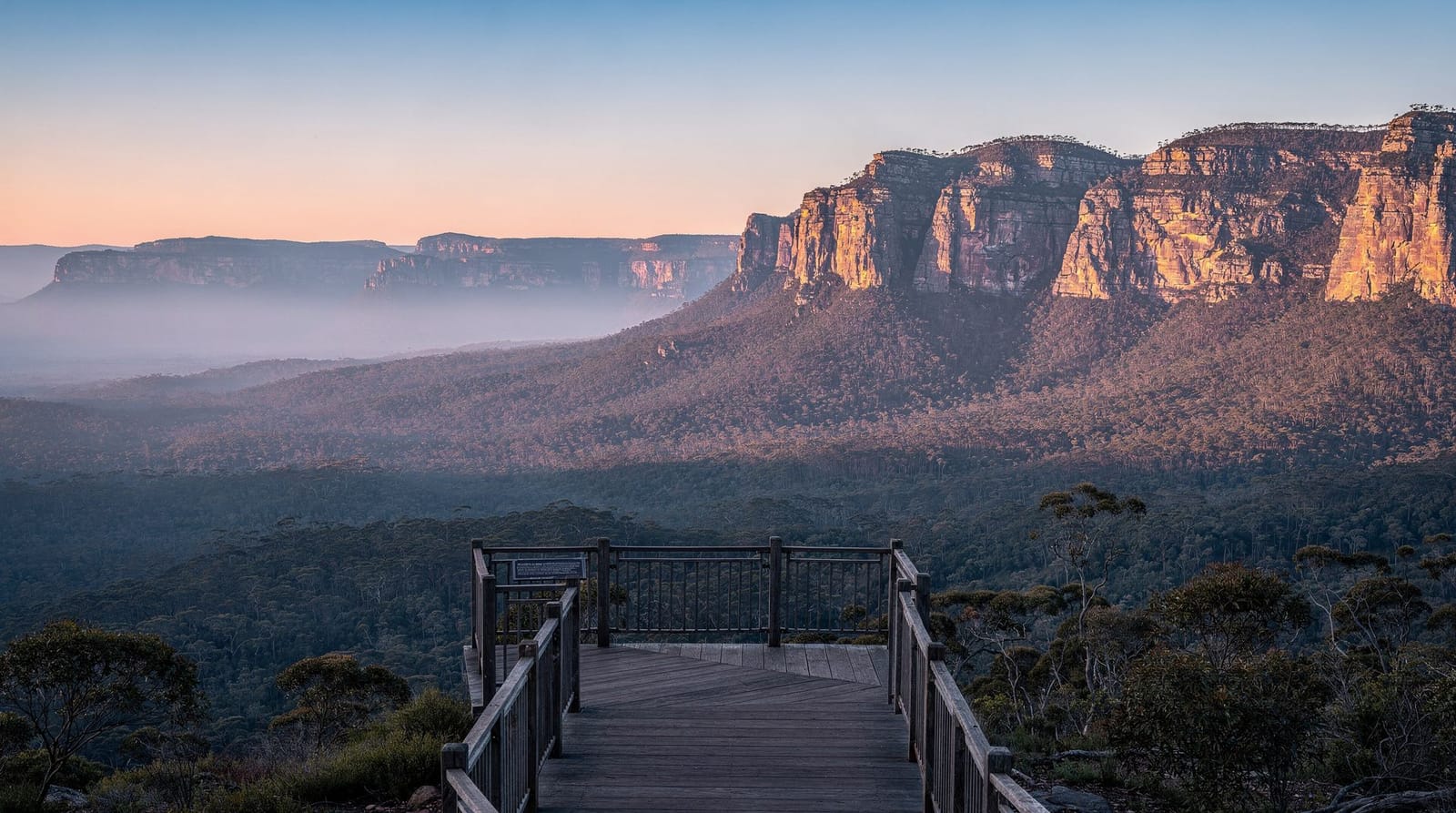
The Grampians, roughly three hours west of Melbourne, holds considerably larger wild kangaroo populations across its grasslands and bushland fringes, with Halls Gap — the region’s main town — particularly well known for kangaroos appearing on the town’s ovals, golf course and grassed reserves specifically around dusk. Because the Grampians is a full-day or overnight trip rather than a quick stop, kangaroo spotting here tends to happen as part of a broader visit built around the region’s hiking trails and lookouts rather than a dedicated wildlife excursion.
The Grampians National Park kangaroo tour specifically builds a guided wildlife-spotting stop into the day alongside the region’s other highlights.
Yarra Valley — kangaroo safaris alongside wine tasting
Several Yarra Valley day tours combine winery visits with a dedicated kangaroo-spotting stop, recognising that wild populations are genuinely common across the valley’s grazing land and grassland fringes bordering vineyard estates. The Yarra Valley foodies tour with Chandon and kangaroo safari pairs a guided wildlife stop with wine and food tasting on the same day, a practical option for visitors who want both without arranging separate trips.
Phillip Island — kangaroos alongside penguins and koalas
Phillip Island’s grasslands and reserve areas also hold wild kangaroo populations, visible in several spots around the island beyond the main Koala Conservation Centre and Penguin Parade sites. The Phillip Island penguins, kangaroos and koalas tour is built specifically around covering all three in a single visit, useful for travellers who want the fullest possible wildlife day on the island.
Moonlit Sanctuary — the reliable, hand-feeding option
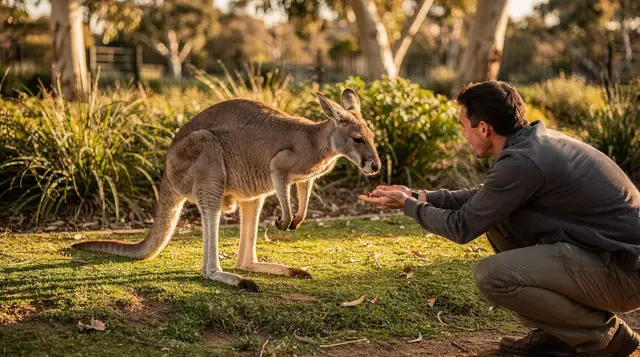
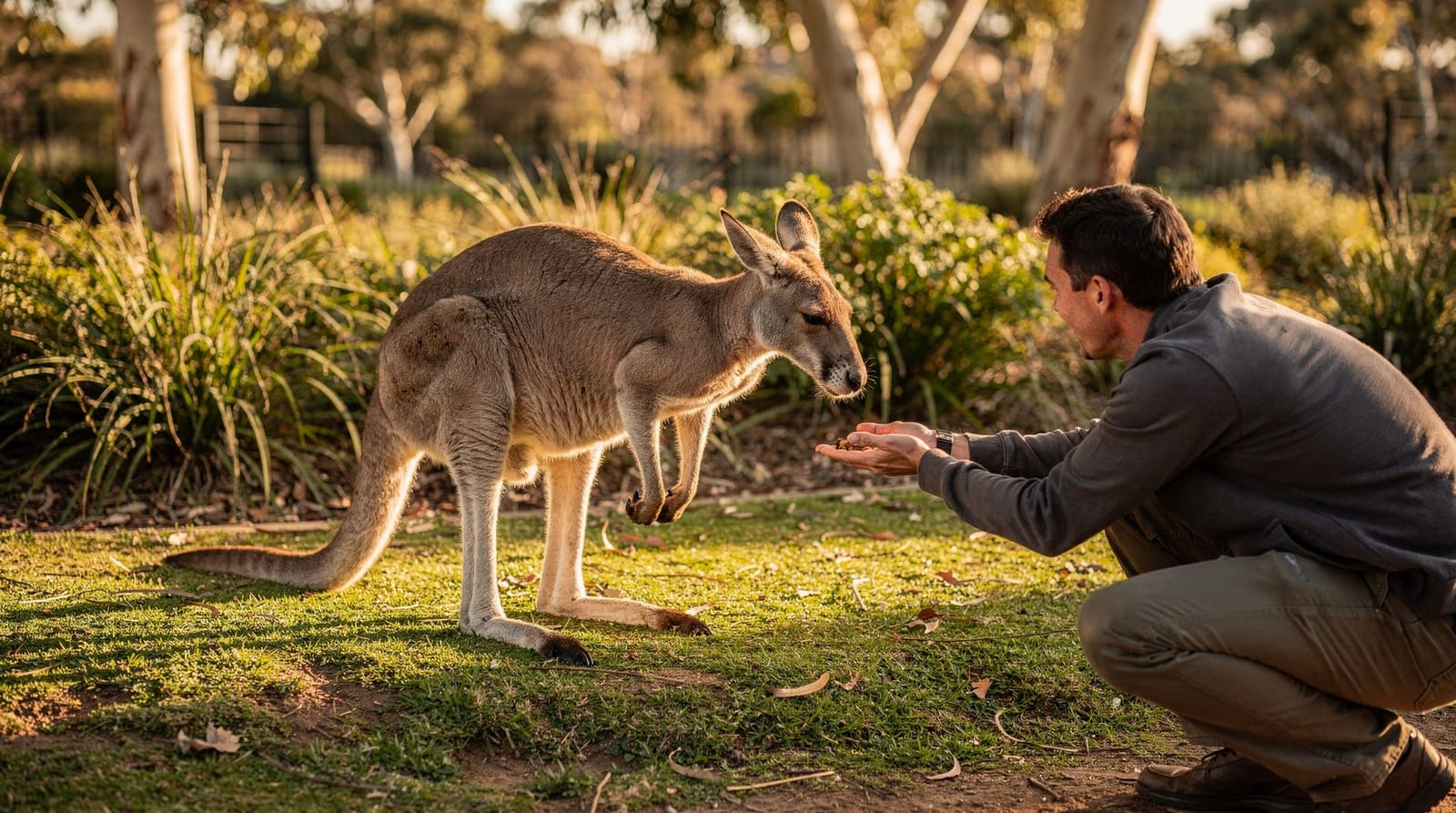
For visitors who want a guaranteed close encounter rather than relying on wild sightings, Moonlit Sanctuary near Pearcedale, about an hour from Melbourne toward the Mornington Peninsula, has a walk-through enclosure where hand-feeding free-roaming kangaroos and wallabies is genuinely permitted, using feed purchased on site under supervised, welfare-conscious conditions. General admission covers full access to this enclosure alongside the sanctuary’s other native species.
What time of day gives the best odds
Kangaroos are most active grazing and moving at dawn and dusk, resting in shade through the hottest part of the day, particularly in summer (December-February). This makes early morning or late-afternoon visits to any of the wild-spotting locations above meaningfully more productive than a midday stop, when mobs are more likely to be resting out of view in tree cover.
Other reliable wild kangaroo locations across Victoria
Beyond Anglesea, the Grampians and the Yarra Valley, several other regional Victoria locations have their own well-known local kangaroo populations worth knowing about for travellers whose itineraries take them through different parts of the state. Wilsons Promontory, Victoria’s southernmost mainland tip, has resident kangaroo populations around its camping and picnic areas, particularly visible in the early morning before day visitors arrive in numbers.
The You Yangs, a distinctive granite range west of Melbourne near Geelong, also holds a reliable wild population across its grassy lower slopes, making it a worthwhile stop for visitors travelling between Melbourne and the Great Ocean Road who want a wildlife stop without detouring specifically to Anglesea.
Kangaroos at Wilsons Promontory and other national parks
National parks across Victoria generally maintain healthier, more naturally behaving kangaroo populations than roadside or golf-course sites, simply because the animals aren’t as habituated to close human contact and behave more as they would in genuinely undisturbed bushland. Wilsons Promontory in particular is well regarded among Victorian wildlife enthusiasts for combining kangaroo sightings with a wider range of native species, including wombats and a variety of native birds, across its walking trails and camping areas — worth factoring into an itinerary for travellers with a specific interest in a more complete, less curated wildlife experience than the managed sanctuaries provide.
Combining kangaroo spotting with hiking and nature walks
Several of Victoria’s best kangaroo-spotting locations double as hiking destinations, meaning a wildlife-focused stop doesn’t need to come at the expense of an active outdoor day. The Grampians’ network of walking trails, ranging from short lookout walks to full-day hikes, regularly cross grassland and bushland fringe areas where kangaroos are commonly seen en route rather than requiring a separate, dedicated spotting detour. Similarly, Wilsons Promontory’s extensive trail network passes directly through areas with resident kangaroo populations, meaning hikers are likely to encounter them as a natural part of the walk rather than needing to seek them out specifically.
Safety and etiquette around wild kangaroos
Wild kangaroos, particularly larger males during breeding season, can behave unpredictably if approached too closely or cornered, and serious injuries to visitors (usually from scratches or kicks after getting too close for a photo) do occur occasionally at popular spotting sites. The sensible approach is straightforward: keep a respectful distance, never attempt to touch or corner a wild kangaroo, don’t get between an animal and its obvious escape route, and never feed wild kangaroos human food or inappropriate supplementary feed, which can cause genuine health problems and encourage risky behaviour around vehicles and visitors.
The supervised, appropriate feeding programs at managed sites like Moonlit Sanctuary are a materially different, welfare-conscious situation compared with feeding wild mobs.
What to do if a kangaroo approaches you unexpectedly
At habituated sites like Anglesea, where kangaroos are used to human presence, an animal occasionally approaching a visitor directly, usually out of curiosity or in hope of food, is not unusual. The sensible response is to remain calm, avoid sudden movements, and simply step back slowly rather than run, since running can trigger a chase instinct in some individuals. Never offer food to encourage closer contact, since this both violates site etiquette at unmanaged wild locations and encourages exactly the kind of habituated, human-food-seeking behaviour that creates problems for both animals and future visitors.
Wallabies versus kangaroos — telling them apart
Victoria is also home to several wallaby species, smaller relatives of the kangaroo family that are sometimes mistaken for juvenile kangaroos by visitors unfamiliar with the distinction. Swamp wallabies, in particular, are common across forested areas including parts of the Dandenong Ranges and Great Otway National Park, and tend to be more solitary and shier than the open-grassland eastern grey kangaroo mobs discussed above, generally sticking closer to dense understory vegetation rather than open grazing areas.
Spotting a wallaby in denser bushland, rather than a kangaroo in open grassland, is a genuinely different (and arguably more challenging) wildlife encounter, and both count as legitimate, worthwhile sightings for visitors interested in Australia’s broader macropod family rather than kangaroos specifically.
Combining kangaroo spotting with a broader Victoria trip
Because reliable wild kangaroo sightings exist along the Great Ocean Road (Anglesea), in the Grampians (Halls Gap), across the Yarra Valley, and on Phillip Island, most visitors encounter kangaroos as a natural part of a broader day trip or road trip rather than needing to plan a dedicated excursion. Anyone driving the Great Ocean Road should watch for the Anglesea turn-off; anyone spending a night or two in the Grampians should walk out toward Halls Gap’s ovals around dusk; and anyone doing a Yarra Valley wine day can add a kangaroo-safari stop to an existing tour booking without much extra planning.
Kangaroo biology and behaviour worth knowing
Eastern grey kangaroos, the species most commonly encountered across Victoria’s wild-spotting locations, live in loose social groups called mobs, typically led by a dominant male, with group size and composition shifting depending on food availability and breeding season. Unlike koalas, kangaroos are highly mobile and cover considerable ground grazing each day, which is precisely why they turn up reliably in open grassland areas — golf courses, ovals, grazing paddocks — rather than being confined to specific trees the way koalas are tied to particular eucalyptus species.
Females carry a single joey in their pouch for several months, and it’s not unusual to spot a joey’s head or feet poking out of a mother’s pouch at well-known viewing sites, particularly during the main breeding season through spring and summer.
Why golf courses specifically attract kangaroos
Golf courses across regional Victoria, not just Anglesea, tend to attract kangaroos because manicured fairways offer exactly the kind of short, easily digestible grass kangaroos prefer, combined with open sightlines that let a wary grazing animal see approaching threats from a distance — a combination that’s hard to find in dense natural bushland. Anglesea’s particular fame comes down to a combination of this ideal grazing habitat, its position within a broader area of connected bushland reserve, and decades of the club deliberately managing the course to coexist with its resident mob rather than treating them as a nuisance, a policy that’s become part of the club’s own identity and marketing.
Kangaroo safety around vehicles
Beyond direct encounters, kangaroos pose a genuine road safety consideration across regional Victoria, particularly around dawn and dusk when they’re most active and most likely to cross roads suddenly, especially near bushland or grassland verges. Drivers on regional highways, including routes to the Grampians, Great Ocean Road and Yarra Valley, should reduce speed and stay alert during these low-light periods, since kangaroo-vehicle collisions are a common and sometimes serious hazard on Victorian country roads, considerably more so than in built-up metropolitan areas.
Comparing wild sightings with managed park experiences
The core trade-off between wild kangaroo spotting and managed, hand-feeding experiences at sites like Moonlit Sanctuary comes down to control versus authenticity: a managed enclosure guarantees an encounter and allows genuine tactile interaction, while wild sightings offer no guarantee but a more authentic sense of animals going about ordinary grazing behaviour in a natural, unmanaged setting. Neither is objectively superior, and many visitors build both into a longer Victoria trip — a guaranteed close encounter at a managed site, plus the more serendipitous thrill of spotting a wild mob somewhere unexpected during a regional drive.
Photography tips for kangaroo encounters
Kangaroos at wild sites like Anglesea and Halls Gap are generally habituated to human presence given decades of regular foot and vehicle traffic, making them more approachable for photography than a genuinely skittish, unhabituated wild population elsewhere might be. Even so, a respectful distance and a longer lens or phone zoom generally produce better, less disruptive photographs than approaching closely, and dawn or dusk light, which also happens to be when kangaroos are most active, tends to produce the most flattering photography conditions as a useful bonus to the practical timing advice above.
Kangaroos beyond Victoria — setting realistic expectations
Visitors arriving in Victoria after seeing dramatic wildlife documentary footage of enormous outback kangaroo mobs sometimes expect similarly overwhelming numbers at every sighting location — in practice, Victoria’s populations, while genuinely reliable, tend to appear in smaller, more modest groups of a dozen or so animals at a time at most of the well-known spotting sites discussed here, rather than the vast outback mobs sometimes seen in Northern Territory or western New South Wales footage. This is simply a different, more temperate ecosystem with correspondingly different population densities, not a lesser or disappointing version of the same experience.
What time to arrive at Anglesea specifically
Because Anglesea Golf Club is an active, operating golf course rather than a dedicated wildlife park, visitors should be mindful of golfers in play when viewing kangaroos from the perimeter paths and designated viewing areas, and avoid walking directly onto the fairways themselves. Early morning, before the course gets busy with golfers and while kangaroos are still actively grazing in the cooler part of the day, tends to offer both the best sightings and the least potential for conflict with the course’s primary use as a working golf club. Weekday mornings specifically are generally quieter for both golfers and visitor traffic than weekend mornings.
A realistic verdict
Kangaroo spotting in Victoria is genuinely low-effort compared with koala spotting — wild populations are common enough across several well-known locations that a sighting is likely rather than a matter of luck, provided you visit at dawn or dusk rather than midday. For a guaranteed, closer, hand-feeding encounter, Moonlit Sanctuary remains the most reliable managed option; for a genuinely wild, no-entry-fee sighting, Anglesea Golf Club on the Great Ocean Road is hard to beat for reliability this close to Melbourne.
Bringing children to see kangaroos
Wild sites like Anglesea and Halls Gap work well for families, since the sightings happen from perimeter paths and grassed areas rather than requiring a hike, and children generally find the golf-course setting at Anglesea genuinely memorable precisely because of how incongruous it looks. For younger children specifically wanting a guaranteed, hands-on encounter rather than a chance sighting, Moonlit Sanctuary’s supervised hand-feeding enclosure is the more reliable choice, since a wild-spotting trip can occasionally come up empty despite good odds, which is a harder disappointment to manage with a young child than with an adult who understands the trade-off going in.
What a realistic Great Ocean Road kangaroo stop looks like
For travellers already driving the Great Ocean Road, a stop at Anglesea Golf Club adds only about 15-20 minutes to the day if timed well, since it sits directly on the standard route out of Melbourne before Torquay and Lorne. Pull into the club’s public car park, walk the perimeter path rather than onto the fairways, and expect to see at least a portion of the resident mob grazing within a short walk of the car park on most days — a genuinely easy addition that doesn’t require rerouting or extra planning beyond building in the short stop itself. A quick 10-15 minute look is usually enough for a satisfying sighting and a few photos before continuing on toward Torquay and the rest of the coastal drive.
Seasonal differences in kangaroo activity
Kangaroo visibility shifts somewhat with the seasons: summer’s heat pushes mobs toward shade during the middle of the day more aggressively than in cooler months, making the dawn-and-dusk rule even more important between December and February. Winter’s cooler daytime temperatures mean kangaroos are sometimes visible grazing for longer stretches through the middle of the day, since there’s less heat-driven pressure to retreat to shade. Spring, coinciding with the main joey season, is a particularly rewarding time to visit well-known sites, since young joeys are more likely to be visible either in the pouch or grazing alongside their mothers at this time of year.
More tours on Viator
Top-rated experiences with verified reviews, bookable on Viator (a Tripadvisor company).


Frequently asked questions about Where to see kangaroos near Melbourne
Is it true kangaroos graze on a golf course near Melbourne?
Yes — Anglesea Golf Club, on the Great Ocean Road about 1h15 from Melbourne, has a resident mob of several hundred eastern grey kangaroos that graze the fairways most days, visible even to non-golfers from the club's perimeter and viewing areas, making it one of the most reliable wild kangaroo sightings in the state.Are kangaroos dangerous to approach in the wild?
Wild kangaroos, particularly large males, can behave unpredictably and should never be approached closely or cornered — keep a respectful distance, don't attempt to touch or feed wild mobs (unlike the managed, supervised feeding at sites like Moonlit Sanctuary), and never get between a kangaroo and its escape route.What time of day are kangaroos most active?
Dawn and dusk are the most reliable times to see kangaroos actively grazing and moving, since they rest in shade during the hottest part of the day, particularly in summer. Halls Gap in the Grampians is well known for kangaroos appearing on the town's ovals and grassed areas specifically around dusk.Can you hand-feed kangaroos anywhere near Melbourne?
Yes, Moonlit Sanctuary near Pearcedale, about an hour from Melbourne toward the Mornington Peninsula, has a walk-through enclosure where hand-feeding free-roaming kangaroos and wallabies is permitted with feed purchased on site — a supervised, welfare-conscious alternative to attempting to feed wild kangaroos elsewhere.Do kangaroo safaris exist in the Yarra Valley or Grampians?
Yes, several Yarra Valley day tours combine winery visits with a guided kangaroo-spotting stop, and Grampians tours specifically market kangaroo sightings alongside the region's hiking and lookout stops, since wild populations are genuinely common across both regions.Is it ever appropriate to feed wild kangaroos?
Generally no — feeding wild kangaroos human food or inappropriate supplementary feed can cause serious health problems for the animals and encourage risky behaviour around vehicles and visitors. The managed, supervised feeding programs at sites like Moonlit Sanctuary use appropriate feed and controlled conditions, which is a materially different situation to feeding kangaroos in an unmanaged wild setting.
Top experiences
Bookable activities with verified prices and instant confirmation on GetYourGuide.