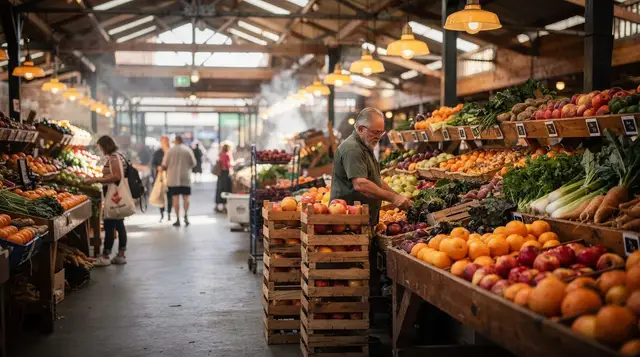
Melbourne's markets beyond Queen Victoria Market
Melbourne: Flavors queen victoria market food tour
What is Melbourne's second-best market after Queen Victoria Market?
South Melbourne Market is generally considered the strongest alternative — smaller and less visited by tourists than Queen Victoria Market, but with a similarly deep produce, deli and prepared-food offering, plus its own famous dim sim stall that rivals anything at QVM. Prahran Market is a close third, known for exceptional quality produce and seafood in a more boutique, less sprawling format.
| Where | South Melbourne, Prahran, Fitzroy, Camberwell |
| Cost | Free entry; spend as much or little as you like |
| Time needed | 1-2 hours per market |
| Getting there | 15-25 min tram from CBD; Camberwell needs a train |
| Best for | Repeat visitors, home cooks, vintage/craft shoppers |
Market comparison at a glance
| Market | Best for | Trading days | From CBD |
|---|---|---|---|
| Queen Victoria Market | Scale, history, first-time visitors | Tue, Thu, Fri, Sat, Sun | Central, walkable |
| South Melbourne Market | Local feel, dim sims, quieter version of QVM | Wed, Fri, Sat, Sun | ~15-20 min tram |
| Prahran Market | Seafood, produce quality, home cooks | Most days, reduced hours some | ~20-25 min tram |
| Rose Street Artists’ Market | Handmade goods, meeting the maker | Sat, Sun | Fitzroy, short tram |
| Camberwell Sunday Market | Vintage, secondhand, bargain hunting | Sun only | Train, longer trip |
Accessibility across Melbourne’s markets
Prahran and South Melbourne Markets are both generally wheelchair and pram accessible across their main covered halls, with accessible parking available near both sites. Rose Street Artists’ Market, being an outdoor weekend market, has flatter but less predictable surface conditions depending on the current stall layout, while Camberwell Sunday Market’s open car park setting is flat but entirely exposed to weather, worth factoring in for anyone with specific mobility or weather-sensitivity considerations.
Weather considerations across the markets
Most of Melbourne’s markets covered here operate at least partly under cover, though the degree varies — Queen Victoria Market and South Melbourne Market both have substantial roofed sections alongside some open-air produce aisles, while Camberwell Sunday Market, held in an open car park, offers essentially no shelter from rain. Checking the forecast before a market visit and dressing accordingly, consistent with Melbourne’s broader unpredictable weather reputation, is sensible regardless of which specific market you’re planning to visit.
Markets and public transport access, summarised
For quick reference: Prahran and South Melbourne Markets are both a 15-25 minute tram ride from the CBD; Rose Street Artists’ Market sits within walking distance of central Fitzroy, itself a short tram trip north-east; and Camberwell Sunday Market requires a longer train journey east, best treated as a dedicated morning trip. None require a car, though driving remains an option for all of them if you’re already exploring by vehicle that day.
Markets as a lens on Melbourne’s growth
Taken as a group, Melbourne’s markets — from Queen Victoria Market’s 1878 origins through to more recently established weekend markets like Rose Street — offer a genuinely useful lens on how the city itself has grown and diversified over close to 150 years. Visiting more than one across a longer stay, rather than treating a single market visit as representative of the whole, rewards curiosity about how the city’s food and shopping culture has layered up over successive generations rather than emerging fully formed.
A quick market comparison
To make the choice easier, here’s the short version. On scale and historical weight, Queen Victoria Market wins outright. On produce and seafood quality specifically, Prahran Market edges ahead of both QVM and South Melbourne. On atmosphere and a genuinely local, less-visited feel, South Melbourne Market is the pick. On handmade goods rather than food, Rose Street Artists’ Market stands alone. On vintage and secondhand bargain hunting, Camberwell Sunday Market is the specialist option. None of these rankings are absolute — they reflect what each market does distinctly well rather than a single best-overall answer.
Melbourne has more than one great market
Queen Victoria Market gets most of the attention, and deservedly so — it’s the largest, oldest and most central — but Melbourne’s market culture runs deeper than a single flagship site, and several of the city’s other markets are genuinely worth a visit in their own right, particularly on a longer stay or for visitors who’ve already covered QVM and want a different, less tourist-heavy experience.
A closer look at South Melbourne Market’s history
South Melbourne Market has operated since 1867, making it, alongside Queen Victoria Market, one of Melbourne’s genuinely historic markets rather than a modern retail construction dressed up with heritage branding. It originally served the working-class inner-southern suburbs before South Melbourne itself gentrified through the late 20th century, and the market has managed the transition without losing its core produce-and-deli character, unlike some historic markets elsewhere that have drifted entirely toward tourist-facing food-hall concepts. Trading four days a week (Wednesday, Friday, Saturday, Sunday) rather than daily gives it a slightly different rhythm to plan around than Queen Victoria Market’s five-day schedule.
Prahran Market’s specific specialties
Beyond the seafood reputation already mentioned, Prahran Market has particularly strong butcher and delicatessen stalls, several with decades of continuous trading and genuine relationships with local farms and producers rather than generic wholesale supply chains. Its relatively compact size compared with Queen Victoria Market makes it easier to cover thoroughly in a single visit without the sense of only having scratched the surface that a first-time QVM visitor sometimes reports.
Camberwell Sunday Market in more detail
Camberwell Sunday Market runs from early morning (around 6am) through early afternoon (typically 1pm) every Sunday, rain or shine, in the Bowen Street car park in Camberwell. Unlike the curated vintage boutiques of Fitzroy, this is genuinely unsorted trash-and-treasure territory — expect to dig through disorganised tables of secondhand clothing, records, tools, homewares and general bric-a-brac, with pricing that rewards confident, friendly haggling more than the fixed-price approach common at Melbourne’s other markets. Serious vintage and collectible hunters often arrive at opening time specifically to beat other early risers to the best finds, since good pieces move quickly once the market gets going.
Rose Street Artists’ Market in more detail
Rose Street Artists’ Market runs weekends only, with individual stallholders rotating week to week rather than a fixed permanent lineup, so the specific mix of jewellery, art, ceramics and clothing on offer varies noticeably between visits. It’s a good stop specifically if you want to meet the maker of whatever you’re buying — most stallholders are the actual artists or designers rather than resellers, giving it a genuinely different character from a standard retail transaction.
South Melbourne Market: the closest rival
South Melbourne Market, a short tram ride south of the CBD, is generally considered Melbourne’s strongest market after Queen Victoria Market — smaller in scale but with a comparably deep produce, deli and prepared-food offering, plus its own long-running specialties. The market’s dim sim stall has a loyal following that rivals QVM’s equivalent, and its doughnut van is similarly iconic among locals, if slightly less internationally famous. It trades Wednesday, Friday, Saturday and Sunday, giving it a different weekly rhythm from Queen Victoria Market that can make it a useful backup on a day QVM happens to be closed.
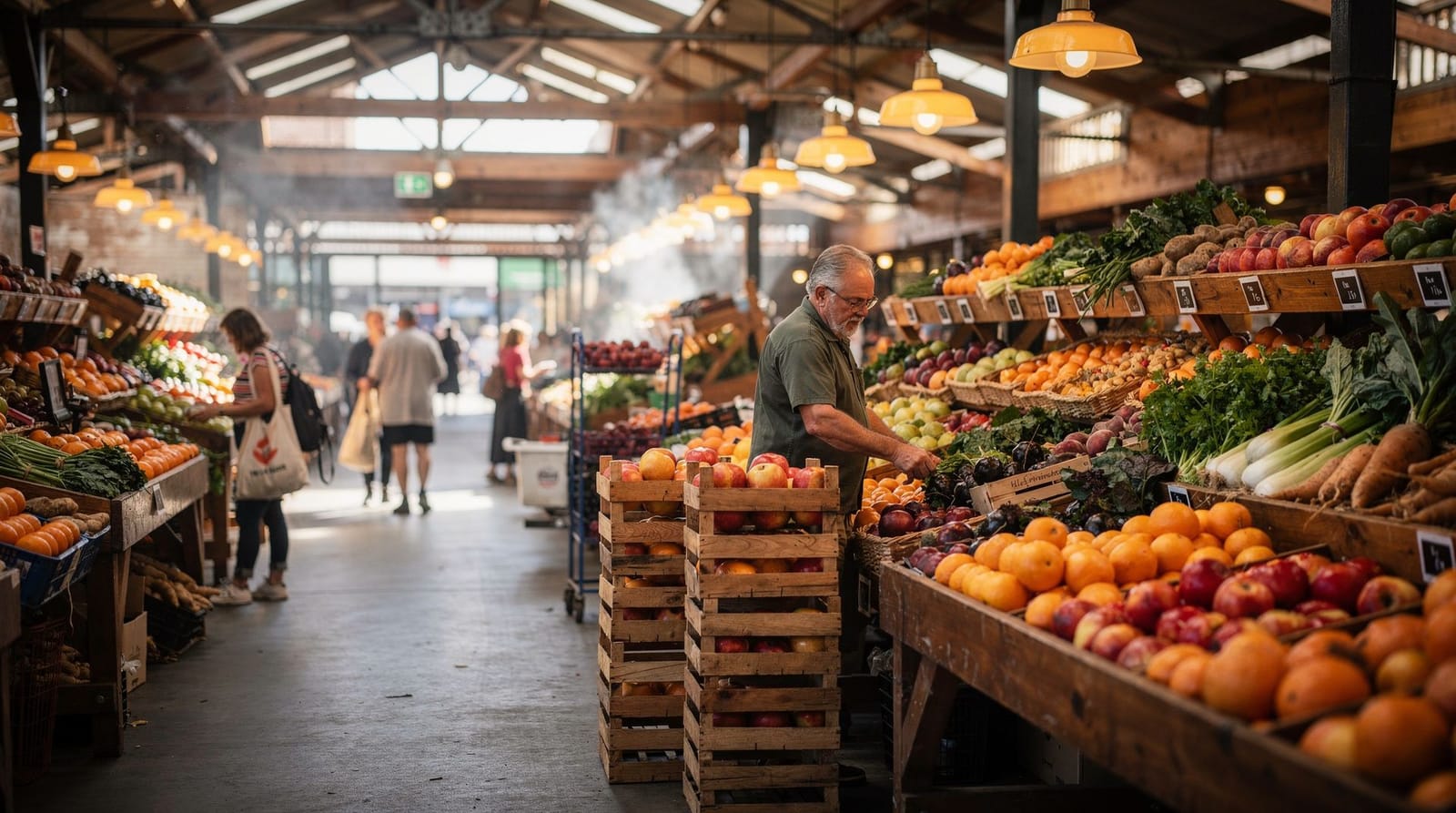 Flavors queen victoria market food tourCheck availability
If you would rather have someone explain what you are tasting, a guided culinary and cultural walk through the flagship market is a sensible way to see the stalls before heading out to the suburban markets. Our Melbourne food tours guide compares the other options.
Why Melbourne supports so many distinct markets
It’s worth asking why a single city sustains this many genuinely distinct, thriving markets rather than consolidating around one or two dominant sites the way some cities do. Part of the answer is Melbourne’s polycentric inner-suburban structure — rather than one dominant CBD serving the entire metropolitan population, Melbourne’s inner suburbs (South Yarra, Prahran, South Melbourne, Fitzroy) each developed their own dense, walkable local centres with enough population and demand to support a genuine local market, rather than everyone converging on a single central site.
That structural pattern, more than any deliberate market-preservation policy, explains why Melbourne’s market culture is genuinely distributed rather than concentrated purely in the CBD.
Prahran Market: quality over scale
Prahran Market, in the inner south-eastern suburb of the same name, is smaller and more boutique than either Queen Victoria or South Melbourne, built around consistently high-quality produce, seafood and deli goods rather than sheer breadth. It’s particularly well regarded for seafood, popular with serious home cooks and several well-known Melbourne chefs specifically for its fish stalls. Market Lane Coffee’s original kiosk (see our Melbourne coffee guide) started here, giving the market a genuine claim to a piece of the city’s specialty coffee history alongside its produce reputation.
What each market tells you about its neighbourhood
There’s a genuine correlation between each market’s character and the neighbourhood surrounding it, worth noticing as you compare them. South Melbourne Market reflects that suburb’s mix of long-established working-class roots and more recent gentrification — traditional butchers and delis alongside newer artisanal stalls. Prahran Market’s more polished, quality-focused offering mirrors Prahran and South Yarra’s generally more affluent character. Rose Street’s handmade-goods focus fits naturally with Fitzroy’s artistic, creative-industry population.
Reading a market this way — as a reflection of its neighbourhood rather than an isolated attraction — tends to deepen appreciation for what might otherwise seem like a fairly interchangeable “go to a market” activity across a longer Melbourne stay.
Rose Street Artists’ Market: handmade, not produce
Rose Street Artists’ Market, in Fitzroy, operates on weekends only (Saturday and Sunday) and is a completely different format from the produce markets above — a curated market of independent local makers selling handmade jewellery, art, clothing and crafts. It’s the best option on this list if you specifically want a genuinely locally made souvenir or gift rather than produce or mass-market goods, and it pairs naturally with a Fitzroy day that also includes vintage shopping and the neighbourhood’s strong café scene.
A Fitzroy market morning also leaves room for the neighbourhood’s wall art, and a street art walking tour led by a working artist is an easy way to fill the afternoon. For more on the area, see the Fitzroy neighbourhood guide, the Melbourne street art guide and Hosier Lane.
Camberwell Sunday Market: trash and treasure
Camberwell Sunday Market, held in a car park in the eastern suburb of Camberwell every Sunday morning, is a large, informal trash-and-treasure market popular with locals for secondhand goods, vintage clothing, bric-a-brac and general bargain-hunting. It requires a longer train trip from the CBD than the other markets on this list, making it more of a dedicated outing for visitors specifically interested in vintage and secondhand shopping than a casual add-on to a broader day.
Practical differences in trading days worth memorising
Given how easy it is to plan a trip around the wrong day for a specific market, here’s the trading-day summary in one place: Queen Victoria Market trades Tuesday, Thursday, Friday, Saturday, Sunday. South Melbourne Market trades Wednesday, Friday, Saturday, Sunday. Prahran Market generally trades daily but with reduced hours on some days — check current listings given this has shifted over the years. Rose Street Artists’ Market and Camberwell Sunday Market are both weekend-only, with Camberwell specifically a Sunday-only event. Cross-referencing this against your actual Melbourne itinerary before finalising which markets to prioritise avoids the single most common and entirely avoidable market-visit mistake.
Which market suits which visitor
First-time visitor with limited time: Queen Victoria Market — it’s the largest, most central, and most historically significant, covering food, general shopping and history in one stop.
Repeat visitor or longer stay wanting a quieter alternative: South Melbourne Market, for a comparable produce and food experience with fewer tourists.
Serious home cooks or seafood enthusiasts: Prahran Market, for consistently excellent produce and fish.
Visitors wanting handmade gifts or a weekend-specific outing: Rose Street Artists’ Market in Fitzroy.
Vintage and secondhand shoppers with a free Sunday morning: Camberwell Sunday Market.
Seasonal and Christmas markets
Beyond the year-round markets covered above, Melbourne hosts a number of seasonal markets, particularly through the lead-up to Christmas, when several inner-suburban locations run dedicated Christmas market events with gift stalls, food trucks and festive decoration, distinct from the everyday produce markets. These tend to run only through late November and December, so they’re worth checking for specifically if your visit falls in that window rather than assuming they operate year-round like Queen Victoria or South Melbourne Market.
Combining two markets in one day
If your itinerary allows it, pairing South Melbourne Market with a walk through nearby Southbank makes a genuinely efficient half-day, since the tram routes connecting them are direct and frequent. Prahran Market pairs naturally with a broader look at the surrounding Chapel Street shopping strip, turning a market visit into a fuller afternoon rather than a standalone stop. Trying to combine Queen Victoria Market with a suburban market on the same day is possible but tiring given the different trading-day patterns and travel time involved — most visitors get more out of treating each as its own dedicated outing rather than rushing between two on one trip.
Farmers’ markets and community markets
Melbourne also has a network of smaller farmers’ markets held on a monthly or fortnightly rotation across different inner suburbs — Collingwood Children’s Farm and the Alphington Farmers’ Market among the better known — which prioritise direct-from-grower produce over the broader retail mix found at the city’s bigger permanent markets. These suit visitors specifically interested in Victoria’s regional produce and direct farmer relationships rather than a general market browsing experience, though their limited, rotating schedule makes them less reliable to plan around than the permanent markets covered above.
Getting to Melbourne’s suburban markets
Prahran Market and South Melbourne Market are both reachable by tram from the CBD in roughly 15-25 minutes, making them realistic half-day additions without needing a car. Rose Street Artists’ Market sits within walking distance of central Fitzroy, itself a short tram ride from the CBD. Camberwell Sunday Market requires a longer train trip east and is best treated as a dedicated morning outing rather than a quick add-on to another day’s plans.
Markets and Melbourne’s multicultural food story
Taken together, Melbourne’s markets tell a broader story about the city’s immigration history that’s worth appreciating beyond any single visit. Queen Victoria Market’s Deli Hall reflects postwar European immigration; Footscray Market (covered in our Footscray Little Saigon guide) reflects Vietnamese resettlement from the late 1970s; and Dandenong Market (see our Dandenong Market guide) reflects more recent South Asian and Afghan migration to Melbourne’s south-east.
Visiting more than one of these markets across a longer stay gives a genuinely richer sense of how the city’s food culture has been built in layers over more than a century, rather than treating any single market as representative of the whole picture.
Best time of day to visit each market
Arriving early (before 9-10am) at any of these markets gets you the best produce selection and the shortest queues at popular stalls, particularly South Melbourne’s dim sim stall and Prahran’s seafood counters, both of which can develop genuine lines by mid-morning on weekends. Camberwell Sunday Market specifically rewards arriving at its 6am opening if you’re after the best vintage and secondhand finds, since serious collectors move quickly once the gates open. Rose Street Artists’ Market is more relaxed about timing, since the handmade-goods format doesn’t sell out stock the way a produce stall does — a leisurely mid-afternoon visit works just as well as an early one.
Bargaining etiquette
Fixed pricing is the norm at Queen Victoria, South Melbourne and Prahran markets, similar to any retail environment — bargaining isn’t expected and can come across oddly if attempted on everyday produce or deli purchases. Camberwell Sunday Market is the clear exception: its trash-and-treasure format genuinely rewards friendly, low-pressure haggling, and most sellers expect and welcome a reasonable counter-offer, particularly later in the morning as they look to move stock. Rose Street’s independent makers occasionally negotiate on higher-priced pieces, but it’s a much softer, less expected exchange than at Camberwell.
What to buy as a souvenir at each
If you want a genuine, non-generic souvenir from a market visit, each has a distinct strength: South Melbourne Market’s dim sims travel surprisingly well if you’re staying somewhere with a kitchen; Prahran Market’s specialty deli goods (local honey, cured meats, artisan cheese where transport rules allow) suit food-focused visitors; Rose Street Artists’ Market is the standout for something genuinely handmade and one-of-a-kind, whether jewellery, ceramics or original art; and Camberwell Sunday Market is the pick for a unique vintage find rather than anything new. Queen Victoria Market’s souvenir shopping is covered separately in our Queen Victoria Market guide.
Common mistakes to avoid
Building markets into the rest of your trip
Markets work best as one thread in a wider plan rather than the whole plan. The free tram zone guide and the Myki card guide explain how to move around cheaply, and the Melbourne tram guide helps you pick the right route out to the suburban markets. For the bigger picture, the Melbourne food and coffee itinerary weaves markets into a full schedule, while the Melbourne coffee guide and best brunch spots suit the mornings you spend market-hopping.
If your stay is short, the one-day Melbourne itinerary shows where a market stop fits, and the Melbourne on a budget guide is useful because market grazing is one of the more flexible ways to eat well. Visitors who enjoy a market’s food side may also like the Footscray market area and the Queen Victoria Market destination page.
Where this fits in a Melbourne itinerary
Treat Queen Victoria Market as the priority for a first or short visit, and add South Melbourne, Prahran or Rose Street as a second or third market visit on longer stays, ideally paired with the neighbourhood each sits in — Prahran with a broader look at that shopping strip, Rose Street with a full Fitzroy day covering vintage shopping and coffee. See our Queen Victoria Market food guide for the specific stalls worth prioritising at the flagship market itself.
More tours on Viator
Top-rated experiences with verified reviews, bookable on Viator (a Tripadvisor company).


Frequently asked questions about Melbourne's markets beyond Queen Victoria Market
Is South Melbourne Market worth visiting if I've already been to Queen Victoria Market?
Yes — it has a genuinely different character, smaller and more locally focused, with its own long-running specialties (the market's dim sims and doughnuts both have loyal followings comparable to QVM's equivalents) rather than being a diminished copy of the bigger market.What is the Rose Street Artists' Market?
Rose Street Artists' Market, in Fitzroy, is a weekend market (Saturday and Sunday) specialising in handmade jewellery, art, clothing and crafts from local independent makers, distinct from Melbourne's produce-focused markets — a good stop if you want to buy something genuinely locally made rather than mass-produced souvenirs.Is Camberwell Sunday Market worth a special trip?
Camberwell Sunday Market is a large trash-and-treasure style market held in a car park in the eastern suburb of Camberwell, popular with locals for secondhand goods, vintage finds and general bric-a-brac at low prices — worth it specifically for visitors interested in vintage shopping or op-shopping, less essential for a general first-time visitor with limited time.Are Melbourne's suburban markets easy to reach by public transport?
Prahran and South Melbourne markets are both reachable by tram from the CBD in 15-25 minutes; Camberwell requires a slightly longer train trip. All are manageable without a car, though the more central Queen Victoria Market remains the easiest single option if transport time is a constraint.Which market is best for buying fresh seafood?
Prahran Market has a particularly strong reputation for seafood quality among Melbourne's markets, popular with serious home cooks and several well-known chefs specifically for its fish and seafood stalls, alongside a generally high-quality produce and deli offering across the rest of the market.
Top experiences
Bookable activities with verified prices and instant confirmation on GetYourGuide.