Fitzroy & Collingwood
Fitzroy and Collingwood guide: Brunswick and Smith Street's street art, indie cafés and vintage shops, and Melbourne's densest specialty coffee roasting
Collingwood Victoria Australia: Melbourne coffee culture history of collingwood tour
Quick facts
- Distance from CBD
- ~2–3 km northeast, 10–15 minutes by tram
- Key streets
- Brunswick Street (Fitzroy), Smith Street (Fitzroy/Collingwood border)
- Known for
- Street art, specialty coffee roasters, vintage shopping, small bars
- Tram
- Route 11 or 12 (Brunswick St), route 86 (Smith St)
- Best for
- Coffee crawl, gallery-hopping, vintage and op-shops
Fitzroy is Melbourne’s oldest suburb and, by most locals’ reckoning, still its most self-consciously alternative — a status it has held in some form since the 1970s, when cheap Victorian terrace housing and light industrial buildings attracted artists, students and a wave of countercultural business owners priced out of the increasingly expensive inner city.
Collingwood, its immediate neighbour to the east across Smith Street, followed a similar trajectory a decade or two behind, and the two suburbs today function almost as a single precinct: Brunswick Street is Fitzroy’s spine, Smith Street runs along the border and increasingly through Collingwood proper, and Gertrude Street cuts across both with its own distinct, slightly more upmarket identity.
This is where Melbourne’s specialty coffee industry is most concentrated — not just cafés serving good coffee, but the roasteries themselves, several of which supply beans to venues across the rest of the city and beyond. It’s also the epicentre of Melbourne’s large-scale street art, distinct from the CBD’s smaller laneway pieces, and a shopping strip built on vintage clothing, independent bookshops and small designers rather than chain retail.
| Where | ~2–3 km northeast of the CBD |
| Cost | Free to walk; coffee ~4.50–5.50 AUD, dinner ~30–45 AUD/person |
| Time needed | Half a day for coffee-and-shopping; a full day with dinner and bars |
| Getting there | Tram 11/12 (Brunswick St) or 86 (Smith St) from the CBD, ~10–15 min |
| Best time | Weekday mornings for coffee without crowds; Fri/Sat nights for bars |
Brunswick Street
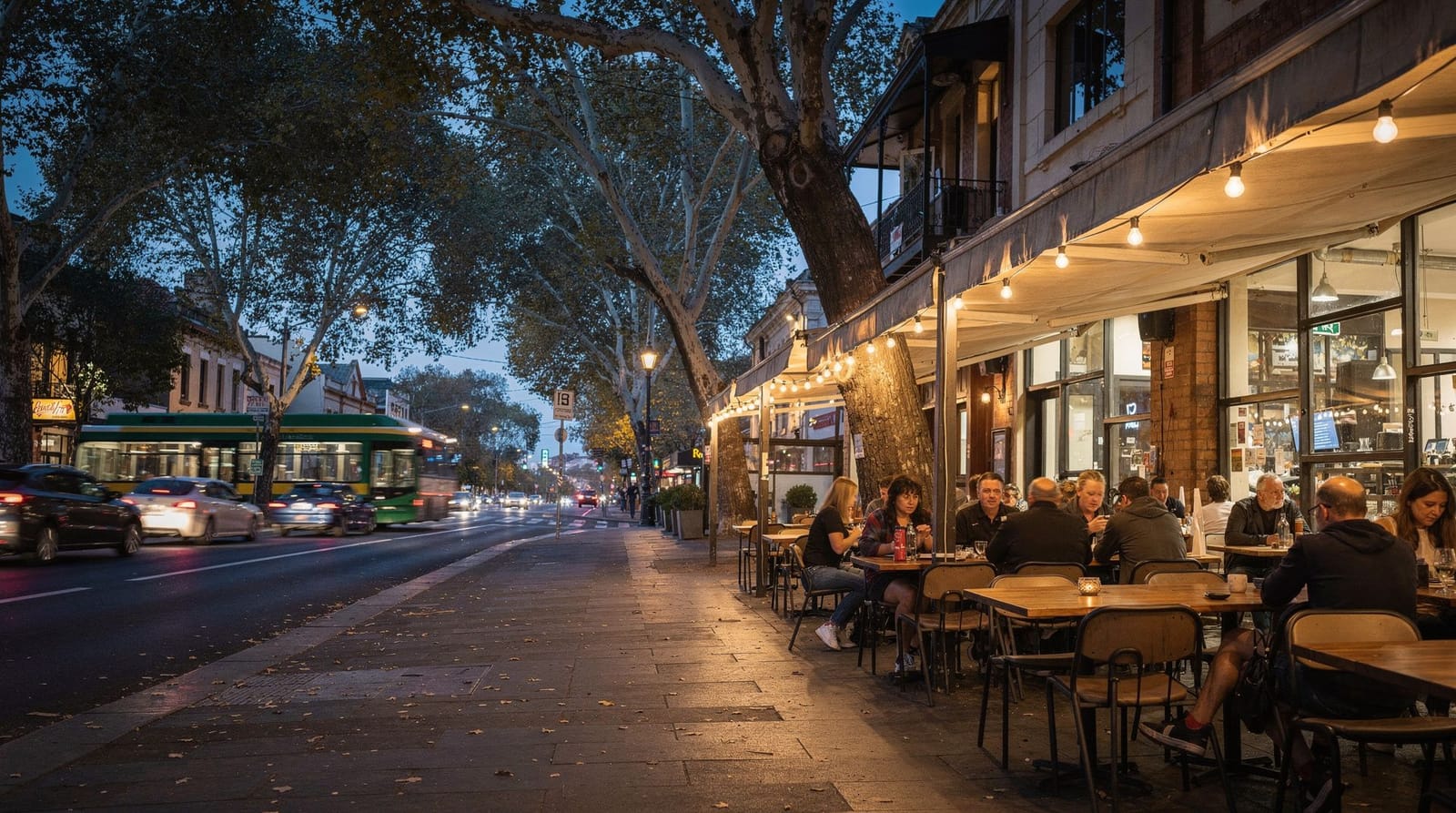
Brunswick Street runs roughly a kilometre and a half from Gertrude Street north to Alexandra Parade, and it remains the most complete single strip for understanding Fitzroy’s identity: bookshops, vintage clothing stores, tattoo parlours, cafés with mismatched furniture, and a dense run of restaurants spanning Ethiopian, Vietnamese, Spanish and modern Australian cuisines within a few blocks of each other. It has gentrified considerably since its rougher 1980s reputation, and prices reflect that, but it has resisted the chain-retail homogenisation that’s affected comparable “alternative” strips in other cities. Weekday mornings are the quietest time to browse; weekend afternoons bring the heaviest foot traffic.
Smith Street and the border with Collingwood
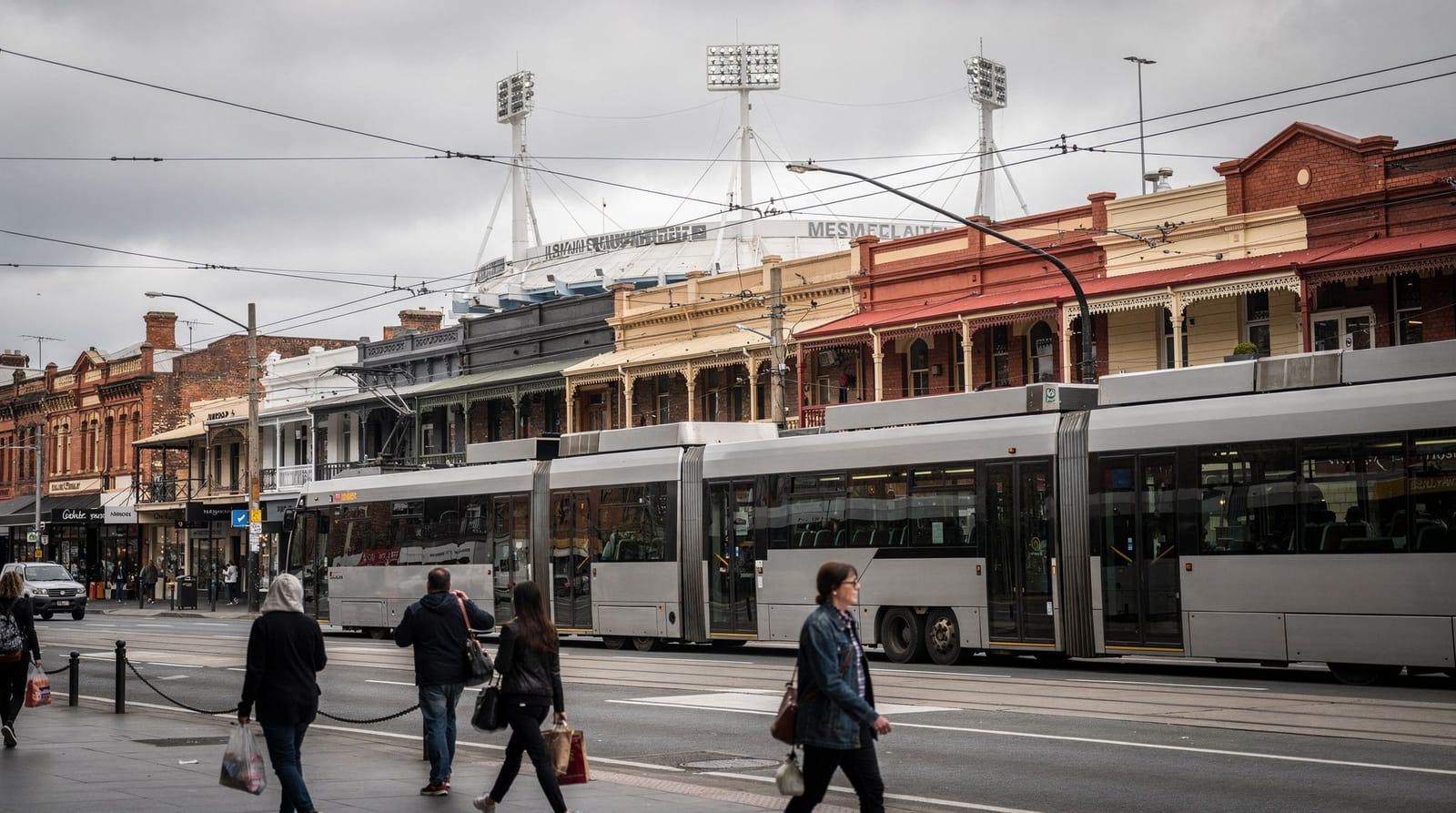
Smith Street marks the historic boundary between Fitzroy and Collingwood and has its own, grittier character than Brunswick Street — a mix of long-running Vietnamese grocers and restaurants (a legacy of postwar and 1970s–80s migration), newer bars and breweries, and some of the best-value vintage and op-shops in the inner city. Tram route 86, running its full length from Bundoora down to Docklands, makes Smith Street one of the easiest of these strips to reach directly from the CBD. Collingwood proper, further east and north, has increasingly become a brewery and small-bar destination in its own right, with several breweries operating tasting rooms out of converted warehouses.
Coffee culture and roasteries
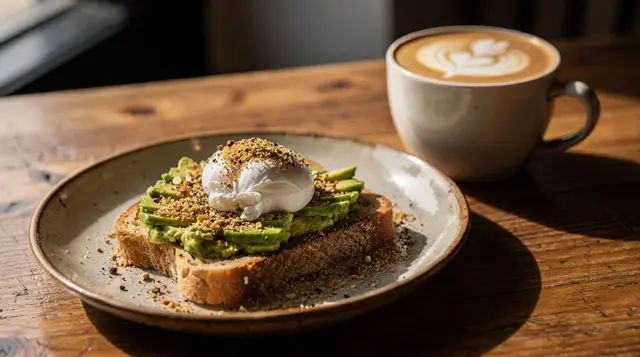
If Melbourne’s coffee reputation has a geographic centre, it’s arguably here rather than the CBD. Several of the roasters that supply cafés across the wider city — Market Lane Coffee, Small Batch, Padre Coffee among them — either originated in or operate significant roasteries within Fitzroy and Collingwood, and the area’s café density means genuine competition on quality rather than tourist foot traffic alone. Unlike Degraves Street in the CBD, most of these cafés serve a local, repeat-visit clientele rather than one-off tourist trade, and prices reflect a more everyday market — typically 4.50–5.50 AUD for an espresso-based coffee. See our Melbourne coffee guide for specific recommendations and the Collingwood coffee culture and history tour for a guided option.
Melbourne coffee culture: history of Collingwood tourIf you want to compare these roastery cafés with the smaller, more tucked-away spots in the city centre, our guide to the best laneway cafés makes a useful companion, and the three-day food and coffee itinerary shows how a Fitzroy morning can fit into a longer eating-focused trip.
Street art beyond Hosier Lane
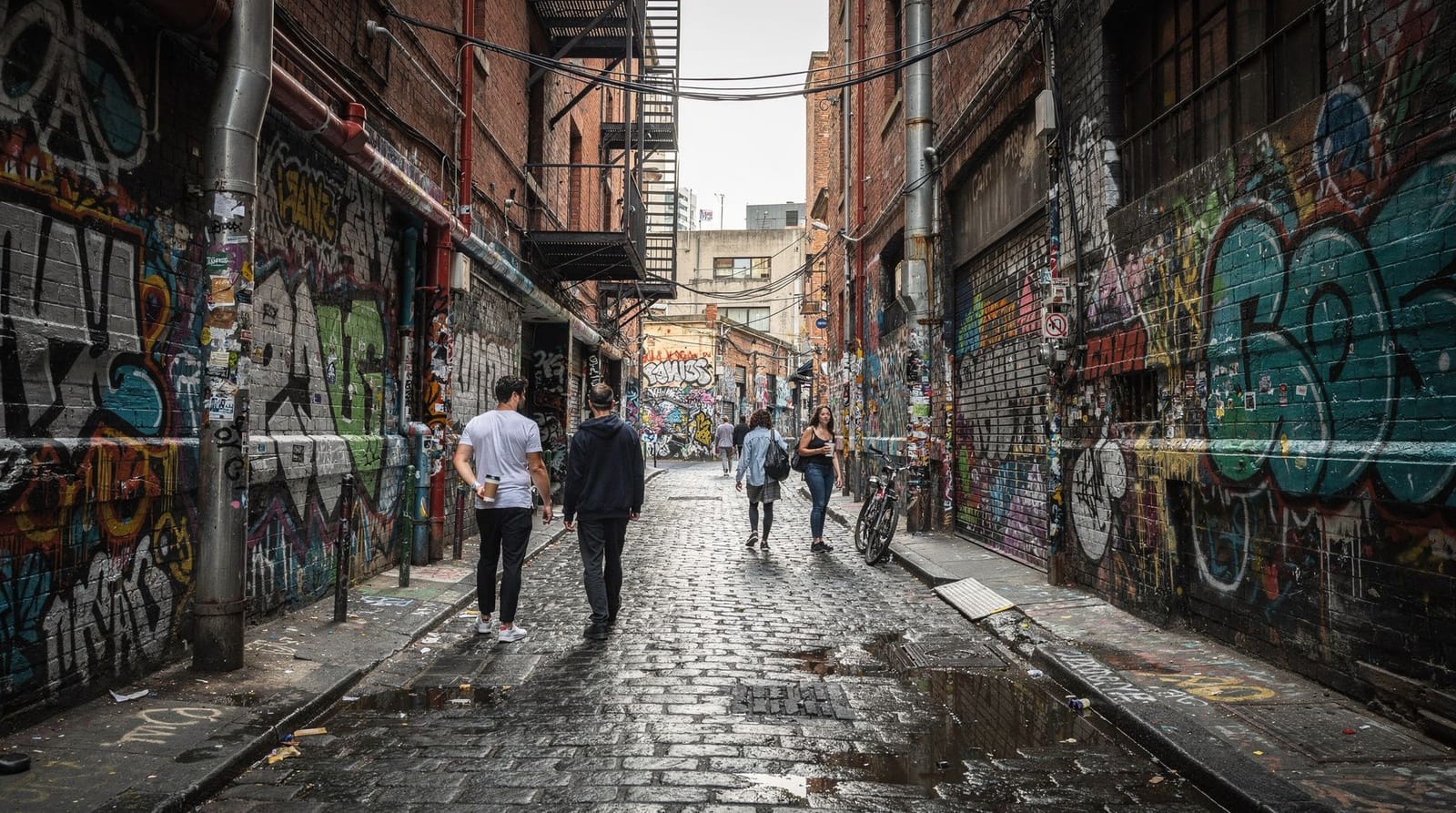
Where the CBD’s Hosier Lane concentrates small-scale, high-turnover street art into a single dense corridor, Fitzroy and Collingwood’s street art tends toward larger walls, longer-running murals and a stronger presence of politically and socially engaged work, reflecting the suburbs’ history as a base for activist and countercultural communities. Rose Street and the laneways around Johnston Street hold some of the more significant pieces, and several walls are effectively curated or semi-permanent rather than the constant overpaint cycle of the CBD lanes.
A walking tour led by a working street artist gives useful context on which pieces are commissioned, which are guerrilla work, and how the local scene’s ethics around overpainting someone else’s work actually function.
Melbourne street art walking tour with a street artistFor the other half of the picture, see Hosier Lane in the CBD, and our broader Melbourne street art guide, which puts the city’s different scenes side by side so you can decide how to split your time.
Vintage shopping and markets
Brunswick Street and Gertrude Street together hold one of the city’s best concentrations of vintage clothing stores, ranging from curated, relatively expensive boutiques to genuine by-the-kilo op-shops. The Rose Street Artists’ Market, held most weekends in Fitzroy, focuses on local designers, jewellery and small-run crafts rather than mass-produced goods, and is a useful contrast to the food-driven Queen Victoria Market. See Fitzroy’s vintage shopping for a street-by-street breakdown.
Prices at the curated boutiques can run well above what a similar piece would cost new elsewhere, reflecting careful selection and condition rather than genuine bargain-hunting — the by-the-kilo op-shops further down Smith Street are the better bet for visitors after value rather than a specific curated find. Independent bookshops along Brunswick Street, several trading for decades, are also worth a browse for secondhand and small-press titles harder to find at chain retailers in the CBD.
Gertrude Street
Running between Brunswick and Smith Streets, Gertrude Street has developed a distinct identity from both of its better-known neighbours — a slightly more considered, design-led strip of galleries (including the not-for-profit Gertrude Contemporary), small restaurants and boutique retail, with less of the backpacker/tourist traffic that Brunswick Street now carries on weekends. It’s a good option if you want the Fitzroy aesthetic with a quieter pace.
How Fitzroy became Melbourne’s alternative suburb
Fitzroy is Melbourne’s oldest suburb outside the original CBD grid, subdivided from the 1830s and built out largely with Victorian-era terrace housing through the second half of the 19th century. By the early 20th century much of that housing stock had deteriorated into some of the city’s most overcrowded slum conditions, and Fitzroy became a landing point for successive waves of migration — Italian and Greek families after the Second World War, followed by a significant Aboriginal community centred around Gertrude Street and the Aboriginal Health Service, one of the first of its kind in Australia.
Cheap rents through the 1970s and 80s then drew artists, students and a countercultural business scene, cementing the suburb’s alternative reputation just as inner-city living was falling out of fashion elsewhere in Melbourne.
Gentrification from the 1990s onward has pushed prices sharply upward — Fitzroy terrace houses are now among the more expensive real estate in inner Melbourne — but the suburb has retained more of its layered social history in its street life than most equivalently gentrified precincts elsewhere in the world.
Breweries and small bars in Collingwood
Collingwood’s shift from light industrial suburb to bar-and-brewery destination has accelerated over the past decade, with several breweries operating tasting rooms directly out of converted warehouse space rather than purpose-built venues — part of the appeal is drinking beer a few metres from the tanks it was brewed in. This sits alongside a growing small-bar scene similar in format to the CBD’s hidden bars but generally cheaper and less design-conscious, aimed at a local rather than tourist crowd. Friday evenings after work are the busiest time across these venues; weekday afternoons are markedly quieter.
For a wider sense of the city’s beer scene, our craft beer and breweries guide covers more venues, while the laneway bars guide is the better pick if you prefer the CBD’s hidden-door format. Evenings here also pair well with live music, which you can explore in our live music venues guide.
Eating beyond the main strips
Beyond Brunswick and Smith Streets’ better-known restaurant rows, the side streets of both suburbs hold a scattering of smaller, less-publicised restaurants that locals generally rate above the flagship strips for value — worth a detour if you’re willing to walk an extra block or two off the main road. Ethiopian and Eritrean restaurants cluster particularly around the northern end of Gertrude Street and Johnston Street, a legacy of East African migration to the area from the 1980s onward, and are among the more distinctive, less-replicated dining options in inner Melbourne.
Getting there
Tram routes 11 and 12 run along Brunswick Street and Nicholson Street respectively, connecting to the CBD in around 10–15 minutes; route 86 runs the length of Smith Street from the city to Bundoora via Collingwood. All of these depart from stops just north of the CBD grid (around La Trobe Street or Victoria Parade) and are covered by a standard Myki fare, since Fitzroy and Collingwood sit outside the Free Tram Zone. Walking from the eastern edge of the CBD (around Parliament Station) takes roughly 20–25 minutes if the weather’s good and you don’t mind the distance.
Because you leave the Free Tram Zone on the way, it helps to read our Myki card guide before you go, and the Melbourne tram guide explains how to read stops and routes if you’re new to the network. For the wider picture, see getting around Melbourne.
Budget for a Fitzroy/Collingwood day
Coffee here runs close to the citywide average (4.50–5.50 AUD), slightly cheaper than the CBD’s most tourist-facing laneways. A casual lunch runs 18–25 AUD; a sit-down dinner on Brunswick or Smith Street runs 30–45 AUD per person before drinks. Vintage shopping varies enormously by store, from a few dollars in a by-the-kilo op-shop to boutique prices well above CBD retail for curated pieces. A guided coffee-and-history tour typically runs 90–130 AUD per person. Overall this is a mid-range precinct — cheaper than Southbank’s riverside dining, pricier than Footscray’s everyday food scene. If you’re keeping a tight rein on spending, the Footscray and Little Saigon guide and our Melbourne on a budget page offer cheaper alternatives, and the Fitzroy neighbourhood guide adds more street-level detail for planning your day.
Fitzroy Gardens, and the mix-up with the suburb
First-time visitors sometimes confuse the suburb of Fitzroy with Fitzroy Gardens, a large Victorian-era garden on the opposite side of the CBD near East Melbourne — the two are unrelated beyond sharing a name (both honour the same colonial-era governor). If a walking itinerary mentions “Fitzroy Gardens,” it means the CBD-adjacent park, not Brunswick Street; see the Fitzroy Gardens guide if that’s what you’re after.
Fitzroy and Collingwood vs Carlton for an evening out
Visitors deciding between an evening in Fitzroy/Collingwood and one in nearby Carlton are really choosing between two different scenes. Carlton’s Lygon Street is built around Italian restaurants and a more traditional dining-strip format; Fitzroy and Collingwood lean toward small bars, breweries and a more eclectic, less formal food scene spread across several streets rather than concentrated on one.
| Precinct | Best for | Food style | Price level |
|---|---|---|---|
| Fitzroy/Collingwood | Coffee, street art, small bars, vintage shopping | Eclectic, global, small bars | Mid-range |
| Carlton (Lygon St) | Italian dining, gelato | Traditional Italian strip | Mid-range |
| CBD laneways | Hidden bars, quick bites | Dense, varied | Mid to high |
Frequently asked questions about Fitzroy and Collingwood
What’s the difference between Fitzroy and Collingwood?
Fitzroy is the older, more established suburb centred on Brunswick Street, historically Melbourne’s bohemian and countercultural hub since the 1970s. Collingwood, immediately east across Smith Street, followed a similar gentrification path somewhat later and today overlaps heavily with Fitzroy in character, though it retains a slightly grittier, more industrial feel with a growing brewery scene.
Is Fitzroy safe to visit at night?
Yes, generally — the main strips (Brunswick, Smith, Gertrude Streets) are well-trafficked into the evening with bars and restaurants open late. Standard city precautions apply on quieter side streets.
How do I get to Fitzroy from the CBD?
Tram routes 11 or 12 along Brunswick Street/Nicholson Street, or route 86 along Smith Street, all run from the eastern CBD edge and take about 10–15 minutes.
Is the coffee actually better here than in the CBD?
It’s a fair claim in the sense that several of the roasteries supplying CBD cafés are based here, and the customer base is more local and repeat-visit rather than tourist foot traffic, which tends to sharpen quality competition. That said, quality varies café to café everywhere in Melbourne.
What should I see if I only have two hours?
Walk Brunswick Street from Gertrude Street north to about Johnston Street, detour a block to see the street art around Rose Street, and finish with a coffee at one of the roastery cafés — a workable two-hour loop covering the area’s main identity.
Is Fitzroy expensive?
It’s mid-range for Melbourne — pricier than outer suburban food strips like Footscray, generally cheaper than Southbank’s riverside dining or CBD tourist-facing venues.
Can I combine Fitzroy with Carlton in one day?
Yes — they’re adjoining suburbs a short tram or 20-minute walk apart, making it easy to pair a Brunswick Street coffee crawl with a Lygon Street Italian dinner in Carlton the same evening.
Is Fitzroy still “alternative” or has it fully gentrified?
Both, honestly — property prices have risen sharply since the 1990s and much of Brunswick Street now caters heavily to visitors and a more affluent local demographic, but the suburb retains a genuine layered history (Italian, Greek and Aboriginal community heritage, activist and countercultural roots) that shows up in its street life, murals and the mix of long-running community organisations alongside newer boutique businesses.
What tram should I take for Smith Street versus Brunswick Street?
Route 86 runs the length of Smith Street from the CBD through Collingwood; routes 11 and 12 serve Brunswick Street and Nicholson Street respectively, a couple of blocks further west. Both depart from stops near the eastern edge of the CBD grid.
Are there markets in Fitzroy?
The Rose Street Artists’ Market runs most weekends, focused on local designers and small-run crafts rather than food, distinct from Queen Victoria Market’s produce-and-deli focus across town.
Is Fitzroy Gardens the same place as the Fitzroy suburb?
No — Fitzroy Gardens is a separate Victorian-era park near the CBD and East Melbourne, unrelated in location to the Fitzroy suburb covered in this guide beyond sharing a name.
Should I choose Fitzroy/Collingwood or Carlton for dinner?
Choose Carlton’s Lygon Street for a traditional Italian dining strip, or Fitzroy/Collingwood for a more eclectic mix of small bars, breweries and varied global food spread across several streets.
Are the vintage shops in Fitzroy actually cheap?
It varies enormously — curated boutiques on Brunswick Street can charge well above retail for selected pieces, while by-the-kilo op-shops further down Smith Street offer genuine bargains. Go to Smith Street specifically if value matters more than curation.
Top experiences
Bookable activities with verified prices and instant confirmation on GetYourGuide.