Melbourne coffee guide: the cafés that earned the city's reputation
Melbourne: Melbourne coffee lovers walk
Duration: 2.5 hours
What makes Melbourne coffee different?
Melbourne's Italian and Greek postwar immigration built an espresso culture in the 1950s-60s that never went away, then a wave of independent roasters from the 2000s onward (Market Lane, Proud Mary, Seven Seeds, Patricia) pushed single-origin beans and flat whites into the mainstream. The result is an unusually high baseline: even an average CBD laneway café is typically better than a specialty shop in most other cities, and the city invented or popularised the flat white and the piccolo latte.
| Typical price | Around 4.50-5.50 AUD takeaway flat white/latte, up to ~6 AUD in busy laneways |
| Best districts | CBD laneways (convenience), Fitzroy/Collingwood (roaster culture) |
| Quiet times | Before 8:30am or after 2-3pm on weekdays |
| Busiest times | Weekend mornings 9-11am, 15-25 min queues at famous names |
| Booking | Not needed — walk-in is the norm across almost all cafés |
Why Melburnians take their coffee this seriously
Sydney has better beaches, Brisbane has better weather, but Melbourne has spent seventy years building a coffee culture that genuinely outranks most cities on earth, and locals will tell you so within about four minutes of meeting you. It starts with postwar immigration: Italian and Greek families arriving in the 1950s and 60s brought proper espresso machines into suburban milk bars at a time when the rest of Anglophone Australia was drinking instant coffee, and cafés like Pellegrini’s Espresso Bar on Bourke Street (open since 1954, still running one of the city’s original Italian espresso machines) never stopped.
What changed the game a second time was the 2000s-2010s wave of independent roasters — St Ali in South Melbourne, Market Lane in Prahran, Seven Seeds in Carlton, Proud Mary in Collingwood — who treated coffee the way a serious wine region treats grapes: single-origin beans, traceable farms, seasonal blends, baristas trained like sommeliers. That culture then spread into hundreds of laneway cafés across the CBD and inner suburbs, which is why an unremarkable-looking hole-in-the-wall in Melbourne’s CBD laneways will often out-pour a “third wave” specialty shop in most other cities without even trying.
How Melbourne’s coffee culture compares internationally
Visitors arriving from Seattle, Portland or London’s East End sometimes assume they already know specialty coffee and are surprised by how differently Melbourne approaches the whole ritual.
American specialty coffee culture tends to emphasise large-format cafés with extensive seating, laptop-friendly work culture and a strong drip/pour-over filter tradition; Melbourne’s version is overwhelmingly espresso-based, smaller in physical footprint, and far less tolerant of laptop squatting — most CBD laneway cafés have limited seating and turn tables over quickly, and camping out with a laptop for hours over a single coffee is a genuine faux pas at the busier spots, even if a handful of larger cafés (Higher Ground among them) are more accommodating.
London’s flat white boom of the 2010s, incidentally, was substantially driven by Antipodean baristas (Australian and New Zealand expats) bringing exactly this style of coffee to the UK, which is itself a small piece of evidence for how far Melbourne’s specific influence has spread.
A neighbourhood-by-neighbourhood cheat sheet
If you’re trying to decide where to focus limited time, here’s a rough breakdown of what each area does best. The CBD and its laneways offer the highest density of good cafés within walking distance of major sights — ideal if you’re sightseeing on foot and want convenience without sacrificing quality. Fitzroy and Collingwood have Melbourne’s deepest roaster culture and the most serious “coffee nerd” scene, worth the short tram trip if coffee itself, rather than proximity to other attractions, is the priority. Carlton’s Lygon Street leans more traditional Italian espresso-bar style, useful if you want a link to the postwar origins of Melbourne’s coffee culture alongside an Italian meal.
South Melbourne and Prahran, home to St Ali and Market Lane’s original kiosk respectively, offer a quieter, more local alternative to the CBD’s tourist-heavy laneways.
Richmond and North Melbourne blend serious coffee with some of the city’s best brunch (see our best brunch guide), suited to a slower, more food-focused visit rather than a quick espresso stop.
What visitors ask baristas most
A few practical questions come up often enough with visiting coffee drinkers that they’re worth addressing directly. ”** — most independent Melbourne cafés keep it simple with one or two sizes rather than a four-tier naming system, reflecting a general suspicion here of coffee chains that prioritise volume over quality. ”** — yes, most baristas will still pour a pattern into a takeaway lid window if asked, though it’s a lower priority than for a dine-in cup given the practical constraints of a lid.
”** — no, this is a completely normal request (often phrased as “can I get that extra hot”), though be aware that milk steamed too hot can scorch and taste burnt, which is partly why baristas steam to a specific temperature by default rather than maximum heat.
Patricia Coffee Brewers (Little Bourke Street, tucked into a laneway near the Flagstaff Gardens end of the CBD) is a stand-up, no-seating espresso bar from the Sensory Lab/St Ali family — small, always busy, and a genuine local litmus test: if a visiting coffee obsessive asks one Melburnian for a recommendation, this is often the answer.
Market Lane Coffee started as a single kiosk in the Prahran Market and has since opened branches at QV (near the State Library), Fitzroy, South Yarra and Auction Rooms in North Melbourne. Market Lane roasts its own beans, changes its filter offering seasonally, and is one of the more approachable specialty roasters for someone who wants excellent coffee without an intimidating ordering ritual.
Proud Mary, on Oxford Street in Collingwood, is arguably Melbourne’s most internationally recognised coffee brand (it has outposts in Portland, Oregon and Austin, Texas) and pairs serious single-origin espresso with a genuinely good all-day breakfast menu, which is unusual — most of the specialty-focused cafés on this list treat food as secondary.
Seven Seeds, on Berkeley Street in Carlton near the University of Melbourne, has been roasting since 2008 and is one of the originators of Melbourne’s traceable, farmer-relationship approach to sourcing; its café runs a serious cupping and education program alongside the counter service.
Industry Beans, on Rose Street in Fitzroy, roasts in-house and is known for pushing unusual origins and processing methods (natural, honey-processed) that read as genuinely experimental rather than gimmicky, plus a modern Australian food menu that holds its own against the coffee.
St Ali, the South Melbourne original that helped start this whole movement in 2005, remains a destination in its own right, with a bigger, more restaurant-like space than most of the smaller CBD laneway spots.
Dukes Coffee Roasters, tucked into Manchester Lane off Collins Street, roasts on-site in full view of the small seating area and is one of the more atmospheric CBD options if you want to watch the process rather than just drink the result.
Brother Baba Budan, on Little Bourke Street, is instantly recognisable by the upside-down chairs hanging from the ceiling and is one of the CBD’s most photographed cafés, run by the same group behind Seven Seeds and St Ali.
 Melbourne coffee lovers walkCheck availability
Ordering like a local, not a tourist
Melbourne café menus assume familiarity with a specific vocabulary, and getting it right (or at least not fumbling it) makes the whole interaction smoother.
Flat white is the default milk coffee — espresso with steamed milk and a thin layer of velvety microfoam, less milky than a latte, no visible foam art expectation attached to the order itself (though most baristas will pour one anyway). Latte is milkier and served in a taller glass. Piccolo latte is a small, strong version in a small glass, ideal if you find a full flat white too diluted. Long black is espresso topped with hot water (crema on top), the standard order for anyone avoiding milk. Cappuccino exists but is treated as slightly old-fashioned by serious cafés — you’ll get one, but don’t expect much chocolate-dusting theatre.
Size matters less than you’d think. Melbourne cafés typically offer one or two sizes (regular and large), not the four-tier system common in chain coffee elsewhere, and ordering “a large flat white” rather than a branded size name will always work.
Takeaway cups are genuinely reusable-cup-friendly. Bring your own cup (a KeepCup, invented in Melbourne, or any reusable) and most cafés will use it without comment; some independents offer a small discount for doing so.
Queue etiquette: at busy laneway cafés, you typically queue at the counter, order and pay, then wait nearby or take a seat if available — table service for coffee-only orders is uncommon outside sit-down breakfast spots.
Laneway cafés versus destination roasters: which to prioritise
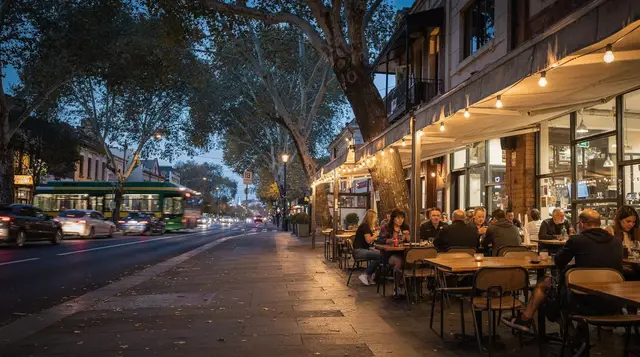
If you have one morning in Melbourne and want the fastest, most representative introduction, do a short laneway crawl in the CBD: Degraves Street, Centre Place and Block Place all cluster multiple genuinely good cafés within a five-minute walk of Flinders Street Station, alongside the city’s older arcades. Pair this with a stop in Hosier Lane for the street art and you’ve covered two of Melbourne’s signature obsessions in one loop.
If you have a full day and want the deeper version, spread it across neighbourhoods: a laneway coffee in the CBD in the morning, lunch and a Proud Mary or Industry Beans coffee in Fitzroy or Collingwood midday, and a Seven Seeds stop in Carlton near Lygon Street in the afternoon if you’re already there for Italian food. See our dedicated guide to Melbourne’s best laneway cafés for a tighter, walkable itinerary through the CBD specifically.
a guided café and coffee culture walkThird-wave specialty versus traditional espresso bars
It’s worth understanding that Melbourne actually runs two overlapping coffee cultures side by side rather than one single scene. The traditional Italian espresso bar tradition — Pellegrini’s, University Café on Lygon Street, and dozens of unchanged suburban milk bars — serves a straightforward, consistent, usually blended espresso with little interest in single-origin beans or filter methods; the point is reliability and ritual, the same cup your grandfather might have ordered in 1975.
The third-wave specialty tradition — Market Lane, Seven Seeds, Industry Beans — treats coffee more like wine, with rotating single-origin offerings, filter brew bars alongside espresso, and staff who can tell you which farm and altitude your beans came from.
Neither tradition has displaced the other; they coexist within a few blocks of each other in the CBD, and part of what makes Melbourne’s coffee culture unusually deep is that both approaches are executed to a high standard rather than one crowding out the other.
Buying beans to take home
Most of the roasters named in this guide sell bagged beans over the counter, and it’s a genuinely good, compact souvenir if you want to bring a piece of Melbourne’s coffee reputation home rather than just a memory of it. Market Lane, Seven Seeds and Industry Beans all roast their own beans and will grind to order for your specific brewing method (espresso, plunger, filter) if asked. Bear in mind that roasted beans are best used within a few weeks of roasting for peak flavour, so buying near the end of your trip rather than the start makes more sense if you’re travelling for more than two or three weeks afterward.
Whole beans also travel through customs more easily than you might expect — coffee is not a restricted agricultural product in most countries, though it’s always worth a quick check of your home country’s import rules if you’re bringing back a large quantity.
Milk alternatives and dietary considerations
Oat milk has become close to a default alternative at Melbourne cafés, usually available without surcharge or for a small (1-1.50 AUD) additional charge, and most baristas are genuinely practised at steaming it to a comparable texture to dairy milk rather than treating it as an awkward substitution. Soy, almond and lactose-free milk are also close to universal at this point. If you have a specific dietary requirement, Melbourne’s café culture is generally accommodating without much fuss — asking for your milk of choice rarely draws a raised eyebrow the way it might in a more traditionally dairy-only coffee culture.
The Melbourne International Coffee Expo and coffee events
If your visit happens to coincide with it, the Melbourne International Coffee Expo (usually held mid-year) draws roasters, baristas and coffee professionals from across Australia and internationally, with public-facing elements including tastings and competitions. It’s a niche interest rather than a mainstream tourist event, but genuinely worth checking the dates if coffee is a serious part of why you’re visiting Melbourne specifically.
Individual cafés and roasters also periodically run cupping sessions (structured tastings comparing different origins or roasts) open to the public — Seven Seeds and Market Lane both have a history of running these, worth asking about directly if you want a more structured education than a casual café visit provides.
Coffee and brunch: the other half of the ritual
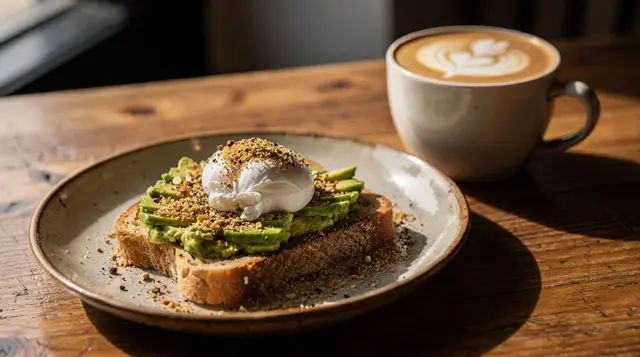
Melbourne rarely treats coffee as a stand-alone transaction — it’s usually paired with brunch, and the city’s brunch scene (smashed avocado did not originate here, contrary to popular belief, but Melbourne certainly popularised the modern café version of it) is worth planning around. See our best brunch in Melbourne guide for specific pairings, and note that at almost every café on this list, the food menu is strong enough to justify sitting down rather than grabbing a takeaway cup and moving on.
Fitzroy and Collingwood: Melbourne’s most serious coffee suburb
If you only add one neighbourhood detour purely for coffee, make it Fitzroy and Collingwood. The concentration of serious roasters here — Proud Mary, Industry Beans, Small Batch on Cambridge Street, Padre Coffee’s original micro-roastery — is unmatched elsewhere in the city, and it pairs naturally with Fitzroy’s vintage shopping strip on Brunswick Street (see our Fitzroy vintage shopping guide) and its street art laneways.
a Fitzroy and Collingwood coffee history tourPractical details: hours, prices and payment
Most independent cafés open around 7am on weekdays, 7:30-8am on weekends, and many close by 3-4pm — Melbourne’s café culture is overwhelmingly a morning-to-early-afternoon phenomenon rather than an all-day one, so don’t assume you can turn up at 5pm expecting a full menu. A few (Proud Mary, St Ali) run longer, into early evening.
Prices sit roughly at 4.50-5.50 AUD for a standard takeaway flat white or latte, nudging toward 6 AUD in the busiest CBD laneway spots and tourist-heavy locations. Card and phone payment are near-universal; a handful of the oldest, most traditional spots (Pellegrini’s included) still lean cash-preferred, though card is generally accepted everywhere now.
Common mistakes visitors make
Assuming a big international chain will give you the “real” Melbourne coffee experience. It won’t — the entire point of this city’s reputation is independent roasters and cafés, and locals will visibly wince if you ask them to recommend a chain.
Turning up at a famous café at 9am on a Saturday expecting no queue. Patricia, Market Lane’s Prahran original, and Proud Mary all get 15-25 minute queues on weekend mornings; go on a weekday or arrive before 8am if you want in and out quickly.
Ordering a “regular coffee” without specifying milk or size. Baristas will usually ask a clarifying question, but knowing the vocabulary (flat white, long black, piccolo) speeds things up and reads as showing basic respect for the craft, which matters more here than in most cities.
Skipping the food. Several of these cafés — Proud Mary, Industry Beans, Higher Ground — are genuinely excellent brunch destinations in their own right, not just coffee stops with an afterthought menu.
Where coffee fits in a Melbourne itinerary
On a first 1-day itinerary a laneway coffee crawl works well as the opening move before Federation Square and the Southbank arts precinct. On longer stays, treat coffee as a thread running through every neighbourhood visit rather than a single dedicated outing — a Market Lane stop before Queen Victoria Market, a Seven Seeds coffee before wandering Lygon Street’s Italian restaurants, a Proud Mary before browsing Fitzroy’s vintage stores.
If you’re staying near St Kilda or Richmond, both have their own smaller but solid café scenes worth asking a local host or Airbnb owner about rather than defaulting to the CBD every morning.
Neighbourhood coffee scenes compared
| Neighbourhood | Best for | Vibe |
|---|---|---|
| CBD & laneways | Convenience while sightseeing | Fast, dense, more tourist-facing |
| Fitzroy & Collingwood | Serious roaster culture, “coffee nerd” scene | Slower, destination-focused |
| Carlton (Lygon Street) | Traditional Italian espresso-bar heritage | Old-school, unpretentious |
| South Melbourne & Prahran | A quieter, more local alternative | Neighbourhood, less crowded |
| Richmond & North Melbourne | Coffee paired with strong brunch | Food-focused, slower pace |
Use this alongside the earlier cheat sheet to decide whether to stay in the CBD for convenience or add a short tram trip to Fitzroy or Carlton for a deeper coffee-focused morning.
Solo travellers and coffee shop culture
Melbourne’s café culture is genuinely comfortable for solo visitors — sitting alone at a laneway café counter or a small table with a coffee and the food menu is entirely normal, not a marker of being unaccompanied the way it might read in some other cities’ dining cultures. Staff at the busier laneway spots move efficiently rather than lingering for conversation, which suits solo travellers wanting a quick, high-quality stop as much as those wanting to sit and people-watch for a while. Bringing a book or simply people-watching from a Degraves Street or Centre Place table is a genuinely pleasant, very Melbourne way to spend twenty minutes between sightseeing stops.
A one-day Melbourne coffee crawl, hour by hour
For visitors with a single morning to dedicate specifically to coffee rather than folding it into general sightseeing: start around 7:30-8am at a CBD laneway café — Degraves Street or Centre Place — before the breakfast rush builds. By 9-9:30am, tram to Fitzroy or Collingwood for a second coffee and browse at Industry Beans or Proud Mary, pairing it with brunch if you skipped breakfast earlier. Early afternoon, a short trip to Carlton for Seven Seeds near Lygon Street rounds out the traditional-versus-third-wave contrast in one day. This sequence avoids the worst of each area’s own peak crowding, since CBD laneways are busiest at lunch and Fitzroy’s brunch spots peak mid-morning on weekends specifically.
Coffee culture for visitors who don’t drink coffee
Not every traveller in your group necessarily drinks coffee, and Melbourne’s café culture generally caters well beyond just espresso — matcha, chai and hot chocolate are near-universal menu items at the cafés named in this guide, and the food menus (particularly at Proud Mary, Industry Beans and Higher Ground) are strong enough to justify a visit on their own. Treating a Melbourne café stop as a food and atmosphere destination rather than purely a coffee transaction makes the city’s café culture accessible to non-coffee-drinkers travelling with coffee enthusiasts, rather than leaving them with nothing to do while the rest of the group orders.
More tours on Viator
Top-rated experiences with verified reviews, bookable on Viator (a Tripadvisor company).
 Viator
Yarra Valley Wine Tour w Exclusive Gin, Cider & Chocolate Tasting
FromAUD 115Check availability → Viator
Melbourne: Yarra Valley Wine, Gin, Whisky and Chocolate Tour
FromAUD 115Check availability → Viator
Melbourne: Epic Yarra Valley Wine Tour & Lunch - Gin/Beer Upgrade
FromAUD 179Check availability →Frequently asked questions about Melbourne coffee guide
What is a flat white and did Melbourne invent it?
A flat white is a espresso with steamed milk and a thin layer of microfoam, served slightly stronger and less milky than a latte. Melbourne and Wellington, New Zealand both claim to have invented it in the 1980s, and the argument has never been settled — what's not disputed is that Melbourne cafés popularised it globally alongside the piccolo latte, a smaller, stronger version served in a small glass.Do I need to book a table at Melbourne's famous cafés?
Most laneway and neighbourhood cafés are walk-in only and don't take bookings, but the well-known ones (Patricia, Market Lane's Prahran and QV branches, Proud Mary) get genuine queues on weekend mornings, often 15-25 minutes. Weekday mornings before 8:30am or after 10am are far quieter at almost all of them.Is Melbourne coffee expensive?
A takeaway flat white or latte runs roughly 4.50-5.50 AUD in most cafés, edging toward 6 AUD in busy CBD laneways and tourist-facing spots. That's in line with, or slightly cheaper than, comparable specialty coffee in London or New York, and noticeably cheaper than Zurich or Copenhagen.What should I order if I don't like milky coffee?
A long black (espresso topped with hot water, crema intact) is the standard order for anyone who wants strength without milk. A piccolo latte is the best middle ground if you want a little milk but find a full latte or flat white too diluted — it's essentially a ristretto shot with a small amount of steamed milk.Which suburb has the best coffee scene: the CBD, Fitzroy or Carlton?
The CBD and its laneways have the highest density of good cafés per square metre, useful if you're sightseeing on foot. Fitzroy and Collingwood have Melbourne's most serious roaster culture (Industry Beans, Proud Mary, Small Batch), while Carlton's Lygon Street leans more traditional Italian espresso than third-wave specialty. None is objectively 'best' — they're different styles of the same obsession.Can I visit a coffee roastery in Melbourne?
Yes. Several of the roasters named in this guide — Market Lane, Seven Seeds, Industry Beans, Proud Mary — roast on-site or nearby and sell bags of beans over the counter, and guided coffee-culture walks exist that take in three or four roasters and cafés with a barista explaining the history as you go.What time should I visit a famous Melbourne café to avoid queues?
Before 8am or after 2pm on weekdays are the quietest windows at almost every well-known café in this guide. Weekend mornings, especially 9-11am, are consistently the busiest, with 15-25 minute queues normal at Patricia, Market Lane's Prahran original and Proud Mary.Is it rude to ask for oat milk or a dairy alternative in Melbourne?
Not at all — oat, soy, almond and lactose-free milk are close to universal at Melbourne cafés now, usually free or for a small 1-1.50 AUD surcharge, and asking rarely draws a second glance given how accommodating the city's café culture generally is toward dietary preferences.
Top experiences
Bookable activities with verified prices and instant confirmation on GetYourGuide.