Melbourne Zoo: what's inside and how to make the most of a visit
Melbourne: Sea life melbourne aquarium
Is Melbourne Zoo worth visiting and how do you get there?
Yes for a genuinely varied day covering both African and Asian species (gorillas, lions, elephants, tigers) and native Australian wildlife (wombats, echidnas, platypus) in one site — general admission runs around 48-50 AUD for adults. The zoo is in Parkville, about 4 km north of the CBD, and its own Zoo railway station on the Upfield line makes it one of the easiest attractions in Melbourne to reach without a car.
One of the world’s oldest zoos, still evolving
| Cost | Around AUD 48-50 adult general admission |
| Time needed | 3-4 hours comfortable pace; closer to a full day with children |
| Getting there | Zoo railway station (Upfield line) or tram route 58 |
| Quietest time | Weekday mornings, outside school holidays |
| Best for | Widest species variety in one accessible site |
Melbourne Zoo, in the inner-northern suburb of Parkville, opened in 1862 and is the third-oldest zoo in the world still operating on its original site — a fact that matters less for trivia value than for what it means on the ground: the grounds have had over 160 years to mature into genuinely established parkland, with towering trees and well-established plantings that make the precincts feel considerably less like a conventional zoo layout than many newer facilities.
It’s run by Zoos Victoria, the same not-for-profit organisation behind Healesville Sanctuary and Werribee Open Range Zoo, and shares their conservation-first funding model — a meaningful share of ticket revenue goes toward field conservation programs for threatened species both in Australia and internationally.
Getting there — one of Melbourne’s easiest attractions to reach
Melbourne Zoo has its own dedicated Zoo railway station on the Upfield train line, a short walk directly to the main entrance, making it genuinely one of the most convenient major attractions in Melbourne to reach by public transport without any need for a connecting bus or long walk. Tram route 58 also runs along nearby Royal Parade, useful if starting from the CBD’s western side or Docklands. Limited paid parking is available on site for those driving, though given the direct train link, most visitors find public transport the simpler option, especially avoiding parking congestion during school holidays.
Main precincts worth prioritising
The Gorilla Rainforest, a large naturalistic enclosure for the zoo’s western lowland gorilla troop, and Lion Gorge, home to the zoo’s African lions, are consistently the most visited precincts and worth timing around a keeper talk if the schedule allows — talks give useful context on individual animals’ personalities and the conservation status of their wild populations. The Trail of the Elephants recreates a Southeast Asian village setting around the zoo’s Asian elephant herd, one of the larger and more elaborate precincts on site.
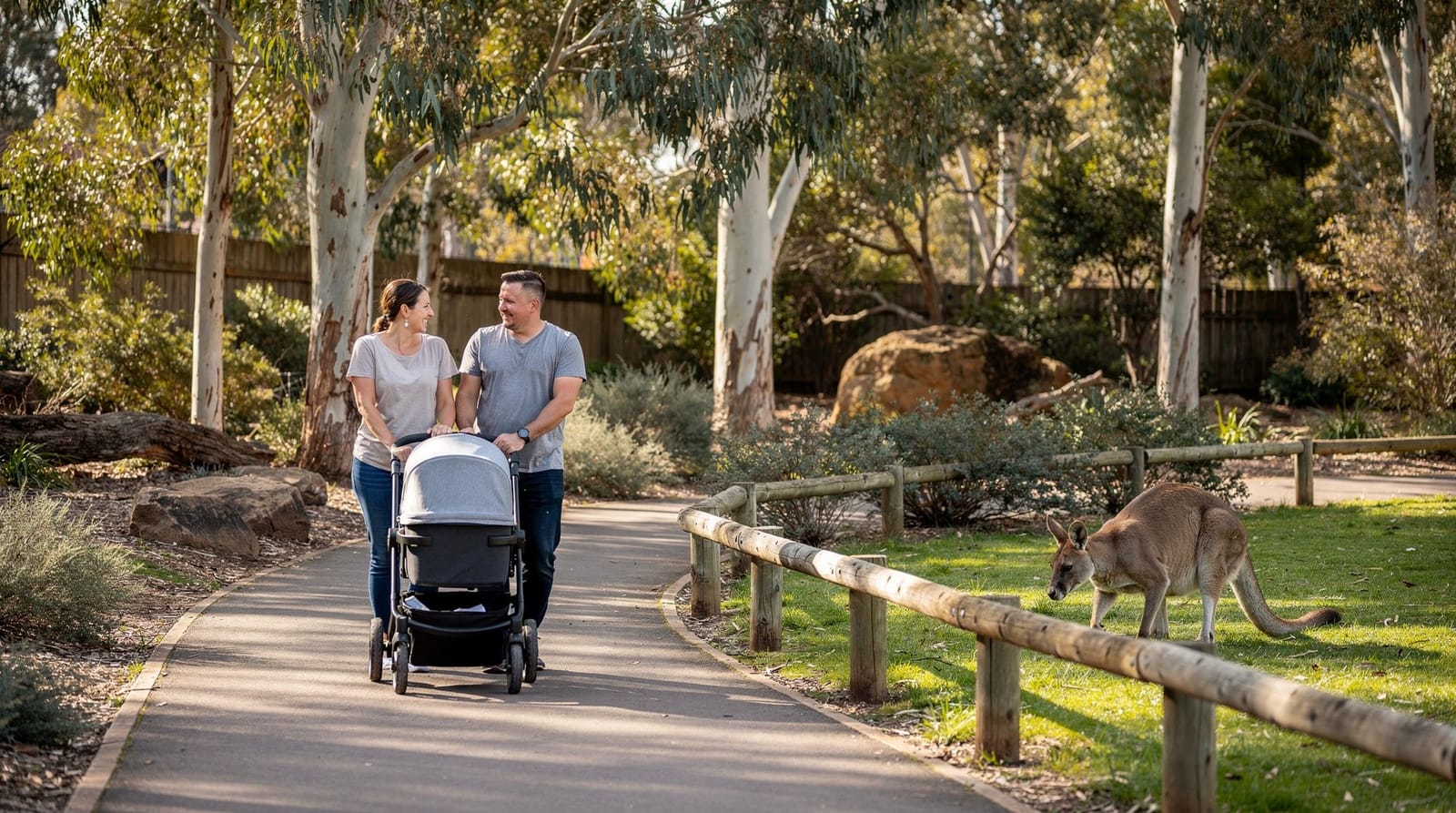
The Australian bush precinct is arguably the most distinctive section for international visitors specifically because it groups native species — wombats, echidnas, dingoes and a walk-through enclosure where kangaroos and wallabies roam at close range along the path — in a single, easily walkable loop, useful for anyone who won’t make it out to a dedicated wildlife park like Healesville Sanctuary or Phillip Island during their trip. The Butterfly House, a warm, humid, walk-through greenhouse filled with free-flying butterflies from multiple species, is smaller and easy to walk past without noticing, but genuinely worth the detour — it’s one of the more immersive single exhibits on site.
Ticket prices and Zoos Victoria membership
General admission runs approximately 48-50 AUD for adults, with concession, senior, and family ticket options, and free entry for children under 4. For anyone planning to visit more than one Zoos Victoria site during their trip — Melbourne Zoo, Healesville Sanctuary and Werribee Open Range Zoo are all run by the same organisation — an annual membership can work out cheaper than paying separate general admission at each, and comes with unlimited entry across all three for its duration. Booking general admission online ahead of a visit is worth doing on weekends and during school holidays, when queues at the gate can build up.
How long to plan for
A comfortable pace through the main precincts, without rushing and with time for one or two keeper talks, takes 3-4 hours. Families with younger children, or visitors wanting to properly explore every precinct including the smaller reptile and bird houses, should budget closer to a full day, particularly if breaking up the visit with a longer lunch at one of the on-site cafés.
Weather and seasonal considerations
Melbourne Zoo is almost entirely outdoors, with a handful of covered exhibits (the Butterfly House, reptile house, some smaller indoor displays), making it noticeably more weather-dependent than a fully indoor attraction like SEA LIFE Melbourne Aquarium. Summer heat (December-February) can make an all-day visit tiring, particularly for children, so an earlier start and plenty of water breaks are worth planning for; winter visits (June-August) are quieter and cooler but still perfectly manageable with a proper jacket, since most walking paths are exposed rather than sheltered. On a forecast of heavy rain or extreme heat, swapping the zoo for an indoor aquarium visit keeps the day dry and shaded, and the zoo can wait for a calmer forecast. More ideas for wet days with children are in our rainy day Melbourne kids guide.
Night events and overnight stays
Beyond standard daytime admission, Zoos Victoria periodically runs evening events at Melbourne Zoo, including overnight “Roar ‘n’ Snore”-style stays that let visitors camp within the grounds and experience the zoo after dark, plus seasonal night-opening events on a separate ticketing schedule to daytime general admission. These run only at specific times of year, so check current listings if an evening or overnight visit specifically appeals, rather than assuming standard tickets cover it.
Melbourne Zoo versus Werribee Open Range Zoo
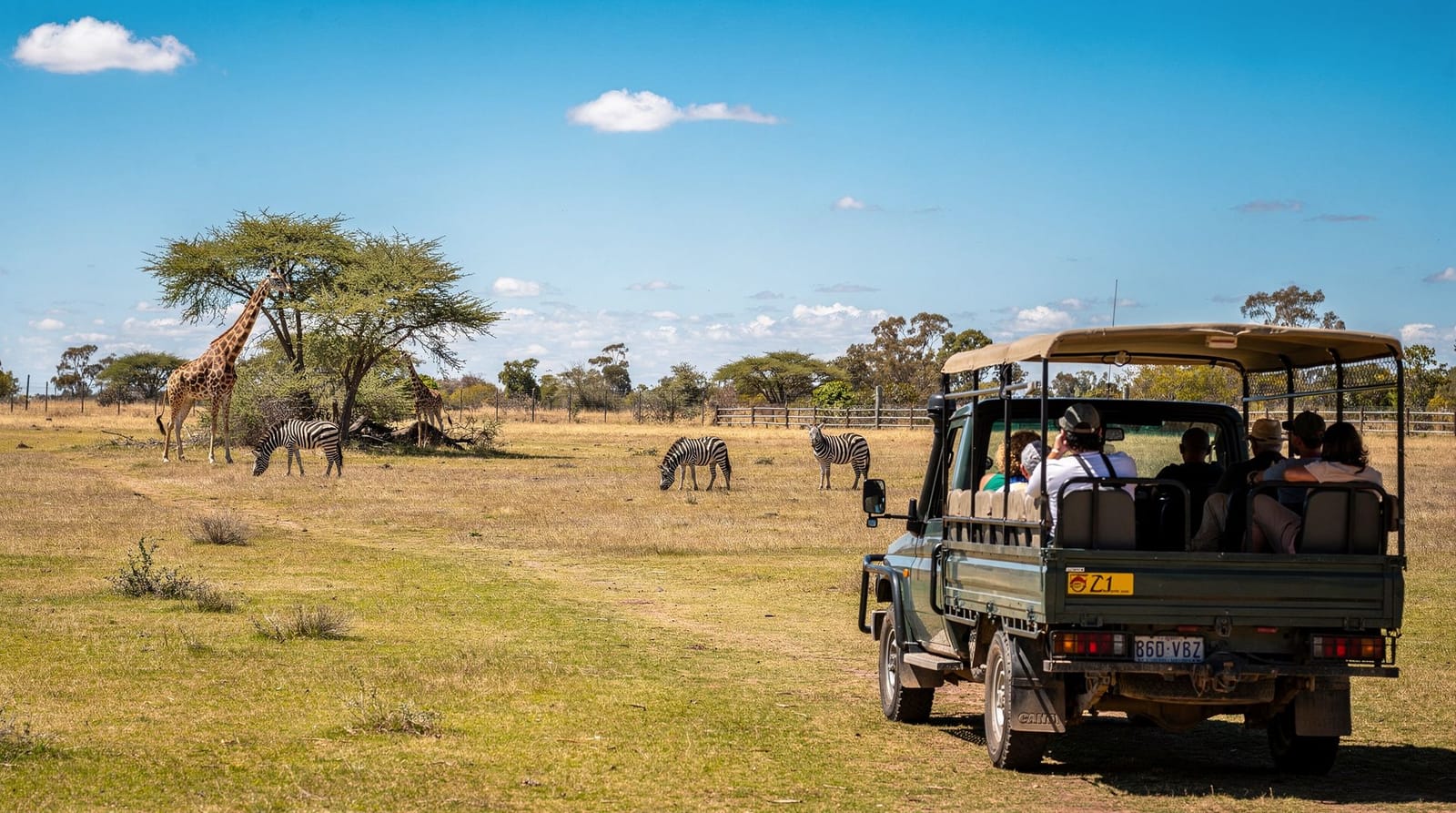
Melbourne Zoo’s Parkville site is built around a conventional (if unusually mature and well-landscaped) enclosure-based zoo layout with quick access from the CBD, while Werribee Open Range Zoo, about 32 km southwest of the city, uses a safari-style open range format where visitors ride through large paddocks of African species on a guided safari truck. Both are run by Zoos Victoria and both are genuinely worthwhile, but they answer different questions: Melbourne Zoo suits a shorter, more accessible city visit, while Werribee suits travellers wanting a more immersive, safari-style format and don’t mind the longer drive.
Melbourne’s three Zoos Victoria sites compared
| Melbourne Zoo | Healesville Sanctuary | Werribee Open Range Zoo | |
|---|---|---|---|
| Distance from CBD | ~4 km, direct train | ~1 hour drive | ~32 km southwest |
| Species focus | Global — African, Asian, Australian | Native Australian only | African savannah |
| Format | Conventional walkable precincts | Naturalistic bushland walk | Guided safari truck |
| Best for | Widest variety, easiest access | A deeper native-wildlife focus | An immersive safari feel |
Anyone weighing up Healesville specifically should read our Healesville Sanctuary guide for the fuller comparison of what each site adds.
What to wear and bring
Comfortable, closed walking shoes are worth prioritising over sandals given the distances covered between precincts, and a refillable water bottle is genuinely useful given the water stations spread across the grounds. Sun hats and sunscreen matter more than first-time visitors sometimes expect, since most of the walking paths run through open areas between the shaded precincts rather than continuous tree cover, and Victoria’s UV levels remain intense even on cool or overcast days. A light jacket is worth packing for shoulder-season and winter visits, since several precincts, including parts of the Australian bush walk, sit in more exposed, breezier sections of the grounds than the sheltered rainforest-style enclosures.
Combining with other Parkville and inner-north attractions
Royal Park, the large public parkland surrounding the zoo, is worth a walk before or after a visit, particularly in spring when its open grassland areas are at their greenest. The inner-north suburbs of Fitzroy and Collingwood and Carlton both sit a short tram or short drive from Parkville, making it straightforward to combine a zoo morning with an afternoon exploring Lygon Street’s Italian restaurants or Fitzroy’s café and vintage shopping scene.
What visitors sometimes get wrong about Melbourne Zoo
A common misconception among first-time visitors is assuming Melbourne Zoo is purely a city convenience option, worth visiting only if there’s no time for the “real” wildlife experiences further out at Phillip Island or Healesville Sanctuary. In practice, several of the zoo’s precincts — the Gorilla Rainforest and Trail of the Elephants specifically — offer species and enclosure scales that neither Phillip Island’s coastal reserve nor Healesville’s native-species focus can replicate, since neither of those sites houses African or Asian megafauna.
Rather than treating it as a fallback option, it’s worth considering Melbourne Zoo on its own terms as one of the stronger city zoos in the Southern Hemisphere, with a genuinely different animal roster to Victoria’s native-wildlife-focused parks.
Combining a zoo visit with public transport sightseeing
Because the Zoo railway station sits on the Upfield line, visitors without a car can easily combine a Melbourne Zoo visit with other stops along the same line or connecting tram routes without needing to return to the CBD and start a fresh journey elsewhere. The inner-north tram network in particular makes it straightforward to continue on to Brunswick, Fitzroy or Carlton after a zoo visit, turning what might otherwise be a single-attraction day into a broader exploration of Melbourne’s inner-northern neighbourhoods using the same transport ticket.
Visitors who would rather have the rest of the city explained on a separate day, after the zoo, can take a guided city highlights tour by bus instead of working out each connection alone. For planning the practicalities, see the Myki card guide, the Melbourne tram guide and the getting around Melbourne guide; the Melbourne with kids guide and the Melbourne Museum guide cover other family-friendly stops nearby.
Accessibility
The main paths through Melbourne Zoo are sealed and largely flat, suitable for prams and most wheelchairs, though the site’s mature, established layout means some sections have gentle slopes given the natural topography of the grounds. Accessible parking is available near the main entrance for those driving, and mobility scooter hire is available on site for visitors who need it.
What a typical visit looks like, hour by hour
Most visitors arrive via the Zoo railway station and start at whichever precinct is nearest the entrance, gradually working their way around the grounds’ loop layout. A realistic pace covers Lion Gorge and the Trail of the Elephants within the first hour, the Australian bush precinct and Butterfly House over the following hour, and the Gorilla Rainforest and remaining bird and reptile houses in a final hour, with a lunch break at one of the on-site cafes worked in around the middle of the visit.
Visitors trying to see everything in under three hours often find themselves rushing the precincts they’d actually most wanted to spend time in, so building in some flexibility, rather than a strict hour-by-hour schedule, tends to produce a more satisfying visit overall.
Comparing ticket value against Melbourne’s other paid attractions
At around 48-50 AUD for adult general admission, Melbourne Zoo sits in a similar price bracket to other major Melbourne paid attractions like the Eureka Skydeck or SEA LIFE Melbourne Aquarium, but delivers considerably more time on site — a half-day to full-day visit compared with 60-90 minutes at most single-building attractions.
For visitors budgeting a Melbourne trip and weighing up which paid attractions are worth including, the zoo’s combination of scale, variety and the option of a Zoos Victoria membership for repeat visits makes it one of the stronger value propositions among the city’s ticketed sights, provided a half-day to full-day time commitment fits the itinerary. Anyone who wants a city-wide view to pair with the zoo’s wildlife can add a visit to the Skydeck observation deck on another day; our Eureka Skydeck guide explains what to expect, and the Melbourne on a budget guide helps weigh paid sights against free ones.
Food and facilities
Several cafés and kiosks are spread across the grounds, along with picnic areas for visitors bringing their own food — a popular choice for families spending a full day on site. A gift shop near the main entrance stocks the usual zoo merchandise, plus items tied to specific conservation programs the zoo supports. Water refill stations are available at several points around the grounds, worth using given how much walking a full visit typically involves, particularly during Melbourne’s warmer months when staying hydrated across a several-hour outdoor visit matters more than it might at a smaller, more compact attraction.
Weekday versus weekend crowds in more detail
Weekday visitor numbers at Melbourne Zoo are noticeably lower outside school holidays, particularly on Tuesdays and Wednesdays, which tend to be the quietest days of the week overall. Weekends see a steady build of family visitors from mid-morning, peaking early afternoon, while summer school holidays (December-January) bring the heaviest sustained crowds of the year across every day of the week, not just weekends. Visitors with flexible travel dates who want the quietest possible experience should prioritise a weekday morning outside the December-January and April school holiday periods specifically.
For families specifically
Melbourne Zoo works well for a broad range of ages, with several playgrounds within the grounds and prams permitted throughout the sealed paths. For a dedicated breakdown of timing, stroller logistics and which precincts hold young children’s attention longest, see Melbourne Zoo for families, which covers the same site from a specifically kid-focused angle rather than the general visitor overview here.
A brief history worth knowing before you visit
Melbourne Zoo’s 1862 opening makes it not just the oldest zoo in Australia but one of a small handful still operating anywhere in the world on their original founding site. Its early decades reflected the zookeeping conventions of the Victorian era — smaller cages, a focus on novelty species, and little of the naturalistic enclosure design that defines the grounds today. The modern precincts (Gorilla Rainforest, Trail of the Elephants, Lion Gorge) represent a substantial, multi-decade reinvestment through the late 20th and early 21st centuries, moving the zoo toward the immersive, habitat-based enclosure design now standard across the better zoos worldwide.
Knowing this history adds some context to the grounds’ unusual character — the mature, established trees and layout aren’t simply good landscaping, they’re the result of 160-plus years of continuous development on the same site, something a newer zoo built in the past few decades simply can’t replicate.
Conservation programs beyond the enclosures
As with Healesville Sanctuary and Werribee Open Range Zoo, Melbourne Zoo’s ticket revenue funds genuine field conservation work through Zoos Victoria, extending well beyond the animals visible on a standard visit. Programs include breeding and reintroduction efforts for critically endangered Australian species such as the eastern barred bandicoot and various threatened frog species, alongside international conservation partnerships tied to some of the zoo’s exotic species, including its gorilla troop. Signage throughout the zoo highlights specific conservation programs tied to individual precincts, worth reading if the broader conservation mission is of interest beyond simply viewing the animals themselves.
Keeper talks and daily programming
Throughout the day, Melbourne Zoo runs a rotating schedule of keeper talks at various precincts, covering feeding times, enrichment activities and conservation status for specific species. These aren’t always prominently advertised outside the park itself, so checking the daily program board near the entrance on arrival, and loosely building the day’s route around whichever talks are scheduled, tends to add considerably more insight than simply wandering between exhibits independently. Popular talks, particularly at Gorilla Rainforest and Lion Gorge, can draw sizeable crowds, so arriving a few minutes early for a specific talk is worth doing if it’s a priority.
Membership and repeat visits
Zoos Victoria membership, covering unlimited entry to Melbourne Zoo, Healesville Sanctuary and Werribee Open Range Zoo, is worth genuine consideration for Melbourne-based families or long-stay visitors planning to visit more than once across a longer trip. The membership typically pays for itself after two or three visits compared with standalone general admission, and includes smaller perks like retail and food discounts on site, plus early access to select seasonal events across all three properties.
Pairing a zoo visit with an inner-north day
Because the Zoo railway station connects directly onto the Upfield line, a Melbourne Zoo morning pairs naturally with an afternoon exploring Carlton’s Lygon Street or Fitzroy and Collingwood’s café and street art scene, all reachable by a short tram hop without returning to the CBD first. This turns a single-attraction day into a broader look at Melbourne’s inner-northern neighbourhoods on the same transport ticket, worth considering for visitors who’d otherwise treat the zoo as an isolated half-day trip.
Getting to know individual animals
Many long-term visitors to Melbourne Zoo develop a familiarity with specific, named individual animals within the resident troops and herds, something the zoo’s own signage and occasional social media updates support by profiling individual gorillas, elephants or other notable residents by name. First-time visitors can get a version of this deeper engagement simply by pausing at keeper talks, where individual animals’ personalities, health histories and social dynamics within their group are often discussed in more depth than the general interpretive signage covers.
Best time of day and year
Weekday mornings, particularly the first two hours after opening, are consistently the quietest time to visit, before school groups and family day-trippers arrive from mid-morning onward. Spring and autumn offer the most comfortable outdoor walking conditions across the largely uncovered site; December-January school holidays bring the heaviest crowds of the year, so booking ahead and arriving early matters more during that window than at any other time.
More tours on Viator
Top-rated experiences with verified reviews, bookable on Viator (a Tripadvisor company).


Frequently asked questions about Melbourne Zoo
How much does Melbourne Zoo cost?
General admission is approximately 48-50 AUD for adults, with concession, senior and family pricing available, and free entry for children under 4. Zoos Victoria members (a combined membership covering Melbourne Zoo, Healesville Sanctuary and Werribee Open Range Zoo) get unlimited entry to all three, which is worth considering for a longer Victoria stay involving more than one visit.How do I get to Melbourne Zoo without a car?
Melbourne Zoo has its own dedicated Zoo railway station on the Upfield line, a short walk from the main entrance — one of the most direct public transport connections to any major Melbourne attraction. Tram route 58 also stops nearby on Royal Parade, a short walk from the zoo's other side.What are the must-see exhibits at Melbourne Zoo?
The Gorilla Rainforest and Lion Gorge are consistently the most popular precincts, along with the Australian bush precinct (wombats, echidnas, dingoes and a walk-through kangaroo enclosure) and the Trail of the Elephants. The Butterfly House, a warm, humid walk-through enclosure with free-flying butterflies, is a smaller but genuinely worthwhile stop many visitors skip by accident.How long should I spend at Melbourne Zoo?
Budget 3-4 hours to see the main precincts at a comfortable pace without rushing; families with young children or anyone wanting to catch several keeper talks throughout the day should allow closer to a full day.Is Melbourne Zoo good for young children?
Yes — prams are permitted throughout the sealed paths, there are several playgrounds within the grounds, and the walk-through Australian bush and Butterfly House exhibits in particular tend to hold younger children's attention well given how close the animals come to path level.Does Melbourne Zoo run night events?
Yes, Zoos Victoria periodically runs evening events at Melbourne Zoo including Roar 'n' Snore-style overnight stays and seasonal night events with different opening hours than the standard daytime visit — check current event listings before planning around a night visit, since these run on a separate schedule and separate ticketing to general daytime admission.Is Melbourne Zoo better than Healesville Sanctuary?
They're not really substitutes — Melbourne Zoo offers a broader roster including African and Asian megafauna alongside Australian species, while Healesville Sanctuary focuses specifically on native Australian wildlife in a more naturalistic bushland setting further from the city. Visitors with time for only one and a strong interest in native species tend to prefer Healesville; those wanting the widest variety in the most accessible location tend to prefer Melbourne Zoo.Which day of the week is quietest at Melbourne Zoo?
Weekday mornings outside school holidays, particularly Tuesdays and Wednesdays, are consistently the quietest. Weekends build steadily from mid-morning, and December-January school holidays bring the heaviest crowds of the year across every day of the week.