The Penguin Parade: complete visitor guide to Phillip Island's little penguins
Gippsland: Penguin parade general viewing ticket
Duration: 2 hours
What is the Penguin Parade and do I need to book ahead?
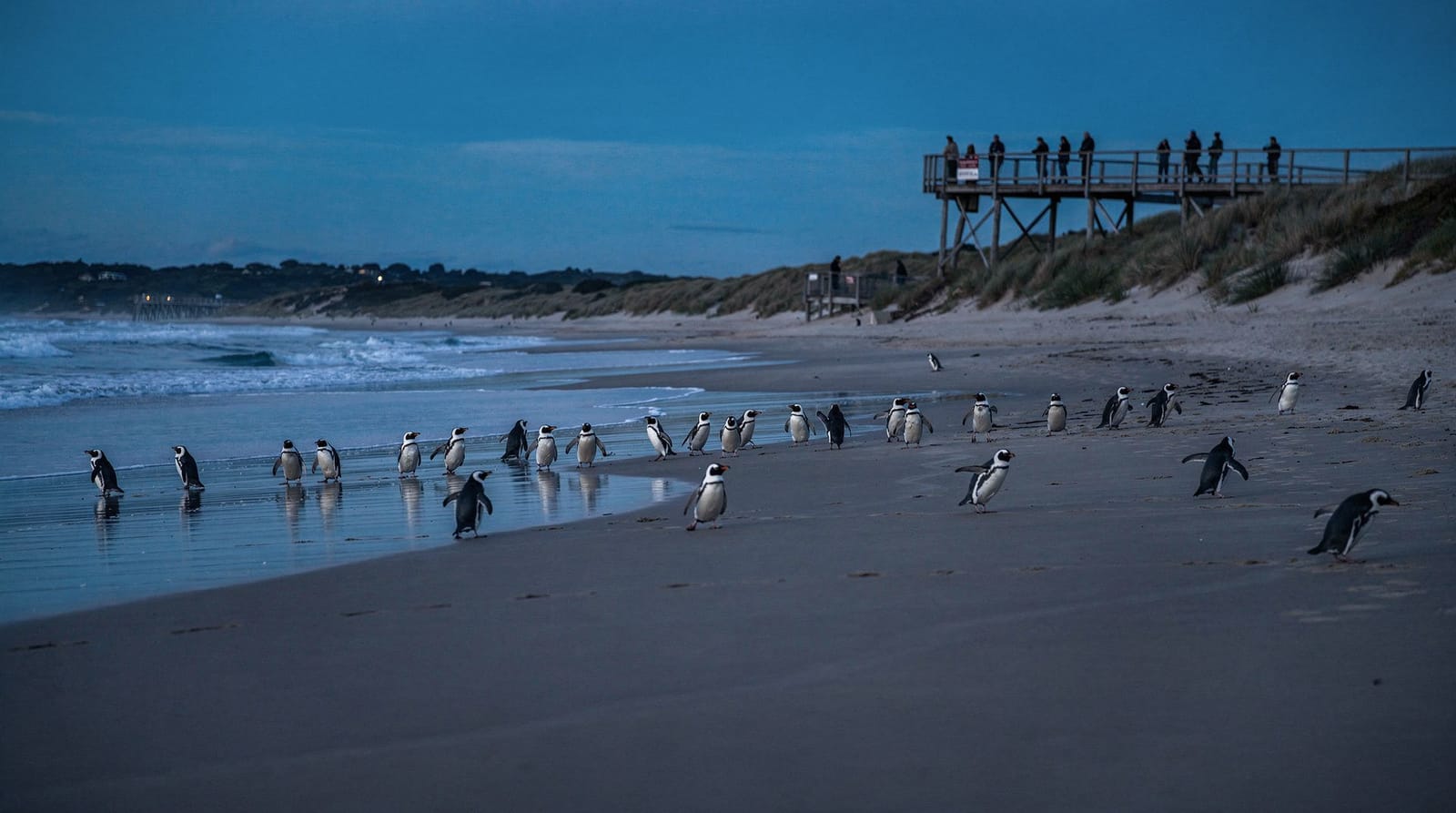
The Penguin Parade is the nightly return of little penguins (the world's smallest penguin species) from the ocean to their burrows at Summerland Beach on Phillip Island, about 140 km and a 1h40-2h drive from Melbourne. It happens every single night of the year at dusk, rain or shine, and general viewing tickets should be booked online in advance — weekend and school-holiday sessions do sell out, especially over summer.
A wild colony, not a wildlife show
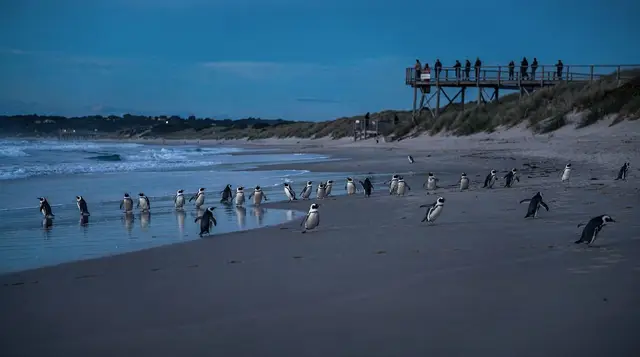
The Penguin Parade at Phillip Island’s Summerland Beach is the nightly return of little penguins — at roughly 30 cm tall and around 1 kg, the smallest penguin species on Earth — from a day spent fishing in Bass Strait back to their burrows in the dunes. It’s easy to mistake this for a staged tourist spectacle given how organised the viewing infrastructure is, but the penguins themselves are entirely wild, unfed and undirected; the only thing managed is where humans are allowed to stand and watch.
| Where | Summerland Beach, Phillip Island, ~140km / 1h40-2h from Melbourne |
| Cost | General Viewing is the cheapest tier; Penguins Plus and Ultimate cost more |
| Time needed | Arrive 45-60 min before dusk; the crossing itself runs 30-60+ min |
| Getting there | Self-drive over the San Remo bridge, or a bundled coach day tour |
| Best time | Every night of the year — no seasonal closure |
That distinction matters for how you should think about the visit: some nights bring hundreds of penguins ashore in a tight raft that crosses the beach together, and other nights bring smaller, more scattered groups — it depends on tides, weather and the season, and nobody, including the rangers, can guarantee numbers on any given evening.
This is genuinely one of Victoria’s best wildlife encounters, and one of the very few places in the world where a colony of wild penguins can be observed this reliably, this close to a major city. It’s also, at 140 km from central Melbourne, a proper excursion rather than a quick stop — plan the logistics as carefully as the ticket choice.
Which ticket should you actually choose?
Phillip Island Nature Parks (the not-for-profit conservation body that manages the reserve) sells several tiers, and the differences are real, not just marketing:
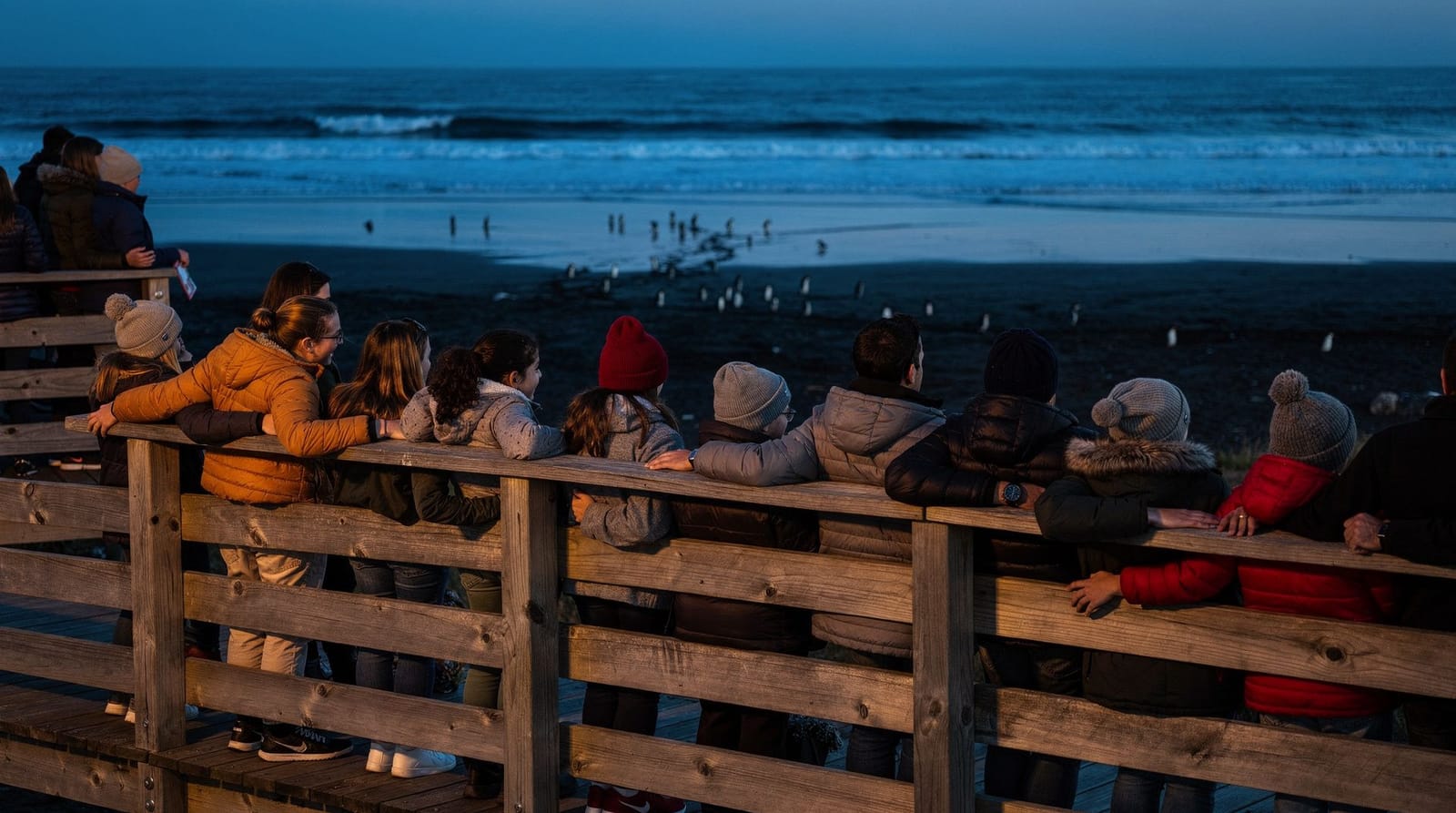
- General Viewing puts you on the main stadium-style concrete and timber stands directly facing Summerland Beach, holding the largest number of visitors. It’s the cheapest ticket and, on most nights, entirely sufficient — you get a clear, unobstructed view of the beach where the penguins cross.
- Penguins Plus upgrades you to a separate, elevated boardwalk viewing area slightly closer to the water’s edge, with noticeably smaller crowds and a ranger talk woven into the visit. If your budget allows it, this is the upgrade most likely to meaningfully improve the experience — less shoulder-to-shoulder crowding, and a marginally more intimate vantage point.
- The Ultimate Adventure Tour is the premium small-group option: a ranger-guided experience with access to a beach-level boardwatch platform that gets you closer to where the penguins actually emerge from the water, capped at a small number of guests per session. It costs meaningfully more but delivers the closest legal vantage point available to the public.
- Underground (occasionally marketed as a below-ground viewing chamber near a real burrow) offers a different angle entirely — watching penguins interact near their burrows at close range from a concealed viewing point, rather than watching the beach crossing itself. It suits visitors who’ve already done a standard viewing and want a different perspective on a return trip, more than it suits first-timers.
For a first visit, book General Viewing tickets and treat any upgrade as a nice-to-have rather than a necessity. If Phillip Island is the single wildlife highlight of the trip and budget allows it, the 3-attractions combo pass bundles the Penguin Parade with the Koala Conservation Centre and the Nobbies boardwalk (fur seal colony viewing) for a genuinely fuller day on the island rather than a single evening event.
comparison, and read the independent review of the standard ticket at Penguin Parade ticket before booking if you want a second opinion.
Getting to Phillip Island from Melbourne
Phillip Island sits about 140 km southeast of Melbourne, connected to the mainland town of San Remo by a single bridge — there is no other road access. Driving takes roughly 1h40 to 2 hours from the CBD via the South Gippsland Highway or the Bass Highway, depending on traffic through Cranbourne and Koo Wee Rup. There’s no train line to the island at all, and while a V/Line coach service technically runs to San Remo and on to Cowes, its schedule isn’t built around evening penguin-viewing times, so relying on it for a same-day Penguin Parade visit is impractical for almost anyone.
For visitors without a car, the realistic choice is a coach day tour from Melbourne that bundles return transport with Penguin Parade entry — the Phillip Island Penguin Parade day tour handles the whole round trip, typically departing central Melbourne mid-afternoon and returning late evening after the parade finishes. For a fuller day that adds other Phillip Island wildlife stops before the evening viewing, the ultimate full-day penguin and eco tour is worth considering.
If you’re driving yourself, note that the return trip means arriving back in Melbourne well after 10-11pm depending on the season’s dusk time — factor that into the following day’s plans, and if driving after a long day, take the fatigue seriously on a highway with plenty of wildlife crossings after dark.
What actually happens on the night
Viewing starts at dusk, and the exact time shifts significantly across the year — as early as around 5:20pm in the depths of winter (June-July) and as late as roughly 8:45pm near the December solstice. The Penguin Parade website publishes the specific time for each date; check it rather than assuming a fixed hour, and plan to arrive at the visitor centre at least 45-60 minutes ahead to park, collect your ticket if needed, walk to the stands and get settled before the first penguins reach the shallows.
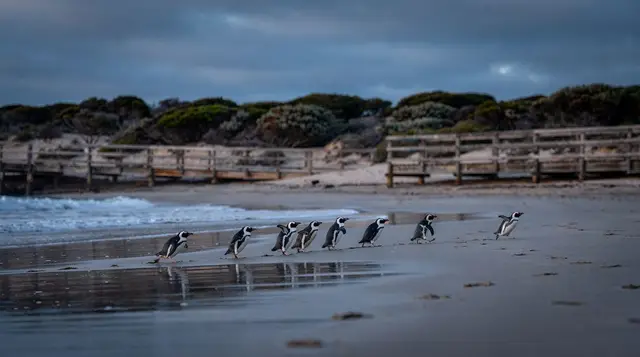
The penguins don’t emerge on a schedule — they gather offshore in “rafts” and wait until enough of them have assembled before crossing the open beach together, since there’s safety in numbers against predators. This means the first arrivals can appear anywhere from a few minutes to nearly an hour after the official start time, and rangers on site provide live commentary explaining the behaviour as it unfolds. Once ashore, the penguins waddle across the sand and up through the dunes to their burrows, often passing remarkably close to (though never onto) the viewing boardwalks that visitors use to reach the main stands after the show.
No photos, no flash, no exceptions
This is the one rule enforced without exception at every ticket tier: no photography, filming or phone use of any kind is permitted once the viewing begins, and rangers actively patrol the stands to enforce it. The reasoning is practical, not precious — even non-flash phone screens produce enough incidental light to disorient penguins crossing open, exposed beach where they’re vulnerable to predators like foxes. There’s no premium ticket that buys an exception to this, and no polite way around a ranger’s request to put a device away. Plan to simply watch — it’s a rare kind of trip experience in an era when almost everything else gets photographed, and most visitors find that limitation adds rather than detracts from the moment.
Weather, warmth and what to bring
The viewing stands sit fully exposed to the sea breeze coming straight off Bass Strait, with no significant windbreak. Even in summer, temperatures drop noticeably once the sun sets, and winter evenings (June-August) can be genuinely cold — commonly 8-12°C at viewing time with a biting wind chill that makes it feel colder still. Bring a proper jacket regardless of the season; a folding umbrella or waterproof layer is worth packing too, since Victorian weather changes with little warning even in the milder months. The visitor centre sells blankets and warm drinks on site, but they’re a backup, not a substitute for dressing properly from the start.
Ethical wildlife viewing at the Parade
The entire viewing infrastructure — the raised boardwalks, the seated stands, the enforced no-flash rule — exists specifically to let large numbers of visitors observe a genuinely wild colony without disturbing its natural behaviour, and it’s run by Phillip Island Nature Parks, a not-for-profit conservation organisation that reinvests ticket revenue into research and habitat protection across the reserve.
That’s a meaningfully different model to venues that stage or feed animals for visitor entertainment, and it’s worth understanding before you visit: the penguins aren’t performing, they’re commuting home from a day’s fishing, and the experience is built around minimising human impact on that routine rather than maximising visitor convenience.
Staying on marked paths, keeping voices low and following ranger instructions immediately isn’t just etiquette — it protects a wild population that’s been monitored continuously since the 1960s.
Combining the Penguin Parade with the rest of Phillip Island
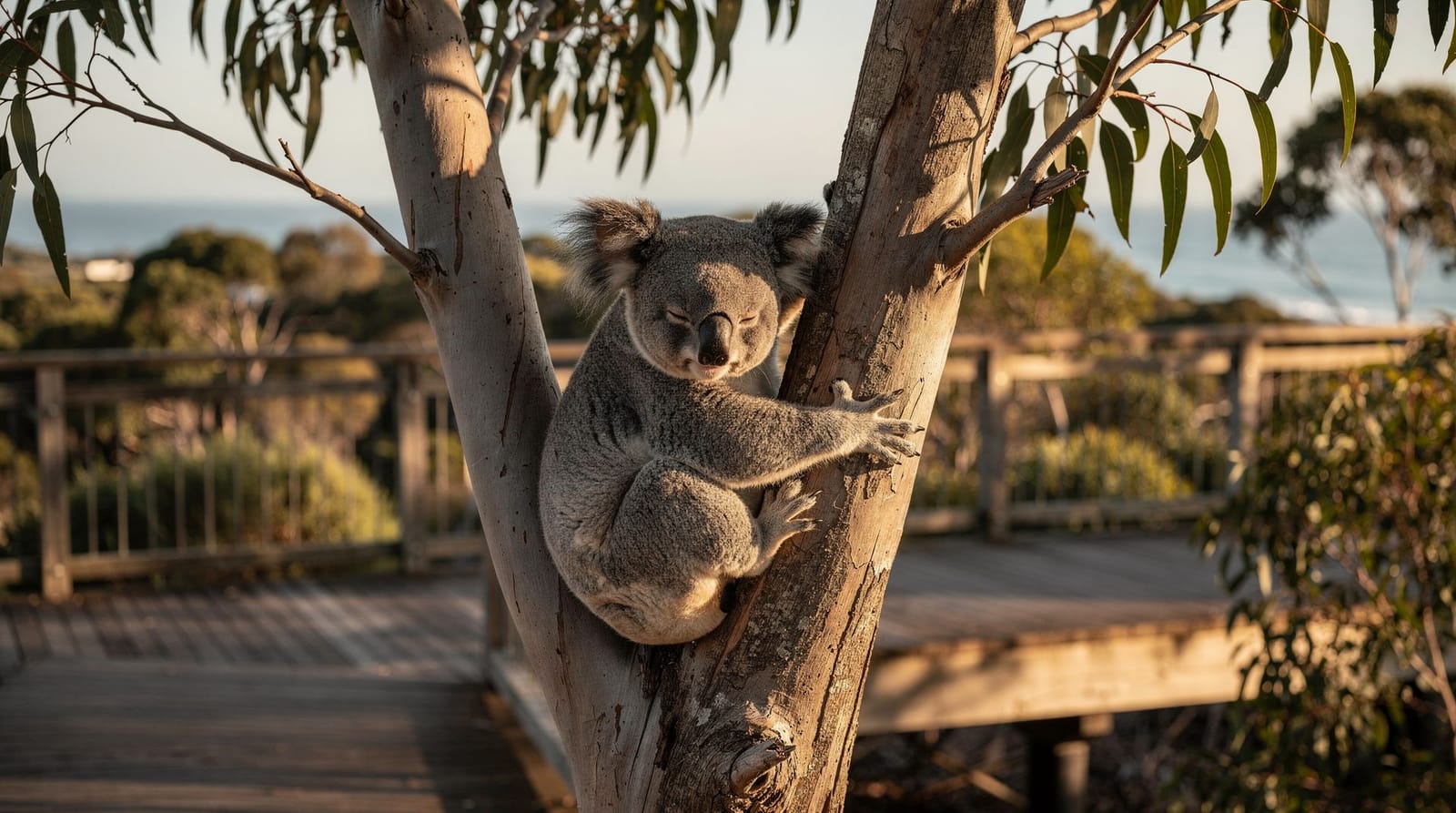
Because the parade only happens at dusk, most of the daylight hours on Phillip Island are free for other wildlife stops. The Koala Conservation Centre has raised boardwalks running directly through gum tree canopy where wild koalas rest at eye level, and it’s a manageable 15-minute drive from the Penguin Parade visitor centre. The Nobbies boardwalk, at the island’s western tip, overlooks Seal Rocks — Australia’s largest fur seal colony — visible year-round from an elevated viewing platform without a boat trip required. For a broader look at everything the island offers beyond the parade itself, see Phillip Island wildlife.
Travellers building a longer regional loop sometimes combine Phillip Island with a Mornington Peninsula stop on the way out or back, given both regions sit broadly southeast of Melbourne, though the direct route to Phillip Island doesn’t pass through central Mornington township. For families weighing up Phillip Island against Victoria’s other wildlife parks, Healesville Sanctuary and Moonlit Sanctuary offer a different, more curated wildlife-park format worth comparing against a wild colony encounter like the Penguin Parade.
Where to stay if you’re not doing a day trip
Cowes, Phillip Island’s main town, has the bulk of accommodation and restaurants and sits about a 15-20 minute drive from the Penguin Parade visitor centre. Staying overnight removes the pressure of a late-night drive back to Melbourne after the parade finishes and opens up a full second day for the island’s other attractions — the Koala Conservation Centre, the Nobbies, and Cape Woolamai’s surf beaches for more experienced surfers. If the Australian Motorcycle Grand Prix is on (typically October), book accommodation on the island well in advance, since the whole island’s capacity fills up around race weekend.
Accessibility at the Penguin Parade
The main General Viewing stands are wheelchair and pram accessible via ramped boardwalks, and accessible parking is available near the visitor centre. The Penguins Plus boardwalk area has some additional steps and a slightly longer walk, so check current accessibility details when booking if mobility is a concern — Phillip Island Nature Parks’ visitor centre staff can advise on the most suitable viewing tier for specific access needs before you commit to a ticket.
Hearing loops and other accessibility aids are available in parts of the visitor centre, and staff can talk through the best route to the stands for visitors with vision impairment ahead of the evening’s viewing session, given the boardwalks and stands are navigated largely in low light once dusk sets in.
A short history of the parade and Phillip Island Nature Parks
Little penguins have nested at Summerland Beach for as long as records exist, but organised public viewing dates back to the 1920s, when locals began gathering informally at dusk to watch the birds cross the sand. What started as an unmanaged, ad hoc local curiosity was gradually formalised through the 20th century as visitor numbers grew, eventually leading to the creation of Phillip Island Nature Parks, the not-for-profit statutory body that has managed the site since.
One of the organisation’s most significant achievements was the Summerland Peninsula buy-back — over several decades, the Victorian government and Nature Parks progressively purchased and removed hundreds of private houses that had been built directly on the penguins’ nesting grounds decades earlier, restoring the dune habitat and substantially growing the colony’s population as a result.
That history is worth knowing because it reframes the current viewing infrastructure: the boardwalks, stands and strict no-flash rules aren’t just visitor-management tools, they’re the tail end of a genuine multi-decade habitat restoration project.
Common misconceptions worth clearing up before you go
A handful of assumptions trip up first-time visitors. The first is thinking the parade is a summer-only event tied to warmer weather — it isn’t, and some of the largest nightly crossings actually happen during the cooler months when fewer visitors are around, since penguin behaviour is governed by tides, moulting cycles and foraging success rather than tourist season. The second is assuming the “Little Penguin” name refers to a juvenile or baby penguin of some other species — little penguins (scientific name Eudyptula minor) are a fully grown adult species in their own right, the smallest of all seventeen penguin species worldwide, and the ones crossing the beach each night are adults, not chicks.
The third is expecting a dramatic, densely packed wildlife spectacle every single night — numbers genuinely vary, and a quieter night with fewer, more spread-out penguins is just as scientifically real and valid an outcome as a night with hundreds crossing in a single raft.
Eating before the parade
Because viewing starts at dusk and most visitors arrive with at least an hour to spare beforehand, deciding where to eat matters more than it might for a daytime attraction. Cowes, the island’s main town, has the widest spread of cafes, pubs and restaurants, roughly 15-20 minutes from the Penguin Parade visitor centre — a sit-down meal there before driving to the parade works well if timed with enough buffer to arrive at the stands ahead of the official start time. The visitor centre itself has a cafe serving simpler meals, snacks and hot drinks, a practical option for anyone who’d rather not factor a Cowes dinner stop into an already tight dusk-driven schedule, particularly in winter when the daylight window closes earlier.
Photography without a camera — what people actually do instead
Given the strict no-photography rule during the viewing itself, many visitors instead spend time photographing the surrounding landscape, the visitor centre architecture and the boardwalk approach before the parade officially begins, when the no-device rule isn’t yet in effect. Some make a point of photographing the Nobbies or Cape Woolamai earlier in the day specifically because they know the evening itself will be phone-free. It’s worth mentally preparing for this shift in advance — many visitors report that the enforced absence of photography, unusual as it feels walking in, ends up being one of the more memorable and unexpectedly calming parts of the whole visit, rather than a restriction they resent by the end of the night.
What the moulting season means for viewing
Between roughly late summer and early autumn, adult little penguins go through an annual moult, spending an extended period ashore replacing their feathers rather than heading out to fish daily. During this window, moulting birds can be seen resting near burrows and around the boardwalks for longer stretches, giving a genuinely different kind of viewing experience from the nightly beach crossing itself. It’s worth knowing this isn’t a sign of illness or distress if you spot a penguin looking a little scruffy and stationary during this period — it’s a completely normal part of the annual cycle.
The Nature Parks conservation levy
A portion of every Penguin Parade ticket funds Phillip Island Nature Parks’ broader conservation work across the reserve, including the long-running Summerland Peninsula habitat restoration, predator control programs that protect the colony from foxes, and ongoing population monitoring that’s been running continuously since the 1960s. Framing the ticket price this way is worth keeping in mind if you’re comparing it against a purely commercial wildlife attraction elsewhere — a meaningful share of what you pay goes directly back into keeping the colony viable long-term rather than into shareholder returns.
Combining with the Nobbies and Koala Conservation Centre in one day
A well-paced Phillip Island day typically starts with the Nobbies boardwalk and Seal Rocks viewing in the late morning or early afternoon, moves to the Koala Conservation Centre in the mid-afternoon when koalas are often visibly active in the lower canopy, and finishes with the Penguin Parade at dusk. This sequencing avoids backtracking across the island and means the day builds toward its headline event rather than feeling like an afterthought tacked onto other stops — the 3-attractions combo pass mentioned earlier is priced specifically around this kind of full-day structure.
Parking and arrival logistics
The Penguin Parade visitor centre has an on-site car park with capacity for the typical nightly crowd, though on peak summer weekends and around the Australian Motorcycle Grand Prix in October, arriving with plenty of buffer before the recommended 45-60 minute window is worth building in further, since parking can fill during exceptionally busy periods. Coach tours typically have designated drop-off arrangements separate from general car parking, one further advantage for visitors without a car who’ve booked a bundled tour rather than self-driving.
Dusk times across the year
| Season | Months | Approximate dusk / start time |
|---|---|---|
| Winter | Jun-Jul | As early as ~5:20pm |
| Spring | Sep-Nov | Gradually later through the season |
| Summer | Dec-Feb | As late as ~8:45pm around the solstice |
| Autumn | Mar-May | Gradually earlier through the season |
Always check the exact published time for your date rather than relying on these approximations — the Penguin Parade website and your ticket confirmation both list the specific dusk time for the night you’re visiting.
What if it rains?
The Penguin Parade runs rain or shine, with no cancellations for weather short of genuinely dangerous conditions — the penguins come ashore regardless, and the viewing stands, while exposed to wind, offer some shelter from direct rain under covered sections. Pack a waterproof layer rather than just an umbrella, since umbrellas can obstruct other visitors’ views on crowded stands and aren’t always practical in the wind common to this exposed stretch of coast.
Ranger talks and the live commentary
Rangers provide live commentary throughout the viewing session at every ticket tier, explaining penguin behaviour as it happens rather than delivering a fixed, scripted talk — useful context if you’re visiting for the first time and want to understand what you’re actually watching beyond “penguins crossing a beach.” Penguins Plus and the Ultimate Adventure Tour include a more focused ranger talk as part of the smaller-group format, but General Viewing visitors still get running commentary over the stands’ speaker system.
Booking timeline: how far ahead to book
Weekend and school-holiday sessions, particularly through the December-February summer season, can sell out weeks ahead for the higher ticket tiers and days ahead even for General Viewing. Booking as soon as your Phillip Island date is fixed is the safest approach; a same-week or same-day booking is realistic for a weekday visit outside peak season, but a riskier bet for a Friday or Saturday night in summer.
Book General Viewing tickets aheadA realistic, honest verdict
For a first Victoria trip, the Penguin Parade earns its reputation — it’s one of the few wildlife encounters anywhere that lets large numbers of visitors watch a genuinely wild species going about an unstaged daily routine, at a scale and reliability that few other places on Earth can match. The honest caveats: it’s a long round trip from Melbourne if you’re not staying overnight, numbers ashore vary night to night in ways nobody can predict, and the standard viewing stands can feel crowded on peak summer evenings. None of that changes the basic recommendation — book ahead, dress warmer than you think you need to, and treat it as a proper half-day-to-evening excursion rather than a quick stop bolted onto something else.
More tours on Viator
Top-rated experiences with verified reviews, bookable on Viator (a Tripadvisor company).


Frequently asked questions about The Penguin Parade
What time does the Penguin Parade start?
Viewing starts at dusk, which shifts through the year — as early as 5:20pm in the depths of winter (June-July) and as late as 8:45pm around the summer solstice (December). The Penguin Parade website and ticket confirmation publish the exact nightly start time; arrive at least 45-60 minutes before that time to park, walk to the viewing stands and settle in before the penguins start emerging.Which Penguin Parade ticket should I choose — general, Penguins Plus or Ultimate?
General Viewing puts you on the main outdoor stadium-style stands facing Summerland Beach — perfectly good and the cheapest option. Penguins Plus adds an elevated boardwalk viewing platform slightly closer to the water with a smaller crowd and a ranger talk. The Ultimate Adventure Tour (small groups, ranger-led, closer beach-level boardwalk access) is the premium tier. For most visitors, General Viewing is genuinely enough; Penguins Plus is worth the upgrade if you want fewer people around you and a better sense of the colony's scale.Can I take photos or use my phone during the Penguin Parade?
No cameras, phones or any photography or filming is permitted anywhere in the viewing area once the penguins start coming ashore — this is strictly enforced by rangers, not a casual suggestion. Flash and even phone screen light disorient the penguins as they cross open beach where they're vulnerable to predators, so devices must stay in pockets or bags. There's no way to buy your way around this rule at any ticket tier.How do I get to Phillip Island without a car?
There's no train or public bus to Phillip Island from Melbourne, so without a car your realistic options are a coach day tour departing central Melbourne (round trip with the Penguin Parade included) or a private transfer. Public transport that gets you to San Remo exists in theory (V/Line coach to Cowes) but it isn't built around evening penguin-viewing timing, so almost every visitor without a car books a tour that bundles transport and entry together.Is the Penguin Parade worth it, or is it overhyped?
For most first-time visitors to Victoria, yes — watching a colony of genuinely wild, un-staged little penguins cross open beach at dusk, in numbers that can run into the hundreds on a good night, is a distinctive experience that doesn't exist in many other places in the world. The honest caveat: numbers vary night to night (weather, tide and season all affect how many come ashore at once), and the general viewing stands can feel crowded on peak summer nights — Penguins Plus meaningfully improves that experience if it's within budget.Do the penguins come ashore every night, or only in summer?
Every single night of the year, without exception — this genuinely isn't a seasonal migration event like whale watching further along the coast. Numbers do fluctuate with the seasons and weather (moulting penguins stay ashore longer during their annual moult in late summer/autumn, for instance), but there is no month when the parade simply doesn't happen.How cold does it get watching the Penguin Parade?
The viewing stands are fully exposed to the sea breeze off Bass Strait, and even summer evenings cool down noticeably once the sun drops — winter nights (June-August) can be genuinely cold, often 8-12°C with wind chill. Bring a proper jacket regardless of season; the venue sells blankets, but a warm layer from home is more reliable and cheaper.Should I book the general viewing ticket or a day tour from Melbourne?
If you already have a car and are comfortable with a long round-trip drive (roughly 4-4.5 hours total driving on top of the visit), booking general or Penguins Plus tickets directly is cheaper and more flexible. If you don't have a car, want the Great Ocean Road-style convenience of someone else driving, or want to combine it with Melbourne wildlife stops like koalas at the Koala Conservation Centre, a bundled day tour from Melbourne makes more practical sense despite the higher combined cost.
Top experiences
Bookable activities with verified prices and instant confirmation on GetYourGuide.
Gippsland: Penguin parade general viewing ticket
Phillip Island: Phillip island penguin parade 3 attractions combo pass
Melbourne: Depuis melbourne excursion a phillip island et defile des manchots
Melbourne: Phillip island ultimate full day tour from melbourne
Melbourne: Phillip island penguin parade afternoon wildlife tour