Phillip Island wildlife: penguins, koalas and fur seals in one trip
Melbourne: Phillip island penguins and wildlife full day tour
What wildlife can you see on Phillip Island besides the Penguin Parade?
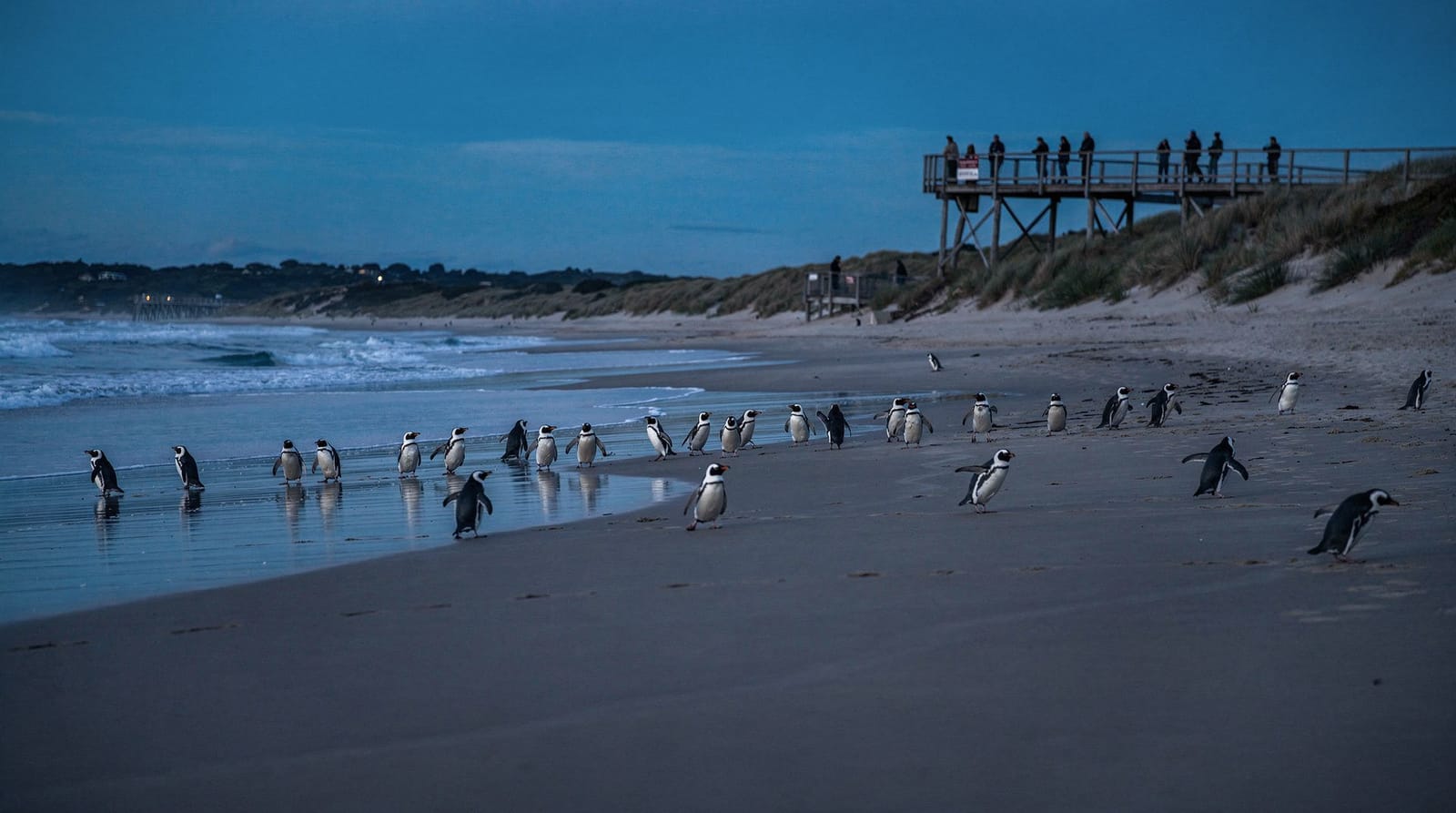
Phillip Island's Koala Conservation Centre has raised boardwalks through gum tree canopy where wild koalas rest at close range, and the Nobbies boardwalk overlooks Seal Rocks, home to Australia's largest Australian fur seal colony (up to around 20,000 animals in peak season), visible without a boat. Both are daytime attractions, which is what makes Phillip Island work as a full-day wildlife trip built around the evening Penguin Parade.
More than a one-species island
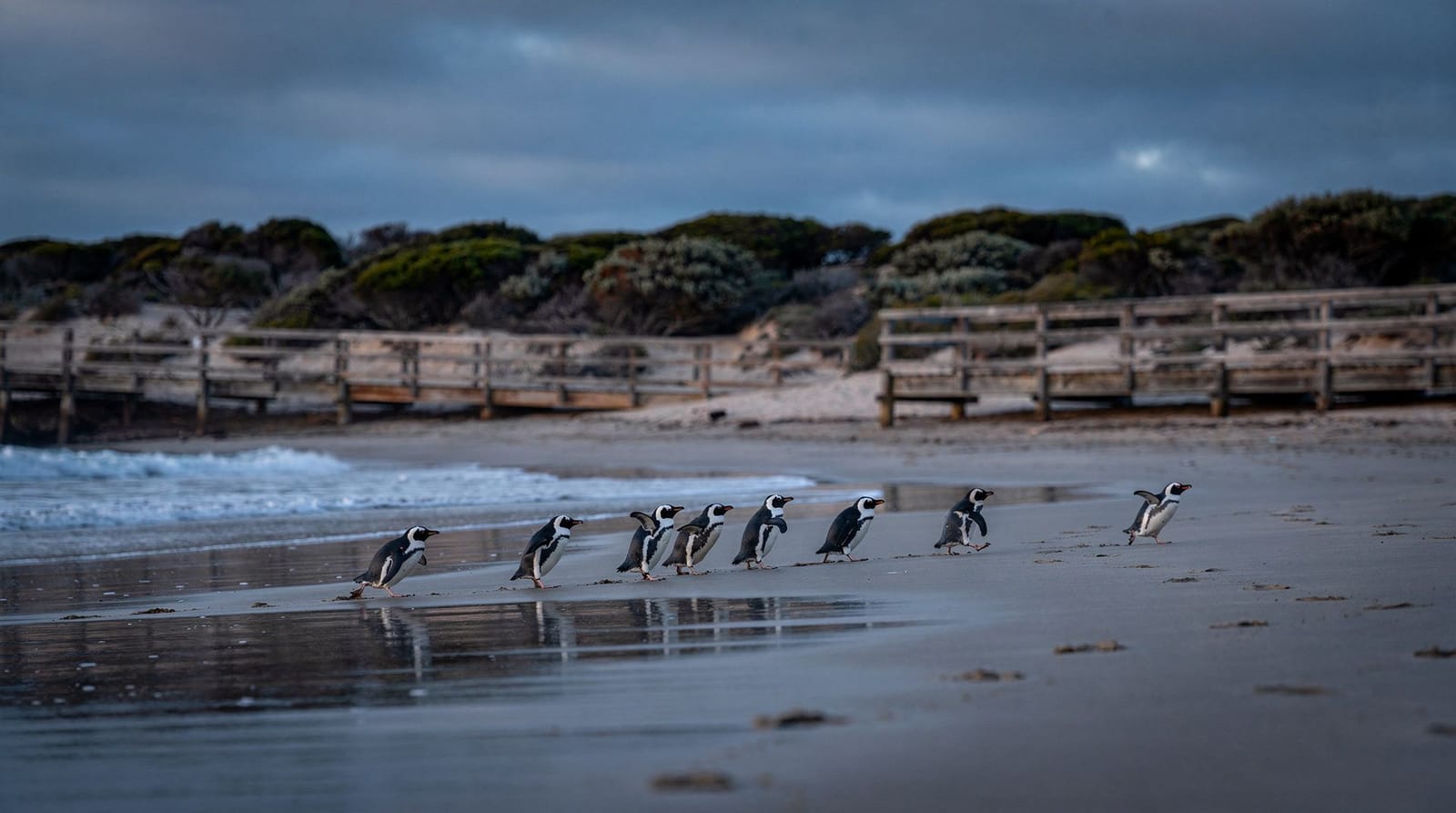
Most visitors book Phillip Island for a single evening event, the Penguin Parade, and never realise the island packs two more genuinely worthwhile wildlife encounters into the same daylight hours — wild koalas at eye level and one of the world’s largest fur seal colonies, both free of a fenced-zoo feel and both run by the same conservation body that manages the penguins. Structured properly, a single day on Phillip Island can cover all three without feeling rushed, which is the honest reason it’s worth building a full day around rather than treating as a quick evening detour from Melbourne.
| Where | Phillip Island — Koala Conservation Centre, the Nobbies, Summerland Beach |
| Cost | Combo pass cheaper than three separate tickets; Nobbies boardwalk is free |
| Time needed | Full day: late morning arrival through to the evening parade |
| Getting there | Self-drive or a bundled full-day wildlife tour from Melbourne |
| Best time | Spring for shearwaters plus comfortable crowds; any season for koalas/seals |
The Koala Conservation Centre
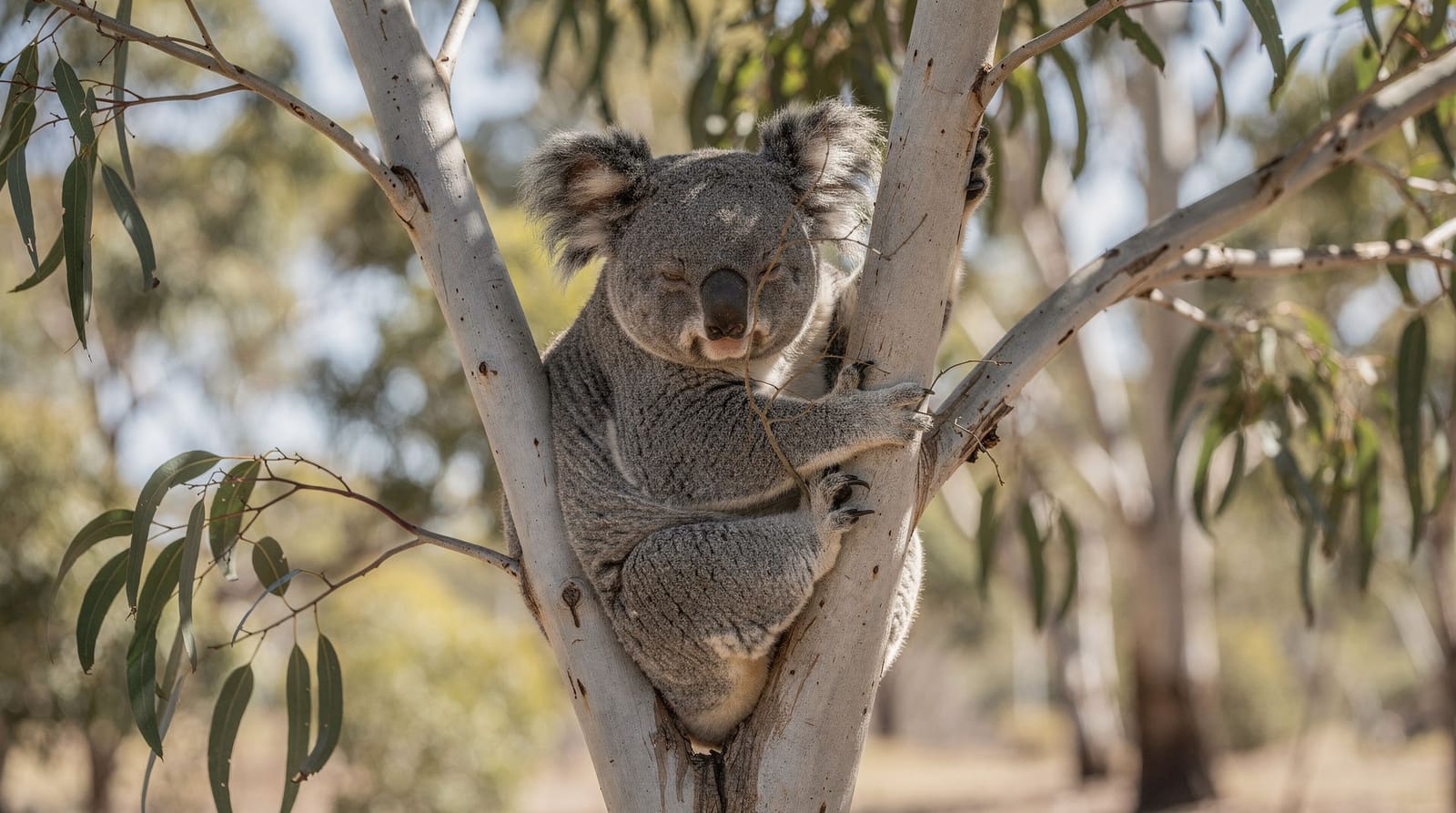
Set in a patch of manna gum and swamp gum woodland a short drive from Cowes, the Koala Conservation Centre uses elevated timber boardwalks that lift visitors up into the tree canopy itself, putting wild koalas at genuine eye level rather than requiring a neck-craning look upward into distant branches. These are wild, free-ranging koalas living in a protected reserve, not animals kept in a fenced zoo enclosure — the boardwalk design exists specifically so visitors can observe them without disturbing their rest, since koalas famously spend 18-20 hours a day sleeping or resting to conserve energy from their low-calorie eucalyptus diet.
Because of that sleep pattern, timing matters: koalas are most likely to be active, feeding or moving between branches in the early morning or late afternoon, while midday visits often mean watching a curled-up, sleeping animal — still worth seeing, but a different experience. Ground-level walking trails supplement the boardwalks for those who want a longer bushland walk, and the reserve is compact enough to properly explore in 45 minutes to an hour.
Seal Rocks and the Nobbies boardwalk
At the island’s western tip, the free, self-guided Nobbies boardwalk winds along dramatic coastal cliffs overlooking Seal Rocks, two small rocky islets a short distance offshore that host Australia’s largest colony of Australian fur seals — numbers swell to around 20,000 animals during peak breeding season in summer. No boat trip is needed; the colony is visible from the boardwalk’s elevated viewing points with the naked eye, though bringing binoculars sharpens the view considerably given the distance involved. The seals’ distinctive, pungent smell often reaches the boardwalk on an onshore breeze before the colony itself comes into view — a genuinely wild-feeling giveaway that this isn’t a curated wildlife park experience.
The Nobbies visitor centre also has an interpretive display on the area’s marine ecosystem and short-tailed shearwater seabirds (also known as muttonbirds), which nest in burrows across the headland and return in enormous numbers at dusk during their breeding season, September to April — a lesser-known wildlife spectacle that overlaps neatly with an evening visit before heading to the Penguin Parade.
Combining all three in one visit
Because the koalas and seals are daytime sights and the parade is strictly a dusk event, the standard, efficient structure for a Phillip Island wildlife day looks like: Nobbies and Seal Rocks late morning or early afternoon, Koala Conservation Centre mid-to-late afternoon (timed for higher koala activity), then the Penguin Parade at dusk. This order minimises backtracking, since the Nobbies sits furthest west on the island, the Koala Conservation Centre is more central, and the Penguin Parade visitor centre at Summerland Beach is the natural final stop before the drive home.
For visitors without a car, the Phillip Island penguins and wildlife full-day tour is built specifically around this itinerary, bundling transport and entry to all three sites into one booking. The 3-attractions combo pass is the better option for self-drivers who just want combined ticketing without the guided tour structure, and covers the Penguin Parade, Koala Conservation Centre and the Nobbies at a lower combined price than three separate tickets.
For an even more comprehensive day including additional beach stops, the ultimate full-day penguin eco tour is worth considering.
Ethical framing — why Phillip Island’s model is different
Phillip Island Nature Parks, the not-for-profit conservation organisation that manages the Penguin Parade, Koala Conservation Centre and the Nobbies, funds ongoing wildlife research, habitat restoration and predator control across the reserve directly from ticket revenue. That’s a materially different model to venues built around staged encounters, animal performances or hands-on photo opportunities — there’s no touching koalas here, no feeding seals, and strict no-flash, stay-on-boardwalk rules apply across all three sites.
Understanding this before visiting reframes the trip usefully: you’re observing wild populations going about ordinary behaviour in a managed reserve, not attending a wildlife show, and the slower pace and occasional “nothing much is happening right now” moments are part of that honesty rather than a shortcoming.
Cape Woolamai and the island’s other nature
Beyond the three headline wildlife sites, Cape Woolamai at the island’s eastern end is a granite headland popular with experienced surfers and home to Victoria’s largest short-tailed shearwater colony, with walking trails around the point offering coastal views without any entry fee. It’s a worthwhile add-on for visitors with an extra half-day and an interest in the island’s broader coastal ecology beyond the three main managed reserves.
Weather and what to pack
Phillip Island sits fully exposed to Bass Strait, and conditions can shift quickly regardless of season — a warm, still morning at the Koala Conservation Centre can give way to a genuinely cold, windy evening at the Penguin Parade. Layer clothing, bring a windproof jacket even in summer, and check the forecast the morning of your visit rather than relying on what Melbourne’s weather is doing, since coastal conditions on the island frequently diverge from the mainland forecast.
Where to base yourself
Cowes remains the practical base for a wildlife-focused Phillip Island visit, sitting roughly central to all three main sites and holding the bulk of the island’s accommodation and dining options. Staying overnight (rather than a single long day trip from Melbourne) removes the pressure of the late drive home after the parade and allows a more relaxed pace across the koala and seal viewing during the day. For the full logistics on getting to the island itself, see the dedicated Penguin Parade guide, and for the honest breakdown of ticket tiers specifically for the parade, Penguin Parade: which ticket?.
Comparing Phillip Island with Victoria’s other wildlife parks
For travellers weighing up how much wildlife time to allocate across a Victoria itinerary, Phillip Island’s wild-colony format (genuinely free-ranging animals in a natural setting) contrasts with the more curated wildlife-park experience at Healesville Sanctuary or Moonlit Sanctuary, both of which hold native species in purpose-built enclosures with closer guaranteed sightings. Neither format is objectively better — Phillip Island trades guaranteed close-up views for genuine wildness, while the sanctuaries trade some of that wildness for near-certain sightings of harder-to-spot species like platypus.
Many first-time Victoria visitors do both across a longer trip, since they answer slightly different questions about what “seeing Australian wildlife” means.
For a similarly hands-on kangaroo-feeding format nearer to Phillip Island’s own driving route, Maru Wildlife Park near Grantville makes a reasonable driving-break stop on the way to or from the island, though it isn’t a substitute for the koala, seal or penguin experiences that Phillip Island itself offers.
If koalas specifically are the priority, koala spotting in Victoria compares all the realistic options side by side, and if kangaroos are the goal, see kangaroo spotting for where sightings are most reliable across the state.
Where this guide fits in your planning
This page is about the animals themselves. For the wider picture of the island, the Phillip Island destination guide covers the place beyond its wildlife, and Cowes is the town most visitors use as their base. If you are still deciding whether to go for a single long day or stay overnight, the Phillip Island day trip guide lays out how the journey from Melbourne works in practice, while the wildlife and nature itinerary shows how the island can sit alongside other animal encounters in Victoria.
Treat the three headline sites as one connected day rather than separate errands. Each one answers a different question: the koalas show you a quiet, close-up encounter, the seals show you a raw and noisy colony, and the parade ends the day with something choreographed by nature at dusk.
What to skip if you’re pressed for time
If a full day genuinely isn’t possible, the honest priority order is the Penguin Parade first (it’s the once-a-day, dusk-only event with no flexibility), the Koala Conservation Centre second (a reliably good, close-up wildlife encounter in a compact space), and the Nobbies third (still worthwhile, but the most flexible to drop if time runs short, since Seal Rocks can occasionally be viewed at a distance from parts of Cowes’ coastline on a clear day, unlike the koalas or the penguins). This isn’t a recommendation to skip the Nobbies casually — it’s simply the most defensible trade-off if your day genuinely can’t stretch to all three.
Binoculars and other gear worth bringing
A decent pair of binoculars meaningfully improves the Nobbies experience specifically, given Seal Rocks sits a real distance offshore — phone cameras alone struggle to capture much detail at that range even before accounting for the no-photography rule at the parade itself. Sturdy, closed shoes suit the boardwalks and any of the ground trails better than sandals, particularly at the Koala Conservation Centre where some ground-level trails supplement the main boardwalk. Sunscreen and a hat matter even on a mild-looking day, since the island’s exposed headlands offer little shade across long stretches of the Nobbies walk.
San Remo and the bridge crossing
The single road bridge connecting San Remo on the mainland to Phillip Island is itself a minor wildlife-viewing spot worth knowing about — pelicans regularly gather at San Remo’s waterfront, and a local pelican feeding has run informally for decades near the jetty, worth a short stop for visitors arriving early in the day before the main wildlife sites open. It’s a low-key, free addition to the day that many self-drivers miss entirely simply because they’re focused on reaching the island itself rather than pausing on the mainland side of the bridge.
Rangers, research and what your ticket actually funds
Because Phillip Island Nature Parks is a not-for-profit statutory authority rather than a private commercial operator, ticket revenue across all three main sites funds an active, ongoing research program that extends well beyond what visitors see on a single visit — long-term penguin population monitoring (tracking individual birds via microchips and nest-box surveys), fox and other introduced-predator control across the reserve, and habitat restoration work tied to the historic Summerland Peninsula buy-back.
Rangers on site, particularly those delivering commentary during the Penguin Parade and at the Koala Conservation Centre, are typically drawing on this research directly rather than reciting generic wildlife facts, which is part of why the commentary at Phillip Island’s sites tends to feel more substantive than at more purely commercial wildlife attractions.
Visitors with a genuine interest in the research side can sometimes find seasonal talks or displays at the visitor centres that go into more depth than the standard walkthrough commentary, worth asking about at the entrance desk if the science behind the conservation work is a particular interest rather than a passing curiosity.
Traveling with older relatives or limited mobility
Families or groups travelling with older relatives or anyone with limited walking stamina should note that while the Penguin Parade’s General Viewing stands and the Koala Conservation Centre’s main boardwalk are both accessible via ramps, a full day covering all three sites plus the walk from car parks involves a genuinely significant amount of standing and walking across the day. Spacing the sites out with seated breaks at the visitor centre cafes, or choosing to prioritise just two of the three sites rather than attempting all three in one day, is worth considering for anyone in the group who tires more easily on longer outings.
The Nobbies boardwalk in particular is longer and more exposed to wind than the Koala Conservation Centre’s, so anyone with limited stamina or wind sensitivity may prefer visiting it earlier in the day when conditions tend to be calmer, saving energy for the koala centre and the evening parade later on.
A full-day itinerary, hour by hour
A realistic self-drive day looks roughly like: depart Melbourne by 9-9:30am for the roughly 1h40-2h drive, arrive Phillip Island by late morning and start at the Nobbies (allow 60-90 minutes including the walk and interpretive centre), lunch in Cowes early afternoon, Koala Conservation Centre from mid-afternoon (60-90 minutes), a short break before dusk, then the Penguin Parade itself (allow at least 90 minutes from arrival at the visitor centre through to the end of viewing).
Driving back to Melbourne afterward typically means arriving home between 10pm and midnight depending on the season’s dusk time — an overnight stay on the island removes that fatigue factor entirely and is worth the extra cost for anyone who can build it into their itinerary.
Short-tailed shearwaters — the island’s third wildlife spectacle
Beyond penguins, koalas and fur seals, Phillip Island hosts a fourth, less-publicised wildlife event that overlaps neatly with an evening visit: the return of short-tailed shearwaters (commonly called muttonbirds) to their burrows across the Nobbies headland and Cape Woolamai. These migratory seabirds travel extraordinary distances each year, spending the non-breeding season as far away as the northern Pacific before returning to Phillip Island between September and April to breed.
At dusk during this window, thousands of shearwaters can be seen circling and diving toward their burrows in a spectacle that, while less structured and less visitor-oriented than the Penguin Parade, rewards anyone who happens to be at the Nobbies or Cape Woolamai around the same twilight hour.
It’s a genuine bonus for visitors already on the island for the parade during the shearwater breeding season, rather than something worth planning a separate trip around.
Unlike the Penguin Parade, there’s no formal viewing infrastructure or ranger commentary built specifically around the shearwater return, so it rewards visitors who happen to be in the right place — the Nobbies boardwalk or Cape Woolamai’s headland — at the right twilight moment, rather than something you can book or guarantee timing for in the same way as the penguins.
A brief history of conservation on the island
Phillip Island’s wildlife tourism has a longer and more complicated history than the polished current visitor experience suggests. Early 20th-century tourism on the island included practices that would be considered unacceptable by today’s welfare standards, and Summerland Beach itself was, for decades, the site of a housing estate built directly across the penguins’ primary nesting dunes. From the 1980s onward, the Victorian government and what became Phillip Island Nature Parks progressively bought back and removed hundreds of these houses, restoring the dune ecosystem and allowing the penguin colony to recover and expand substantially.
That same conservation-first philosophy now extends across all of the island’s managed wildlife sites — the Koala Conservation Centre and the Nobbies both operate under similar not-for-profit, research-funded principles, a genuinely different model to attractions built primarily for entertainment value.
What each site costs and how the combo pricing works
General admission to the Penguin Parade alone covers only the parade; the Koala Conservation Centre and the Nobbies both have their own separate entry arrangements (the Nobbies boardwalk itself is free, while the Koala Conservation Centre charges a modest standalone admission). The 3-attractions combo pass bundles all three under one ticket at a meaningfully lower combined price than paying for each separately, and it remains valid for a single day, making it the natural choice for anyone planning to see all three sites in one visit rather than spreading them across separate trips.
Because the Nobbies is free regardless of which ticket you hold for the other sites, there’s no reason to skip it purely on cost grounds — it’s the one part of a full wildlife day that costs nothing beyond the drive and the walk itself.
Wet weather on Phillip Island
Because two of the three main wildlife sites — the Nobbies boardwalk and the Koala Conservation Centre’s outdoor trails — are entirely outdoors, and the Penguin Parade stands are open-air by design, a genuinely wet day changes the practical experience more than it does at an indoor attraction. Rain doesn’t cancel any of the three sites (the penguins come ashore regardless of weather, rain included), but a waterproof jacket rather than just an umbrella is worth packing, since umbrellas are impractical on the exposed boardwalks and are not permitted in the immediate Penguin Parade viewing area regardless, since they can obstruct other visitors’ sightlines in the stands.
Wildlife photography opportunities outside the parade
Because photography is banned only during the Penguin Parade itself, the Nobbies boardwalk and the Koala Conservation Centre are both genuinely good, permitted photography locations — the elevated boardwalk through the tree canopy at the koala centre in particular gives an unusually close, well-lit vantage point for photographing wild koalas that’s difficult to replicate elsewhere in Victoria. Visitors with a specific interest in wildlife photography often prioritise arriving with good natural light for these two sites earlier in the day, saving the phone-free parade purely for the experience itself rather than trying to capture it.
Bookings and timing
The Penguin Parade and combo tickets should be booked online in advance, particularly for weekends, school holidays and the peak summer season (December-February), when sessions can sell out. The Koala Conservation Centre and Nobbies don’t require advance timed-entry booking in the same way, though the combo pass covering all three is worth purchasing ahead regardless, since it locks in the lower bundled price and removes one logistics step from an already full day.
Seasonal differences across a Phillip Island wildlife day
Each season changes the character of a Phillip Island wildlife visit in different ways. Summer (December-February) brings the longest daylight hours, meaning a later dusk and more time for the koala and seal sites beforehand, but also the island’s busiest crowds and warmest, sometimes uncomfortably hot, midday conditions for the outdoor boardwalks. Autumn (March-May) offers milder walking conditions and thinning crowds after the summer peak. Winter (June-August) brings the earliest dusk of the year, meaning less daylight to fit in the koala centre and Nobbies before the parade, but also the quietest crowds and, for many repeat visitors, some of the more dramatic coastal weather at the Nobbies lookout.
Spring (September-November) overlaps with the shearwater breeding season beginning and generally comfortable walking conditions across all three sites, making it a strong all-round choice for a first visit without the summer crowds.
Seasonal snapshot
| Season | Months | What stands out |
|---|---|---|
| Summer | Dec-Feb | Longest daylight, biggest crowds, peak seal numbers |
| Autumn | Mar-May | Milder conditions, thinning crowds |
| Winter | Jun-Aug | Earliest dusk, quietest crowds, dramatic Nobbies weather |
| Spring | Sep-Nov | Shearwaters returning, comfortable walking conditions |
More tours on Viator
Top-rated experiences with verified reviews, bookable on Viator (a Tripadvisor company).


Frequently asked questions about Phillip Island wildlife
Can I see koalas and the Penguin Parade in one day on Phillip Island?
Yes, and it's the standard way most visitors structure a Phillip Island day — the Koala Conservation Centre and the Nobbies fur seal viewing are both daytime attractions, roughly 15-20 minutes' drive from each other and from the Penguin Parade visitor centre, leaving the evening free for the parade itself.Are the koalas at the Koala Conservation Centre wild or captive?
They're genuinely wild koalas living in a protected reserve of manna gum woodland, not a zoo enclosure — the raised boardwalks simply let visitors walk through the tree canopy at the koalas' own resting height without disturbing them, rather than koalas being kept in a fenced display.How do I see the fur seals at the Nobbies?
The Nobbies boardwalk, at the western tip of Phillip Island, is a free, self-guided elevated walkway overlooking Seal Rocks offshore, where Australia's largest colony of Australian fur seals hauls out year-round. No boat trip is required — binoculars help, since the rocks sit a reasonable distance offshore, but the colony (and its distinctive smell on the wind) is visible to the naked eye.Is Phillip Island wildlife viewing ethical?
Phillip Island Nature Parks, the not-for-profit body managing the Penguin Parade, Koala Conservation Centre and the Nobbies, runs all three as conservation-first sites with strict no-touch, no-flash and stay-on-boardwalk rules, and reinvests ticket revenue into ongoing research and habitat protection — a meaningfully different model to venues built around staged animal encounters.What's the best order to visit Phillip Island's wildlife sites in one day?
Most visitors do the Nobbies and Seal Rocks in the late morning or early afternoon (best light and typically calmer conditions), the Koala Conservation Centre in the afternoon, and finish with the Penguin Parade at dusk — this order avoids backtracking, since the Nobbies sits furthest west, the Koala Conservation Centre is more central, and the Penguin Parade visitor centre is the natural last stop before heading home.Do I need a car to see all of Phillip Island's wildlife sites?
Public transport between the sites is impractical for a single-day visit, so almost every visitor either drives themselves or books a bundled day tour. The combo tickets and full-day eco tours from Melbourne are built specifically around covering all three sites (penguins, koalas, seals) in one visit without needing to self-drive between them.
Top experiences
Bookable activities with verified prices and instant confirmation on GetYourGuide.
Phillip Island: Phillip island penguin parade 3 attractions combo pass
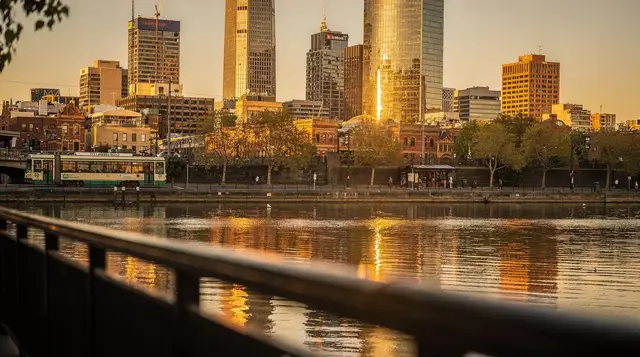
Melbourne: Phillip island penguins and wildlife full day tour
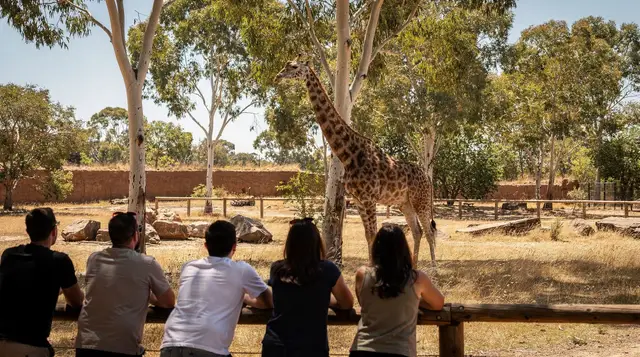
Melbourne: Phillip island penguins and wildlife
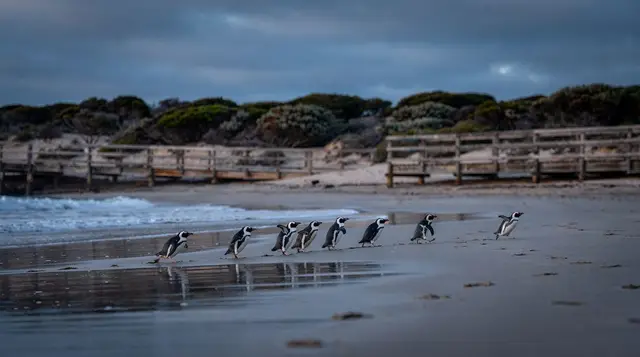
Melbourne: Phillip island ultimate full day tour from melbourne
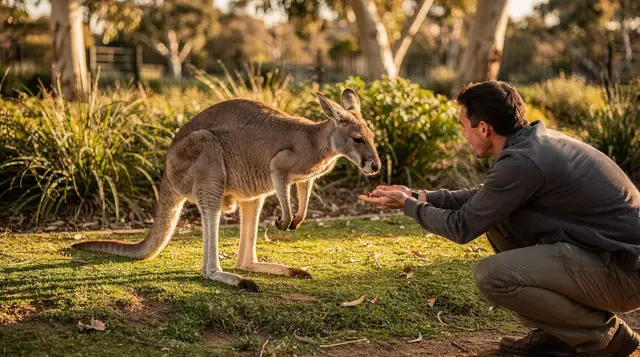
Melbourne: Phillip island private tour with penguin parade