St Kilda neighborhood guide: beach, penguins and nightlife
Melbourne: From melbourne private st kilda tour with penguin viewing
Is St Kilda a good place to stay in Melbourne?
Yes, especially for beach access, family-friendly attractions like Luna Park, and a livelier nightlife scene than the CBD — it's roughly 20-25 minutes from the city centre by tram, close enough to combine easily with CBD sightseeing while offering a genuinely different, more relaxed daytime pace.
Melbourne’s bayside answer
St Kilda sits on Port Phillip Bay roughly 6km south of the CBD, and it’s Melbourne’s clearest answer to “does this city have a beach scene” — a genuine, patrolled bay beach, a heritage amusement park, a lively bar and live-music strip, and a small but reliable wild penguin colony, all within a single walkable neighbourhood a short tram ride from the city centre. It carries a slightly rougher, more lived-in character than some of Melbourne’s more polished inner suburbs, a reputation locals generally embrace as part of St Kilda’s identity rather than something to smooth over.
| Where | Port Phillip Bay, ~6km south of the CBD |
| Vibe | Beach, heritage amusement park, nightlife, penguins |
| Getting there | 20-25 min tram from the CBD, ~15 min by car off-peak |
| Good for | Beach days, families, evening nightlife |
| Best time | Dusk for penguins; summer for swimming, winter for quiet |
The foreshore and beach
St Kilda’s beach curves along the bay from the pier down past the Esplanade, a genuine swimming beach (patrolled during the warmer months) that’s calmer and more family-friendly than Victoria’s surf coast further afield, given its sheltered bay position rather than open ocean exposure. Summer weekends bring out heavy local crowds — sunbathers, swimmers, volleyball games along the sand — while winter leaves the foreshore quieter but still a pleasant walking route, particularly at sunset, when the bay and distant CBD skyline catch the light.
The pier and its penguin colony
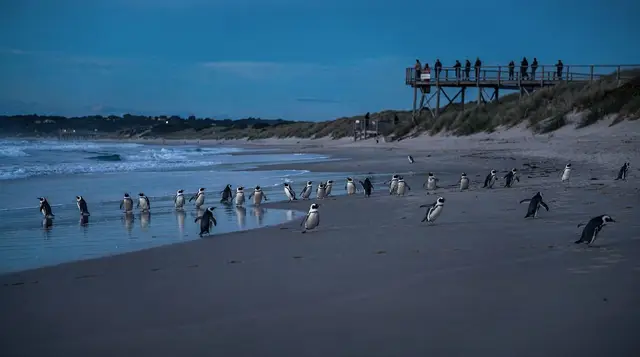
St Kilda Pier’s most surprising feature for visitors is a small, wild colony of little penguins living among the rock breakwater near the pier’s end, having established themselves there decades ago and remained despite the pier’s constant foot traffic. They’re visible most reliably around dusk, when the birds return from a day’s fishing, and viewing is free from the public breakwater path — though respectful, quiet observation without flash photography matters for a colony that’s chosen to live this close to a busy tourist walkway despite the disturbance that implies.
 From melbourne private st kilda tour with penguin viewingCheck availability
It’s a genuinely different, more low-key wildlife experience than Phillip Island’s Penguin Parade, worth doing if you want a free, evening add-on to a St Kilda visit rather than a dedicated excursion, though the colony is smaller and the sightings less choreographed than Phillip Island’s larger, more managed viewing platform.
book a St Kilda sunset and penguin viewing cruiseLuna Park: a 1912 survivor
Luna Park, right on the Esplanade, opened in 1912 and remains one of the world’s oldest continuously operating amusement parks, its Scenic Railway rollercoaster similarly ranking among the oldest rollercoasters still running anywhere. The park’s iconic “Mr Moon” face entrance is one of Melbourne’s most recognisable landmarks, and while the rides skew smaller and more historic than a modern theme park, that heritage character is precisely the appeal for many visitors rather than a shortcoming — it’s a genuinely different experience from a contemporary thrill-ride park, closer to a living piece of early-20th-century entertainment history than a modern attraction.
Acland Street: cake shops and European heritage
Acland Street carries St Kilda’s other distinct historical thread: a run of European-style cake shops and delicatessens established by Jewish migrants, many from Eastern Europe, who settled in St Kilda through the mid-20th century. Several of these bakeries have operated continuously for decades, and the strip remains one of Melbourne’s most distinctive food streets — worth a stop for cake and coffee even if you’re not otherwise drawn to St Kilda’s beach and nightlife identity.
A brief history: from grand seaside resort to gritty icon
St Kilda’s history runs through several distinct identities. In the Victorian era, it developed as Melbourne’s grand seaside resort, drawing wealthy residents to genteel promenades and bathing pavilions in a style that echoed European seaside towns of the period — grand hotels and mansions built along the foreshore reflected the same gold-rush wealth that funded the CBD’s arcades and civic buildings. Through the mid-20th century, St Kilda’s fortunes declined, and it developed a reputation, particularly through the 1970s-90s, as a rougher, red-light district associated with street-based sex work and a harder-edged bar scene — a period locals still reference candidly rather than glossing over.
Since the 1990s and 2000s, substantial gentrification has reshaped St Kilda again, bringing renovated Victorian mansions, upscale dining and a broader family-friendly reputation back to the foreshore, while the suburb has retained enough of its harder-edged nightlife history to avoid feeling sanitised in the way some gentrified neighbourhoods do elsewhere. That layered history — genteel resort, gritty decline, gentrified revival — is part of what gives St Kilda a more textured, less uniformly polished character than some of Melbourne’s other visitor-friendly suburbs.
The Esplanade Market and weekend stalls
On Sundays, the Upper Esplanade hosts a long-running arts and crafts market, drawing local artists, jewellers and craftspeople selling directly rather than through retail markup — a good source for a genuinely local souvenir distinct from mass-produced options in some CBD tourist shops. It runs weather-dependent and seasonally, so check current scheduling if a market visit is part of your plan.
Nightlife and live music
Fitzroy Street and the surrounding blocks carry St Kilda’s concentrated bar, club and live-music scene, historically one of Melbourne’s most significant, with several long-running venues that have hosted major Australian acts over the decades. It’s a livelier, later-running scene than most other neighbourhoods on this list, and pairs naturally with the live music covered elsewhere on this site if St Kilda features in your evening plans.
Getting there from the CBD
By tram, the route via St Kilda Road takes roughly 20-25 minutes from the CBD core, running frequently throughout the day and evening on one of Melbourne’s busiest routes. By car, it’s about 15 minutes outside peak traffic, though parking near the beach and Acland Street gets genuinely difficult on summer weekends. On foot, St Kilda is too far from the CBD for a casual walk (roughly 6km), making the tram the practical default for most visitors.
Where to stay in St Kilda
Accommodation ranges from beachfront hotels with bay views to budget hostels and short-term apartment rentals, generally at a lower price point than equivalent CBD or Southbank quality, reflecting the extra travel time into the city centre. Families particularly benefit from St Kilda’s combination of beach access, Luna Park and a relaxed daytime pace, while nightlife-focused travellers gain a livelier evening scene than most alternatives on this list.
Honest take: worth staying, or a day trip?
For most itineraries, St Kilda works better as a half-day or full-day visit from a CBD or Southbank base than as your primary accommodation choice, simply because the 20-25 minute tram commute adds up if you’re also trying to fit in CBD sightseeing, museum visits and day trips further afield during the same stay. The exception is if beach access, Luna Park and a livelier nightlife scene are genuine priorities rather than a nice-to-have — in that case, basing yourself in St Kilda and treating CBD sightseeing as the day-trip direction (rather than the reverse) makes equal sense.
Be aware that St Kilda’s popularity means its main strips (Acland Street, the foreshore, Luna Park’s immediate surrounds) get genuinely crowded on warm weekends and public holidays, with pricing at some foreshore-facing cafes and restaurants running a premium over equivalent quality a few streets back — a mild but real honest-planner flag worth knowing if you’re budget-conscious.
St Kilda with families
St Kilda ranks among Melbourne’s strongest family bases, combining beach access, Luna Park, the free penguin colony and a generally relaxed daytime atmosphere in one walkable area. Families with younger children benefit from the flat, stroller-friendly foreshore promenade, while older kids and teenagers get genuine entertainment value from Luna Park’s heritage rides. It’s a rare combination of daytime family activity and evening adult nightlife within the same small area, useful for mixed-age travelling groups wanting both in one base.
Practical tips
Visit the penguin colony at dusk, not midday — the birds are out fishing during the day and only return as light fades, so a daytime pier walk won’t deliver the same wildlife encounter.
Bring cash for some Acland Street cake shops, several of which still favour cash for smaller purchases despite the city’s broadly card-first culture.
Check Luna Park’s current opening days before planning around it specifically — unlike a standard attraction, it doesn’t always run daily, particularly outside peak holiday periods.
Sunset is St Kilda’s best hour — the beach, pier and Esplanade all benefit from the golden light and cooling temperatures after a hot day, and it’s when the penguin colony becomes active.
St Kilda by season
Summer (December-February) is St Kilda’s peak season by a wide margin — warm enough for genuine beach swimming, long daylight hours for evening strolls, and the busiest version of every venue and attraction covered here. Winter (June-August) empties the beach considerably, but the foreshore walk, Acland Street’s cake shops and the pier’s penguin colony all still work well, arguably with more atmosphere given the quieter crowds and moodier bay-and-sky light. Spring and autumn split the difference, generally the most comfortable temperatures for extended outdoor time without summer’s heat or winter’s shorter days.
Where this fits in your Melbourne trip
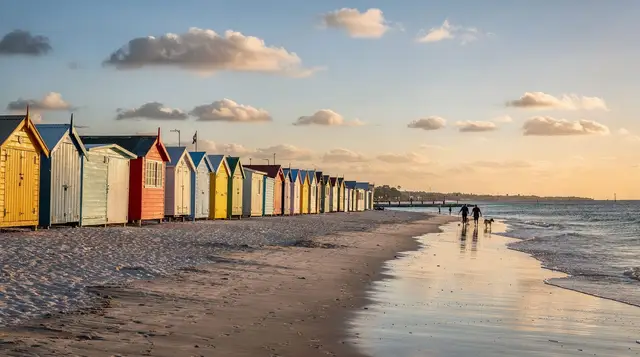
St Kilda delivers a genuinely different side of Melbourne from the CBD’s laneways and arcades — beach, heritage amusement, wild penguins and a lively nightlife strip all within one walkable neighbourhood. It pairs well with a look at Brighton’s bathing boxes further along the bay if beach culture is a theme for your trip, and offers a genuine contrast to inner-north options like Fitzroy or Carlton if you’re comparing where to stay in Melbourne more broadly.
For visitors based in the CBD or Southbank, St Kilda works well as a half-day or full-day excursion even without staying there overnight, particularly timed around sunset for the beach, pier and penguin colony together.
St Kilda versus Brighton for a bayside base
Both suburbs sit on Port Phillip Bay, but they suit different priorities. St Kilda offers Luna Park, the penguin colony, a livelier nightlife strip and generally cheaper accommodation, making it the stronger choice for families or travellers wanting an active, varied bayside neighbourhood. Brighton, a little further south, trades that energy for a quieter, more residential character and the well-known bathing boxes — better suited to a shorter, quieter beach visit than a full evening out. Many visitors do both: St Kilda for a fuller day, Brighton for a shorter photo-and-beach stop.
What a first-time visitor tends to underestimate
Visitors who know St Kilda only by reputation sometimes arrive expecting either a polished resort beach or a rough, no-go nightlife strip, and the reality sits between the two: a genuinely mixed neighbourhood with a patrolled family beach by day and a livelier bar scene concentrated specifically around Fitzroy Street by night, with plenty of quieter streets in between. Budgeting a proper half-day rather than a rushed hour is the easiest way to see both sides rather than judging the whole suburb on a five-minute pier walk.
More tours on Viator
Top-rated experiences with verified reviews, bookable on Viator (a Tripadvisor company).


Frequently asked questions about St Kilda neighborhood guide
Can you see penguins at St Kilda?
Yes — a small colony of little penguins lives among the rocks at the end of St Kilda Pier, visible most reliably around dusk when they return from a day's fishing. It's free to view from the breakwater, though quiet, respectful viewing without flash photography is important for the colony's wellbeing.Is St Kilda beach good for swimming?
Yes, St Kilda beach is patrolled during the warmer months and suits casual swimming, though it's a bay beach rather than a surf beach — calmer water than Victoria's ocean coastline, better suited to families and relaxed swimming than serious surfing.How far is St Kilda from Melbourne's CBD?
Roughly 6km, translating to a 20-25 minute tram ride along one of Melbourne's most frequent routes (the 96 tram via St Kilda Light Rail from the CBD is a common option), or about 15 minutes by car outside peak traffic.Is Luna Park in St Kilda worth visiting?
Yes, if heritage amusement parks interest you — Luna Park opened in 1912 and its Scenic Railway rollercoaster is one of the oldest continuously operating rollercoasters in the world. It suits families with kids of most ages, though thrill-ride enthusiasts should expect a smaller-scale, historic experience rather than a modern theme park.Is St Kilda safe at night?
Generally yes along the main Fitzroy Street and Acland Street strips, which stay busy and well-lit into the evening given the concentration of bars and restaurants; as with most nightlife strips, normal city awareness applies on quieter side streets later at night.Do you need to pay to see the St Kilda penguins?
No — viewing is free from the public breakwater path at the end of St Kilda Pier. A guided sunset tour or cruise is available for those who want commentary and a higher chance of a good sighting, but it isn't required to see the colony.
Top experiences
Bookable activities with verified prices and instant confirmation on GetYourGuide.