Southbank neighborhood guide: arts, river views and Eureka Skydeck
Melbourne: Melbourne eureka skydeck 88 entry
Is Southbank a good place to stay in Melbourne?
Yes, especially for river or skyline views, proximity to the Eureka Skydeck, Arts Centre and NGV, and a genuinely family-friendly, stroller-flat riverside promenade — it's a 5-10 minute walk or short tram ride from the CBD, nearly as convenient while offering a quieter evening atmosphere.
The CBD’s arts-precinct neighbour
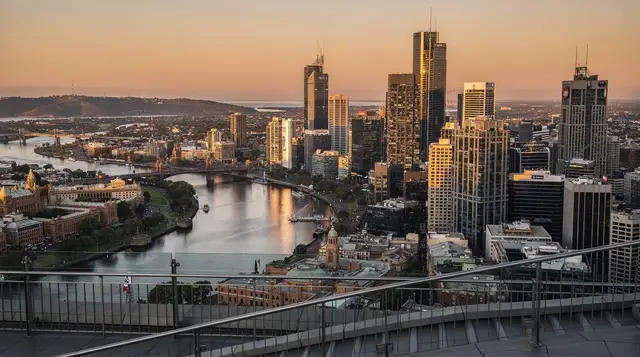
Southbank sits directly across the Yarra River from Melbourne’s CBD, connected by Princes Bridge and several other pedestrian crossings, making it genuinely one of the most convenient alternatives to staying in the city centre itself — a 5-10 minute walk gets you to Flinders Street Station, and the whole precinct sits inside or immediately adjacent to the Free Tram Zone. It developed through the 1990s and 2000s from a former industrial and warehouse district into Melbourne’s dedicated arts and entertainment precinct, now home to the Arts Centre, the National Gallery of Victoria, Eureka Tower and a dense run of riverside dining and residential high-rises.
| Where | South bank of the Yarra, opposite Flinders Street Station |
| Vibe | Arts, river views, high-rise, quieter evenings than the CBD |
| Getting there | 5-10 min walk over Princes Bridge, Free Tram Zone |
| Good for | Views, families, arts and culture, a calmer base |
| Best time | Year-round; book riverside dining ahead in summer |
Eureka Skydeck: the neighbourhood’s headline attraction
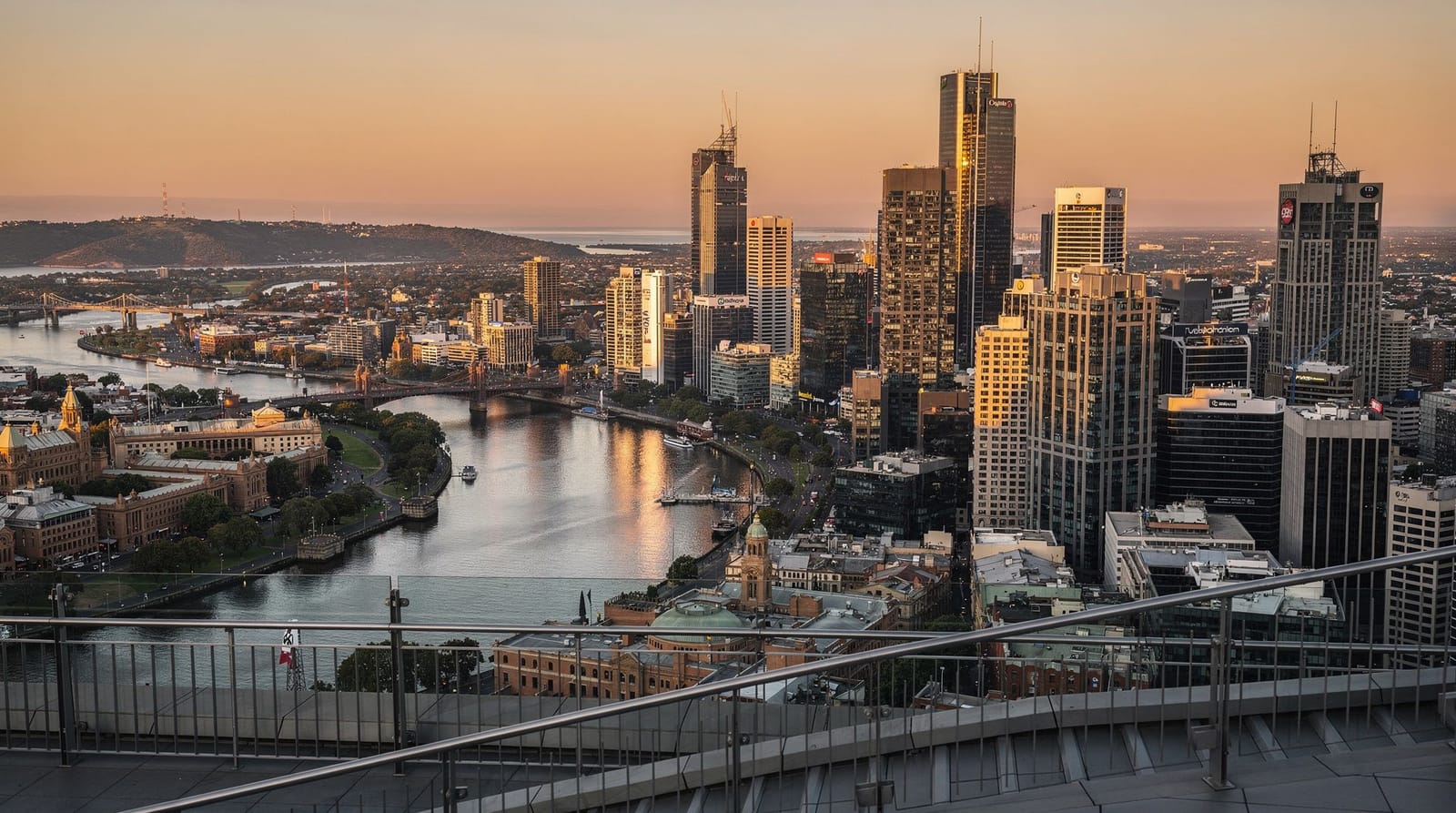
Eureka Skydeck, 285 metres up in Eureka Tower, is Southbank’s best-known single attraction and the tallest public viewing point in the Southern Hemisphere — covered in full detail in our dedicated guide, but worth flagging here as a genuine reason to base yourself in this neighbourhood specifically, since it sits a short walk from most Southbank accommodation rather than requiring a trip across the river.
 Melbourne eureka skydeck 88 entryCheck availability
The Arts Centre and NGV
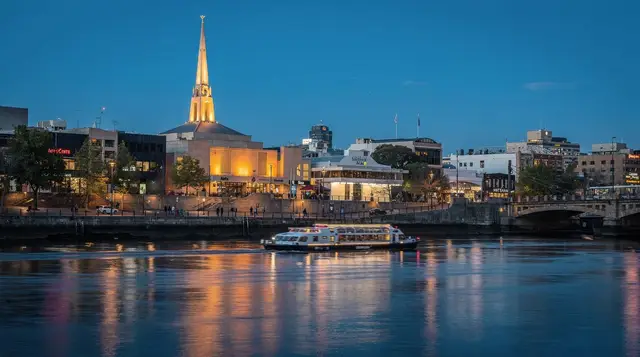
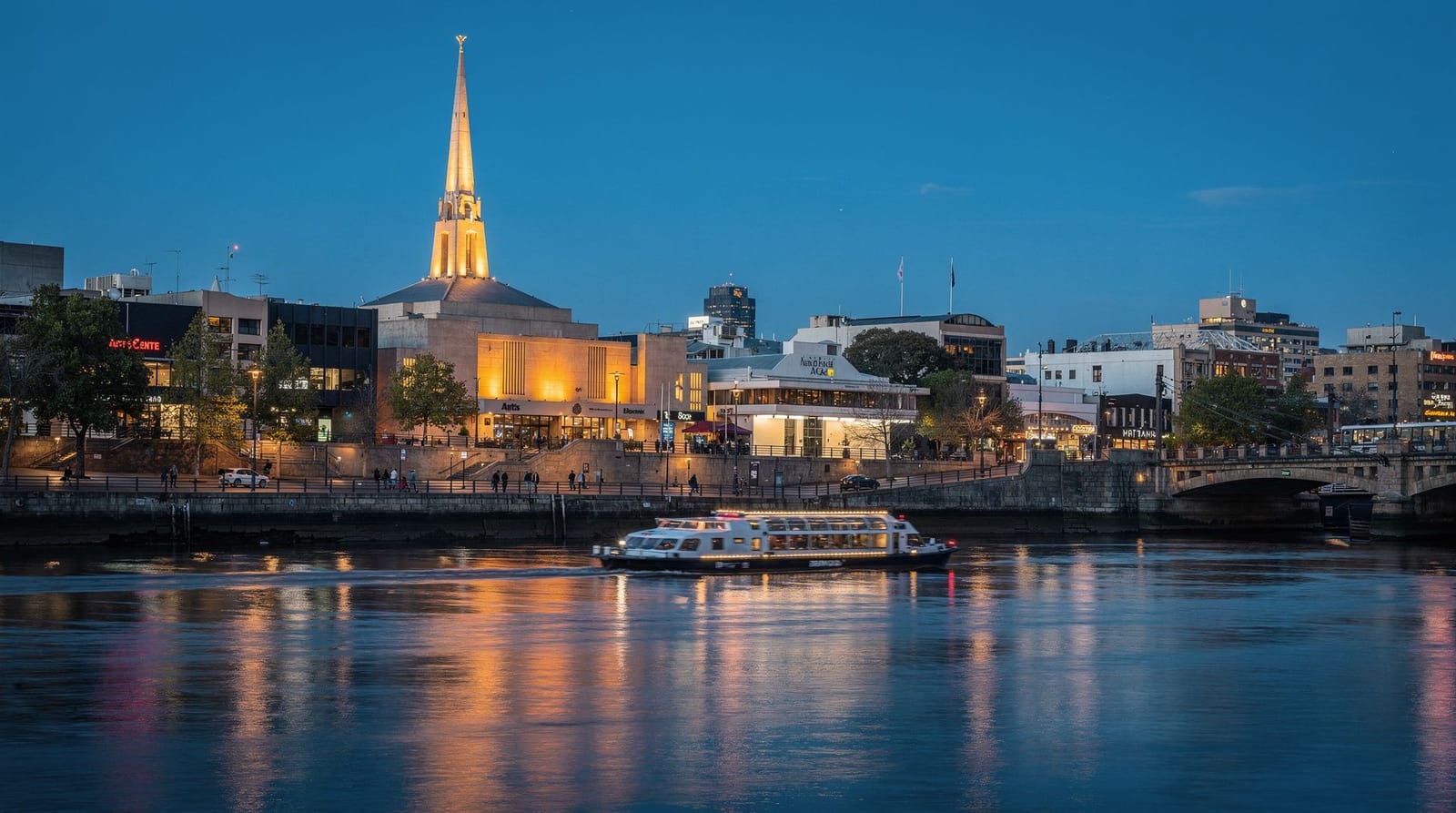
Southbank houses Melbourne’s two most significant arts institutions within a few minutes’ walk of each other: the Arts Centre, with its distinctive spire visible across much of the CBD skyline, hosting opera, ballet, theatre and major touring productions; and the National Gallery of Victoria’s International building, Australia’s oldest and among its most visited public galleries, with free general admission to its permanent collection. Both sit directly on the riverside promenade, making a combined visit to both institutions plus a Yarra River walk a genuinely full and free (aside from any specific ticketed performances) day of culture.
The Yarra promenade
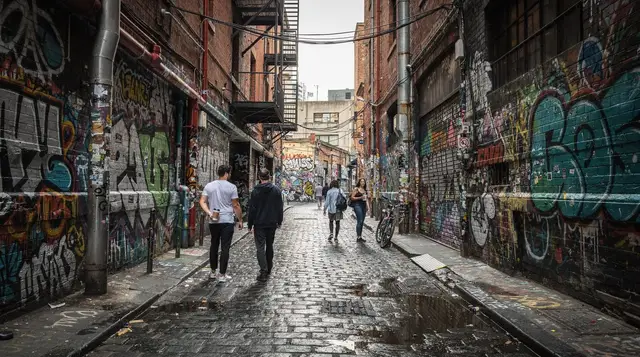
The riverside walkway running the length of Southbank is one of Melbourne’s most pleasant free activities — flat, stroller-friendly, lined with restaurants, public art and river-facing seating, and equally enjoyable for a morning coffee walk or an evening stroll after dinner. It connects directly to Hosier Lane and the CBD across Princes Bridge on one end, and toward Docklands on the other, giving genuine flexibility for how far you want to walk in either direction.
book a Yarra River sightseeing cruise from SouthbankDining along the riverfront
Southbank’s promenade restaurants offer a genuinely pleasant river-view dining setting, though it’s honest to flag that some of the most visible, water-facing venues carry a location premium over equivalent quality a block or two back from the water — a common pattern in riverside dining precincts worldwide. Walking slightly inland, or choosing a restaurant based on menu and reviews rather than pure water-view seating, generally finds better value without losing much of the neighbourhood’s atmosphere.
 Yarra river 15 hour scenic sunset public cruiseCheck availability
A brief history: from wharves to arts precinct
Southbank’s transformation is a genuinely dramatic piece of Melbourne urban planning history. Through the 19th and much of the 20th century, this stretch of riverbank served industrial and shipping functions — wharves, warehouses and manufacturing rather than anything resembling today’s arts-and-dining precinct. A concerted redevelopment push through the 1990s, anchored by the Arts Centre’s earlier establishment and later accelerated by Crown Casino’s 1997 opening and Eureka Tower’s 2006 completion, transformed the area within a generation from working industrial waterfront to one of the city’s most valuable residential and tourism precincts.
That rapid, deliberate transformation is worth knowing because it explains Southbank’s slightly different character from organically developed neighbourhoods like Fitzroy or Carlton — it feels more planned, more high-rise, and less layered with older architectural history, a trade-off some visitors prefer for its polish and others find less atmospheric than Melbourne’s older inner suburbs.
Crown Casino and Southbank’s other side
Adjacent to the arts precinct, Crown Casino and its associated hotel and dining complex form a separate, larger-scale entertainment offering within Southbank — worth knowing about even if gambling itself doesn’t interest you, since the complex includes a substantial range of restaurants and a large hotel tower. It’s honest to note that some of Crown’s dining options carry the same location-premium pricing pattern as the riverside promenade restaurants, and the complex’s scale and crowds can feel like a different, more commercially generic experience than the Arts Centre and NGV’s more culturally focused offering a short walk away.
Southbank with families
Southbank ranks among Melbourne’s better family bases, given the flat, stroller-friendly riverside promenade, SEA LIFE Melbourne Aquarium’s proximity, and Eureka Skydeck’s family ticketing options. It’s generally quieter in the evenings than St Kilda or the CBD’s laneway bar scene, suiting families prioritising an earlier bedtime schedule, though it lacks a beach or dedicated playground-style attraction of its own.
Southbank versus the CBD: an honest comparison
The core trade-off is straightforward: the CBD offers marginally more convenience (you’re already there rather than a short walk or tram ride away) and a livelier, more varied laneway and shopping scene; Southbank offers better views, a quieter evening atmosphere once the day-trip crowds clear, and easier access to the Arts Centre, NGV and Eureka Skydeck without crossing the river. For most visitors, the difference is small enough that either choice works well, and Southbank’s flatter, more open riverside layout genuinely suits families and travellers who find the CBD’s laneway grid slightly more overwhelming to navigate.
Getting there and around
On foot, Southbank connects to the CBD via Princes Bridge (near Flinders Street Station) and several other pedestrian crossings, all under 10 minutes’ walk. By tram, routes along St Kilda Road connect Southbank to the CBD and further south toward St Kilda itself. By car, Southbank has more designated parking than the CBD’s laneway-heavy core, though weekday peak traffic across the river crossings can add meaningful delays.
Where to stay in Southbank
Accommodation skews toward larger hotels and apartment-style high-rises, generally offering river or skyline views at a premium over an equivalent non-view CBD room, though overall pricing is broadly comparable to the CBD given Southbank’s status as a similarly central, high-demand area. Families benefit particularly from the flatter walking terrain and proximity to SEA LIFE Melbourne.
Southbank by season
Southbank’s riverside promenade is genuinely pleasant year-round, though summer (December-February) brings the busiest evening crowds and the most demand for outdoor river-view dining tables — book ahead on weekends. Winter (June-August) is quieter and cooler, but the promenade’s restaurants and the covered Arts Centre and NGV both offer reliable indoor alternatives if weather turns, making Southbank a solid wet-weather base compared with neighbourhoods more dependent on outdoor walking and cafe culture. Autumn (March-May), Melbourne’s generally best season, is arguably Southbank’s most photogenic window, with clear light and comfortable temperatures for the full length of the river walk.
Southbank for a special dinner
If you’re planning a specific celebratory dinner during your Melbourne stay, Southbank’s riverside restaurants offer some of the city’s most reliably scenic dining settings, particularly for a table timed around sunset when the CBD skyline and Flinders Street Station’s dome catch the evening light across the water. Booking a window or riverside table specifically, rather than accepting whatever seating is available on arrival, is worth confirming when you reserve, since not every table at a given restaurant actually faces the river.
Moving around without a car
Most visitors who base themselves here never need to think about driving. The Free Tram Zone and the wider tram network cover the short hops, and a Myki card takes care of anything beyond the zone. If you are arriving from the airport, our guide to the airport transfer explains the options for reaching the river side of the city, and the broader getting around Melbourne page covers how trains, trams and buses fit together. Staying here also makes the Melbourne without a car itinerary very easy to follow.
Rainy-day and slow-morning options
Because so much of the precinct is indoors or covered, a grey forecast does not wreck a Southbank stay. Galleries, theatres and the aquarium absorb a wet afternoon, and the rainy day ideas for families are a useful companion if you are travelling with children. When the weather clears, the walk can simply resume. Our guide to Melbourne in winter explains how to plan around the cooler months, and the packing guide is worth a glance, since a light waterproof layer is the sensible default whatever the season.
Pairing Southbank with the rest of the city
Southbank works best as one half of a wider plan rather than a self-contained destination. In the evening, the river crossing makes it easy to head over to the laneway bars or sample the best laneway cafes the next morning, then come back to a calmer room. Visitors interested in the city’s cultural side can add the State Library Victoria and the Royal Botanic Gardens, both reachable without much planning. If you are working out how long to give the city overall, how many days in Melbourne and the one-day itinerary show where a Southbank stay slots in, while the three-day first-timer plan uses this side of the river as a natural starting point.
Who tends to enjoy Southbank most
Travellers who like to see a place from above and from the water usually get the most out of the neighbourhood. The combination of a high viewing deck, an easy riverside walk and a calm evening suits couples, families and anyone who wants a straightforward base without hunting for a quiet street. People who prefer a gritty, older streetscape or a dense run of independent bars may find it too polished, and for them the Fitzroy and Collingwood area or the CBD laneways will feel more their style. For wider context on the area, the Southbank and arts precinct destination page gives the overview, and the Melbourne destination guide places it within the whole city.
Practical tips
Walk across Princes Bridge for the classic photo of Flinders Street Station’s dome framed against the river — one of Melbourne’s most reliable photo spots, especially at golden hour.
Book Arts Centre performances well ahead if a specific show matters to your trip, since popular touring productions and opera or ballet seasons can sell out weeks in advance.
Choose restaurants a block back from the direct riverfront for better value without losing much walkability or atmosphere.
Combine Eureka Skydeck with an NGV visit on the same day — both sit within a few minutes’ walk of each other, making an efficient half-day pairing of views and art.
What sets Southbank apart architecturally
Unlike the CBD’s dense mix of Victorian-era and modern buildings, Southbank’s skyline is almost entirely a product of the past three decades, dominated by residential and hotel high-rises including Eureka Tower itself, briefly the world’s tallest residential building on completion in 2006. This gives the neighbourhood a noticeably more contemporary, vertical character than the CBD’s older commercial core, worth knowing if you’re specifically drawn to (or want to avoid) a more modern, high-rise streetscape as part of your accommodation choice.
Where this fits in your Melbourne trip
Southbank is one of Melbourne’s strongest alternatives to a straight CBD stay, offering nearly identical convenience with better views and a calmer evening atmosphere. It pairs naturally with Eureka Skydeck, the NGV and a walk across to Hosier Lane and the CBD’s arcades, making it easy to treat as a base rather than purely a day-visit destination.
For families and travellers comparing where to stay in Melbourne, Southbank sits alongside the CBD as one of the two most practical first-timer choices, with St Kilda and Fitzroy offering more distinct alternative characters a short tram ride further out.
Southbank versus Docklands, another riverside option
Southbank is often mentioned alongside Docklands as Melbourne’s other major waterfront redevelopment, but the two suit different visitors. Southbank sits directly across from Flinders Street Station with the Arts Centre, NGV and Eureka Skydeck all within a few minutes’ walk, giving it a genuinely cultural, pedestrian-friendly character. Docklands, further west along the Yarra’s mouth, is more corporate and residential, with fewer major sights within immediate walking distance and a quieter, less lively evening atmosphere outside event nights at Marvel Stadium. For a first Melbourne stay, Southbank is the stronger choice; Docklands suits longer-staying visitors prioritising newer apartment-style accommodation over proximity to the CBD’s core sights.
A day in Southbank, roughly paced
A realistic half-day in the neighbourhood starts with a morning coffee on the Yarra promenade, moves to the NGV or Arts Centre for a couple of hours, and finishes with Eureka Skydeck timed for late afternoon light before an early dinner riverside. Families with young children can swap the gallery time for SEA LIFE Melbourne Aquarium, which sits within the same short walk.
More tours on Viator
Top-rated experiences with verified reviews, bookable on Viator (a Tripadvisor company).


Frequently asked questions about Southbank neighborhood guide
Is Southbank walkable to the CBD?
Yes, it's a 5-10 minute walk across Princes Bridge or Southbank's other pedestrian crossings to reach Flinders Street Station and the CBD grid, making it one of the most convenient alternatives to staying directly in the city centre.What's the difference between Southbank and Docklands?
Southbank sits directly across the Yarra River from the CBD, walkable to Flinders Street Station and home to the Arts Centre, NGV and Eureka Skydeck; Docklands is further west along the waterfront, more corporate and residential in character, with less within immediate walking distance of the CBD's core sights.Is Southbank good for families?
Yes — the flat, stroller-friendly riverside promenade, SEA LIFE Melbourne Aquarium and Eureka Skydeck's family-friendly ticketing options make Southbank one of Melbourne's stronger family bases, particularly for families wanting arts and culture over beach or nightlife-focused activities.Are Southbank restaurants overpriced?
Some of the riverside promenade's most visible restaurants do carry a location premium compared with equivalent quality a block or two back from the water, a fair honest-planner flag — walking slightly inland from the direct riverfront generally finds better value without losing much convenience.What can you see from a Southbank hotel room?
Higher-floor Southbank hotel rooms typically offer river views across to the CBD skyline, Flinders Street Station's dome, and in some cases a partial view toward the MCG or Docklands — a genuine step up in outlook compared with most CBD hotel rooms at a similar price point.
Top experiences
Bookable activities with verified prices and instant confirmation on GetYourGuide.