Melbourne CBD neighborhood guide: the first-timer's base
Melbourne: Melbourne city highlights walking tour
Is the CBD the best place to stay in Melbourne?
For most first-time visitors, yes — the CBD sits inside the Free Tram Zone, within walking distance of Flinders Street Station, the laneways, arcades and Queen Victoria Market, and connects directly to every other neighbourhood by tram or train without needing transfers, making it the lowest-friction base for a first Melbourne trip.
The compact grid that makes Melbourne walkable
Melbourne’s CBD sits on the Hoddle Grid, laid out in 1837 as a rigid rectangular street pattern split by wide main boulevards (Collins Street, Bourke Street) and narrower “little” streets running between them, further subdivided by the laneway network covered in our arcades and laneways guide.
That compact, walkable layout is the CBD’s single biggest advantage as a place to stay: most of the attractions a first-time visitor wants — Flinders Street Station, Hosier Lane, the arcades, Queen Victoria Market — sit within a 15-20 minute walk of each other, with the entire area also covered by the Free Tram Zone for anyone who’d rather ride than walk.
A brief history: from colonial outpost to “Marvellous Melbourne”
Melbourne’s CBD grid was surveyed in 1837, just two years after the city’s founding, and its subsequent transformation from a modest colonial settlement into a wealthy, architecturally ambitious city centre happened remarkably fast — driven almost entirely by the wealth flowing through the city during Victoria’s 1850s-80s gold rush, covered in more depth in our gold rush history guide. By the 1880s, the resulting building boom had earned Melbourne the nickname “Marvellous Melbourne,” and much of what makes today’s CBD architecturally distinctive — the arcades, the grand Collins Street bank facades, Flinders Street Station’s later 1910 rebuild — traces directly back to this concentrated wealth wave.
That history is still visible in the grid’s layout itself: the wide main boulevards (Collins Street, Bourke Street) were built for genuine civic grandeur, while the narrower “little” streets and laneways between them, originally intended for service access and stables, became the coffee-and-bar laneway culture that now defines much of the CBD’s contemporary character.
What’s actually in the CBD
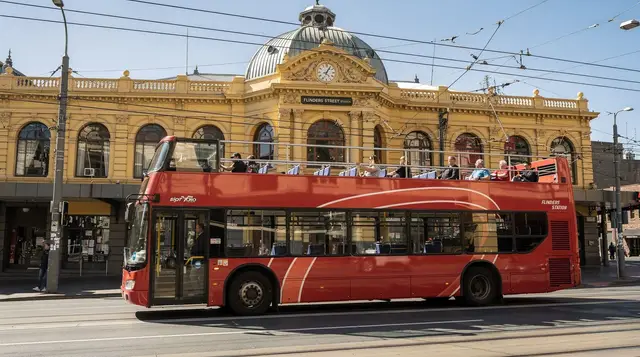
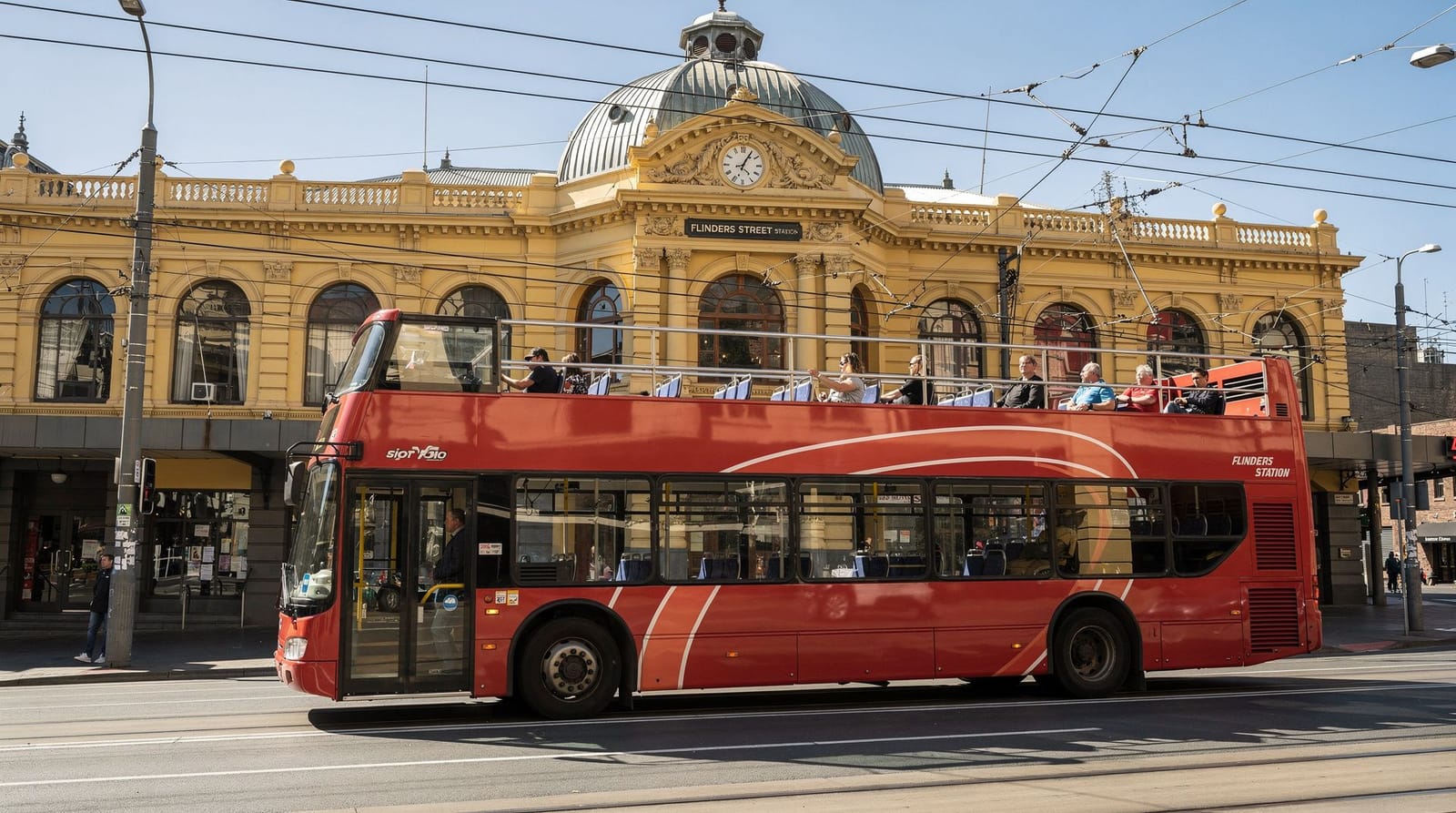
Beyond the laneways and arcades, the CBD holds Melbourne’s densest concentration of major sights: Flinders Street Station anchors the southern edge opposite Federation Square; Queen Victoria Market, on the grid’s northern edge, remains one of the Southern Hemisphere’s largest open-air markets; Bourke Street Mall and Collins Street cover the CBD’s major retail; and Chinatown, along Little Bourke Street, is one of the oldest continuous Chinese settlements outside China itself, dating to the 1850s gold rush.
 Melbourne city highlights walking tourCheck availability
Laneway bars and evening life
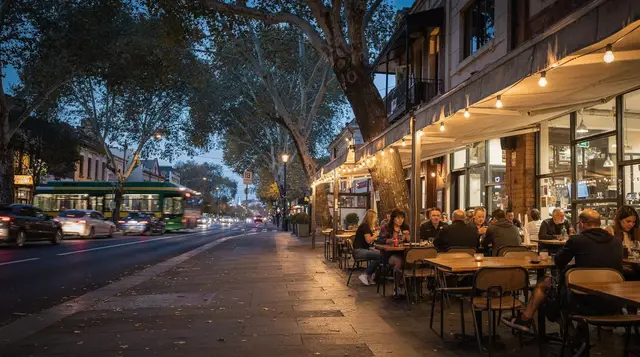
The CBD’s laneway network — covered in depth in our laneway bars guide — carries Melbourne’s densest concentration of small bars, a direct product of 1980s-90s liquor licensing reform that made tiny, low-capacity venues commercially viable. AC/DC Lane, Rutledge Lane and dozens of similarly narrow lanes host everything from rock bars to speakeasy-style cocktail venues, giving the CBD a genuinely strong evening scene beyond its daytime shopping and sightseeing identity.
book a secret laneways and food walking tourShopping: from department stores to arcades
Bourke Street Mall anchors the CBD’s mainstream retail, home to Melbourne’s major department stores, while Block Arcade and Royal Arcade offer a more heritage-focused, boutique shopping experience a block away. Collins Street’s western end carries a mix of international luxury retail, while the eastern “Paris end” leans toward older bank buildings and more understated boutique shopfronts, covered in more depth in our Victorian architecture guide.
Transport hub status: Flinders Street and Southern Cross
The CBD’s biggest practical advantage for visitors is its transport centrality: Flinders Street Station handles the entire metropolitan train network, while Southern Cross Station, a short walk or tram ride west, handles regional V/Line services (including to Ballarat and Geelong for the Great Ocean Road), interstate connections and the SkyBus to Melbourne Airport. Staying in the CBD means every regional day trip and airport transfer starts from a station within easy walking distance, rather than requiring an additional cross-town journey first.
CBD with families
The CBD works reasonably well for families, particularly those prioritising walkability and proximity to major sights like the Eureka Skydeck and SEA LIFE Melbourne Aquarium, both a short walk or tram ride from the CBD core via Southbank. It lacks a beach or dedicated playground-style attraction of its own, and the laneway grid’s narrower footpaths can feel busier and less stroller-friendly than Southbank’s flatter riverside promenade — worth weighing if you’re travelling with very young children and prams.
CBD by season
The CBD’s mix of covered arcades, indoor shopping and laneway bars makes it a genuinely strong wet-weather base — Block Arcade and Royal Arcade alone offer 20-30 minutes of dry, covered walking on a rainy day. Summer (December-February) can turn the narrower laneways uncomfortably warm by early afternoon given how much heat the tight, building-lined streets retain; mornings and evenings are more comfortable. Autumn (March-May), Melbourne’s generally best season, offers the most reliably pleasant conditions for extended CBD walking.
Who the CBD suits (and who it doesn’t)
The CBD suits first-time visitors, travellers on short stays who want maximum convenience, and anyone prioritising walkability to major sights over neighbourhood character. It’s a less natural fit for travellers seeking a distinctly local, less touristy atmosphere — for that, Fitzroy or Carlton offer a genuinely different, more residential feel a short tram ride out. It also generally carries a price premium over inner-suburb alternatives like Richmond for comparable accommodation quality.
A suggested first CBD day
For visitors staying in the CBD on their first day, a realistic loop looks like: morning coffee in Degraves Street or Centre Place, a walk through Block Arcade and Royal Arcade, lunch near Queen Victoria Market, an afternoon detour to Hosier Lane and Federation Square, then an early evening drink at a CBD rooftop bar before dinner in Chinatown or one of the laneway restaurants. This single day covers most of the CBD’s headline experiences without needing transport beyond your own feet and the Free Tram Zone.
How to pace your days when the CBD is your base
One of the quiet benefits of a central base is that you stop treating each outing as an expedition. Without a long commute at either end of the day, you can split your sightseeing into short blocks: a late breakfast, a couple of hours out, a break back at the hotel when the weather turns or the afternoon gets tiring, then a second outing in the evening. Visitors based further out tend to commit to a full day away and then regret it at four in the afternoon. In the CBD, the room is never far away.
This flexibility matters most in the first two days, when jet lag is likely to be at its worst. A short walk back to a bed beats a long tram ride home. If you’re still deciding how long to stay, our how many days in Melbourne guide helps match the length of your trip to the places you want to see, and a CBD base anchors a first visit well whatever length you choose.
Reading the grid: a simple way to orient yourself
The Hoddle Grid is easy to learn once you know a few rules. The long streets run in one direction and the shorter cross streets in the other, and the “little” streets sit between the main boulevards. Landmarks do the rest of the work: Flinders Street Station marks the southern edge, the river sits just beyond it, and the market anchors the opposite side of the grid. If you lose your bearings, walk until you hit one of those edges and reorient from there.
Trams also double as a navigation aid. Because the lines run along the main streets, you can ride a few stops and step off knowing roughly where you are relative to the station. For the practical detail on how the network works, see our Melbourne tram guide and the Free Tram Zone page, which explains where the free area starts and ends.
Eating well without leaving the grid
The CBD rewards a little curiosity at mealtimes. The obvious choices on the busiest streets are fine for a quick bite, but the better meals tend to sit a short step off the main drag: a first-floor dining room above a laneway, a counter-service spot tucked into an arcade, or a small place in Chinatown with a queue of regulars at the door. A useful habit is to look at who is eating there. A mix of office workers and locals is generally a better sign than a menu with photographs.
For coffee, the laneways carry most of the weight, and our Melbourne coffee guide and best laneway cafes pages go into the detail. If you would rather have someone steer you through the best bites, a guided tasting walk is a relaxed way to cover several stops without planning them yourself.
Evenings follow the same logic. Rather than settling on the first open door, walk a block or two in each direction before deciding. The grid is small enough that a ten-minute loop shows you most of the options, and the difference in atmosphere between neighbouring streets can be surprising. Eating a little earlier or later than the main rush also tends to make for a calmer meal and a friendlier welcome.
Rainy-day and slow-morning options
The CBD is better than most city centres when the weather turns. Arcades, indoor markets, galleries and libraries sit close together, so you can move from one dry place to the next with very little time outside. The State Library Victoria is a good place to slow down for an hour, and it pairs well with a coffee in the surrounding streets. On a day when the forecast keeps changing, as it often does here, a flexible plan built around indoor stops keeps the day from falling apart.
Noise and accommodation considerations
Because the CBD combines residential apartment towers, hotels and a genuinely lively laneway bar and live music scene within the same compact grid, some accommodation — particularly rooms directly above or adjacent to popular laneway bar strips — can carry more late-night noise than an equivalent room in a quieter neighbourhood like Carlton or Southbank. If a quiet night’s sleep matters more than being metres from the action, checking a specific hotel’s proximity to known nightlife strips (or simply choosing a higher floor) is worth doing at booking time.
Getting to everywhere else from the CBD
Every neighbourhood covered in this guide connects to the CBD by tram or train within 10-25 minutes: Southbank is a 5-10 minute walk across Princes Bridge; Carlton and Fitzroy are 10-15 minutes by tram; Richmond is 10-15 minutes by train or tram; and St Kilda is roughly 20-25 minutes by tram. This centrality is the core reason the CBD remains the default first-timer choice — no other neighbourhood connects this efficiently to all the others simultaneously.
Chinatown: one of the world’s oldest
Little Bourke Street’s Chinatown precinct dates to the 1850s gold rush, when Chinese prospectors and merchants established a settlement here that’s remained continuously occupied ever since — making it one of the oldest continuous Chinese settlements outside China itself, alongside San Francisco’s. Today it carries a dense run of Chinese, and increasingly broader East and Southeast Asian, restaurants and grocers, worth a stop for genuinely good and reasonably priced dining within the CBD grid rather than travelling further out for equivalent quality.
Where to stay within the CBD
The CBD covers a genuinely large area, and location within it matters: staying near Flinders Street Station or Collins Street puts you closest to the laneways, arcades and river; staying near Queen Victoria Market or the northern grid edge suits early-morning market visits and Chinatown dining; staying near Southern Cross Station suits travellers prioritising easy regional and airport transport over laneway proximity. Accommodation options span budget hostels, mid-range chain hotels and luxury towers across the whole grid.
Before you book: questions worth asking yourself
Choosing a base comes down to a few honest questions. Do you want to step outside and be in the middle of things, or would you rather come home to somewhere quiet? Will you spend most evenings out, or mostly sleep at the hotel? Are you planning several regional day trips, or staying mostly in the city? The more your answers lean toward convenience, evenings out and early train departures, the stronger the case for the CBD.
If your answers lean the other way, nothing is lost by choosing a quieter neighbourhood and riding in each day. The CBD is easy to reach from everywhere, which is exactly why it works as a daytime destination even for people who sleep elsewhere. Our Melbourne on a budget guide is a useful companion if cost is the deciding factor, since it looks at where the savings actually come from.
A last consideration is how you like to travel. Some visitors enjoy the buzz of a busy centre and find it energising; others need a calmer corner at the end of the day. Neither is wrong. If you know you recharge best in quiet surroundings, consider a room on a higher floor or on a side street away from the bar strips, and treat the CBD as the place you spend your days rather than only your nights. Whichever way you lean, arriving with a loose plan, a few anchor sights and room to wander usually produces the best memories of the city.
Practical tips
Use the Free Tram Zone rather than assuming you need to walk everywhere — while the CBD is genuinely walkable, trams cover the same ground faster on hot or wet days at no cost.
Book CBD accommodation further ahead during major events — the Australian Open (January), the Formula 1 Grand Prix (March) and AFL finals season (September) all drive CBD pricing and availability noticeably.
Choose your specific CBD block based on your priorities — laneway proximity, market access, or transport centrality all favour slightly different parts of the grid.
Don’t confuse Flinders Street and Southern Cross stations when planning regional day trips or an airport transfer — they serve different networks entirely.
Where this fits in your Melbourne trip
The CBD remains Melbourne’s most convenient, lowest-friction base for most visitors, particularly first-timers and shorter stays, offering direct access to the laneways, arcades, street art and Victorian architecture covered throughout this site.
For a full comparison against Melbourne’s other neighbourhoods, see our broader where to stay in Melbourne guide, which weighs the CBD against Southbank, St Kilda, Fitzroy, Carlton and Richmond in more depth.
More tours on Viator
Top-rated experiences with verified reviews, bookable on Viator (a Tripadvisor company).


Frequently asked questions about Melbourne CBD neighborhood guide
Is the Melbourne CBD walkable?
Yes, extremely — the Hoddle Grid's compact, rectangular layout means most CBD attractions sit within a 15-20 minute walk of each other, and the entire area falls inside the Free Tram Zone for anyone who'd rather not walk between the grid's edges.Is the CBD expensive to stay in?
Generally yes, it carries a premium over inner-suburb neighbourhoods like Richmond or Carlton for comparable accommodation quality, reflecting its maximum convenience and central location, though budget hostels and mid-range chain hotels are both well represented alongside luxury options.What's the difference between Flinders Street Station and Southern Cross Station?
Flinders Street Station handles Melbourne's metropolitan and suburban train network; Southern Cross Station, a short walk or tram ride west, handles regional V/Line services (including to Ballarat and Geelong), interstate connections and the SkyBus to Melbourne Airport.Is the Melbourne CBD safe at night?
Yes, generally — the CBD's main streets and laneway bar precincts stay well-lit and populated well into the evening, and it's one of Melbourne's safer areas overall by international city standards, though normal city awareness applies on quieter side streets after midnight.Does the CBD have good food?
Yes, extensively — Degraves Street and Centre Place's cafe laneways, Chinatown along Little Bourke Street, and Queen Victoria Market's food hall all sit within the CBD grid, giving genuinely broad dining variety without needing to leave the neighbourhood.
Top experiences
Bookable activities with verified prices and instant confirmation on GetYourGuide.