V/Line regional trains: which Victorian day trips work by rail
Melbourne: Melbourne sovereign hill a touch of gold ballarat tour
Duration: 8 hours
What is V/Line and where does it go?
V/Line is Victoria's regional rail (and connecting coach) network, running from Southern Cross Station to major regional centres including Geelong, Ballarat, Bendigo and further afield. It's a genuinely good option for day trips to those specific towns, but many of Victoria's best-known tourist destinations — the Great Ocean Road beyond Geelong, Yarra Valley, Phillip Island, the Grampians beyond a certain point — aren't well served, or served at all, by rail alone.
Victoria’s regional rail network, honestly assessed
V/Line is Victoria’s regional train (and connecting coach) network, running from Southern Cross Station out to major regional centres across the state. For a handful of specific day-trip destinations — Geelong, Ballarat, Bendigo — it’s a genuinely good, low-hassle option that beats driving for anyone who’d rather not deal with parking or navigation.
| Departs from | Southern Cross Station |
| Works well for | Ballarat, Bendigo, Geelong |
| Doesn’t reach | Yarra Valley, Phillip Island, Twelve Apostles directly |
| Ticketing | Myki for near-metro trips; separate V/Line fares further out |
| Best time | Book ahead for weekend and school-holiday travel |
For many of Victoria’s other headline attractions, though, honest expectations matter: the Great Ocean Road beyond Geelong, the Yarra Valley wine region and Phillip Island aren’t realistically reachable by rail alone, and this guide covers which is which so you can plan transport accordingly.
Destinations that genuinely work well by V/Line
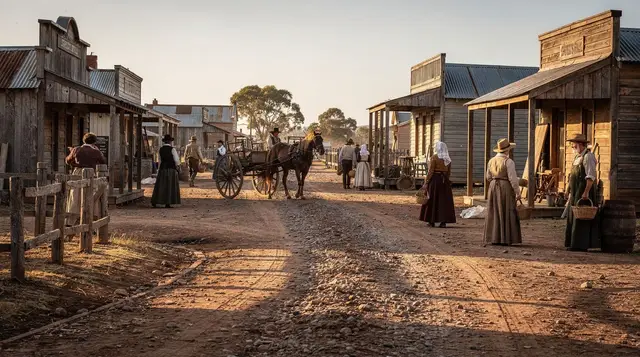
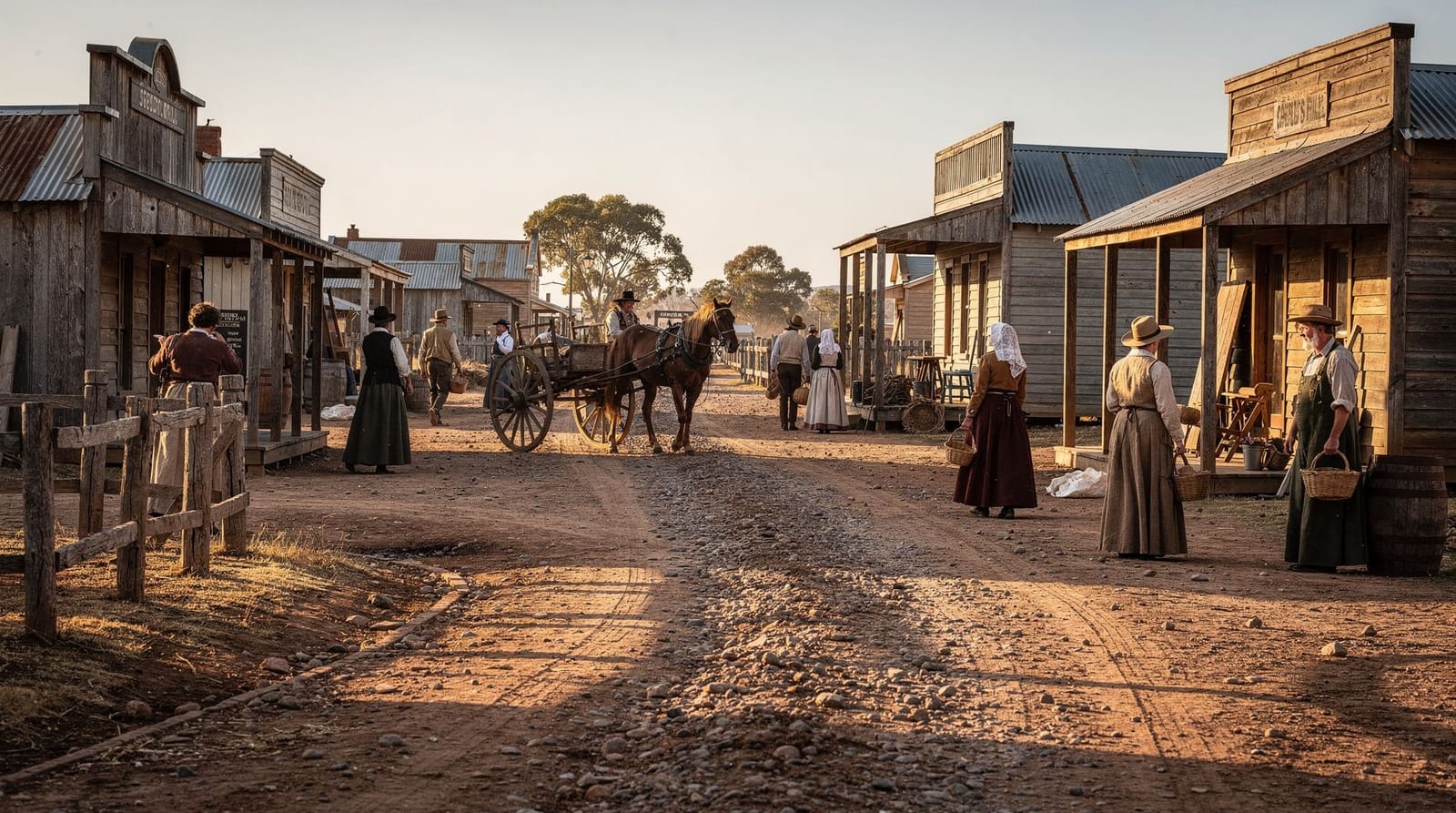
Ballarat: direct V/Line trains from Southern Cross Station take roughly 1.5-2 hours, making this one of Victoria’s easiest regional day trips by rail. From Ballarat station, Sovereign Hill and the town centre are a short taxi or local bus ride away — a genuinely practical way to see the gold-rush history without a car.
Bendigo: similarly well-served with direct trains from Southern Cross, another good rail-based day trip option for visitors wanting regional Victorian history without driving.
Geelong: the closest major regional centre to Melbourne, with frequent direct trains — useful both as a destination in its own right and as a connecting point for onward V/Line coach services toward the Great Ocean Road’s closer towns.
A brief history of the V/Line network
V/Line traces its origins to the Victorian Railways, the state’s original rail authority established in the 19th century as gold-rush wealth funded rapid rail expansion connecting Melbourne to goldfields towns like Ballarat and Bendigo — a direct historical link to why these specific towns retain such strong rail connections today, since the lines were originally built to move goods, workers and gold-rush migrants rather than modern tourists.
Many other Victorian towns and regions that developed later or grew around different industries (wine, coastal tourism, national parks) never received the same rail investment, which is precisely why destinations like the Yarra Valley and Phillip Island lack direct rail access today — their development postdates the era of major regional rail line construction, and building new dedicated tourist rail lines to serve them was never pursued given the relatively modest population and freight volumes involved compared with the historically mining- and manufacturing-driven towns V/Line was originally built to serve.
Onboard experience and what to expect
V/Line trains generally offer a comfortable, if unremarkable, regional rail experience — reserved and unreserved seating options depending on the route and service, luggage racks suitable for typical day-trip bags, and on longer routes, occasional food and beverage trolley service. Trains are air-conditioned and generally punctual, though regional services can experience delays more readily than the tightly scheduled metropolitan network, given longer routes and more variables (level crossings, freight train interactions on shared track) affecting on-time running.
For a Ballarat or Bendigo day trip specifically, the journey itself is a pleasant, low-effort way to see a slice of regional Victorian countryside between the city and your destination, a genuine part of the day’s appeal beyond simply reaching the destination itself.
Destinations where V/Line only partially helps
The Great Ocean Road: V/Line trains reach Geelong directly, and connecting coach services continue from there to some coastal towns including Torquay and further along the route. This works for a visit focused specifically on the road’s closer towns, but it’s considerably slower and less flexible than driving, and doesn’t practically extend to the Twelve Apostles — for that, self-driving via our Great Ocean Road self-drive guide or an organised day tour are the realistic options.
The Grampians: V/Line services reach nearby regional towns, but the national park itself and Halls Gap require a further connecting journey that’s rarely convenient for a day trip — a hire car or organised tour is the standard approach for most visitors.
Destinations where V/Line doesn’t really help
Yarra Valley: no direct passenger rail serves the valley’s wineries, and while a train-plus-taxi combination is technically possible via a nearby town, it adds enough complexity and cost that most visitors simply book a wine tour or drive themselves instead.
Phillip Island: not served by rail at all — reaching the Penguin Parade and the island’s other attractions requires a car or an organised tour departing from Melbourne.
Mornington Peninsula: limited and indirect rail options exist to nearby towns, but the peninsula’s hot springs, beaches and wineries are realistically a car or tour destination rather than a rail day trip.
A closer look at the Ballarat and Bendigo experience
Since these are the two destinations V/Line serves best, it’s worth detailing what a typical rail-based day trip actually looks like. 5-2 hour journey passes through pleasant Victorian countryside before arriving at Ballarat’s own historic station, itself a well-preserved piece of gold-rush-era architecture worth a look before heading onward. From there, a short taxi or local bus ride reaches Sovereign Hill, the town’s main attraction, or you can explore Ballarat’s compact, walkable CBD directly from the station on foot.
Bendigo follows a broadly similar pattern — direct trains, a comparable journey time, and a historic town centre with its own distinct gold-rush architecture and attractions within easy reach of the station.
Both trips work comfortably as a full day out, departing mid-morning and returning by early evening, without needing to rush.
Combining V/Line with a guided tour for the best of both
For visitors who like the idea of taking the train (avoiding driving and parking concerns) but still want guided commentary and logistics handled, some tour operators specifically design itineraries around V/Line’s schedule, meeting rail arrivals at Ballarat or Bendigo and handling the onward local transport and guiding rather than requiring you to arrange your own taxi or bus at the destination end. This hybrid approach captures much of the self-guided rail trip’s simplicity and lower cost while still delivering the structured, informative experience a full tour package offers — worth considering specifically for Ballarat and Bendigo, the two destinations where this combination genuinely makes sense given the reliable direct rail service.
Booking and fares
V/Line tickets can be booked via the official V/Line website, its app, or in person at major stations, and advance booking — while not always strictly required — is worth doing for weekend and school holiday travel, when popular services can sell out and advance fares are sometimes cheaper than buying on the day. For shorter routes that fall within or close to the metropolitan zone boundary, your Myki card may cover part of the journey, but genuinely long-distance regional fares typically require separate V/Line ticketing — check your specific route rather than assuming Myki alone will work end to end.
V/Line coaches: filling the gaps rail doesn’t reach
Beyond the rail network itself, V/Line operates connecting coach services to towns without a direct train line, often timed to meet specific train arrivals so a single booking can combine a rail leg with a coach leg seamlessly. This is how V/Line extends its practical reach toward some Great Ocean Road towns and other regional centres not directly on a rail line — check your itinerary carefully when booking, since a “V/Line to X” journey might actually involve changing from train to coach partway through.
Guided tours as the alternative for rail-poor destinations
For the Yarra Valley, Phillip Island, Great Ocean Road beyond Geelong, and the Grampians, an organised day tour from Melbourne remains the standard, hassle-free alternative to both rail gaps and self-driving.
 Melbourne sovereign hill a touch of gold ballarat tourCheck availability
For Ballarat specifically, since it does have good direct rail access, a guided tour is more a matter of preference (commentary and logistics handled for you) than genuine necessity — worth comparing the modest extra cost of a tour against simply taking the train yourself and using a local taxi at the other end.
book a private Ballarat and Sovereign Hill tourV/Line for longer regional stays
Beyond single-day trips, V/Line is also a genuinely practical option for visitors planning a multi-day regional Victoria itinerary without a hire car — travelling by train to Ballarat or Bendigo, staying overnight, and exploring the immediate town on foot or via local taxi before returning to Melbourne (or continuing on to a further destination) removes the need for a vehicle entirely for that portion of a longer trip.
This works less well for a itinerary trying to combine multiple regional destinations in sequence, since connections between regional centres themselves (Ballarat to Bendigo directly, for instance, without returning via Melbourne) aren’t always straightforward or frequent — check specific point-to-point regional connections carefully if this kind of multi-stop regional rail itinerary is part of your plan, since it’s more complex than the straightforward Melbourne-out-and-back day trips this guide primarily covers.
Practical tips
Check whether your destination is truly a train town or a train-plus-coach town. Ballarat, Bendigo and Geelong are straightforward single-leg rail trips; other destinations often require a connecting coach that adds time and complexity.
Book ahead for weekend regional trips. Popular Friday evening and weekend V/Line services toward wine and coastal regions can sell out, particularly around Australian public holidays.
Compare total door-to-door time against driving or a tour before committing to rail. For destinations V/Line only partially serves, the total journey time including connections can end up longer than simply driving or booking a direct tour.
The bottom line
V/Line is a genuinely good, low-stress option for Ballarat, Bendigo and Geelong specifically, and honestly limited or impractical for many of Victoria’s other headline day-trip destinations. Check your specific destination against this guide before assuming regional rail will get you there — for the Yarra Valley, Phillip Island and the Great Ocean Road beyond Geelong, our getting around Melbourne guide, self-drive guide and individual destination pages point to the realistic alternatives.
Train versus tour versus self-drive, at a glance
| Option | Best for | Trade-off |
|---|---|---|
| V/Line train | Ballarat, Bendigo, Geelong solo travellers | No door-to-door commentary or logistics handled |
| Guided tour | Any destination, groups wanting logistics handled | Costs more than the train alone |
| Self-drive / hire car | Yarra Valley, Phillip Island, Grampians, Great Ocean Road | Parking, navigation and driver fatigue to manage |
A realistic Ballarat-by-train day, hour by hour
A mid-morning departure from Southern Cross gets you into Ballarat by roughly 11am after the 1.5-2 hour journey, leaving a full afternoon at Sovereign Hill via a short taxi or bus from the station. Returning on an early-evening service gets you back into Melbourne in time for dinner, without needing to rush the museum-and-township visit at the other end. The same rough pattern works for Bendigo, adjusted for that town’s own historic centre and attractions.
More tours on Viator
Top-rated experiences with verified reviews, bookable on Viator (a Tripadvisor company).


Frequently asked questions about V/Line regional trains
Can I use my Myki card on V/Line trains?
For shorter routes within or near the metropolitan zone boundary, yes, Myki works normally. For longer regional journeys further out, V/Line uses its own ticketing (bookable via the V/Line website, app or at stations), separate from standard metropolitan Myki fares — check the specific route before assuming Myki alone covers your whole trip.Can I get to Ballarat by train from Melbourne?
Yes — V/Line runs direct services from Southern Cross Station to Ballarat, taking around 1.5-2 hours, making it one of the most straightforward regional day trips by rail. From Ballarat station, Sovereign Hill and the town centre are a short taxi or local bus ride away.Can I get to the Great Ocean Road by train?
Only partially — V/Line trains reach Geelong directly, and a connecting V/Line coach service continues on to some Great Ocean Road towns including Torquay and further along the coast, but this is considerably slower and less flexible than driving or an organised tour, and doesn't reach the Twelve Apostles conveniently. For a proper Great Ocean Road day trip, self-driving or a tour is the realistic choice.Do I need to book V/Line tickets in advance?
Advance booking isn't strictly required for most routes but is recommended for weekend and school holiday travel, when popular services can sell out, and can sometimes secure a cheaper advance-purchase fare compared with buying on the day.Is V/Line a good way to reach the Yarra Valley?
Not directly — the Yarra Valley's wineries aren't served by passenger rail, and the region is realistically reached by car, organised tour, or a combination of train to a nearby town plus onward bus or taxi, which adds complexity most visitors avoid by simply booking a tour or driving instead.What's the difference between V/Line trains and V/Line coaches?
V/Line operates both regional trains on rail lines and connecting coach (bus) services that extend to towns without a direct rail line, often timed to meet specific train arrivals — a single V/Line booking can involve a train leg followed by a coach leg to reach your final destination, so check your itinerary details carefully.Is V/Line cheaper than driving to Ballarat or Bendigo?
Usually, once you account for fuel and parking, especially for a solo traveller — a return V/Line ticket is typically cheaper than a full day of car hire or fuel for one person, though a group sharing a car can come out ahead of buying several individual train tickets.
Top experiences
Bookable activities with verified prices and instant confirmation on GetYourGuide.