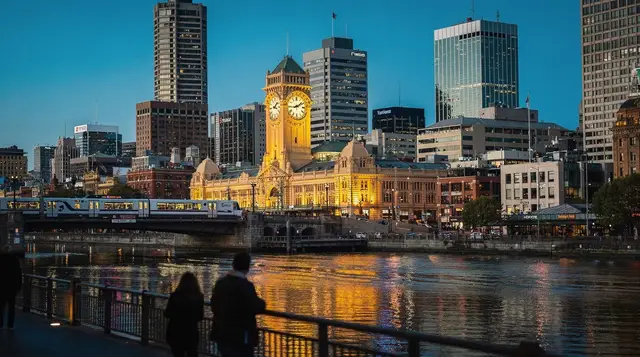
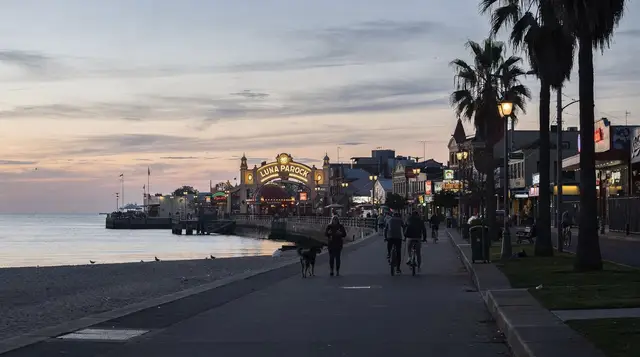
Getting around Melbourne: trams, trains, buses and beyond
Melbourne: Electric bike tour of melbourne
Duration: 4 hours
What's the easiest way to get around Melbourne?
For the CBD and inner suburbs, a Myki card covering trams, trains and buses handles almost everything, supplemented by walking for short hops and the free City Circle Tram and Free Tram Zone for no-cost CBD travel. For destinations beyond the metro network — the Great Ocean Road, Yarra Valley, Grampians — you'll need a hire car, an organised day tour, or in some cases a V/Line regional train.
Melbourne’s transport network splits cleanly into two problems: getting around the CBD and inner suburbs (genuinely easy, largely tram-based) and reaching regional Victoria (a car or organised tour, in most cases). This guide walks through every mode — trams, trains, buses, walking, cycling and rideshare — and which one suits which kind of trip.
| CBD & inner suburbs | Trams, trains, buses, walking — Myki covers all |
| Regional Victoria | Hire car, organised tour, or limited V/Line trains |
| Cost | Daily Myki fare cap keeps CBD travel genuinely affordable |
| Free options | Free Tram Zone, City Circle Tram |
| Key app | PTV app or Google Maps for real-time arrivals |
The short version: public transport for the city, a car or tour for the regions
Melbourne’s transport situation splits cleanly into two very different problems. Within the CBD and inner suburbs, the city’s tram, train and bus network — the largest operating tram system in the world by route length — genuinely covers almost everything a visitor needs, supplemented by walking and the occasional rideshare. Beyond the metro area, reaching destinations like the Great Ocean Road, Yarra Valley or Grampians requires a different approach entirely — a hire car, an organised day tour, or in a handful of cases a regional V/Line train. This guide covers both halves of that picture.
Trams: the backbone of CBD and inner-suburb travel
Melbourne’s tram network reaches almost every inner suburb a visitor would realistically want to explore: St Kilda, Fitzroy and Collingwood, Carlton, Southbank and beyond, all connected by frequent, easy-to-navigate services.
Our full tram guide covers routes, boarding and the touch-on/touch-off system in detail; the key things to know upfront are that you need a Myki card for any trip outside the Free Tram Zone, and that the free City Circle Tram gives a no-cost CBD orientation loop worth doing on your first day.
A first-time visitor’s transport priority list
For anyone arriving in Melbourne without a settled transport plan, a sensible priority order looks like this: first, sort a Myki card within your first hour or two in the city, since almost everything else depends on it. Second, ride the free City Circle Tram loop for orientation before committing to any specific plans. Third, familiarise yourself with the Free Tram Zone boundary so you don’t accidentally pay for trips that should be free. Fourth, download the PTV app and Google Maps before you need them, rather than fumbling with app stores mid-journey.
Only after these basics are sorted should you start thinking about regional day trips, hire cars or organised tours — getting the city-level transport fundamentals right first makes every subsequent decision easier.
Trains: connecting the wider metro area and beyond
Melbourne’s train network radiates out from two main CBD hubs — Flinders Street Station and Southern Cross Station — reaching outer suburbs, and, via V/Line regional services, destinations further afield including Geelong, Ballarat and Bendigo. For most CBD-focused sightseeing, trains matter less than trams day to day, but they’re the fastest way to reach the MCG and Melbourne Park precinct on event days, and the sole practical option for Melbourne Airport transfers via SkyBus departing from Southern Cross.
Buses: filling the gaps
Where trams and trains don’t reach, Melbourne’s bus network fills in — useful for some outer suburbs and specific routes not served by rail or tram, though visitors doing typical CBD and inner-suburb sightseeing will likely use buses far less than the other two modes. Night bus routes also cover some corridors after trams stop running late in the evening, worth knowing if you’re relying on public transport for a late finish.
Walking: often the fastest option in the CBD core
Central Melbourne’s compact, flat Hoddle Grid layout means most core sightseeing — the laneways, Federation Square, Flinders Street Station, the Queen Victoria Market district — sits within a comfortable 20-30 minute walk of most CBD accommodation, and a tram or bus rarely beats walking for trips within this radius once you factor in waiting time. A guided walking tour is worth considering specifically for the CBD core rather than relying on transport at all.
Cycling: a genuinely good alternative for covering ground
Melbourne’s flat terrain and extensive riverside and bayside bike paths make cycling a practical way to cover more ground than walking without the cost of constant rideshare trips — see our bike tours guide for guided and self-guided options, including electric-assist bikes for reaching further-out spots like Brighton’s bathing boxes without excessive effort.
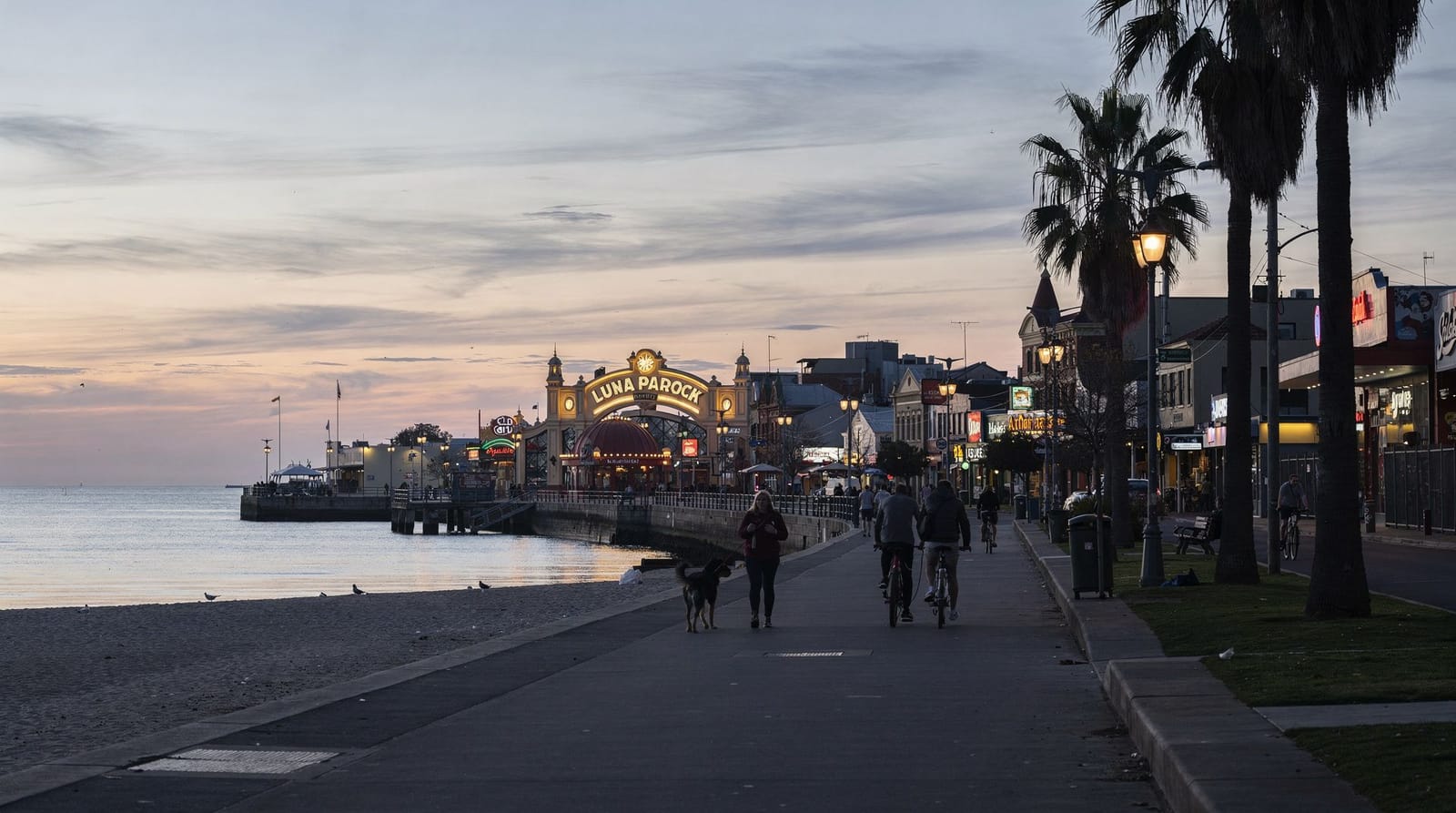 Electric bike tour of melbourneCheck availability
Apps and tools worth having on your phone
Beyond the PTV app and Google Maps mentioned earlier, a few other tools genuinely simplify getting around Melbourne. Rideshare apps (Uber, Ola and similar) are worth installing before you land rather than downloading them mid-trip when you actually need a car. A currency conversion app or our own currency converter tool helps make sense of AUD pricing across transport options, particularly useful when comparing SkyBus, taxi and tour costs against your home currency.
For self-drive regional trips, a dedicated offline maps app (Google Maps allows offline map downloads) is worth setting up before you leave mobile reception in more remote parts of regional Victoria, since coverage genuinely drops out in some stretches of the Great Ocean Road and Grampians.
Transport costs compared across a typical day
To put the different options in perspective, consider a single day of typical CBD-and-inner-suburb sightseeing: walking costs nothing but limits your range; a Myki-based day of tram and train use, benefiting from the daily fare cap, typically costs a modest, capped amount regardless of how many trips you take; a single rideshare trip across the same distance covered by several tram hops would cost considerably more per trip; and a guided bus or bike tour sits in between, priced for the specific experience and commentary rather than pure point-to-point transport.
Building your daily transport budget around trams and trains as the default, with rideshare reserved for late nights or heavy luggage days, keeps costs genuinely modest across a multi-day stay.
Uber, Ola and traditional taxis all operate widely across Melbourne and are a sensible choice for late-night travel, larger groups, or trips involving substantial luggage, but cost considerably more per trip than Myki-based tram or train travel for routine sightseeing movement. Reserve rideshare for situations where convenience genuinely outweighs cost — after a late dinner, or on arrival with heavy bags — rather than as a default for every trip within tram or train reach.
Getting to Melbourne’s day-trip destinations
Organised tours are the standard, no-hassle way to reach the Great Ocean Road, Phillip Island, Yarra Valley and similar destinations without driving yourself — a coach or small-group vehicle collects you in the CBD and handles all the logistics.
explore Melbourne’s CBD by guided bus tourSelf-driving gives considerably more flexibility and is genuinely worth considering for multi-stop regional itineraries, provided you’re comfortable with driving on the left and Victoria’s specific road rules — see our Great Ocean Road self-drive guide and broader driving in Victoria guide for the practical details.
V/Line regional trains cover a handful of specific destinations — Geelong, Ballarat, Bendigo — directly from Southern Cross Station, though many of Victoria’s best day-trip destinations (Yarra Valley, Phillip Island, the Great Ocean Road towns beyond Geelong) aren’t well served by rail alone. Our V/Line guide covers exactly which regional destinations work by train and which genuinely need a car or tour instead.
Accessibility across the network
Melbourne’s public transport accessibility has improved considerably in recent years but remains genuinely uneven across the network. Newer low-floor trams and progressively upgraded platform stops offer level boarding, while some older heritage-style trams and stops still require a step up — check accessible-stop listings on the PTV site if this affects your travel plans. Train stations vary similarly, with major hubs like Flinders Street and Southern Cross offering comprehensive accessible facilities, while some smaller suburban stations lag behind.
For visitors with significant mobility needs, confirming accessible routes for your specific planned journeys in advance, rather than assuming universal accessibility, avoids difficulties on the day.
A practical mode-by-mode decision guide
Staying entirely in the CBD for a day or two: walk plus the free City Circle Tram and Free Tram Zone — you may not need a loaded Myki at all.
Exploring inner suburbs (St Kilda, Fitzroy, Carlton, Southbank): Myki-loaded trams, supplemented by walking for the final short stretch to specific addresses.
Attending a match or event at the MCG or Melbourne Park: trains, given the boosted event-day frequency and severely limited parking near both venues.
Day-tripping to the Great Ocean Road, Phillip Island or Yarra Valley: an organised tour if you’d rather not drive, or a hire car if you want full flexibility and are comfortable with left-hand driving.
Late-night travel or heavy luggage: rideshare or taxi, accepting the cost premium for the convenience.
Transport for specific traveller types
Solo budget travellers: rely almost entirely on walking, the free City Circle Tram, the Free Tram Zone and Myki-loaded trams for everything else — genuinely one of the cheaper major cities to get around as a visitor.
Families with young children: trams and trains work well with prams on newer low-floor vehicles, though budgeting for occasional rideshare trips (particularly with tired kids at the end of a long day) is a sensible contingency rather than a strict rule to avoid entirely.
Business travellers with tight schedules: rideshare and taxi become more justifiable given time value, particularly for airport transfers and any trip where a specific arrival time matters more than cost.
Multi-generational groups: consider a private tour or transfer for regional day trips specifically, since coordinating an older or less mobile family member through public transport connections adds friction that a private vehicle removes entirely.
Extended stays (a week or more): a Myki Pass period ticket may work out more cost-effective than repeated daily-capped Myki Money spending — do the maths based on your actual expected daily travel pattern.
What changes if you’re travelling during a major event
Major events — AFL finals, the Australian Open, the Formula 1 Grand Prix, the Melbourne Cup — all significantly affect normal transport patterns, with boosted service frequency on relevant routes but also genuinely increased crowding and, for road-based options, considerably worse traffic and parking availability near the specific venue. If your visit coincides with any of these events, building extra transit time into your schedule and defaulting to public transport over driving near the relevant venue is doubly important — see our sports precinct guide for how each major event affects transport in its specific area of the city.
Mode-by-mode cost comparison
| Mode | Typical cost | Best for |
|---|---|---|
| Walking | Free | CBD core, short hops |
| Free Tram Zone / City Circle Tram | Free | CBD sightseeing loops |
| Myki tram/train/bus | Capped daily fare | Inner suburbs, everyday travel |
| Rideshare/taxi | Considerably more per trip | Late nights, luggage, groups |
| Guided day tour | Fixed per-person price | Regional day trips without driving |
| Hire car | Daily rate + fuel | Multi-stop regional itineraries |
Payment options beyond a physical Myki
Melbourne’s network has progressively expanded contactless payment options — tapping a contactless bank card or phone directly, rather than buying and topping up a physical Myki card, is increasingly supported across trams, trains and buses, though coverage and specific rules can still vary by mode and route. If you’d rather not queue for a physical Myki on arrival, check current PTV guidance for whether your card or phone is accepted for your specific trip; where it’s supported, it removes one more piece of friction from getting started.
The bottom line
Melbourne genuinely doesn’t require a car for the city itself — trams, trains, buses and walking cover the CBD and inner suburbs comprehensively, and the Free Tram Zone and City Circle Tram add a layer of no-cost convenience most comparable cities don’t offer visitors. The moment your itinerary extends to regional Victoria, though, plan deliberately: organised tours remove the driving question entirely, while self-driving via a hire car opens up a flexibility that public transport alone can’t match for destinations like the Great Ocean Road.
More tours on Viator
Top-rated experiences with verified reviews, bookable on Viator (a Tripadvisor company).


Frequently asked questions about Getting around Melbourne
Do I need a car in Melbourne?
Not for the CBD and inner suburbs, where trams, trains and walking cover almost everything efficiently. A car becomes genuinely useful, or close to necessary, for exploring the Great Ocean Road, Grampians and parts of the Mornington Peninsula independently, since public transport to these areas is limited or nonexistent for some stops.What's the difference between trams, trains and buses in Melbourne?
Trams run on street-level tracks throughout the CBD and inner suburbs, the densest and most useful mode for most visitor sightseeing; trains connect the CBD to outer suburbs and regional Victoria via Southern Cross and Flinders Street Stations; buses fill gaps in areas trams and trains don't reach, particularly further from the centre.Is Uber or taxi common in Melbourne?
Yes, both operate widely and are a reasonable choice for late-night travel, groups, or trips involving heavy luggage, though they're considerably more expensive per trip than Myki-based public transport for routine sightseeing movement within the tram and train network's reach.How walkable is central Melbourne?
Very — the CBD's Hoddle Grid layout is compact and flat, and most core sightseeing (laneways, Flinders Street Station, Federation Square, Queen Victoria Market) sits within a comfortable 20-30 minute walking radius of most CBD accommodation.How do I get to the Great Ocean Road or Yarra Valley without a car?
Organised day tours from the CBD cover both destinations without needing to drive, and are the standard choice for visitors uncomfortable driving on the left or unwilling to hire a car for a single day. Self-driving gives more flexibility but requires confidence with Victoria's road rules — see our dedicated self-drive and driving guides.What's the best transport app for visitors in Melbourne?
The PTV (Public Transport Victoria) app and Google Maps both give accurate, real-time tram, train and bus directions and arrival estimates, and are the two most useful tools for navigating the network without needing to memorise routes or timetables.Does Melbourne have a daily fare cap?
Yes — Myki applies a daily cap on tram, train and bus fares within the metropolitan zone, so once you hit the cap on a given day, further trips on those modes are free for the rest of that day, making unlimited sightseeing hops genuinely affordable.Can I use contactless card or phone payment instead of a physical Myki?
Melbourne's public transport network has been progressively rolling out contactless bank card and phone payment options alongside the traditional Myki card, though coverage and rules can vary by mode, so check current PTV guidance for your specific trip if you'd rather not buy a physical Myki card.
Top experiences
Bookable activities with verified prices and instant confirmation on GetYourGuide.