Aboriginal heritage in Melbourne: what to see and where
Royal Botanic Gardens Victoria Melbourne Gardens: Melbourne aboriginal heritage walk
What is the best way to learn about Aboriginal heritage in Melbourne?
The Aboriginal Heritage Walk through the Royal Botanic Gardens, led by Wurundjeri and other Kulin Nation guides, is the single best introduction — 90 minutes covering bush food, tool-making and the site's significance to the Kulin Nation before it became a European-style garden. Bunjilaka at Melbourne Museum and the Koorie Heritage Trust near Federation Square are the best free follow-ups.
| Where | Royal Botanic Gardens, Melbourne Museum (Carlton), Federation Square, near Healesville |
| Cost | Free (Bunjilaka, Koorie Heritage Trust) to around AUD 45–70 for a guided walk |
| Time needed | Half a day for the CBD sites; add a day trip for Coranderrk near Healesville |
| Best for | Culture-curious travellers wanting more than the laneways-and-coffee circuit |
| Booking | Guided walks recommended in advance, especially weekends and school holidays |
Whose land Melbourne sits on
Before it was a European settlement founded in 1835, the land now covered by central Melbourne and its surrounding suburbs was — and remains — the Country of the Wurundjeri Woi Wurrung people, part of the Kulin Nation, an alliance of five language groups (Wurundjeri, Boonwurrung, Wathaurong, Taungurong and Dja Dja Wurrung) who shared custodianship of the broader Port Phillip and Yarra River region for an estimated 40,000-plus years before colonisation. The Yarra River itself carries a Woi Wurrung name, Birrarung, still used today alongside the colonial one, and the river’s significance to Kulin culture long predates the grid of streets, arcades and trams now layered on top of it.
This isn’t background trivia — it’s directly relevant to how you experience the city. Federation Square, Melbourne Museum, the Royal Botanic Gardens and the Yarra corridor itself all sit on sites with specific, documented Aboriginal significance, and a handful of well-run public programs make that history accessible without requiring specialist knowledge going in.
The Aboriginal Heritage Walk, Royal Botanic Gardens
The single best introduction is the Aboriginal Heritage Walk through the Royal Botanic Gardens, a roughly 90-minute guided walk led by Wurundjeri or other Kulin Nation guides through the gardens’ billabongs, lawns and bushland-style plantings. The walk covers traditional plant use (bush foods, medicine plants, tool-making materials), the site’s pre-colonial significance as a meeting and camping ground near the river, and how the 19th-century transformation into a formal European-style botanic garden altered — but didn’t erase — the land’s older story.
It’s a genuinely different experience from simply strolling the gardens on your own: guides point out plants that look purely decorative to an untrained eye but carried practical and cultural importance for thousands of years, and connect the gardens’ geography (its position on a bend of the Yarra, its higher ground) to why this specific site mattered before European settlers valued it purely for its river frontage and soil quality.
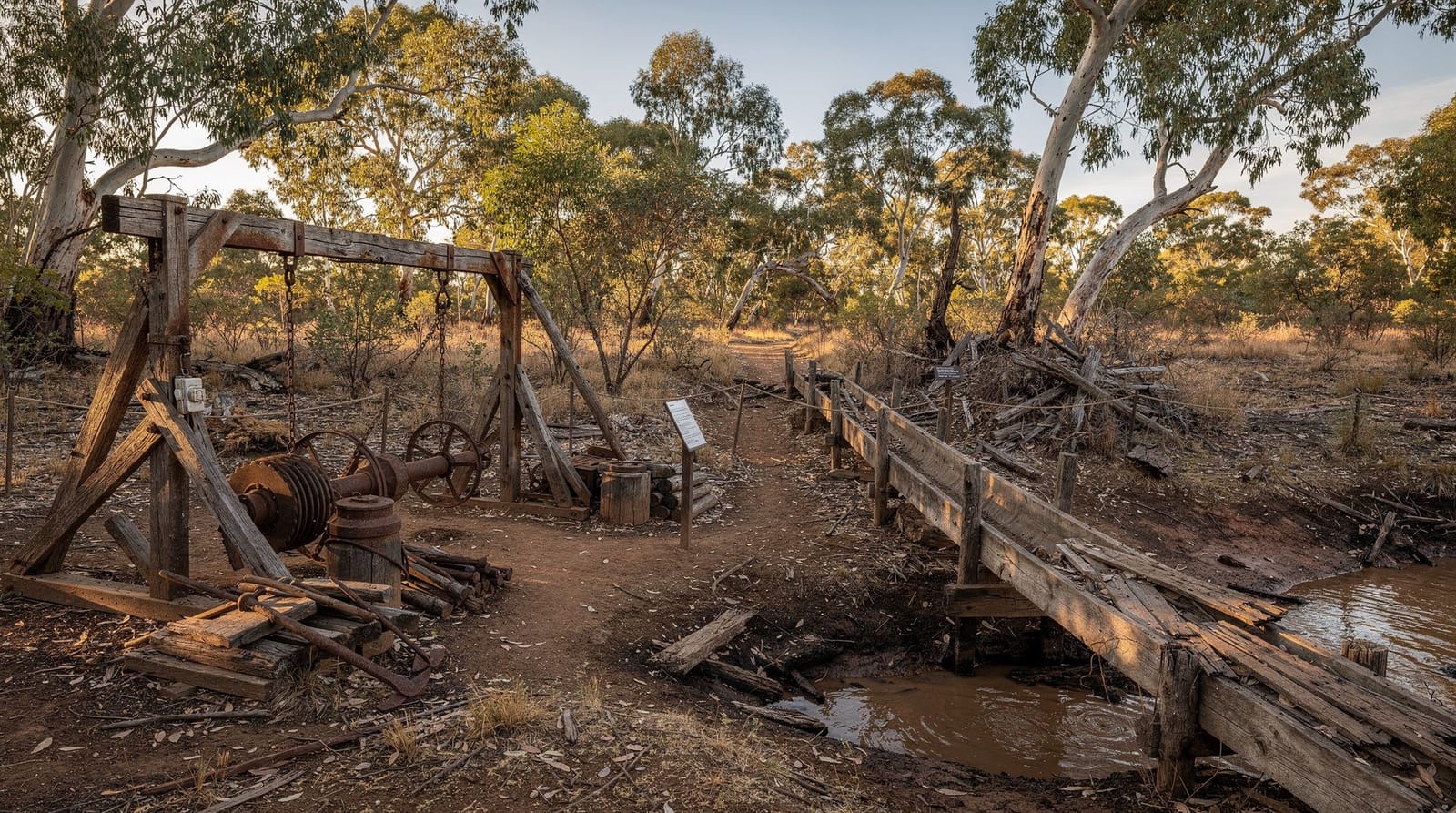 Royal Botanic Gardens Victoria Melbourne Gardens: Melbourne aboriginal heritage walkCheck availability
Bunjilaka Aboriginal Cultural Centre, Melbourne Museum
Inside Melbourne Museum in Carlton Gardens, Bunjilaka is a dedicated Aboriginal cultural space — its name references Bunjil, the wedge-tailed eagle creator spirit central to Kulin Nation belief systems. The centre’s exhibitions rotate but consistently cover Victorian Aboriginal history, contemporary Indigenous art and culture, and difficult colonial-era material presented directly rather than softened. It’s included in standard museum admission, making it one of the best-value stops on this list since you’re not paying anything extra to visit.
Bunjilaka works well paired with the museum’s other galleries on a single visit, but don’t treat it as a quick five-minute add-on — the exhibitions reward at least 45 minutes to an hour if the subject genuinely interests you.
Koorie Heritage Trust, Federation Square
The Koorie Heritage Trust, based in the Yarra Building at Federation Square, is a free-admission gallery, cultural organisation and archive dedicated to Aboriginal peoples of south-eastern Australia specifically (as distinct from a general “Australian Indigenous” framing that can flatten distinct nations and languages into one category). Its rotating exhibitions showcase contemporary Koorie artists, and the on-site shop sells genuine Aboriginal-made art, craft and books rather than the mass-produced “Aboriginal-style” souvenirs sold in some CBD tourist shops — a distinction worth caring about if you want to buy something authentic rather than something merely aesthetic.
The Trust also runs guided walking tours of Melbourne’s CBD focused specifically on Aboriginal history and contemporary Koorie community life in the city — a good complement to the more nature-focused Botanic Gardens walk.
book a guided Aboriginal heritage walking tourCoranderrk, near Healesville
For a deeper, harder history, Coranderrk — established in 1863 near present-day Healesville — was a 19th-century Aboriginal reserve that became, for several decades, a largely self-managed and self-sufficient farming community run substantially by its Wurundjeri and other Kulin residents, producing crops and hops that were commercially successful enough to draw resentment from neighbouring settler farmers.
The Victorian government progressively reduced Coranderrk’s land and autonomy from the 1870s onward and formally closed the reserve in the early 1900s, despite sustained, well-documented protest and petitioning by its residents — a story that’s become one of the better-known case studies in Victorian Aboriginal history precisely because of how thoroughly its residents documented their own resistance at the time.
Parts of the original Coranderrk site remain accessible near Healesville today, and the story is told in more depth at the Koorie Heritage Trust and in regional Yarra Valley exhibitions — worth building into a Yarra Valley day trip if the history interests you beyond the wine.
Comparing the four main sites at a glance
| Site | Cost | Time needed | Guide-led |
|---|---|---|---|
| Aboriginal Heritage Walk (Botanic Gardens) | Around AUD 45–70pp guided | ~90 minutes | Yes, Wurundjeri/Kulin guides |
| Bunjilaka (Melbourne Museum) | Included in museum admission | 45–60 minutes | Mostly self-guided, occasional talks |
| Koorie Heritage Trust | Free | 30–60 minutes | Self-guided gallery; guided city walks available |
| Coranderrk (near Healesville) | Free to explore the accessible site | Half a day including travel | Mixed; interpretation varies by visit |
If time only allows one stop, the Aboriginal Heritage Walk gives the richest single-visit introduction because it’s guide-led throughout; if budget is the constraint, Bunjilaka and the Koorie Heritage Trust together cover a comparable breadth of history for free.
Should you book a guided walk or go it alone?
The honest answer depends on how much this theme matters to your trip. A guided Aboriginal Heritage Walk or Koorie Heritage Trust city tour costs more and requires advance booking, but delivers direct storytelling from a Wurundjeri or Kulin Nation guide, the chance to ask questions, and access to context that simply isn’t printed on a sign anywhere in the gardens. Bunjilaka and the Koorie Heritage Trust’s static galleries, by contrast, are free, require no booking, and reward a self-paced visit — a genuinely good option if a guided slot doesn’t fit your schedule or budget.
A reasonable middle path for a first Melbourne visit: do one guided experience (the Botanic Gardens walk is the strongest single choice) and treat Bunjilaka and the Koorie Heritage Trust as free, flexible follow-ups you can fit around the rest of your CBD day.
Scar trees and other traces in the urban landscape
Beyond the formal cultural institutions, the Melbourne region still carries physical traces of pre-colonial Aboriginal life for those who know where to look. Scar trees — large old eucalypts bearing healed-over wounds where bark was removed for canoes, shields, coolamons (carrying vessels) or shelter — survive in pockets across parks and reserves in greater Melbourne, including within the Royal Botanic Gardens and along stretches of the Yarra corridor further from the CBD. Most are unmarked or only lightly signed, precisely because their significance is better protected by not being turned into a tourist attraction with foot traffic and souvenir stands.
Stone tool scatters, midden sites (shell and food-waste deposits marking long-term camping sites) and other archaeological traces exist across the wider region too, though for the same protective reasons they’re rarely publicised with specific locations. If this kind of detail genuinely interests you, the guided walks and cultural centres listed above are the appropriate way to learn more — asking a Wurundjeri-led guide directly, rather than searching for exact GPS coordinates of unmarked heritage sites, respects both the sites themselves and the communities who maintain them.
Language and place names worth knowing
A small vocabulary goes a long way toward understanding how deeply Aboriginal place-naming underlies the modern city, even where it’s not always visible on street signs. Beyond Birrarung (the Yarra), Nairm is the Boonwurrung name for Port Phillip Bay; Bunjil, the wedge-tailed eagle, is the Kulin Nation’s creator spirit and namesake of Bunjilaka; Corroboree, an English-adapted word now used broadly across Australia, originally described a specific type of Aboriginal ceremonial gathering with song and dance.
Increasingly, new public infrastructure, parks and buildings across Melbourne carry dual English and Aboriginal names — the Bunjil statue outside Docklands Stadium (Marvel Stadium) is a well-known example most visitors walk past without knowing its significance.
Learning even a handful of these names before a visit changes how you read the city’s public art, signage and place names, turning what looks like arbitrary naming into a visible layer of continuous Aboriginal presence in a city that’s often marketed purely on its European colonial and contemporary multicultural identity.
What changed in 2017: the Yarra River’s legal status
In 2017, Victoria passed legislation (the Yarra River Protection Act, informally recognising the river as “one living and integrated natural entity”) that formally acknowledged the Yarra/Birrarung’s cultural and spiritual significance to the Wurundjeri people in a way explicitly informed by Māori legal recognition of the Whanganui River in New Zealand the same year. It’s a largely symbolic and governance-focused piece of legislation rather than one that changes how visitors experience the river day-to-day, but it reflects a broader, ongoing shift in how the city and state formally engage with Aboriginal heritage rather than treating it purely as historical background.
How to approach this respectfully as a visitor
Use both names where you can. Referring to the river as Birrarung/Yarra, or acknowledging Wurundjeri Country when it’s contextually relevant, costs nothing and reflects the growing convention in Victorian public life.
Buy art and craft from verified Aboriginal-owned or Aboriginal-endorsed outlets. The Koorie Heritage Trust shop and Bunjilaka’s gift shop are reliable; some CBD souvenir shops sell “Aboriginal-style” products with no connection to actual Aboriginal artists or communities, a distinction worth checking before buying anything marketed as authentic.
Prioritise guided experiences led by Aboriginal guides over generic cultural content. The Botanic Gardens walk and Koorie Heritage Trust tours are led by Wurundjeri and Kulin Nation people themselves, which is a materially different experience from a general city tour that mentions Aboriginal history in passing.
Don’t expect a single site to cover everything. Aboriginal history in the Melbourne region spans tens of thousands of years and multiple distinct nations — no single walk, museum or afternoon does justice to that scope, and treating any one stop as “the Aboriginal experience, done” undersells the depth available across several sites.
A practical one-day itinerary for this theme
If Aboriginal heritage is a specific priority for your Melbourne time rather than one stop among many, a realistic single day looks like: morning Aboriginal Heritage Walk through the Royal Botanic Gardens (90 minutes plus travel), a coffee break, then an afternoon combining Bunjilaka at Melbourne Museum with the Koorie Heritage Trust at Federation Square — both free or included in existing admission, both walkable from the CBD, and both complementary rather than repetitive in what they cover.
For a longer trip, add a Yarra Valley day that includes time near Healesville to learn about Coranderrk, extending the theme from Melbourne’s inner city out into regional Victoria where the 19th-century mission and reserve system played out most directly.
Getting there
The Royal Botanic Gardens sits a short walk or tram ride from Southbank and the CBD; Melbourne Museum is in Carlton Gardens, a 10-minute tram ride or 20-minute walk from the city centre near Carlton; the Koorie Heritage Trust is inside Federation Square, directly opposite Flinders Street Station and a two-minute walk from Hosier Lane. All three sit comfortably within a single day’s walking and tram-hopping without needing a car.
Where this fits in your Melbourne trip
This is one of the more substantive additions you can make to a Melbourne itinerary beyond the standard laneways-and-coffee circuit, and it doesn’t require sacrificing much time — a single well-planned day covers the CBD’s core sites, and even a rushed half-day covering just the Botanic Gardens walk and Bunjilaka gives genuine depth. It pairs naturally with the city’s broader Victorian-era history and colonial architecture, since so much of what Melbourne is now proud of architecturally was built directly on land and wealth extracted from this same history — a connection worth holding in mind rather than treating the two subjects as unrelated chapters of the same guidebook.
If you’re staying in the CBD or Southbank, every site in this guide is within easy tram or walking distance; from Fitzroy or Richmond, it’s a short tram ride into the city centre. For a longer trip that includes regional Victoria, the Ballarat goldfields region and Grampians (Gariwerd) — whose traditional name, Gariwerd, is now used alongside “Grampians” on official park signage — extend this history well beyond the city into Country with its own distinct, deep significance to the Djab Wurrung and Jardwadjali peoples.
Combining this theme with a wider first-time itinerary
Aboriginal heritage sites slot naturally into a broader Melbourne stay rather than requiring a dedicated trip on their own. A 3-day first-timer itinerary has room for a morning Botanic Gardens walk without displacing the laneways, Queen Victoria Market or Southbank stops most visitors also want. If your dates run longer, folding a Healesville day into a broader Yarra Valley day trip lets you see Coranderrk’s story alongside the region’s wineries rather than as a separate, single-purpose excursion.
More tours on Viator
Top-rated experiences with verified reviews, bookable on Viator (a Tripadvisor company).


Frequently asked questions about Aboriginal heritage in Melbourne
Who are the traditional owners of the Melbourne area?
The Wurundjeri Woi Wurrung people are the traditional owners of the land the Melbourne CBD sits on, part of the broader Kulin Nation alliance of five language groups (Wurundjeri, Boonwurrung, Wathaurong, Taungurong and Dja Dja Wurrung) who shared custodianship of the wider Port Phillip and Yarra region for tens of thousands of years before European settlement in 1835.What does Birrarung mean and why does it matter?
Birrarung is the Woi Wurrung name for the Yarra River, meaning roughly 'river of mists' or 'river of white mists and shadows.' It's increasingly used alongside the colonial name Yarra in official signage and place-naming as part of a broader push to recognise the river's Aboriginal name and significance, including its 2017 legal recognition as a living entity.Can I book the Aboriginal Heritage Walk in the Botanic Gardens without a private tour?
Yes — the Royal Botanic Gardens runs this as a standing public program with scheduled dates rather than only as a bespoke private booking, though a guided small-group or private version through the affiliate booking below guarantees a specific date and time rather than relying on the gardens' own calendar.Is Bunjilaka at Melbourne Museum free to visit?
Bunjilaka Aboriginal Cultural Centre is included in standard Melbourne Museum general admission, so there's no separate fee — a genuinely good-value stop if you're already visiting the museum for its other galleries.What is Coranderrk and can I visit it?
Coranderrk, near Healesville, was a 19th-century Aboriginal reserve and mission established in 1863 that became a self-sufficient farming community run substantially by its Wurundjeri and other Kulin residents, before the Victorian government forcibly reduced and eventually closed it in the early 1900s. Parts of the original site are accessible near Healesville, with the Coranderrk story also told at the Koorie Heritage Trust and in regional exhibitions.Is the Koorie Heritage Trust free?
Yes, general admission to the Koorie Heritage Trust's gallery space (Yarra Building, Federation Square) is free, funded through a mix of government and philanthropic support rather than ticket sales, though the Trust welcomes donations and sells Aboriginal-made art and craft in its shop.Do I need to book the Aboriginal Heritage Walk in advance?
Booking ahead is strongly recommended, especially for weekend dates and school holiday periods, since group sizes are kept deliberately small to preserve the quality of the guiding — a genuine benefit rather than a limitation, but one that means popular dates can fill days ahead. Weekday mornings are usually the easiest slots to secure on short notice.Is a guided walk better than exploring independently?
For most visitors, yes — the Aboriginal Heritage Walk and Koorie Heritage Trust tours are led by Wurundjeri or other Kulin Nation guides sharing knowledge that isn't fully captured in signage or exhibition text, and being able to ask direct questions adds a dimension a self-guided visit can't replicate. That said, Bunjilaka and the Koorie Heritage Trust's static exhibitions are genuinely worthwhile on their own if a guided walk doesn't fit your schedule.
Top experiences
Bookable activities with verified prices and instant confirmation on GetYourGuide.