Maru Wildlife Park at Grantville: a roadside stop on the way to Phillip Island
Melbourne: Phillip island penguins and wildlife full day tour
What is Maru Wildlife Park and where is it?
Maru Wildlife Park is a smaller, independently run wildlife park at Grantville, on the South Gippsland Highway roughly 90 minutes from Melbourne and about 30-40 minutes before reaching Phillip Island via San Remo. It's known for hand-feeding kangaroos and wallabies in an open paddock setting and holds koalas, dingoes and various other native species across a compact site, making it a straightforward roadside stop for visitors driving to or from Phillip Island rather than a dedicated destination in its own right.
| Where | Grantville, South Gippsland Highway, ~90 min from Melbourne |
| Cost | Separate general admission; kangaroo feed usually purchased on site |
| Time needed | 45 minutes to 1.5 hours |
| Booking | Not required — standard walk-up roadside stop |
| Best for | Families with young children driving to Phillip Island |
Setting the right expectations before you go
Because Maru is easy to stumble across in search results or roadside signage while planning a Phillip Island trip, it’s worth being clear from the outset about what kind of stop it actually is: a modest, independently run animal park built around a hands-on kangaroo-feeding experience and a general farmyard atmosphere, not a large-scale conservation facility on the order of Healesville Sanctuary or a wild-colony experience like the Penguin Parade. Visitors who arrive expecting either of those will likely be underwhelmed; visitors who arrive expecting a pleasant, low-cost roadside break with a genuine kangaroo-feeding opportunity generally find it delivers exactly what it promises.
A roadside detour, not a destination in its own right
Maru Wildlife Park sits at Grantville on the South Gippsland Highway, roughly 90 minutes from Melbourne and about 30-40 minutes before reaching Phillip Island via the San Remo bridge — meaning it falls almost exactly on the direct driving route that most Melbourne visitors already take to reach the Penguin Parade and the island’s other wildlife sites. It’s an independently run park, separate from Phillip Island Nature Parks (the not-for-profit body that manages the Penguin Parade, Koala Conservation Centre and the Nobbies), and it isn’t included in any of the combo tickets or bundled tours covering those sites.
That independence is worth understanding upfront: Maru is a genuinely separate visit and separate entry fee, best thought of as an optional roadside stop rather than a required part of a Phillip Island day.
The drive from Melbourne to Grantville
Grantville sits roughly an hour and 15-25 minutes from central Melbourne depending on the exact route and traffic through the outer south-eastern suburbs, via the South Gippsland Highway. This positions it as a genuinely natural halfway-ish point on the roughly 90-minute-to-two-hour total drive to Phillip Island, rather than requiring a specific detour off the main route. Visitors driving from Melbourne’s CBD typically pass through Cranbourne and Koo Wee Rup before reaching the Grantville area, with the highway gradually transitioning from suburban fringe development into open farming country as the drive progresses.
What’s inside
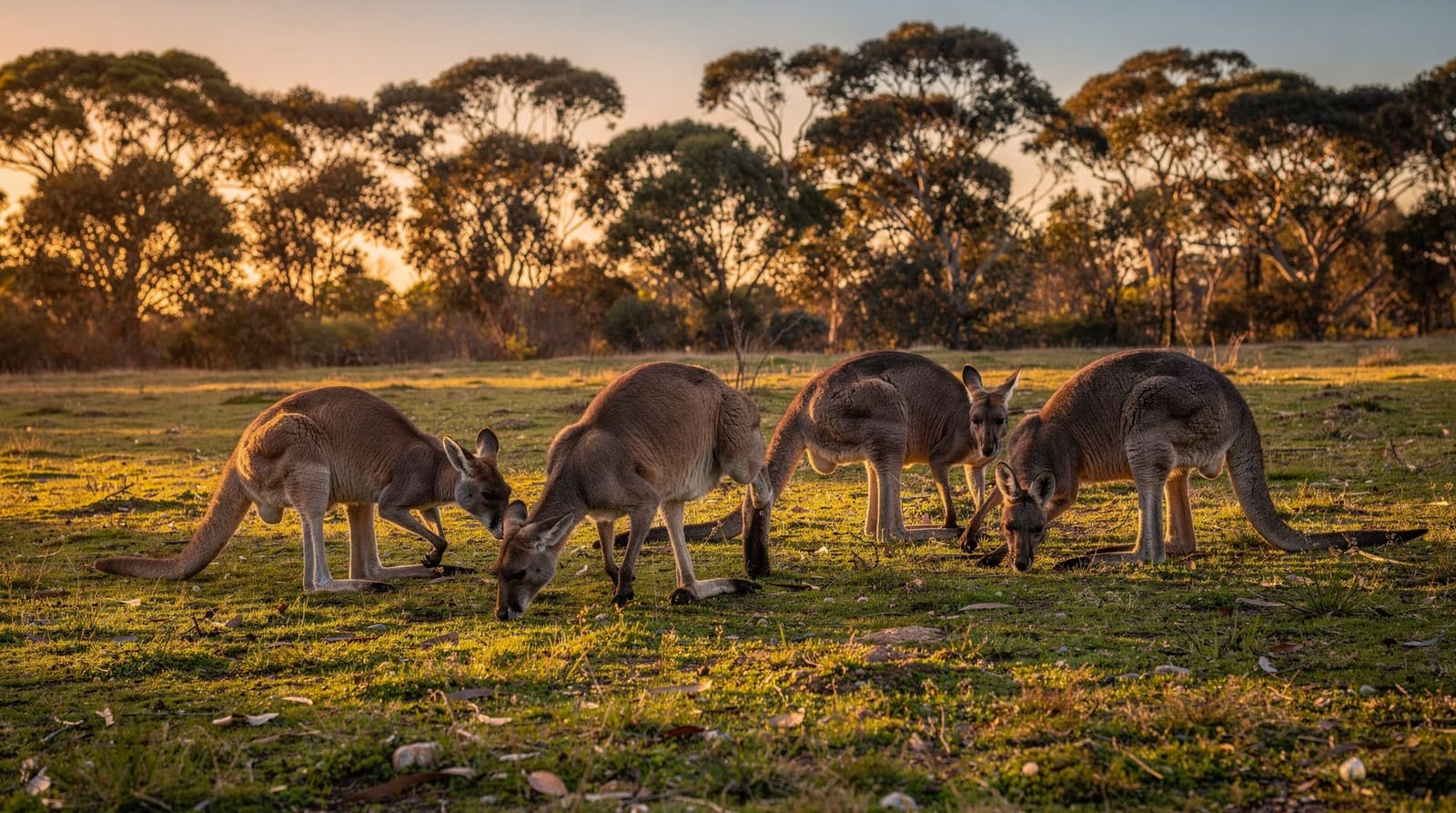
Maru’s main draw is its open-paddock kangaroo and wallaby enclosure, where hand-feeding is permitted with feed available for purchase on site — a similar format to Moonlit Sanctuary on the Mornington Peninsula side, though Maru sits directly on the Phillip Island route rather than requiring a separate trip in a different direction. Beyond the kangaroos, the park holds koalas, dingoes and a range of other native and some introduced species across a compact, easily walkable site, along with a farmyard-style area that tends to appeal to younger children specifically.
A brief note on independent versus not-for-profit wildlife parks
It’s worth understanding the distinction between Maru’s independent, commercially run model and the not-for-profit conservation model used at Phillip Island Nature Parks, Zoos Victoria’s sites and Healesville Sanctuary — this isn’t necessarily a mark against Maru specifically, but it does mean the underlying funding and research priorities differ. Not-for-profit sites typically funnel a meaningful share of ticket revenue into active field conservation and research programs beyond the visitor experience itself, while independently run commercial parks generally operate more like conventional tourism businesses, with animal welfare and visitor experience as the primary focus rather than a broader conservation research mandate.
Neither model automatically means better or worse animal care in practice, but travellers with a specific interest in supporting conservation research specifically, rather than simply enjoying an animal encounter, may want to weigh this distinction when deciding how to allocate their wildlife-related spending across a Victoria trip.
Why it’s a genuine option for a driving stop
Long highway drives with young children benefit from a break roughly halfway through, and Maru’s position on the South Gippsland Highway corridor makes it a natural stopping point for exactly that reason — a chance to stretch legs, use facilities and let kids interact with animals directly before continuing on to Phillip Island’s more structured, boardwalk-based wildlife sites. For visitors without children or without much spare time in their itinerary, it’s entirely skippable in favour of going straight to Phillip Island’s main sites, covered in full in Phillip Island wildlife.
What time of day works best at Maru
Because the kangaroo enclosure’s feeding activity depends partly on how hungry the animals happen to be and the ambient temperature, mid-morning through early afternoon tends to see the most active engagement from the resident mob, while very early morning or the heat of a summer afternoon can see quieter, less interactive animals resting in shade. Given that most Phillip Island day trips depart Melbourne mid-morning, a Maru stop naturally falls within this more active window for most travellers without requiring any special timing adjustment.
Comparing Maru with Phillip Island’s Koala Conservation Centre
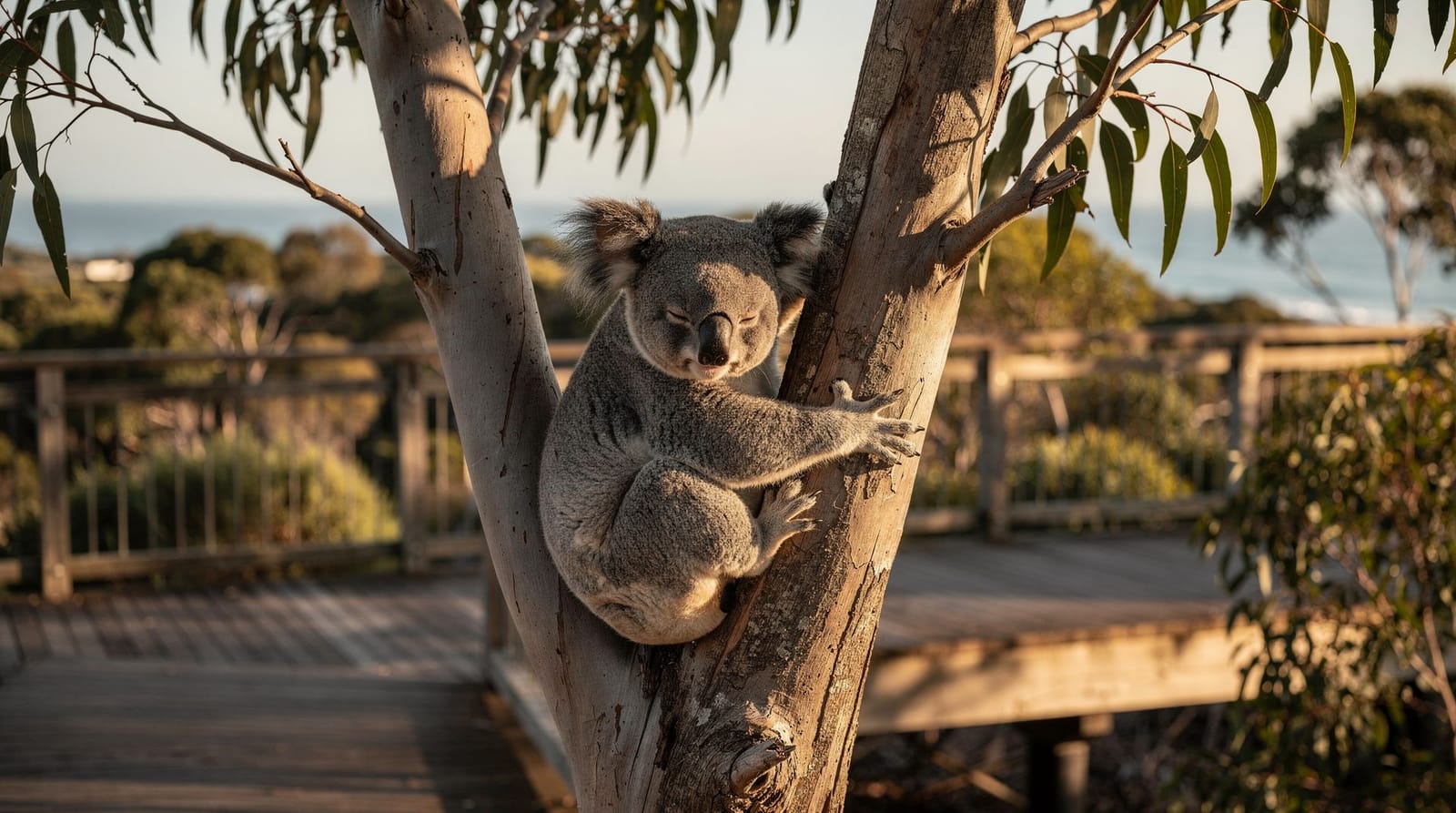
The Koala Conservation Centre on Phillip Island itself uses raised boardwalks through a protected reserve of genuinely wild, free-ranging koalas, a different format built around minimal-contact observation rather than hands-on interaction. Maru’s koalas, by contrast, are held in a more conventional enclosure as part of a smaller, independently run park. Neither is a replacement for the other — visitors wanting the fullest possible koala encounter on a Phillip Island trip may still want to visit the Koala Conservation Centre even after stopping at Maru, since the two offer genuinely different styles of viewing.
Alternative stopping points on the way to Phillip Island
For travellers who’d prefer a non-wildlife break during the drive, or who’ve decided to skip Maru specifically, the South Gippsland Highway corridor and the approach to San Remo offer a few other reasonable stopping options — San Remo itself, right at the base of the Phillip Island bridge, has a small selection of cafes and a jetty area where local pelicans often gather, functioning as a low-cost alternative stretch-the-legs stop immediately before crossing onto the island. Choosing between Maru and a San Remo stop largely comes down to whether the priority is a hands-on animal encounter partway through the drive or a simpler coffee-and-view break right before arriving at the main event.
Market days and additional facilities
Maru has traditionally operated a produce and craft market area on weekends alongside its animal enclosures, worth factoring in if visiting on a Saturday or Sunday and interested in local produce or craft stalls in addition to the wildlife encounters. Basic food and drink facilities are available on site, useful for a lunch break partway through a longer highway drive.
Practical logistics for a self-drive family
Because Maru sits directly on the route rather than requiring a detour, incorporating it into a Phillip Island day trip doesn’t require significant advance planning — most families simply decide on the day, or the night before, whether the stop is worth the extra time based on how the children in the group are coping with the drive so far. On-site parking is straightforward and typically free, and the park’s compact layout means there’s no risk of the stop dragging on longer than planned, unlike some of the larger, more sprawling wildlife sites on Phillip Island itself where a “quick look” can easily stretch to two or three hours once everyone is engaged.
How long to plan for
Most visitors spend 45 minutes to an hour and a half at Maru — enough time for the kangaroo feeding enclosure and a walk through the rest of the site, without the half-day-plus commitment the main Phillip Island sites typically require. This makes it genuinely compatible with continuing on to Phillip Island the same day, rather than eating meaningfully into time better spent at the Koala Conservation Centre, the Nobbies or the Penguin Parade itself.
Weather considerations at Maru
Like most of Victoria’s wildlife parks, Maru’s enclosures are predominantly outdoors, meaning a wet or particularly cold day changes the practical experience of the kangaroo feeding enclosure specifically, since animals may be less inclined to approach for feeding in heavy rain. This is a minor consideration for a short stop rather than a full day out, but worth bearing in mind if the forecast for the Gippsland region on the day of travel looks genuinely poor — in that case, prioritising Phillip Island’s own indoor-adjacent facilities (the visitor centres at the Penguin Parade and Nobbies both have covered areas) over an additional outdoor stop at Maru may make for a more comfortable overall day.
Kangaroo and koala spotting elsewhere in Victoria
For a broader comparison of every reliable place to see kangaroos across the state — including wild sightings that cost nothing at all — see kangaroo spotting in Victoria. For the equivalent comparison focused on koalas, covering Phillip Island’s Koala Conservation Centre, Healesville Sanctuary and wild roadside spotting along the Great Ocean Road, see koala spotting in Victoria.
Grantville and the South Gippsland Highway corridor
Grantville itself is a small township along the South Gippsland Highway, best known to most travellers precisely because of its position on the direct route to Phillip Island rather than as a destination with much else to offer beyond Maru Wildlife Park and a handful of local services. The highway corridor through this section of Gippsland runs through relatively flat farming and grazing country, a noticeable contrast to the more dramatic coastal scenery that begins once the road crosses onto Phillip Island itself via the San Remo bridge. For self-drivers, recognising Grantville as a signpost that Phillip Island is within the final 30-40 minutes of the drive is a useful practical marker in itself, beyond the wildlife park stop.
Ticket pricing and what’s included
Maru Wildlife Park operates its own independent ticketing structure, with general admission covering access to the kangaroo and wallaby feeding enclosure, the koala and other animal exhibits, and the farmyard area. Feed for the kangaroo enclosure is typically purchased separately on site, similar to the arrangement at Moonlit Sanctuary, rather than being bundled into the base entry price. Because Maru operates independently of any of the tour catalogue’s bundled Phillip Island packages, it’s worth budgeting for as a genuinely separate cost on top of whatever Phillip Island tickets or tour package is booked for the main event later in the day.
How Maru compares with a dedicated Phillip Island wildlife day
Families with limited time on a single Phillip Island day trip need to weigh up whether a Maru stop is worth the time cost against the island’s own wildlife sites. Because Maru sits before the San Remo bridge crossing, adding it to the itinerary doesn’t cost extra driving distance beyond what’s already required to reach Phillip Island — it simply adds the visit duration itself (45 minutes to 90 minutes) to the overall day.
For families with a full day allocated to Phillip Island and comfortable extending their departure time from Melbourne slightly earlier, a Maru stop is a low-cost addition; for those on a tighter schedule trying to fit in the Nobbies, Koala Conservation Centre and Penguin Parade all in one day, skipping Maru in favour of more time at the island’s own sites is the more time-efficient choice.
What families with very young children specifically appreciate
Maru’s farmyard-style area, featuring smaller, gentler animals in addition to the main kangaroo and koala exhibits, tends to appeal particularly to toddlers and very young children who may find some of Phillip Island’s larger, more spread-out wildlife sites overwhelming or require more walking than a younger child can manage comfortably. The compact, easily walkable layout at Maru suits shorter attention spans well, making it a practical stop specifically for families with children too young for a full Phillip Island wildlife day but still wanting some hands-on animal interaction as part of the overall road trip.
Accessibility considerations
Maru’s grounds are generally flat and manageable for prams, given the site’s compact scale, though as an independently run park rather than a purpose-built accessible facility, formal wheelchair accessibility provisions may be more limited than at the larger, purpose-designed Zoos Victoria or Phillip Island Nature Parks sites. Visitors with specific accessibility needs may want to check current facilities directly with the park ahead of a visit rather than assuming parity with the larger, better-resourced conservation sites covered elsewhere in this guide.
Other independent wildlife parks along Victoria’s regional highways
Maru is one of several smaller, independently run wildlife parks scattered along Victoria’s regional highway network, generally positioned to catch passing tourist traffic heading to a larger, better-known destination. This is a common pattern across regional Victoria and worth being aware of more broadly — such parks vary considerably in scale, animal welfare standards and overall quality, and worth researching individually rather than assuming uniform standards simply because a park happens to sit conveniently on a well-travelled route.
Checking recent visitor reviews before committing time to any such independent roadside wildlife stop is a reasonable precaution, given the more variable standards compared with the well-established, not-for-profit conservation bodies covered elsewhere in this guide.
If you’d rather not drive yourself
Not everyone wants to handle the highway, the timing and the return leg in the dark after the penguins. If that’s you, a guided day from Melbourne takes the driving off your hands, though it won’t normally stop at Maru, so you trade this roadside break for a tighter, pre-set itinerary. Options such as a full-day tour combining the penguins with koalas and other wildlife are covered in our day-trip guide, and for a ready-made booking you can look at a full-day Phillip Island tour with penguins and wildlife. Travellers who want a slower pace and a night on the island can instead consider a two-day trip with accommodation that pairs the Great Ocean Road with Phillip Island.
If you are driving but only want the evening show sorted, a general viewing ticket for the Penguin Parade keeps the main event simple while Maru stays a flexible, unbooked extra earlier in the day. Our Penguin Parade ticket comparison explains how the options differ.
Planning the rest of the trip around Maru
Because Maru is a short, low-pressure stop, it slots easily into a wider Victoria plan. If you are still deciding how to structure the trip, the Phillip Island day trip guide lays out the day, and the Phillip Island destination page gives the broader picture of the island, including the town of Cowes. Those wanting to pair wildlife with a different kind of scenery can look at Wilsons Promontory or the Mornington Peninsula as alternative directions.
Travelling by car brings its own questions: driving in Victoria covers road rules and habits worth knowing, particularly if you are used to driving on the right. Anyone building a longer stay around animals will find the wildlife and nature itinerary useful, and families can browse Melbourne with kids and the Melbourne Zoo family guide for other child-friendly animal days. For a larger open-range alternative closer to the city, see Werribee Open Range Zoo, and for a few more ideas beyond the island, read Phillip Island beyond the penguins.
Finally, if the weather turns, the Melbourne rainy-day guide for kids offers indoor fallbacks, and the Penguin Parade tips post helps you make the most of the evening once you have crossed the bridge.
A realistic verdict
Maru Wildlife Park is worth treating exactly as what it is: a convenient, low-commitment roadside stop for families driving to Phillip Island who want a hands-on kangaroo-feeding break partway through the trip, not a destination that justifies a special detour on its own. Anyone tight on time, or without young children specifically wanting the feeding interaction, can reasonably skip it in favour of spending the extra time at Phillip Island’s main wildlife sites once you arrive.
Combining Maru with a self-guided wildlife-spotting day
For travellers interested in Victoria’s native wildlife more broadly rather than a single stop, Maru can anchor one point in a wider self-drive itinerary that also takes in wild roadside kangaroo and koala sightings elsewhere in the state — our kangaroo spotting and koala spotting guides cover reliable free viewing locations beyond any ticketed park. Treating Maru as one data point in that broader picture, rather than the definitive Victorian wildlife experience, sets a more accurate expectation for what the stop itself delivers relative to the state’s wider wildlife-viewing opportunities.
Comparing Maru with the alternatives on the same route
| Maru Wildlife Park | Moonlit Sanctuary | Koala Conservation Centre | |
|---|---|---|---|
| Location | Grantville, on the direct route | Mornington Peninsula, separate direction | On Phillip Island itself |
| Style | Open-paddock hand-feeding, farmyard | Hand-feeding + night tours | Elevated boardwalk, wild koalas |
| Booking | Not required | Recommended for night tours | Included in Nature Parks tickets |
| Time cost | Adds 45-90 min, no detour | Requires a separate trip | Part of the main Phillip Island day |
This table is a starting point rather than a ranking — the right choice depends on whether hands-on feeding, wild-koala viewing or an evening nocturnal experience matters most to your specific day. See Moonlit Sanctuary and koala spotting in Victoria for the fuller detail on each.
Deciding whether Maru fits your specific itinerary
A simple way to decide: if your Phillip Island day is already tightly scheduled around the Penguin Parade’s evening timing, skip Maru and prioritise the Nobbies and Koala Conservation Centre instead. If you have a full day allocated, are travelling with young children who benefit from a driving break, and specifically want a hands-on kangaroo-feeding moment that Phillip Island’s own boardwalk-based sites don’t offer, Maru is a low-cost, low-risk addition that costs only its own visit duration rather than extra driving distance.
More tours on Viator
Top-rated experiences with verified reviews, bookable on Viator (a Tripadvisor company).


Frequently asked questions about Maru Wildlife Park at Grantville
Is Maru Wildlife Park worth stopping at on the way to Phillip Island?
For families or anyone wanting a relaxed, hand-feeding kangaroo encounter without detouring far off the direct route to Phillip Island, yes — it sits right on the South Gippsland Highway corridor most Melbourne visitors already drive through, making it a low-effort addition rather than requiring separate planning.How does Maru Wildlife Park compare with the Koala Conservation Centre on Phillip Island?
Maru is an independently run, smaller-scale park focused heavily on hand-feeding interaction with kangaroos and wallabies in open paddocks, while Phillip Island's Koala Conservation Centre (part of Phillip Island Nature Parks) uses elevated boardwalks through a protected reserve of genuinely wild, free-ranging koalas. They offer different styles of encounter rather than one simply replacing the other.Is Maru part of any bundled Phillip Island tour ticket?
No — Maru operates independently of Phillip Island Nature Parks and isn't included in the combo passes or bundled tours covering the Penguin Parade, Koala Conservation Centre and the Nobbies, so it's a separate stop and separate entry fee if you choose to visit.How long should I plan to spend at Maru Wildlife Park?
Most visitors spend 45 minutes to an hour and a half, making it a genuinely manageable stop-off on the drive rather than requiring a dedicated half-day the way the main Phillip Island wildlife sites do.Does Maru Wildlife Park have a market or shop on site?
Yes, the park has traditionally operated alongside a produce and craft market area on weekends, worth checking current opening details for if that's of interest alongside the animal encounters.Should I book Maru Wildlife Park in advance?
No — Maru operates as a standard walk-up roadside attraction rather than a timed-entry site, so advance booking isn't required. Simply factor the 45-90 minute stop into your driving schedule for the day.Is Maru Wildlife Park worth it if I'm short on time on a Phillip Island day trip?
Generally no, if your schedule is already tight — skipping Maru in favour of more time at the Nobbies, Koala Conservation Centre and Penguin Parade makes better use of a constrained day. It's a better fit for travellers with a full day allocated and a slightly earlier departure from Melbourne.