Melbourne street art: the full guide beyond Hosier Lane
Melbourne: Melbourne street art walking tour with a street artist
Where is the best street art in Melbourne outside Hosier Lane?
Fitzroy and Collingwood's back streets (particularly around Johnston Street and the Rose Street area) carry far more square metres of legal and semi-legal street art than the CBD's laneways combined, alongside AC/DC Lane, Union Lane and Duckboard Place in the city centre. A guided tour with a working street artist adds context a solo walk can't.
Beyond the postcard: Melbourne’s real street art footprint
| Where | Hosier Lane + CBD laneways, plus Fitzroy and Collingwood |
| Time needed | 60-90 min for the CBD loop; half-day+ with Fitzroy/Collingwood |
| Cost | Free to walk; guided tours around AUD 50-100/person |
| Getting there | Walkable CBD loop; short tram ride to Fitzroy/Collingwood |
| Best time | Morning in summer; daylight hours in Fitzroy/Collingwood year-round |
Hosier Lane gets all the Instagram attention, but it’s genuinely just the introduction to a much larger, more varied street art ecosystem spread across the CBD and, especially, the inner-northern suburbs of Fitzroy and Collingwood. If Hosier is the concentrated, famous sample most visitors see in their first hour in Melbourne, the wider scene — spanning residential back streets, disused industrial walls, and entire building facades commissioned as large-scale murals — is where the city’s street art culture actually lives day to day.
This guide covers that broader footprint: where to go, how the legal and semi-legal systems differ between the CBD and the suburbs, and how to tell the difference between a wall that’s fair game for repainting and a commissioned mural that’s expected to last.
The CBD laneways, beyond Hosier
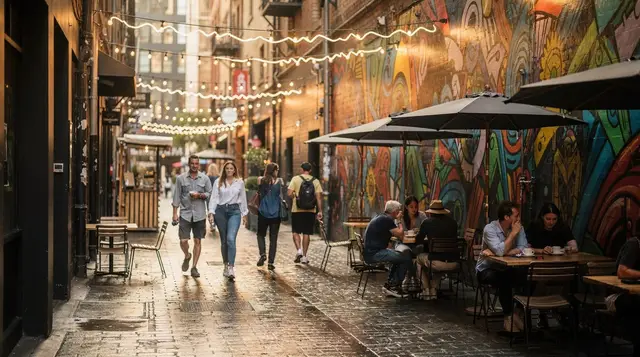
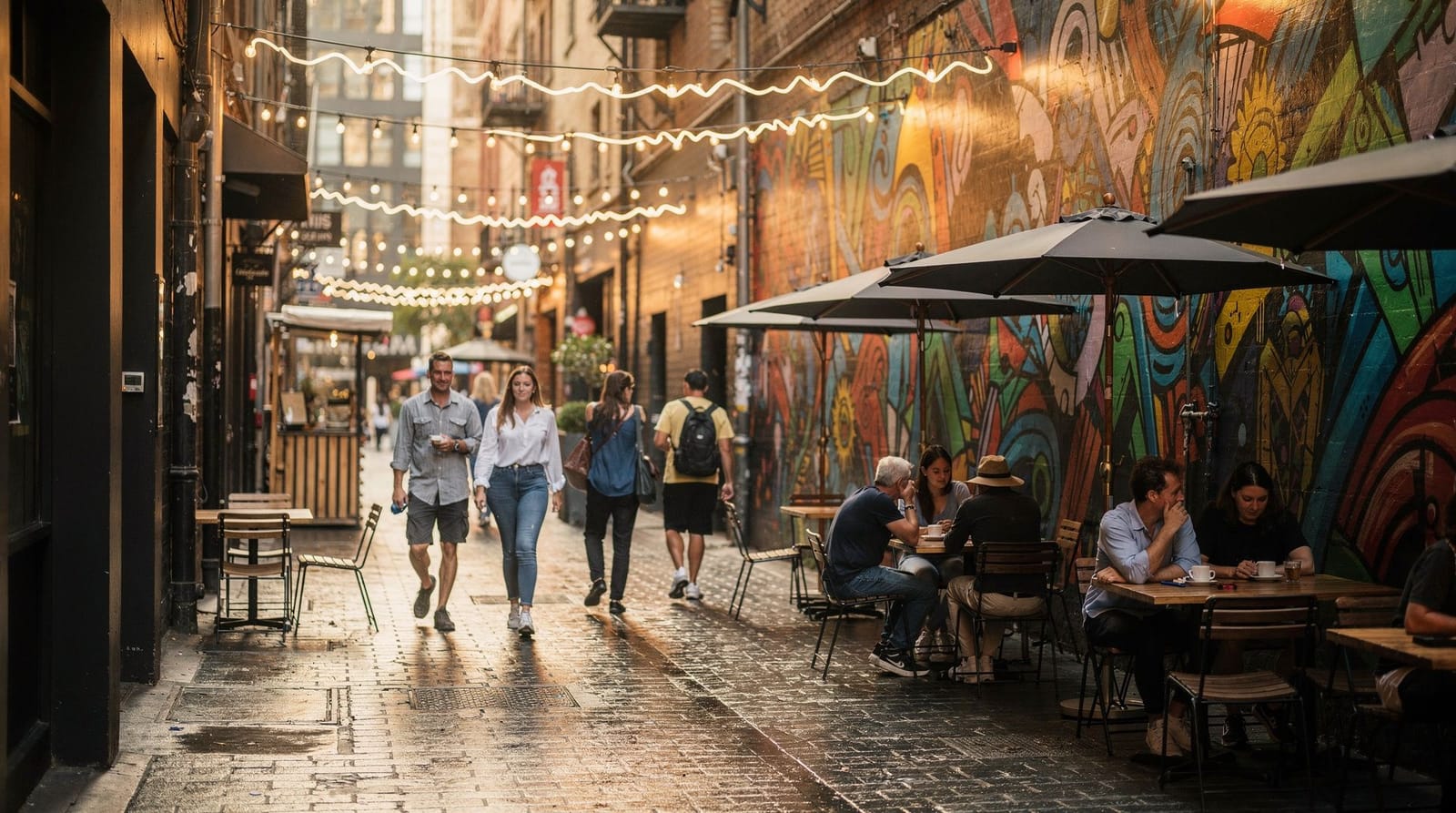
Within the city centre, Hosier Lane’s direct continuation Rutledge Lane carries the same constant-turnover ethos with slightly less foot traffic, making it a quieter spot for unobstructed photos. AC/DC Lane, renamed in 2004 in tribute to the band’s Melbourne roots, sits off Flinders Lane and carries music-themed and general street art in a narrower, grittier setting than Hosier. Union Lane, just off Bourke Street Mall, is the busiest and most central of the group, its walls cycling fastest of all given how many artists want that specific high-visibility spot. Duckboard Place, smaller and less trafficked, tends to host longer-lived pieces simply because fewer artists compete for its more modest wall space.
Together with Hosier, these five laneways form a walkable CBD loop covered in more depth in our arcades and laneways guide, typically taking 60-90 minutes at an unhurried pace.
Fitzroy: the real heartland
Fitzroy, Melbourne’s oldest inner suburb and long its most bohemian, carries a street art footprint that dwarfs the CBD laneways in sheer scale. Rose Street, Johnston Street, and the network of back lanes threading between Brunswick Street and Smith Street carry large-scale murals, stencil work and rotating smaller pieces across residential fences, shop shutters and industrial walls — a genuinely different texture from the CBD’s tourist-trafficked laneways, since much of Fitzroy’s street art exists for the neighbourhood itself rather than as a deliberate visitor attraction.
 Melbourne street art walking tour with a street artistCheck availability
Because Fitzroy’s street art is more dispersed across a wider area than the CBD’s tight laneway cluster, a guided tour genuinely pays off here in a way it’s more optional in Hosier Lane — a guide who works within the local scene can walk you between specific standout pieces across several streets in an efficient loop, saving hours of aimless wandering that might still miss the best work.
Collingwood: bigger walls, bigger murals
Adjacent to Fitzroy, Collingwood’s industrial character — former warehouses, factory walls, wider streets — has attracted larger-scale commissioned murals than Fitzroy’s more residential streetscape allows. Some of Melbourne’s largest single street art pieces, several storeys tall on the sides of former industrial buildings, sit in Collingwood rather than the more famous CBD laneways, reflecting how the suburb’s redevelopment from industrial to creative and hospitality use over the past two decades has been accompanied by deliberate large-scale mural commissioning by building owners and local council programs, distinct from the more spontaneous, informally-tolerated laneway model.
How the scene actually started
Melbourne’s street art movement traces back to the late 1980s and 1990s stencil art scene, when a small number of artists began using cut stencils and spray paint to produce fast, repeatable political and social commentary across the city’s then-neglected laneways — a technique that spread quickly precisely because it let artists produce complex, recognisable images in minutes rather than hours, reducing the risk of being caught mid-piece.
That stencil tradition, distinct from the large-scale figurative murals more common today, remains visible throughout the CBD laneways and is arguably Melbourne’s most original contribution to global street art technique, predating the broader international stencil-art boom associated with artists like Banksy by several years in some cases.
Through the 2000s, as licensing reform enabled the small-bar boom covered in our laneway bars guide, the same laneways hosting new hospitality venues increasingly hosted street art too, and the two trends fed each other — bars and cafes benefited from the atmospheric backdrop, and the increased foot traffic gave artists a larger audience. By the 2010s, the City of Melbourne had shifted from tolerance to active promotion, incorporating the laneway art scene into official tourism marketing, a rare case of municipal government embracing what had begun as unsanctioned activity rather than continuing to police it as pure vandalism.
Seasonal and practical timing notes
Melbourne’s changeable weather (the city’s famous “four seasons in one day” pattern) affects a street art walk more than most attractions, given it’s entirely outdoors. Summer (December-February) days can turn uncomfortably hot in the CBD’s narrow, heat-trapping laneways by early afternoon — mornings are more comfortable. Winter (June-August) brings shorter daylight hours and a real chance of rain, though the laneways themselves offer some shelter under overhanging awnings and building overhangs in the CBD precinct specifically. Autumn (March-May), broadly considered Melbourne’s best season, tends to offer the most reliably comfortable walking conditions for a longer combined CBD-and-Fitzroy street art day.
How the legal system actually differs by location
It’s worth understanding that “Melbourne street art is legal” is an oversimplification that varies significantly by location. The CBD’s core laneway precincts (Hosier, Rutledge, AC/DC Lane, Union Lane) operate under a genuinely unusual informal-tolerance model where building owners and the City of Melbourne have, over roughly two decades, arrived at community consensus that these specific walls are open for constant repainting.
Fitzroy and Collingwood’s scene is more mixed: some walls operate on similar informal tolerance, others are formally commissioned murals on private building facades (meaning painting over them without the owner’s and often the original artist’s consent is genuinely illegal), and unsanctioned tagging outside any of these categories remains a criminal offence regardless of neighbourhood.
Visitors sometimes assume the entire inner city operates on a blanket “street art is fine here” rule; it doesn’t, and the distinction matters if you’re trying to understand why some walls seem untouched for years while others change weekly.
book a laneways and street art food tourGuided tours: what they add
A tour led by a working street artist — several operate specifically in the CBD laneways and extend into Fitzroy and Collingwood — adds three things a solo walk generally can’t: identification of specific artists behind notable pieces, explanation of the informal social rules governing which walls get repainted and which don’t, and access to locations you’re unlikely to stumble across without local knowledge, particularly in the more dispersed Fitzroy and Collingwood scene. Some tours include a live painting demonstration or supervised opportunity to add a small piece of your own, a genuinely different experience from simply photographing finished work.
Food-focused laneway tours are a common alternative, bundling street art stops into a broader walk that also covers coffee culture and CBD history — worth choosing if street art is one interest among several rather than your primary focus.
 Melbourne laneways tour w lunchCheck availability
Photography and etiquette
Respect fresh work. If a piece looks recently painted, give it space rather than touching the wall for a texture close-up — wet or recently dry paint smudges easily.
Don’t add your own tag as a visiting tourist. Even in the CBD’s legal-tolerance laneways, adding graffiti without any connection to the local scene tends to draw pointed disapproval from artists and nearby shopkeepers who maintain the ecosystem.
Shoot Fitzroy and Collingwood in daylight. Unlike the CBD laneways, which stay reasonably lit and populated after dark, some of the suburban back streets are quieter and less well-lit in the evening — daytime visits are the more comfortable choice for photography and general wandering.
Look for commissioned murals’ credit plaques. Larger commissioned pieces in Collingwood in particular sometimes carry small plaques crediting the artist and commissioning body — worth checking if you want to follow up on an artist’s other work afterward.
Buying real Melbourne street art
If a piece genuinely moves you and you’d like to bring something home beyond a photo, several artists connected to the laneway and Fitzroy/Collingwood scene sell prints, original canvases and smaller works through their own studios, small independent galleries scattered through Fitzroy and Collingwood, and occasional weekend markets. This is a meaningfully more authentic option than the mass-produced “street-art-style” merchandise sold in some CBD tourist shops, which typically has no connection to any actual local artist.
A guided tour led by a working artist is also a natural way to ask directly where to find their own or their peers’ work for sale, since gallery representation for street artists tends to be smaller and less centrally listed than for more conventional fine art.
A suggested half-day loop: CBD to Fitzroy
Start with the CBD laneway loop (Hosier, Rutledge, AC/DC Lane, Union Lane) covered in our arcades and laneways guide, then take a short tram ride up Brunswick Street or Smith Street into Fitzroy for the afternoon, working through Rose Street and Johnston Street’s back lanes before finishing with a coffee or meal on Brunswick Street. This combines the CBD’s concentrated, famous sample with the suburb’s genuinely larger and more varied scene in a single half-day that requires no car and only a couple of short tram hops.
Combining street art with a coffee crawl
Fitzroy and Collingwood’s back streets sit alongside some of the city’s best independent cafes, making a street art walk a natural pairing with Melbourne’s wider coffee culture. Breaking the loop with a flat white between Rose Street and Johnston Street keeps the pace unhurried and gives tired feet a break before continuing on to Smith Street’s stretch of murals — a genuinely pleasant way to spend a slow Fitzroy morning that doesn’t feel like ticking off a checklist.
Where this fits in your Melbourne trip
Street art is one of Melbourne’s most distinctive cultural exports, and treating Hosier Lane as the whole story undersells a scene that extends meaningfully into Fitzroy and Collingwood with a different, arguably richer texture. It pairs naturally with the CBD’s arcades and laneways, a look at the city’s broader live music scene (both draw on the same inner-city creative energy), and — for visitors interested in the underlying urban history — the small-bar licensing reform that helped shape the same laneway network these murals now cover.
For travellers staying in Fitzroy itself, the street art scene is essentially on your doorstep; from the CBD, it’s a short tram ride worth building into any day that isn’t fully booked with day-trip excursions.
If you’re also interested in Melbourne’s Victorian-era built heritage as a contrast to this contemporary layer, our Victorian architecture guide covers the older story of the same streets these murals now cover, and travellers based in Richmond or St Kilda will find smaller, more scattered pockets of street art worth a look on their own daily walks even outside the two main hubs covered here.
More tours on Viator
Top-rated experiences with verified reviews, bookable on Viator (a Tripadvisor company).


Frequently asked questions about Melbourne street art
Is Fitzroy's street art as good as Hosier Lane?
In terms of sheer volume and variety, yes, and arguably more so — Fitzroy and Collingwood's residential back streets and industrial laneways carry a wider spread of large-scale murals and stencil work than the CBD's compact laneway network, though Hosier remains the most concentrated, central and famous single spot.Do I need a guided tour to see Melbourne's street art properly?
No, most of it is freely walkable without a guide, but a tour led by a working street artist adds genuine value — identifying specific artists, explaining which walls are informally 'protected' by community respect versus fair game for repainting, and taking you to spots you likely wouldn't find without local knowledge.Is it legal to paint over someone else's street art in Melbourne?
Within the city's recognised legal-wall precincts (Hosier Lane, Rutledge Lane, AC/DC Lane, Union Lane and similar), yes — that constant turnover is the accepted norm. Outside those precincts, on private property without the owner's consent, painting is vandalism and treated as a criminal offence regardless of artistic intent.What is Melbourne's oldest surviving piece of street art?
Because the recognised legal-wall precincts operate on a constant-turnover model, very few individual pieces survive more than months or a couple of years; pieces that do last tend to be larger commissioned murals on private building walls outside the core laneway precincts, which carry more permanent protection than laneway walls painted over by informal community consensus.Where can I buy Melbourne street art or prints?
Several artists associated with the city's laneway scene sell prints and original work through their own studios, small Fitzroy and Collingwood galleries, and occasional markets — a more meaningful souvenir than mass-produced street-art-themed merchandise sold in some CBD tourist shops.How much time should I set aside for street art beyond Hosier Lane?
Allow 60-90 minutes for the CBD laneway loop alone, and a half or full day if you're adding Fitzroy and Collingwood, since the suburban scene is far more spread out and rewards unhurried wandering between streets rather than a quick pass.Is the street art scene different in winter?
The art itself doesn't change, but shorter daylight hours and a real chance of rain make the CBD laneways, which offer some overhead shelter, a more practical winter choice than the more exposed suburban back streets of Fitzroy and Collingwood.
Top experiences
Bookable activities with verified prices and instant confirmation on GetYourGuide.