Melbourne's food scene: a practical guide
Melbourne’s food strength is depth and diversity, not a single signature dish
Visitors expecting a single obvious “Melbourne dish” to seek out, the way you might for other cities, should recalibrate that expectation early — the more useful mental model here is a map of neighbourhoods, each with its own genuinely distinct culinary identity worth visiting on its own terms.
| Where | Queen Victoria Market, Lygon St, Footscray, Chinatown |
| Cost | 12-20 AUD casual lunch, 30-50 AUD mid-range dinner main |
| Time needed | A dedicated food day, or spread across your whole trip |
| Getting there | Tram/train — most food strips sit outside the CBD core |
| Best time | Weekday for shorter queues; weekend for brunch culture |
Unlike cities that have one obvious “must-try” dish, Melbourne’s food identity comes from the breadth of immigrant communities that have shaped it over more than a century — Italian, Greek, Vietnamese, Chinese, and more recently a wide range of other Asian and Middle Eastern cuisines — each with a genuine neighbourhood stronghold rather than a diluted, city-wide version. This guide is a map of where those strongholds actually are.
A rough guide to what things cost
A casual lunch (a laneway noodle bowl, a market bratwurst, a Footscray pho) typically runs 12-20 AUD; a genuine sit-down dinner at a mid-range restaurant runs 30-50 AUD per main, before drinks; and a higher-end tasting menu experience at one of the city’s fine-dining venues can run well beyond 150 AUD per person. This spread means Melbourne can be either a genuinely affordable food destination or an expensive one depending entirely on which strip and which meal format you choose — there’s no single “Melbourne food price,” which is part of why it’s worth being deliberate about where you eat rather than defaulting to whatever’s closest to your hotel.
Queen Victoria Market
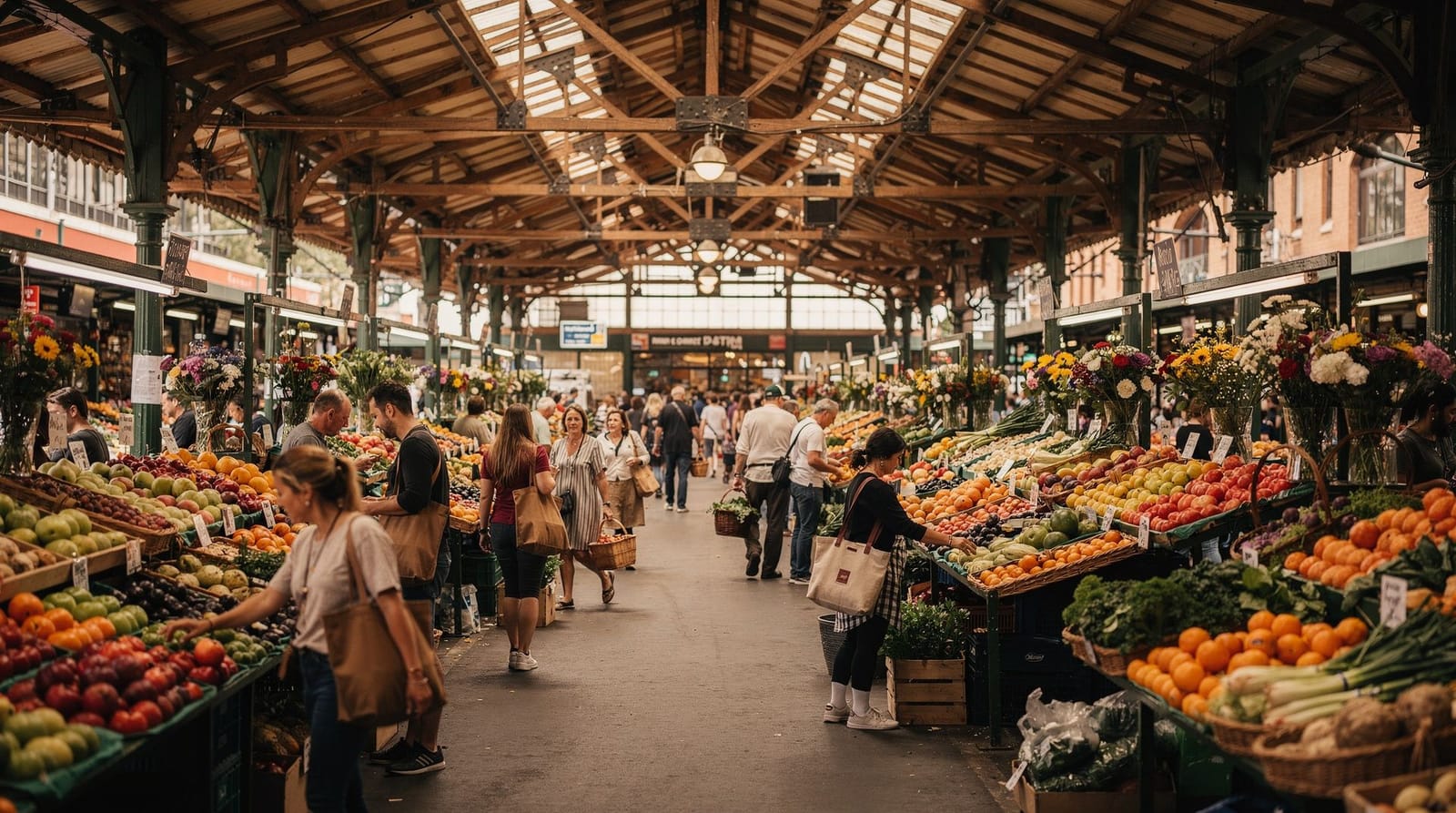
Queen Victoria Market, on the CBD’s northern edge, is Melbourne’s oldest and largest market, dating to 1878, and its deli hall and produce sheds are the single best introduction to the city’s food culture in one place — bratwurst stalls, cheese specialists, dumplings, and fresh produce at genuinely good prices. The Wednesday night market (running over summer) adds a more festival-like food-stall atmosphere.
 Melbourne multicultural markets culinary culture tourCheck availability
Dietary requirements and vegetarian, vegan options
Melbourne’s food scene handles dietary requirements comfortably by international standards — vegetarian and vegan options are standard on most restaurant menus rather than an afterthought, and dedicated vegan restaurants and cafés are common enough in Fitzroy, Collingwood and the CBD that finding a genuinely good plant-based meal rarely requires much searching. Gluten-free options are similarly well catered for at most sit-down restaurants, though it’s still worth confirming with smaller, more traditional Italian or Vietnamese kitchens where cross-contamination in a small kitchen can be a genuine concern for coeliac travellers specifically.
Lygon Street, Carlton — the Italian tradition
Carlton’s Lygon Street is where Melbourne’s postwar Italian immigration built one of Australia’s most concentrated Italian restaurant and café strips, and while some of the strip has become more tourist-facing over the decades, several genuinely long-running family restaurants remain worth seeking out specifically rather than picking at random.
Footscray — Melbourne’s best Vietnamese food
Footscray, west of the CBD via a short train ride, has one of Australia’s most significant Vietnamese communities, and its food scene — particularly the “Little Saigon” strip around Hopkins and Nicholson Streets — is widely regarded by locals as offering the city’s best value and most authentic Vietnamese food, well beyond what you’d find at CBD versions aimed at tourists. It’s less polished than the CBD food scene but consistently better value.
The CBD laneway food scene
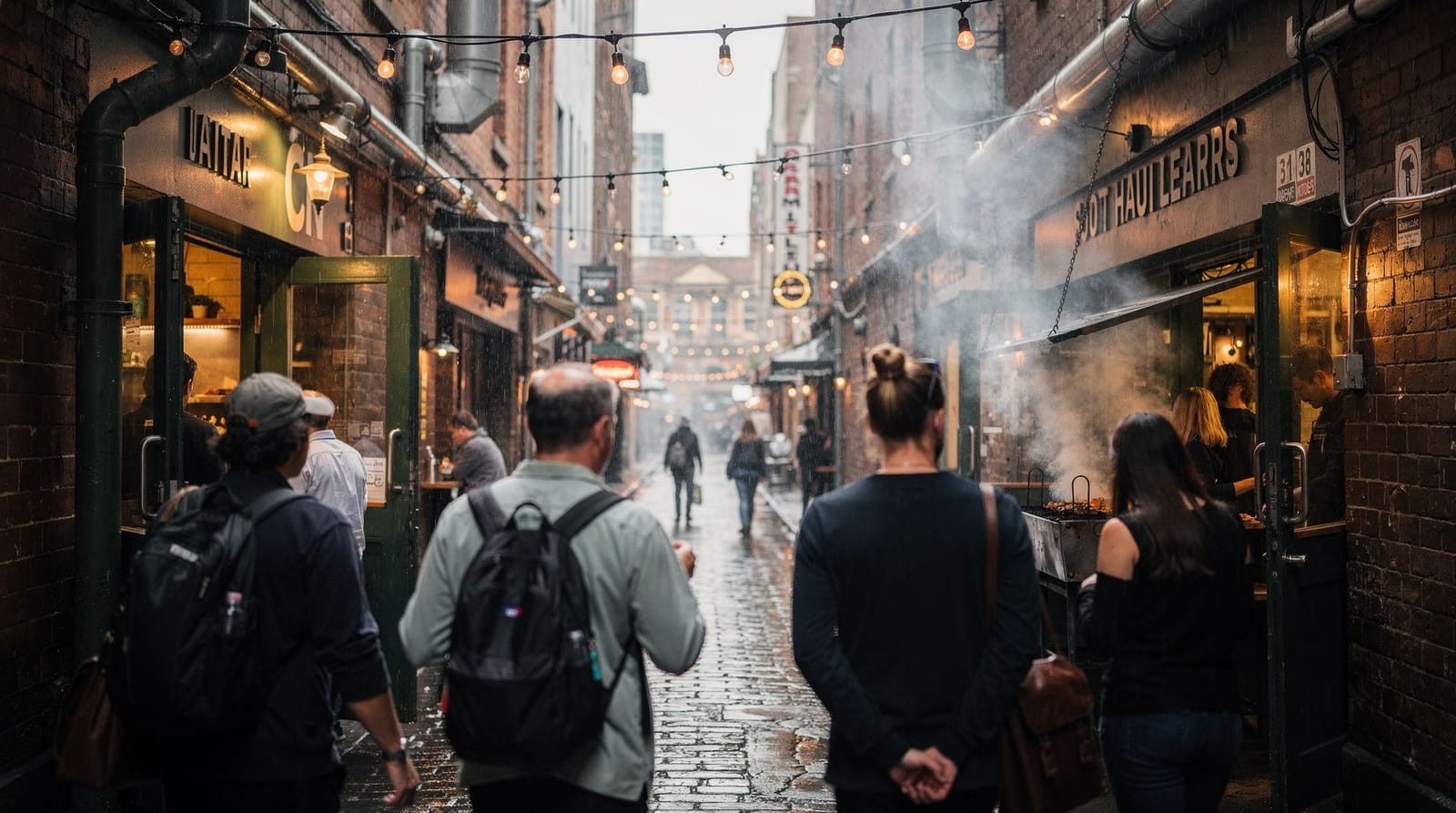
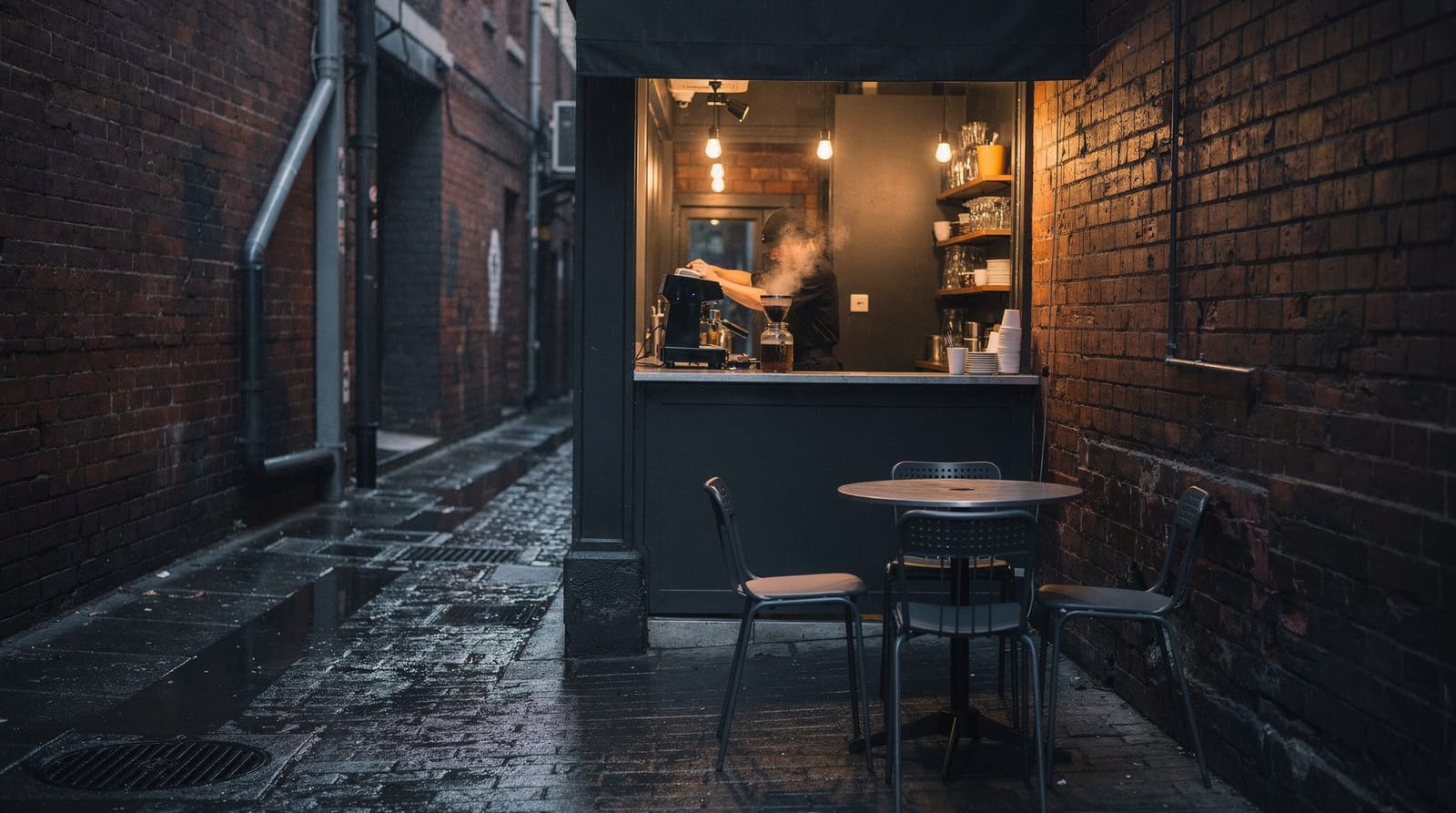
Beyond coffee, Melbourne’s laneways host a genuinely wide range of casual eating, from Chinatown’s long-running Cantonese and Sichuan restaurants to newer Asian fusion spots tucked into arcades. Our laneways guide covers the wider network if you want to explore beyond the well-trodden Degraves Street strip.
 The melbourne experience 3 hour culinary walking tourCheck availability
Rooftop bars and a different kind of evening
Several CBD and Southbank rooftop venues combine food, drinks and a view — a good complement to a daytime market or laneway visit rather than a substitute for it. See our Melbourne nightlife guide for specific recommendations.
What’s overrated, honestly
Southbank’s riverside restaurant strip and much of the food immediately around Federation Square and Crown are priced for tourist foot traffic and generally undercooked relative to that price — a coffee there is fine, but for dinner, walk ten minutes further into the CBD’s interior or take a short tram to Fitzroy, Carlton or Richmond instead. Hardware Lane’s lunch specials, while heavily advertised, are also more about volume than quality compared with the surrounding arcades.
Chinatown and the older Chinese food tradition
Melbourne’s Chinatown, running along Little Bourke Street in the CBD, is one of the oldest continuous Chinese settlements outside Asia, dating to the 1850s gold rush era, and its restaurants reflect generations of established Cantonese cooking alongside newer regional Chinese cuisines that have arrived with more recent immigration waves. It’s worth treating as a destination in its own right rather than a quick stopover between other CBD activities, particularly for yum cha on a weekend, a genuinely popular local tradition rather than a tourist-only experience.
Greek food and the CBD’s older immigrant history
Postwar Greek immigration, alongside the Italian wave that shaped Lygon Street, left its own mark on Melbourne’s food scene — Melbourne is sometimes described as having one of the largest Greek populations of any city outside Greece itself, and a cluster of long-running Greek restaurants and cafés around the CBD’s eastern end reflects that history. This tradition also runs deep into Melbourne’s coffee culture more broadly, discussed in our coffee guide, since Greek and Italian café owners were central to establishing the city’s espresso-first culture decades before it became fashionable elsewhere.
Brunch culture
Beyond dinner and coffee, Melbourne has a genuinely strong brunch culture — weekend queues outside popular cafés in Fitzroy, Carlton and South Yarra are a common sight, reflecting brunch’s status as something closer to a dedicated weekend ritual than a quick meal. Expect a wait of 20-40 minutes at the most popular spots on Saturday or Sunday mornings; arriving before 9am or after 11:30am generally avoids the worst of it.
Food and wine beyond the city
If food is your priority, pairing a city-based food day with a Yarra Valley wine day trip rounds out Melbourne’s food identity with its wine region — several Yarra Valley wineries run kitchens genuinely worth the trip independent of the tastings.
Neighbourhood food strips at a glance
| Area | Known for | Price level |
|---|---|---|
| Queen Victoria Market | Deli hall, produce, bratwurst, dumplings | Budget |
| Lygon Street, Carlton | Traditional Italian | Mid-range |
| Footscray | Vietnamese (“Little Saigon”) | Budget |
| Chinatown, CBD | Cantonese, yum cha, regional Chinese | Mid-range |
| Southbank riverside | Tourist-facing, view-driven dining | Overpriced for what’s delivered |
Building a one-day food itinerary
If you only have one day to dedicate to eating your way through Melbourne, a workable route is: breakfast or coffee in Fitzroy, a late-morning wander through Queen Victoria Market for lunch, an afternoon coffee break (see our coffee culture guide for where), and dinner in Chinatown or on Lygon Street depending on your mood. This spreads the day across genuinely different food traditions rather than concentrating everything in one strip, and keeps transit time manageable since these areas connect easily by tram.
a hands-on dumpling cooking classMarkets beyond Queen Victoria
Queen Victoria Market is the best-known, but it isn’t the only food market worth a visit — our best markets in Melbourne guide covers smaller neighbourhood and weekend markets that reward a visit if you have time beyond the obvious CBD stop, including some with a stronger local, less tourist-facing atmosphere.
Frequently asked questions about Melbourne’s food scene
What is Melbourne’s signature food?
There isn’t a single one — the city’s strength is breadth across immigrant food traditions (Italian on Lygon Street, Vietnamese in Footscray, market food at Queen Victoria Market) rather than one iconic dish.
Where is the best Vietnamese food in Melbourne?
Footscray’s “Little Saigon” strip, around Hopkins and Nicholson Streets, is widely considered the city’s best value and most authentic Vietnamese food scene, well beyond the CBD’s more polished versions.
Is Queen Victoria Market worth visiting for food alone?
Yes — the deli hall and produce sheds are one of the best single introductions to Melbourne’s food culture, and simply wandering and sampling is a genuinely worthwhile activity even without a specific meal planned.
Should I eat at Southbank’s riverside restaurants?
Generally, no, for dinner specifically — the strip is priced for tourist foot traffic and the food quality doesn’t consistently match. A short walk into the CBD’s interior or a tram to Fitzroy or Carlton is better value.
Is Melbourne’s Chinatown worth visiting?
Yes — it’s one of the oldest continuous Chinese settlements outside Asia, dating to the 1850s gold rush, with restaurants reflecting generations of established Cantonese cooking. Weekend yum cha is a genuinely popular local tradition worth timing a visit around.
Does Melbourne have a strong brunch culture?
Yes, genuinely so — weekend queues outside popular cafés in Fitzroy, Carlton and South Yarra are common, and brunch functions closer to a dedicated weekend ritual than a quick meal here.
What immigrant communities have shaped Melbourne’s food scene most?
Postwar Italian and Greek immigration shaped the CBD and Carlton’s food and coffee culture from the 1950s onward, while more recent Vietnamese immigration built Footscray’s celebrated food scene — together they explain much of the city’s food identity today.