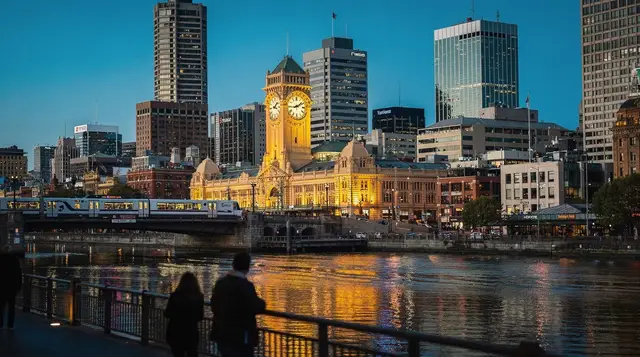
Hop-on hop-off buses in Melbourne: what actually exists
Melbourne: Melbourne city highlights group tour by bus
Duration: 3.5 hours
Is there a hop-on hop-off bus in Melbourne?
Not really — Melbourne has no permanent big-red-bus hop-on hop-off loop like Sydney or London. What it does have is the free City Circle Tram (route 35), which loops the CBD every 12 minutes with no ticket needed, plus guided sightseeing bus tours that run fixed routes rather than open hop-on hop-off passes. For most first-time visitors, the free tram plus a short walking tour covers the same ground for less money.
Setting expectations before you search for tickets
If you’ve travelled to Sydney, London, Rome or a dozen other big cities, you’ve probably used a hop-on hop-off double-decker bus with a day pass and a recorded commentary track through headphones. Search “Melbourne hop-on hop-off bus” and you’ll find plenty of pages promising exactly that — but the honest answer is that no permanent, year-round, big-bus hop-on hop-off network currently operates in Melbourne. A handful of operators have run limited or seasonal versions over the years, and the market shifts, so it’s worth checking current listings before you book anything sold under that name, since some third-party sites recycle old branding for tours that have since changed format.
What Melbourne has instead is arguably better suited to how the city is actually laid out: a free tram loop around the CBD, an enormous network of paid trams covering every inner suburb, and a mix of guided walking and bus tours for anything beyond the free loop’s reach. This guide breaks down what’s real, what to book instead, and how to string it together into a day that covers as much ground as any hop-on hop-off pass would.
| Where | City Circle Tram loops the CBD; paid trams reach the inner suburbs |
| Cost | Free (City Circle + Free Tram Zone); guided bus tours around 60-100 AUD |
| Time needed | 45-50 min for a full City Circle loop |
| Getting there | Board anywhere along route 35, no ticket needed |
| Best time | Morning, for orientation before exploring on foot |
The City Circle Tram — Melbourne’s actual free loop
The City Circle Tram, route 35, is a heritage burgundy-and-green tram that runs a continuous loop around the edge of the CBD: down Spring Street past Parliament, along Flinders Street past the station, out to Docklands, and back up William Street past the Queen Victoria Market district. It runs roughly every 12 minutes through the day, has recorded commentary pointing out landmarks as you pass, and — critically — costs nothing. You don’t touch on with a Myki card, you just board.
It’s not a hop-on hop-off pass in the technical sense (there’s no ticket to show, because there’s no ticket), but functionally it does the same job for the CBD core: ride the whole 45-50 minute loop once to get oriented, then hop off wherever looks interesting and rejoin a later tram when you’re ready to move on. The catch is scope — it only covers the CBD’s outer boundary, not St Kilda, Fitzroy, Carlton or anywhere genuinely suburban, so it’s a first-morning orientation tool rather than a full-day sightseeing solution.
Beyond the free loop: paid trams cover everything else
Once you’ve done the City Circle loop, the rest of Melbourne’s tram network — the largest operating urban tram system in the world — reaches almost everywhere a visitor would want to go: St Kilda for the beach and Luna Park, Fitzroy and Collingwood for the inner-north café and street-art scene, Carlton for Lygon Street’s Italian strip, and Southbank for the arts precinct.
These trams require a Myki card touch-on (except inside the Free Tram Zone, which covers most of the CBD itself), and they run frequently enough — every 5-10 minutes on busy routes — that “hopping off” wherever you like and catching the next one a few minutes later works almost as flexibly as a dedicated tourist loop, at a fraction of the typical hop-on hop-off day-pass price.
For a fuller rundown of how the whole system fits together, see our guide to getting around Melbourne and our dedicated tram guide.
If you want a guided bus tour instead
Some visitors genuinely want the guided-commentary format — a seat, a headset or speaker, and someone pointing out what you’re looking at — without the hassle of planning tram connections themselves. That product does exist in Melbourne, just structured differently from the classic hop-on hop-off pass: fixed-route group bus tours with a live guide, typically running three to four hours and covering the CBD core, Southbank, St Kilda and a couple of inner suburbs in one loop, usually with a few short stops for photos rather than open all-day re-boarding privileges.
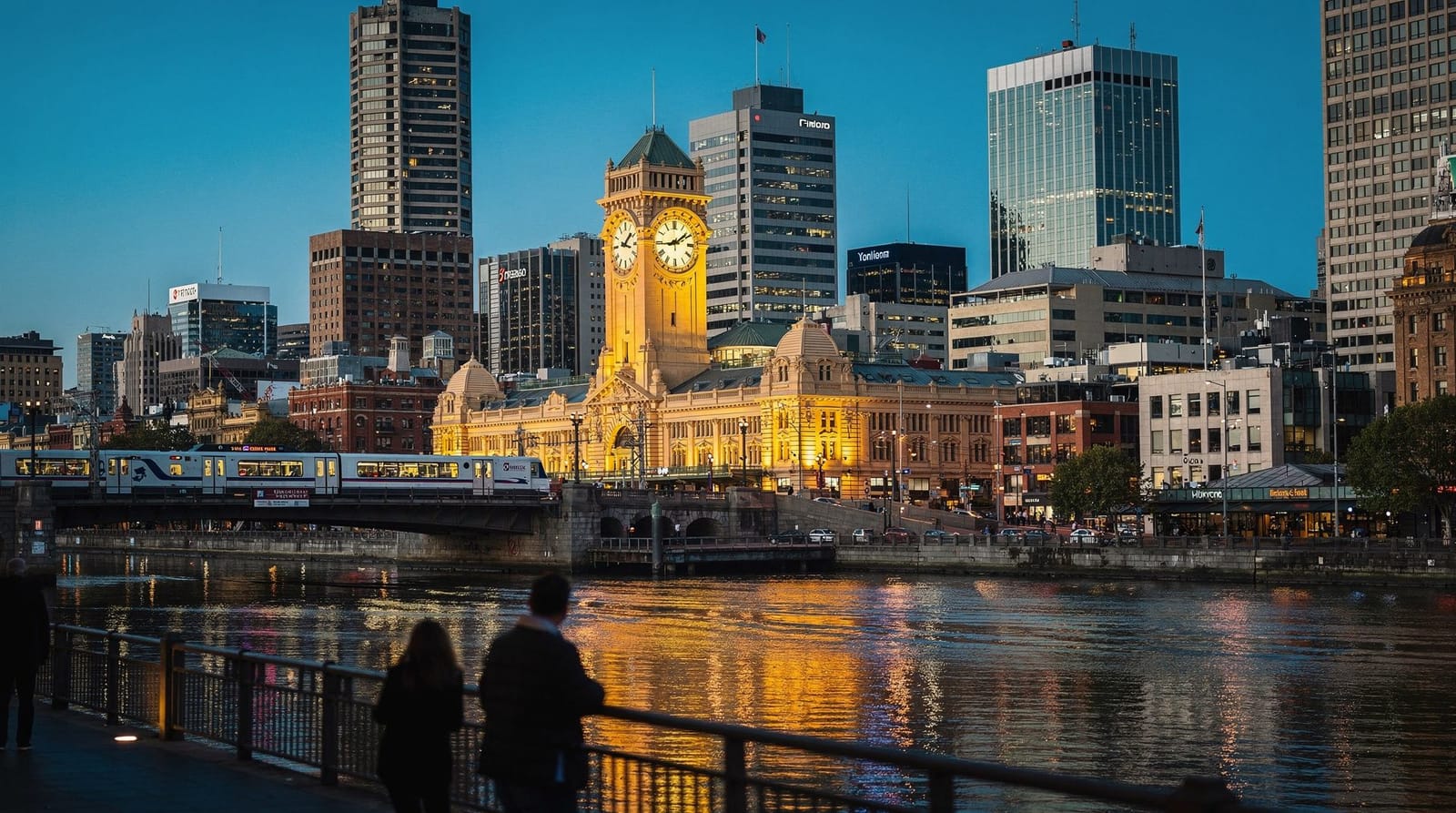 Melbourne city highlights group tour by busCheck availability
For a longer, more flexible version that still gives you a vehicle and a guide handling the logistics, a full-day sightseeing tour with multiple stops is the closer equivalent to what a hop-on hop-off pass would deliver in another city — you don’t get unlimited re-boarding across the whole day, but you do get door-to-door transport between a curated list of sights without needing to think about tram lines at all.
 Melbourne city surrounding sightseeing tourCheck availability
Private options exist too, useful for families or small groups who want the guided-tour format but on their own schedule rather than a fixed group departure time.
book a private Melbourne sightseeing tourWalking is often genuinely faster in the CBD core
It’s worth saying plainly: much of what a hop-on hop-off bus would show you in central Melbourne — Federation Square, Flinders Street Station, Hosier Lane’s street art, the laneways, the Queen Victoria Market district — sits within a 15-20 minute walk of each other. A bus, even a hop-on hop-off one, has to follow roads and traffic signals, and Melbourne’s one-way streets and tram-priority lanes mean a bus loop is rarely quicker than walking for anything inside the Hoddle Grid.
If your legs are up for it, a guided walking tour covers the same historic and cultural ground as a bus loop, with a guide who can actually stop and talk you through a laneway mural rather than driving past it.
Getting to sights outside the CBD’s reach
For destinations that are genuinely outside walking-and-tram range — Phillip Island for the Penguin Parade, the Great Ocean Road and Twelve Apostles, the Yarra Valley wine region — no city hop-on hop-off bus would reach them anyway, since they’re one to four hours’ drive away. Those trips are structured as dedicated day tours or self-drive itineraries rather than city-loop stops; our Great Ocean Road self-drive guide and individual destination pages cover the realistic options for each.
A practical one-day plan without a hop-on hop-off pass
For a first full day in central Melbourne, a workable free-and-low-cost combination looks like this: ride the free City Circle Tram loop once in the morning to get oriented (0 AUD), get off near Flinders Street Station and walk the laneways and Hosier Lane on foot (0 AUD, roughly 90 minutes), touch on a Myki for a paid tram out to St Kilda for lunch and the beach (single fare, well under 10 AUD), and finish with a late-afternoon Yarra River cruise for a seated, guided view of the CBD skyline from the water. That combination covers more ground, in more depth, than a single hop-on hop-off day pass typically would in other cities — and costs less than most such passes charge for a single day.
Bikes as another self-guided option
If you’d rather cover ground under your own power with the flexibility a bus can’t match, Melbourne’s flat CBD and riverside paths make it a genuinely good bike tour city — electric-assist options remove the effort question for anyone worried about distance or heat.
try an electric bike sightseeing tourWhy other cities have hop-on hop-off buses and Melbourne doesn’t
It’s worth understanding the “why” rather than just the “what,” because it explains a genuine structural difference in how Melbourne is built compared with cities where the format thrives. Hop-on hop-off buses work best in cities with widely dispersed attractions, patchy public transport, or road layouts that favour a big vehicle circulating a fixed loop — think Los Angeles’ sprawl or a city with an unreliable, sparse transit network. Melbourne is close to the opposite case: a dense, compact CBD with the largest operating tram network in the world already threading through it, meaning a second, paid, bus-based layer duplicates a service the city already provides for free or near-free.
Operators have tested seasonal hop-on hop-off routes in the past specifically to capture the tourist dollar that other cities’ buses earn, but commercial viability has been the sticking point each time — locals simply don’t need it, and enough visitors discover the free tram alternative that a paid bus loop struggles to fill seats consistently enough to justify the operating cost.
This matters practically: if you do see a hop-on hop-off product advertised for Melbourne on a booking site, read the fine print closely. Some listings repackage a fixed-route sightseeing tour (a handful of photo stops rather than genuine unlimited all-day re-boarding) under hop-on hop-off branding because the search term drives traffic, even though the product itself doesn’t function the way the phrase implies in other cities. This isn’t necessarily a scam — the underlying tour may well be a perfectly good sightseeing product — but it’s worth knowing what you’re actually buying before comparing the price against a “real” hop-on hop-off pass from your last trip to London or Sydney.
A cost comparison worth doing before you book anything
Because the market keeps shifting, it’s worth running the numbers yourself before assuming any single option is cheapest. A typical big-city hop-on hop-off day pass elsewhere in the world runs somewhere in the 35-55 AUD-equivalent range per adult. Compare that against Melbourne’s actual costs: the City Circle Tram is free; a full day of Free Tram Zone travel within the CBD is free; a Myki-based day of hopping on regular trams to St Kilda and back, with the daily fare cap in effect, typically costs less than a single hop-on hop-off pass would elsewhere; and even a paid guided bus tour, which is the closest genuine equivalent, tends to sit at or below that same range for a single well-curated 3-4 hour loop rather than a full unlimited day.
Run through this comparison for your own itinerary and travel party size before booking anything branded as hop-on hop-off — in almost every realistic scenario, Melbourne’s free-and-cheap public transport options beat the cost of an imported format the city was never really built around.
Accessibility considerations
For visitors with mobility needs, it’s worth knowing that Melbourne’s public transport accessibility has improved substantially in recent years but remains uneven. Newer low-floor trams offer level boarding and dedicated wheelchair and pram spaces, while some older heritage-style trams — including some City Circle Tram services — still require a step up. Guided bus tours typically use modern coaches with accessible boarding, which can make them a more predictable choice than relying on whichever tram happens to arrive if accessibility is a firm requirement rather than a preference.
Checking accessible-stop listings via Public Transport Victoria, or confirming accessible vehicle availability directly with a bus tour operator before booking, removes any guesswork on the day.
The bottom line
If a page promises a classic hop-on hop-off double-decker bus network in Melbourne, treat it with some scepticism and check exactly what’s included before paying — the format that actually delivers the most value here is the free City Circle Tram for orientation, paid trams (or a short walk) for the rest of the CBD and inner suburbs, and a guided bus or walking tour if you specifically want narration without planning your own route. Save the “day pass” budget for a Yarra River cruise or a proper day trip instead, where it buys something Melbourne’s tram network genuinely can’t replace.
Families and first-timers: which option actually suits you
For families with young children who tire of walking, the paid guided bus tour format tends to work better than trying to string together the City Circle Tram and several Myki tram legs with tired kids in tow — a single vehicle, air conditioning and a fixed schedule removes a lot of the logistics burden, even at a higher cost than the free options. For confident independent travellers without mobility concerns, the free City Circle Tram plus walking plus the odd paid tram genuinely does cover the same ground for a fraction of the cost, and it’s the option most locals would recommend to a first-time visitor asking how to see the CBD in a morning. Group size matters too: a private CBD tour spreads its cost across the group, which can make it comparable to public transport fares once there are three or four people sharing a vehicle.
What a hop-on hop-off pass from another city included that Melbourne handles differently
Visitors coming from a city with a genuine hop-on hop-off network often expect a single ticket to cover both orientation and inter-suburb travel across a full day. Melbourne splits that job across two free products instead of one paid one: the City Circle Tram handles orientation, and the Free Tram Zone covers unlimited touch-on-free travel within the CBD boundary for the rest of the day. Travel beyond the Free Tram Zone — to St Kilda, Fitzroy or the inner suburbs — requires a Myki touch-on, but Melbourne’s daily fare cap means a full day of tram hopping rarely costs more than a few dollars, well under what a single-day hop-on hop-off pass charges in most comparable cities.
More tours on Viator
Top-rated experiences with verified reviews, bookable on Viator (a Tripadvisor company).


Frequently asked questions about Hop-on hop-off buses in Melbourne
Why doesn't Melbourne have a hop-on hop-off bus?
Melbourne's CBD is compact, flat and served by the world's largest operating tram network, so a dedicated tourist bus loop has never really taken hold commercially the way it has in car-centric or hillier cities. Operators have tried limited seasonal routes in the past, but nothing has stuck as a permanent, year-round product — the free City Circle Tram effectively does the same job at no cost.What's the closest thing to hop-on hop-off in Melbourne?
The free City Circle Tram (route 35) is the closest equivalent: a heritage-look tram that loops continuously around the CBD's outer edge, stopping near Flinders Street Station, Docklands, the Queen Victoria Market district and Parliament, with recorded commentary and no ticket required. It doesn't reach outer suburbs or day-trip destinations, though.Can I do a bus tour to see Melbourne's neighbourhoods?
Yes — several operators run half-day and full-day coach tours covering the CBD, Southbank, St Kilda and inner suburbs with a live guide, which is a reasonable paid alternative if you want narration and don't want to plan your own tram-and-walk route.Is the free City Circle Tram worth doing as a tourist?
Yes, especially on your first morning. A full loop takes about 45-50 minutes and gives you a rough mental map of the CBD before you start exploring on foot — well worth the zero cost, even if you only ride part of the loop and hop off wherever looks interesting.Do I need a Myki card for the City Circle Tram?
No. The City Circle Tram is genuinely free — you don't touch on with a Myki card, and no ticket is checked. It's one of the few tram routes in Melbourne where you can simply board and ride without any card at all.How do I see Melbourne's outer sights like Phillip Island or the Great Ocean Road without a hop-on hop-off bus?
Those destinations are well outside any city bus loop and are usually visited via a dedicated day tour (bus, small group or private) departing from the CBD, or by self-drive if you're comfortable driving on the left. See our separate guides on the Great Ocean Road and Phillip Island day trips for specifics.
Top experiences
Bookable activities with verified prices and instant confirmation on GetYourGuide.